

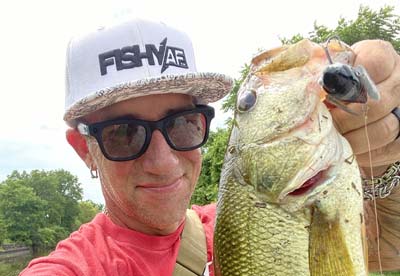
Sean DePoala spent his childhood in Ulster County, which is at the heart of New York’s Hudson Valley. "I grew up on the river," he said. He and a friend would help older men gather herring by wading into the tidal water. Then the young anglers would watch as they used those small fish to catch big ones — striped bass weighing upwards of 40 pounds. And they did it all from shore.
DePoala's life continued. There were careers in motorsports and construction. There was a battle with colon cancer. But through all that, the water kept calling. "Fishing has been my life," he said. And it continues to hold that place today.
While DePoala has relocated upstate, his shore-fishing approach hasn't changed. When he's not working or promoting the sport he loves, he's fishing all that Central New York has to offer — canals, streams, rivers, lakes, and even a few reservoirs whose construction dates to the 19th century. “It’s phenomenal to have this in my backyard,” he said. He and his wife, Marcy, share their angling adventures through their Shoreline Monsters accounts on Instagram and YouTube.
While he makes forays for other species, bass are DePoala’s primary target. Catching them from shore requires a specific set of skills, especially during fall, when environmental conditions and bass requirements are changing. He’s willing to share many of the lessons he’s learned along the way to help you catch more and bigger bass this autumn.
Do Your Homework
DePoala keeps busy. He works in construction and is part of the crew behind Lakeside Outfitters and its website, tackletrap.com, which offers everything from minnows for ice fishing to the latest JDM releases, all from the southeastern corner of New York's Oneida Lake. So, when the workday is done, he spends a couple of hours listening to music through headphones, walking, and casting, while forgetting everyday problems and relieving stress.
One of his favorite spots to walk and fish is the historic Erie Canal. Portions of the waterway that ran from Albany to Buffalo and opened 200 years ago have become parks. Walkers, cyclists, and paddlers have replaced canal boats laden with passengers and cargo and pulled by mules. DePoala is one of the few anglers who regularly cast from the former towpath. "It's really good to fish," he said. He's caught 5-pound smallmouth and 8-pound largemouth from the canal, which is no more than 40 feet wide for most of its length. Finding them here, or anywhere else they swim, requires some homework, he said.
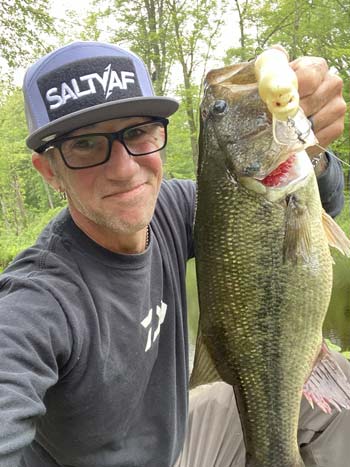
Seasonal patterns dictate bass movement regardless of where they swim, so it's essential to understand how they affect bass location and activity. DePoala said hot and dry summers lower the water level, and that kills aquatic vegetation rooted close to the bank and drives up water temperature. That makes shore fishing tough in August, forcing anglers to search out stretches of deep water or overhanging cover. Conditions improve when September brings fall’s cooler temperatures and rain. Add in the pre-winter feeding spree, and bass fishing gets better.
DePoala spends time researching potential spots. He’s interested in where a stream bends, creating slightly deeper water along the outside, or the location of washouts. On the historic Erie Canal, he looks for inlets. Google Maps’ satellite views are a good way to find these hot spots on any body of water.
Accessibility also requires research. DePoala said he might look for something as elementary as whether the shore is flat, dry, or clear enough to make it walkable. He also needs to determine if it’s public or private land, the latter requiring permission to access.
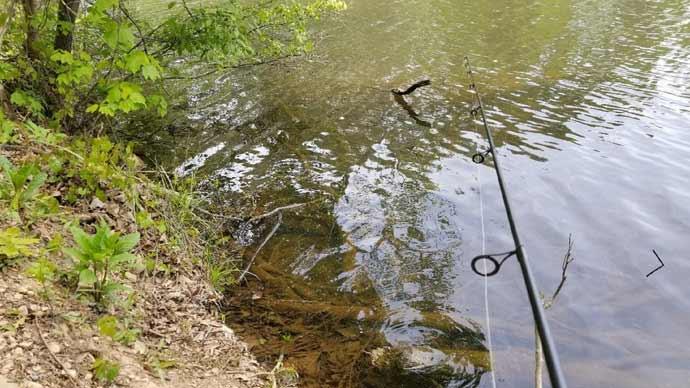
Research continues onsite. DePoala always has an eye open for where and how aquatic vegetation is growing, where laydowns have fallen, and how much water stands under shoreline brush. Bass will use any of those situations at the right time. “This is why people put the homework in,” he said. “I’m on the hunt. It’s like hunting a deer. You can’t go out to the middle of the woods and expect a deer.”
‘Shooting The Bank’
Finding bass when shore fishing requires ingenuity. “We don’t have electronics,” DePoala said. “We’re old school.” Your lure is the only way you know bass are around or what cover or structure lies under the surface.
DePoala employs a methodical approach that he calls "shooting the bank." It's a series of fan casts that covers the 180 degrees of water in front of him. By casting at different angles, he ensures his lure will contact any piece of structure or cover and eventually end up in front of a bass. "They aren't going to swim 20 feet to attack," he said.
Possibly the most critical casts DePoala makes are those parallel and within inches of shore. Plenty of bass live in that zone; it's where most boaters fish, he said. But it can be a blind spot for many shore anglers, who are inspired to cast as far offshore as possible. While that approach has its time and place, he encourages you to fully explore all the cover and structure closer to your feet.
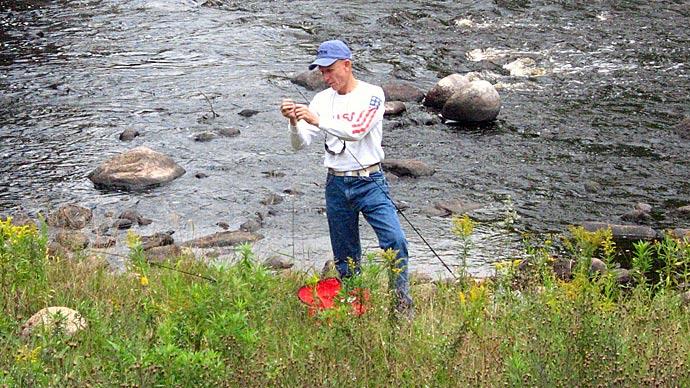
DePoala extends his fishing reach in a couple of ways. First is waders. “Going waist deep allows you to reach more,” he said. That simple maneuver, when done safely and respectfully to shoreline property owners, can get you closer to more bass, especially when the water level is low or there are expansive shallow flats. Wading adds distance to his casts before he makes them and allows him to bypass sections of shoreline that are unwalkable.
The second is his e-scooter, which he built himself. His cancer has made walking distances difficult. That comes into play when fishing the historic Erie Canal, where you walk in from road crossings. Riding the e-scooter along the former towpath is an easy way for him to cover more distance faster and with less effort.
Get More From Your Gear
DePoala offered a scenario: It may be 5- to 8-feet deep until you reach 25 yards from the bank, then there’s a shelf that drops into 15 feet of water. That’s key structure, especially in the fall, when bass feed on baitfish they pin against the drop. Reaching something like that is best done with a long cast. And for that, you need the right equipment.
DePoala starts with rods 7 feet or longer and a 3000- or 4000-size spinning reel. Their large diameter spool stores line in large loops, which leaves the reel with less drag during a cast. “That allows you to cast farther,” he said.
Line size and material also play a role in casting distance. DePoala uses a line with a small diameter, such as 10-pound test braid. It's more flexible and has less memory, making it flow off his reel and through his rod’s guides with ease. If you prefer monofilament or fluorocarbon line, he suggests soaking the entire filler spool in hot water for about 15 minutes before spooling up. That relaxes the line, erasing any memory and making it easier to spool and cast.
When spooling a reel, DePoala aims to have the line hand-tight. Machine winding tends to add too much tension, causing the line to bury within itself, which stifles casting distance. And as soon as his lure lands on a long cast, he'll leave his reel's bail open and lift his rod's tip. He winds that extra line on his reel with minimal tension, ensuring it's ready to leap off the spool on his next cast, adding even more distance.
Hunt The Best Presentation
DePoala seeks more than just cover and structure when walking the bank. “I always look for fish,” he said. He notes the profile and colors of minnows and baitfish so that he can mimic them with his lure choices. Pumpkinseeds, for example, have yellow and gold along their belly and turquoise tops.
Largemouth bass are built for big meals. "A 3-pounder — you can put your fist in its mouth," DePoala said. "A giant frog is the same size. That's a meal for a big bass." So, don't be bashful about fishing with big baits when fishing from shore.
DePoala carries an assortment of big lures. It starts with wake baits that resemble 10-inch-long rats. "I love fishing a topwater crawler," he said. So, he includes some Ravencraft Ghost-Pinion Crawlerbaits, which are upwards of 6 inches long. He believes they mimic a small bird, a gosling, or a baby duck. And there's reasoning behind these giant offerings. "If you want to up your game, throw big lures," he said.
But there are times when small lures rule, and DePoala packs for that scenario, too. One of his favorites is a 2.8- or 3.3-inch Keitech swimbait rigged on a Megabass Okashira Screwhead jig head, which sports a small propeller. He can easily control its depth and add action with the tip of his medium-light rod while swimming it around and through shoreline cover.
Consistent experimentation helps DePoala refine and expand his offerings. He believes the best way to learn a new lure is by bringing only it in maybe three or four different colors. That discipline will pay off, deepening your understanding of how it works and bass respond. “Make that extra effort,” he said.