


Over the past few seasons, no bass fishing rig has been as popular or effective as a minnow on a jighead. The explosion in popularity of forward-facing sonar has made this simple setup very effective, and it accounted for many top finishes and wins in professional bass fishing. As the technique has evolved, some products have made it easier and have provided ways to trigger more bites, including the following details on advanced mid-strolling.
What is Mid-Strolling?
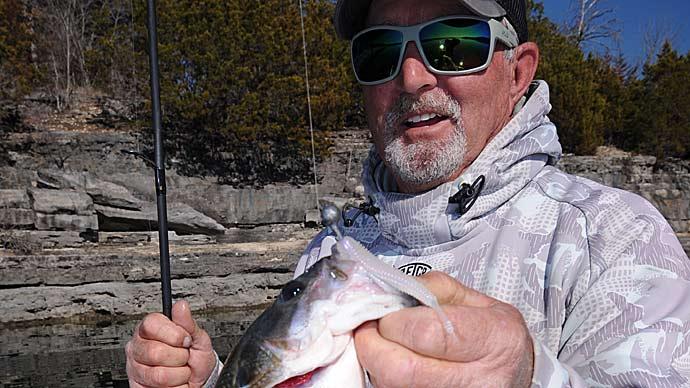
Using a jighead and soft plastic minnow is not new, as it's been done for decades. What is new is how anglers use it in tandem with their live sonar to watch fish react to baits presented in the middle of the water column with a shaking retrieve. This technique is called mid-strolling as the bait "strolls" through the middle of the water column. However, it's also often known by other names, such as "shaking a minnow" or a "Damiki Rig," even though the latter is typically more of a vertical approach.
No matter what you call it, fishing a minnow this way to suspended bass can be deadly. At times, when the bass are suspended and in open water, there is no other technique that can effectively target these bass. Often, they are too deep to reach with diving baits like jerkbaits, and other times they are too far away from the bottom to be interested in lures fished along the bottom, which is why this population of bass has largely been untapped until this new technology came along.
Working the bait requires some experimentation based on the day, as on some trips, the bass will come a long way to inspect and then bite a bait. On other days, it must be presented just right to get their attention. No matter what the case, the bass usually prefer to feed up and will not chase a lure that whizzes past them towards the bottom. This is why a steady retrieve and having the right gear to make a precise presentation are critical when mid-strolling.
Tools to Shake It Better
One of the critical parts of fishing a lure like this is getting the attention of bass, which can often be in a negative or neutral mood and simply cruising along. Other times, they will be corralling balls of baitfish, which can happen just about anywhere in the water column. Getting a bass to see your bait requires skill and the right gear to present it to them with precise casting accuracy. As this way of fishing has evolved, there are now many products that make it easier, including rods, line, lures, and jigheads.

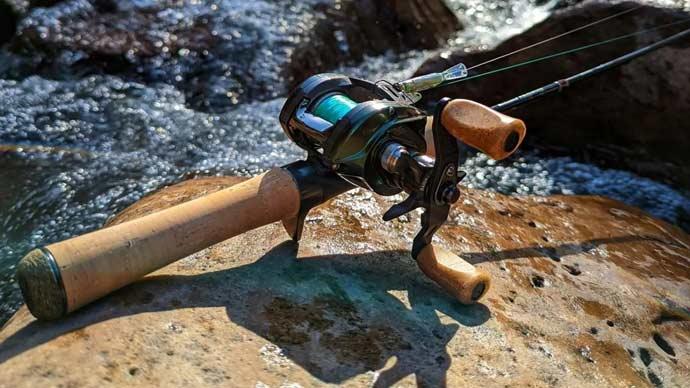
Any rod will work for fishing this way, but spinning tackle is the preferred choice for most anglers because of how well these setups cast lightweight offerings and the fact that you can flip the bail to let the bait fall on slack line instead of feeding line out from a baitcast reel. While any rod will work, companies have noticed this fishing style and developed spinning rods with specific characteristics.
Some of these are shorter to allow an angler to shake the rod in front of them with more control as they work their lures. These include rods like the Daiwa Power Scope series, which start at shorter lengths than most modern bass rods, with models starting at 6-feet long and available in several other sizes under 7-feet long.
Another trend that helps with the technique is rods with a solid tip section, like some Shimano Expride B rods. The solid tip section allows better control of a bait when shaking it and helps detect light bites.
There are no "technique-specific" reels for mid-strolling, and any quality reel will do the trick, but some excellent braided lines will make it easier. Some anglers prefer a sinking braid to get better contact with their lure, but an ultra-thin braided line like Seaguar PE-X8 allows anglers to have the same strength they are used to, but in a micro diameter. For instance, the 18-pound line has a diameter equivalent to between 3 and 4-pound test monofilament. This thinner diameter cuts through the water and gives better control of your lure with less drag in the water, and provides longer and more accurate casts.
The other component is the leader material you use, and many anglers prefer a shorter leader of fluorocarbon than they would with standard finesse techniques. Instead of using a leader nearing six feet or longer, many prefer a leader length of around 24 inches. The other change is going up to heavier 10, 12, or even 15-pound test. The shorter leader and heavier line allow the bait to have a better connection to your line with less stretch and drag in the water, leading to more control.
Baits and Jigheads
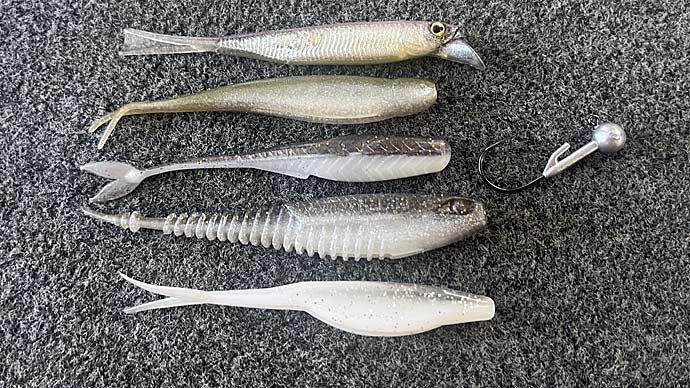
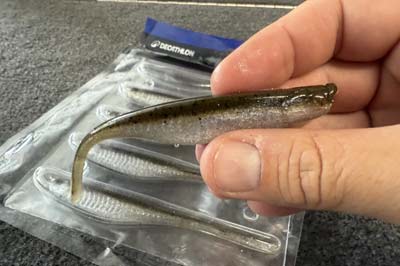
The selection of soft plastic minnow baits has exploded, and there are many excellent ones to choose from. Any standard fluke-style bait will work in a pinch, but adding molded wings and front sections of baits like the Deps Sakamata Shad and Jackall Drift Fry have much more action. Other companies have their own spin on the minnow and have created ultra-lifelike baits like the Caperlan Yubari FINSS Finesse that looks just like a baitfish.

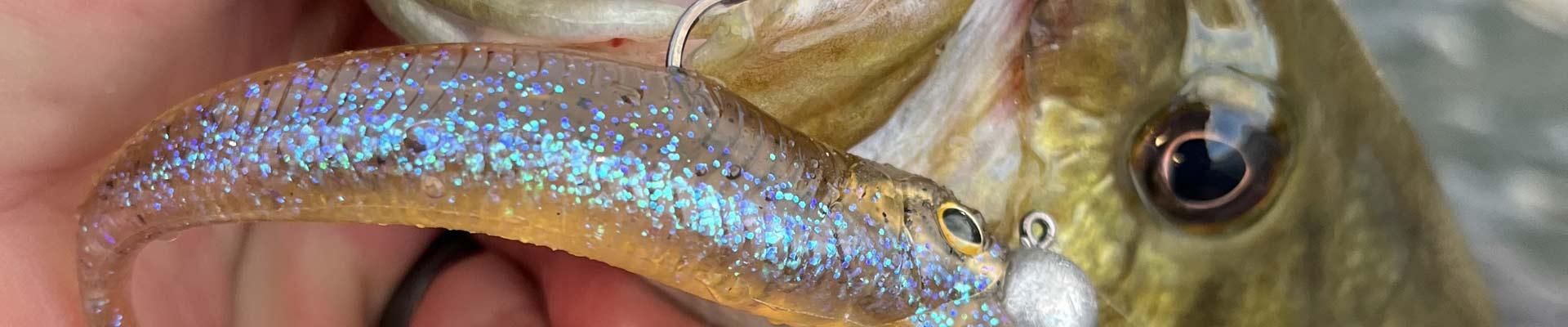
Just as crucial as the minnow is the jighead, which is now offered in many more shapes than the traditional round ball head. These round versions still work, but jigheads like the Owner Range Roller and Gamakatsu Horizon Head allow the bait to roll more and maintain a more horizontal look.
When connecting the jigheads to their line, many anglers have found that a loop knot will allow the bait more freedom of movement. This works great, but jigheads now have a built-in ring that does the same thing. These welded loops on the Treeshaker Austin Felix's Dream Stroller and Missile Baits Eye Roll do the trick and give the bait even more action as you shake it through the water column.
Like everything in bass fishing, you can keep things simple or get as technical as you'd like, including with emerging techniques like mid-strolling. As it's advanced, more and more products will allow you to take it to the next level.