

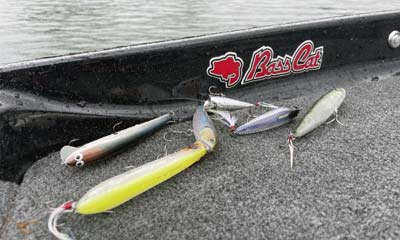
It'd be hard to argue for a more exciting way to catch bass than a topwater lure. The fun of watching a bass explode on the surface keeps bass anglers returning for more, and it's also a great way to catch a bunch of bass with the chance of a true lunker. Topwater lures come in many shapes and forms, and you can use these few tips to catch more bass with them.
Picking the Right Topwater Lure
Countless lures classify as topwater baits, and the list can include walking baits that will "walk the dog" when you retrieve them, poppers that will pop and chug as you bring them back in, as well as frogs, pencil poppers, buzzbaits, and more. They all have a time and place and work for different situations.
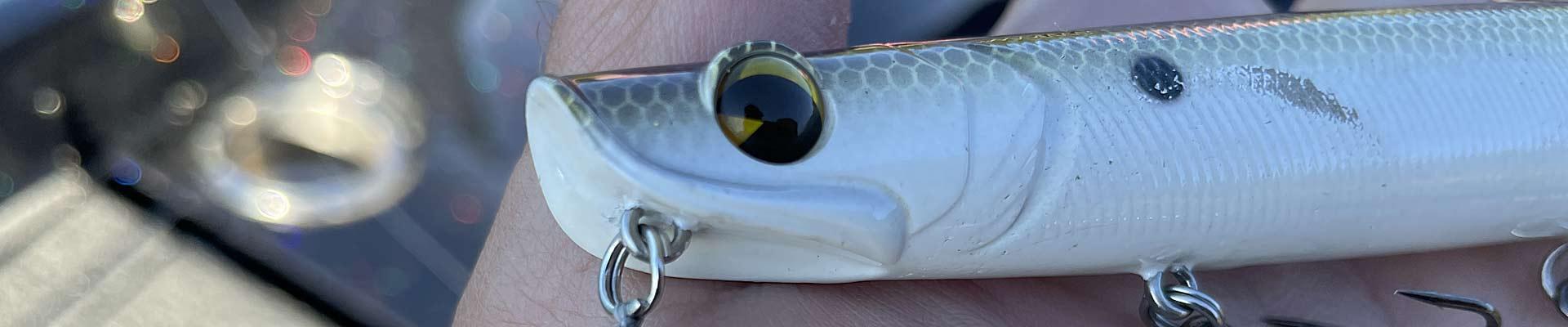
The most common topwater style is the walking topwater bait, a pencil-shaped bait that will walk from side to side as you bring it back towards you. They are excellent all-around topwaters and can be fished quickly or slower to get fish to come up and strike. Some of the more popular models are the Heddon Zara Spook, Lucky Craft Sammy, Strike King Sexy Dawg, and more.
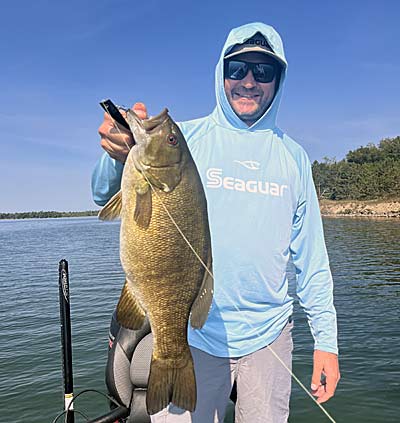
Poppers can be fished more slowly and will pop and spit water as you work them. They are ideal when the bass are shallow, and they work great even during the middle of the day without a ripple on the water. Since they are generally smaller, they do not make near the commotion that walking baits do and are better suited for fishing slowly in shallow water and around shade from docks, bushes, and other objects. Some of the best are the original Rebel Pop-R, ima Finesse Popper, Lobina Lures Rico, and more.
Other topwater baits must also be mentioned here and shine in certain situations. Hollow-bodied frogs are great when fishing above vegetation. Pencil poppers are effective for calling fish from deep water because they create a considerable disturbance and attract fish. Buzzbaits shine when moving quickly, fishing fast, and targeting feeding bass.
Mixing Up Your Retrieves and Rod and Reel Choices
One of the most critical aspects of topwater fishing is establishing a rhythm with your retrieve and dialing in your cadence. Some days, the fish want a slow action as you work a bait; other times, the faster, the better. It's a balancing act between what the bait is meant to do and what the fish wants, but the best approach is to mix it up and see what triggers the most bites.
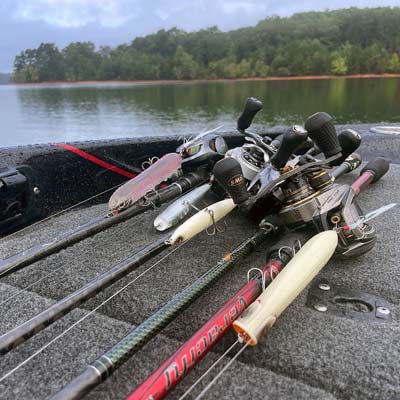
Choosing the right rod and reel for your topwater baits can make a big difference in how the lure performs and even in landing more fish. A rod with the right tip action for walking baits will allow the bait to walk more easily. It won't be easy if it's too stiff, and the same will be true if the rod tip has too much bend. Most medium- or medium-heavy baitcast models will align with your needs to get the best action out of your bait. Also, rods with a more parabolic bend will have some forgiveness when a bass is fighting. This will allow you to land more fish hooked on treble hooks.
For poppers, a medium-action baitcast rod is excellent, but spinning tackle also works great and will be very helpful for casting these lightweight baits. However, heavier tackle is needed for fishing frogs as you'll often be dealing with thick vegetation. For pencil poppers and buzzbaits, a medium heavy or heavy baitcast rod will also do the trick.
Reel speed can also play a role in the performance of your topwater baits. Most of the work is done with your rod when fishing a topwater bait, but a slow reel will take much longer to pull in slack as you work the lure. A good all-around reel speed would be 7.1:1, but you can go even faster. The added benefit of a faster reel is that you can quickly bring your bait back in if you need to make a cast, which is a massive benefit if you see bass busting on the surface and need to rush to make a cast to them while your bait is out in the water and away from the activity.
Tricks to Make Your Life Easier
Choosing the right line is one of the most crucial aspects of topwater fishing. It can significantly impact how your bait performs as sinking lines like fluorocarbon pull it down and make it harder to work correctly. Many anglers use monofilament because it floats and keeps the bait on the surface. Braided line also floats and adds many benefits for topwater fishing.
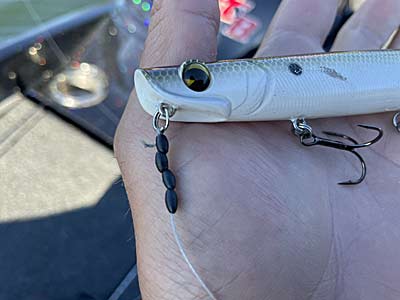
For one, a quality braid like Seaguar Smackdown will cast much further than monofilament because of the smaller diameter, and a 30 or 40-pound test will be extremely thin and help you reach greater distances with your casts. The other plus with braid is that there is no stretch, so if a bass bites at the end of a long cast, you can set the hook and drive the hooks much better than a monofilament that stretches.
The one downside to the braided line is that it is limp and can sometimes wrap around the front treble hook when you are working a lure. Add a few rubber bobber stops in front of the bait to combat this issue, and this problem will be solved.
Topwater fishing is tons of fun and a great way to catch bass. Try these tips and tricks to ensure you're prepared to get in on the action this topwater season.