

Several bass remain deep in early fall on clear-water reservoirs, but some quality bass make a quick move to the shallows then.
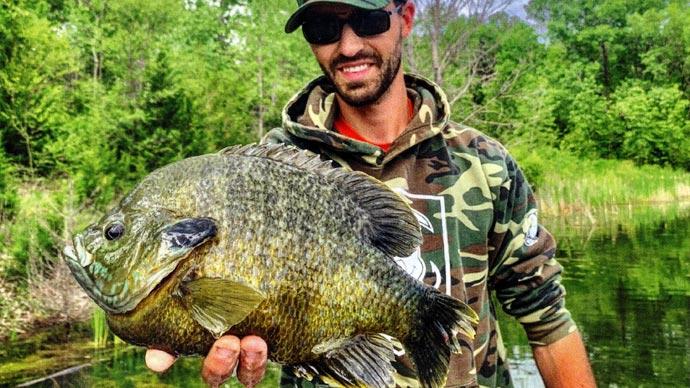
Former Bassmaster Elite Series pro Brian Snowden knows a combination of cool nights and lack of oxygen content in deep water triggers early fall bass into moving shallow on the clear Ozark highland reservoirs he fishes. “A lot of times when that water gets really warm, the best oxygen content is actually shallow," Snowden says. Baitfish and bluegill also seek the better oxygenated waters of the shallows in the early fall.
Bass are scattered in the shallows during the early fall, although some of the fish will travel in wolfpacks roaming in search of baitfish and bluegill. “You have to cover some water, and you are going to get one or two bites, and then you might go an hour and then get two or three bites,” Snowden says. “It is not going to be where you are going to catch a whole bunch in one little area.”
On his home waters of Table Rock Lake and neighboring Bull Shoals Lake, Snowden finds early fall largemouth bass in the 1- to 5-foot range hanging around some type of cover or rocks. “Usually, you are going to look for either laydowns or rock changes from like gravel to ledge rock, which the largemouth really like,” Snowden says. “Depending on the lake level, the fish could still be around buck brush if the lake is high, and if it is not high, the back sides of boat docks and laydowns and bigger rock tend to be what I try to target in the fall.”
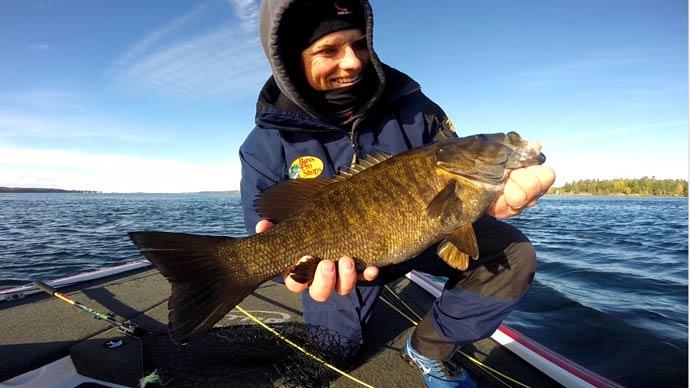
Smallmouth and spotted bass also will be shallow if the day is cloudy and breezy. “The smallmouth, especially in that time frame, are roaming the banks looking for food, so you will catch a lot of them in that 5 to 10 feet of water, especially if you have an overcast, windy day", he says.
The Table Rock Lake guide suggests you can catch early fall bass anywhere in the shallows, but he usually looks at the rock banks and covers for clues to put together a pattern. "Pay attention to the type of rock where you are getting bites or the cover you are getting bites on,” Snowden says. He usually likes to start fishing in smaller pockets along the main lake because these spots feature changes in the rock banks, and he can cover the whole pocket quickly.
The presence of baitfish in the shallows is key to fishing for early fall bass. "When you start seeing those shore minnows jumping around, that is usually a good indication that you are in the right area,” he says.
Lure Choices
Reaction lures that he can retrieve at a medium to fast pace for covering water quickly are Snowden’s main choices for early fall shallow bass.
His first choices are a topwater walking bait, such as the Heddon Zara Spook and Reaction Innovations Vixen, or a buzz bait. His color choices for the topwater walkers are bone or bluegill patterns. He opts for a 1/2-ounce buzz bait with a mouse or blue herring skirt color. Snowden throws both the walking baits and buzz baits on 30-pound braid or 17-pound monofilament.
Other reaction baits he tempts early fall shallow bass with are a square bill crankbait and a glide bait. Snowden runs a 1.5-inch sexy shad or ghost minnow square bill crankbait on 14-pound Bass Pro Shops XPS fluorocarbon line around shallow cover and rocks. Steadily winding a 7-inch shad pattern or bone glide bait on 20-pound fluorocarbon creates a side-to-side action that also produces bites for Snowden in the early fall.

On calm, sunny days, Snowden pitches a 3/8- or 5/16-ounce jig and Net Bait Paca Chunk or Zoom twin tail trailer on 14-pound fluorocarbon to bass holding tight to cover such as docks and laydowns. He favors a jig in green pumpkin, blue, and orange, and a green pumpkin trailer with chartreuse dye on the tips of the trailer’s appendages. The jig produces strikes by either letting it fall into shady areas of cover or swimming it along ledges 5 to 8 feet deep.
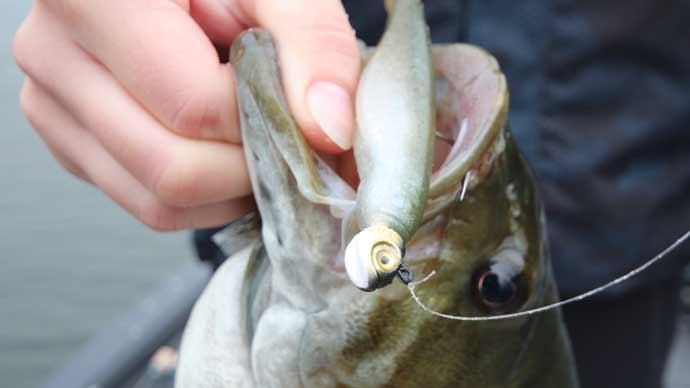
When smallmouth and spotted bass move to the shallow rocks, Snowden tempts them with a Ned rig (Bass Pro Shops HFT Ned Tails in peanut butter and jelly or green-pumpkin/orange colors and 1/16- or 1/8-ounce jighead) on spinning tackle and a 10-pound braid main line and 8-pound fluorocarbon leader. His other option for shallow smallmouth and spotted bass is a 5/16-ounce finesse jig (green pumpkin/orange or green pumpkin/purple) and a green pumpkin or green pumpkin candy Zoom Speed Craw he throws on 12-pound fluorocarbon. A hop-and-fall retrieve along the ledges works best for both lures.
Stealthy Approach
Early fall bass in clear, shallow water spook easily, so Snowden tries to make long, accurate casts to the skittish fish. He also keeps his trolling motor on constant at a setting of 2 or 3. “If you are on and off that trolling motor all the time that makes vibrations and shakes and jiggles," says Snowden, who notes that bass tend to flee from those sounds. He also turns off all his electronics if he finds an area loaded with fish.
The seven-time Bassmaster Classic qualifier suggests the early fall shallow pattern is more of a tournament tactic for quality bass during tough conditions than a numbers technique he could use for guide trips. "On a good day, you are going to get 10 to 12 bites, but you are going to get 13 to 16 pounds (five-bass total weight),” Snowden says. He suggests the shallow bite produces mainly bass in the 3-pound range along with some 4- and 5-pounders.