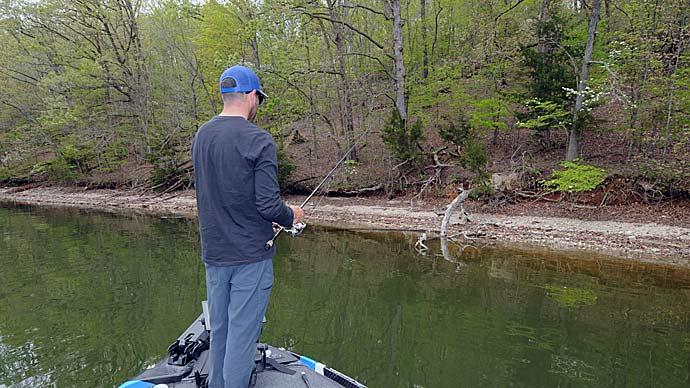


When the spawn is on, you can just about use anything in your tackle box to catch bass.
This is a time when you can have 20 rods on the front deck of your boat and catch bass on every rod. I frequently have eight to 10 rods on my front deck during the spawn and have caught bass on nearly all of the lures I tied on each rod.
Although a plethora of lures will produce during the spawn, the conundrum becomes which handful of baits will work best so you can avoid cluttering your front deck with so much tackle. Through nearly 50 years of bass fishing, I have discovered five lures that will trick bass into biting while the fish are on or near spawning beds.
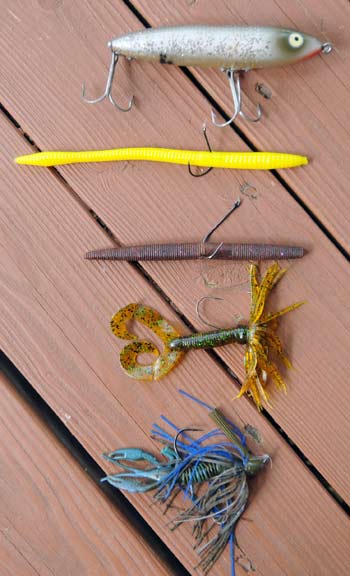
Here's a look at my five favorite lures for catching bass from top to bottom during the spawn.
Walking Topwater Lure
The walking-style topwater bait draws strikes from quality female bass lurking near the spawning beds and from keeper-size male bass protecting the nest. The topwater walker is ideal for covering water and drawing strikes from bass when you can't see nesting fish.
Lure choices: Heddon Zara Spook.
Sizes: 4 1/2 inches.
Colors: Baby bass, black shore minnow, flash bass, or flitter shad.
Best weather conditions: Cloudy, low light or shady with a breeze creating a slight chop on the water.
Best water conditions: Clear or stained.
Retrieves: The standard walk-the-dog retrieve at a slow pace. If I see a bass following the lure, I speed up the pace, which usually draws a strike. Stopping the retrieve usually causes the following bass to turn away from the Spook.
Rod, reel, and line: 6-foot, 6-inch medium action casting rod, 6:6 gear ratio baitcast reel, and 14-pound test monofilament line.
Floating Worm
When spawning bass ignore my topwater offering, I switch to a floating worm presentation. The plastic worm I chose doesn't actually float, but it falls at a tantalizingly slow rate into a bass' bed, causing the guarding fish to suck in the worm.
Lure choice: Zoom Trick Worm wacky rigged with a #1 Owner Mosquito hook.
Sizes: 6 1/2 inches.
Colors: Yellow, bubblegum, or white.
Best weather conditions: Sunny for the yellow and bubblegum, and cloudy for the white worm. Calm or slight breeze.
Best water conditions: Clear.
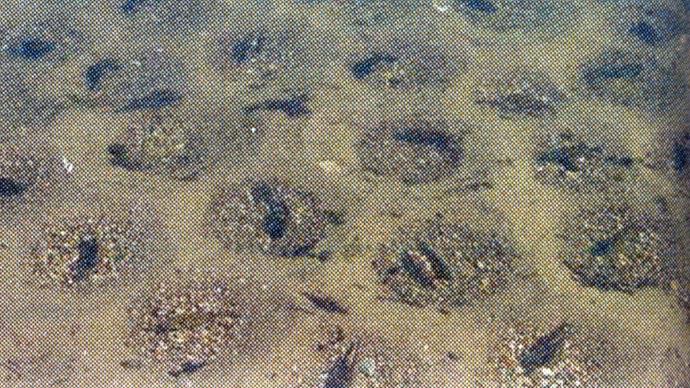
Retrieves: Cast the worm past any clear spot you can see on the bottom, indicating a nest, and slowly reel the worm towards the nest. While the worm is falling near the bed, occasionally twitch your rod to make the worm flex. Bass will usually inhale the worm before it reaches the bottom.
Rod, reel, and line: 7-foot medium spinning rod, Size 30 spinning reel, and main line of 8-pound braid with a 10-foot leader of 8-pound fluorocarbon.
Stick Worm
A wacky-rigged stick worm falls faster than the floating worm, so it can trigger reaction strikes as it falls into the nest or is slowly dragged in the nest. The wacky-rigged stick worm is ideal for skipping behind docks and overhanging trees to deliver the lure to spots where bigger bass build their nests.
Lure choices: Yamamoto Senko, Berkley The General, or Yum Dinger wacky rigged with a 3/0 extra wide gap hook.
Sizes: 4 1/2, 5, or 6 inches.
Colors: Green pumpkin, purple, white, or bubblegum.
Best weather conditions: Sunny or cloudy, with a calm or slight breeze.
Best water conditions: Clear or stained.
Retrieves: Just cast the lure to any clean spots on the bottom or around shallow cover, and let it sink to the bottom. When the worm falls into a nest or on the bottom near cover, slightly twitch the bait once or twice, making sure to keep the lure in the nest or next to the cover.
Rod, reel, and line: 6-foot medium-heavy action spinning rod, Size 30 spinning reel, and a main line of 30-pound braid and a 10-foot leader of 10-pound fluorocarbon.
Double-Tail Plastic Grub
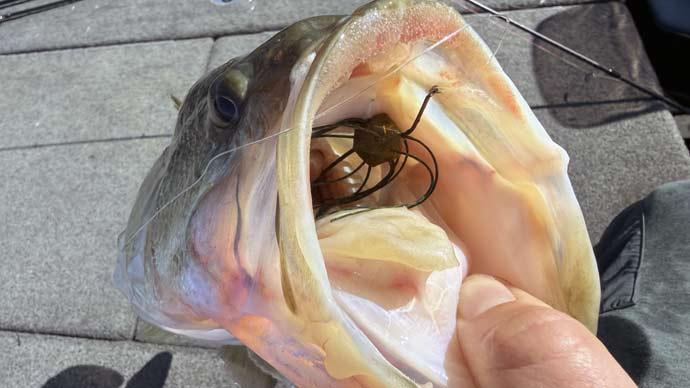
I previously had limited success using the grub while sight-fishing. Still, I discovered the lure's full potential when I wrote an article for bassresource.com on Greg West's double-tail grubs tactics. I noticed the lure worked best when bumping it along the bottom to catch nesting bass in deeper water.
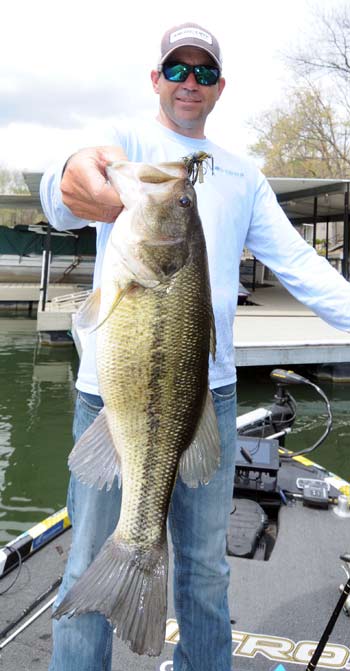
Lure choice: Chompers Skirted Grub on a Chompers Stand-Up Jig Head.
Sizes: 1/4 or 3/8 ounce on the jig head.
Colors: Root beer green, green pumpkin, or watermelon seed.
Best weather conditions: Sunny and calm.
Best water conditions: Clear to stained.
Retrieves: Cast to the banks and reel slowly and steadily, making sure the lure constantly makes contact with the bottom. Fish it out to 10 feet deep to catch quality bass spawning in deeper water.
Rod, reel, and line: 6-foot medium action spinning rod, Size 30 spinning reel, and 8-pound monofilament.
Jig and Plastic Craw
A jig-and-craw produces bass in any conditions and in any season. The combo is especially effective during the spawn because it can be flipped, pitched, or skipped to spawning bass in tight places.
Lure choices: A finesse jig and a 3-inch plastic craw.
Sizes: 1/4, 5/16 or 7/16 ounces.
Colors: Brown/orange jig with green pumpkin craw for clear water, Okeechobee craw jig and same color craw for stained water, and black or black/blue jig with black/blue craw for murky to muddy water. Add a rattle to the craw for fishing in murky to muddy water.
Best weather conditions: Bluebird skies during a cold front.
Best water conditions: Clear, stained, murky, or muddy.
Retrieves: Pitch, flip, or skip the combo to a target and let it fall to the bottom. Hop it once or twice and then reel it in and present it to another target.
Rod, reel, and line: 7-foot medium-heavy casting rod or 7 1/2-foot flipping stick, 7:0 or higher gear ratio baitcast reel, and fluorocarbon line with 12-pound test for clear water, 14-pound for stained water, and 17- to 25-pound for murky and muddy water.