Fishwhittler
Members
-
Joined
-
Last visited
Everything posted by Fishwhittler
-
The differences are in the width, line capacity, and the clutch lever location. The 4600 has a thumb bar similar to low-profile reels, but the 5500 has a lever on the handle-side cover that takes the place of the thumb bar. It's a little less convenient than the thumb bar, that's all. Other than that, the 4600 weighs .6oz less than the 5500 due to the smaller size. The 4600 holds 160 yards of 30# braid as opposed to 205 yards of 30# braid for the 5500. I've got a 5501C3, which is the LH version of the 5500, and the spool is huge. You'll probably never need all of the line on your reel if you are fishing for bass, though if you were fishing for carp, stripers, or other large fish that make long, hard runs, I can see where the extra line capacity would be useful.
-
Based on the thousands of lure customizers doing exactly that, yes. I've never heard of a single case of anyone getting sued for repainting factory lures and selling them, and I'm pretty sure the big companies would have rooted out any such loophole long ago if one existed. It's the same with any kind of custom work, fishing-related or no: You are selling your work, not necessarily the product you customized. If such were not the case, companies such as Jann's Netcraft, Barlow's Tackle, Lure Parts Online, and other large suppliers of lure-making parts would not exist today.
-
What I'd try is putting a liquid polishing compound on the gears and cranking for an hour or two. I've tried toothpaste as well as polishing compound, but the toothpaste doesn't do anything the polish doesn't do better. I've had good results with Meguiar's PlastX polish. After the polish you'll have to clean off the gears with soap and water and a toothbrush before reinstalling.
-
The 5.1:1 BB1's are the only reels without the instant anti-reverse. Both the 6.4:1 BBHZ and 7.1:1 BB1SHZ versions have an AR bearing.
-
Is that the Speed Spin or the Speed Spool?
-
Some bearings have removable shields but not all. For example, the bearing shields on the Shimano Citica E are not removable though the shields on the Citica D were. Beats me as to why they changed, and I don't like the change. Look carefully at the bottom of the bearing in the pic below and you'll notice a darker area. There's a metal C-clip that holds the shields in place, and this can be removed by carefully inserting a sharp pointed object (such as a sharp fishhook or a dental pick) into that space and then sliding it between the clip and the bearing race. The shield can then be carefully lifted off the bearing using the same hook/pick. To replace, just place the shield on the bearing and slide the clip into place. Not all bearings will have this clip, and if you don't see it the shields cannot be removed. Also, if your bearing looks like the one below, the shields are permanent. I much prefer bearings with removable shields because they are easier to clean. However, I always replace the shields after flushing the bearing so as to keep contaminants out. I've not noticed any difference in how freely the bearings spin with the shields on or off. I've heard the Orange-Seal bearings can spin faster/longer with the shields removed, but I've no experience with them and can't say for certain. I hope this helps! Ben
-
Cheaper lures will catch fish, but you'll see far more issues with cheap lures not running straight or breaking. Suspending jerkbaits especially - cheaper ones will not always suspend the same. No lure really suspends perfectly, but the high-dollar ones will be much more consistent. Of the two "Springer 100" knockoffs of the LC Pointer I've got, one is a slow sinker and the other suspends or floats extremely slowly. I saw a pic once (on this forum, but that was years ago) where a guy took a bunch of the Springer 100 lures and put them in an aquarium together. Most ended up on the bottom, a few suspended, and the rest floated. That's par for the course with knockoffs. If you buy, say, ten Lucky Craft square-bill cranks and ten Strike King KVD cranks and compare them, the LC baits will all look nearly identical. The paint on the Strike King lures will have noticeable inconsistencies, and the lure bodies themselves will not all be put together with the two halves lined up. Take them out on the water and odds are you'll have to tune more of the SK lures than the LC's. As far as fish-catching, fish are far too finicky from one day to the next. Some days they'll hit one lure and others they want something completely different. It comes down to what each angler believes he/she is getting the most bang for their buck out of. The Megabass Vision 110 is extremely popular, but I couldn't say whether it will catch more or bigger fish than a $3 knockoff. I've heard far more complaints about Strike King® lures than lures from any other big-name company. I caught a lot of fish on the Red Eye Shad this year, but I know a lot of guys have had problems with them swelling up if left out in the sun. Broken lips, water entrance, untunable lures, those are all things that occur with a much higher frequency in cheaper lures. Plus, the high-end lures usually look better than cheap ones. I'm very susceptible to being "caught" by a lure with a well-executed build and finish. Take a gander at this one: [i was trying to post an image here, but this forum won't let me. Try this link instead.] No, I don't have one. Yes, I want one. Oh yeah, once you catch a fish on a lure you built/painted, you're a hopeless addict. You've been warned. Tight lines! Ben
-
Don't expect the KO's to perform like the originals. They are decent baits in their own right, but there's a reason Megabass jerkbaits command the price they do and a reason why the KO's sell for $2-3 apiece. I've tried a few of the more expensive KO's and they're very nice, for a $3 lure. If they charged $15 I'd laugh outright - they're not worth it. Look closely at a KO and see how many bubbles and other flaws are in the plastic, and then compare it with an original. The difference will be clear. I've got both the Lucky Craft Pointer 100 and the Jann's Netcraft Springer 100 copy of the Pointer and there's absolutely no mistaking which one is worth $15.
-
Actually, the C3 has a pair of "strip" springs in place of the coil springs prevalent in newer bait caster designs. The part is #22808 on the schematic below; I have no idea if this is the right model, but that part should be the same regardless of model. You might try bending the springs toward the spool to give them more springiness, but don't take it too far. http://www.mikesreel...500C3_99-10.pdf
-
-
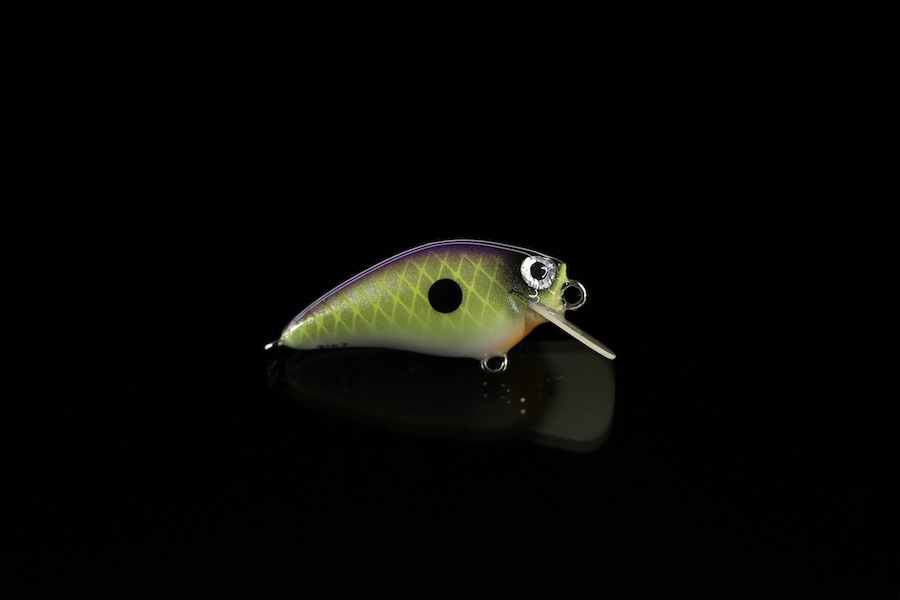
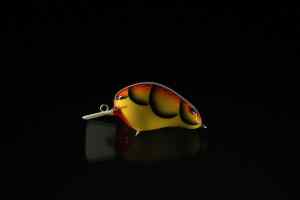 Fleeing Spring Craw
-
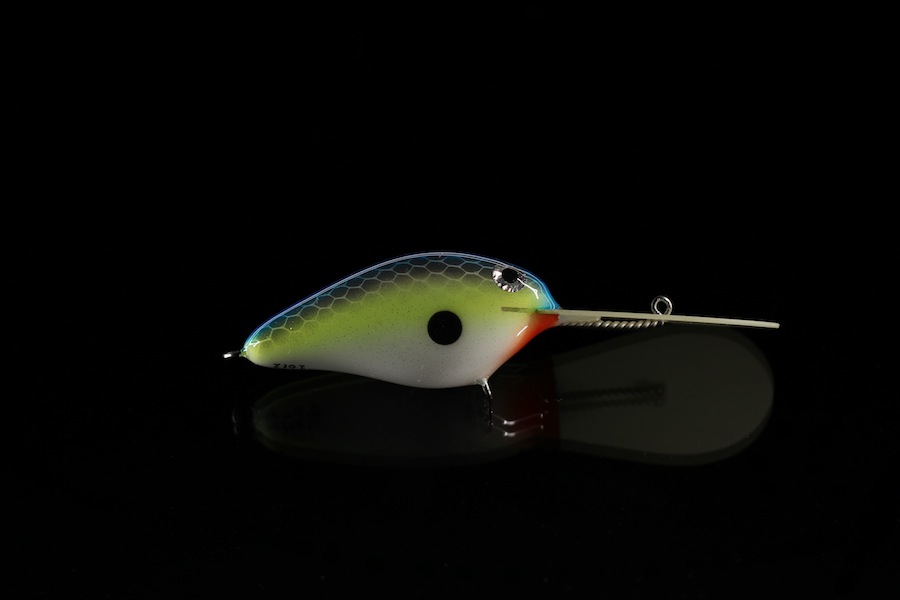
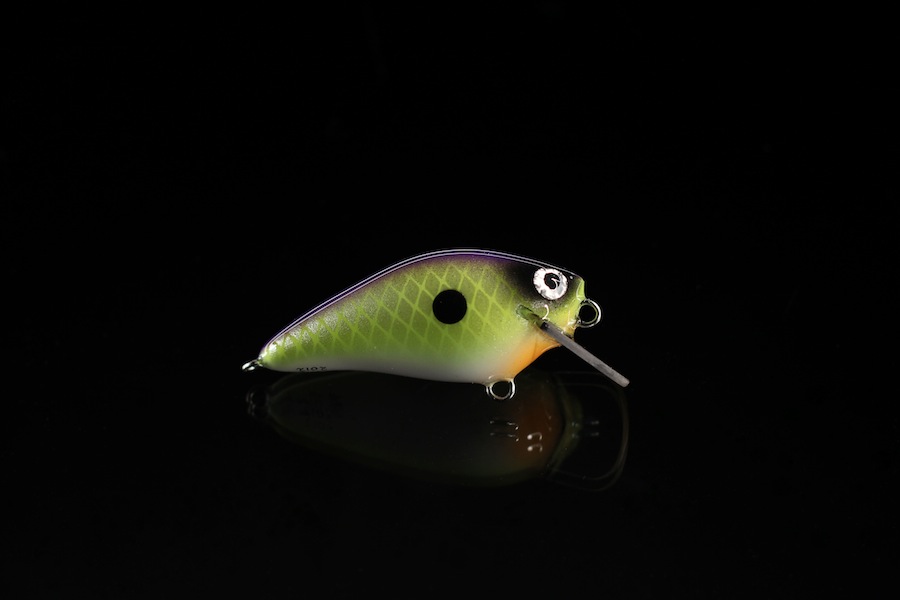
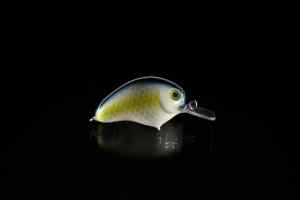 Glitter Chartreuse Shad
-
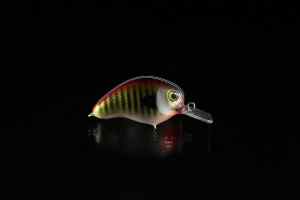 Natural Light Bluegill
-
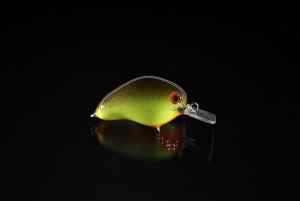 Chartreuse Root Beer
-
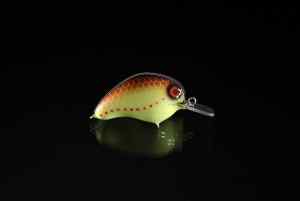 Copper Perch
-
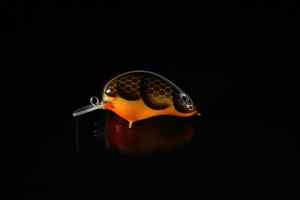 Fleeing Orange-Belly Craw
-
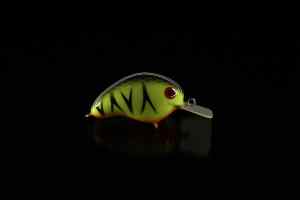 Firetiger
-
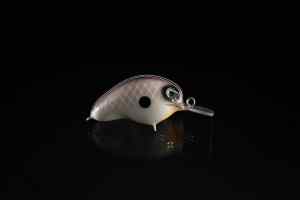 Albino Shad
-
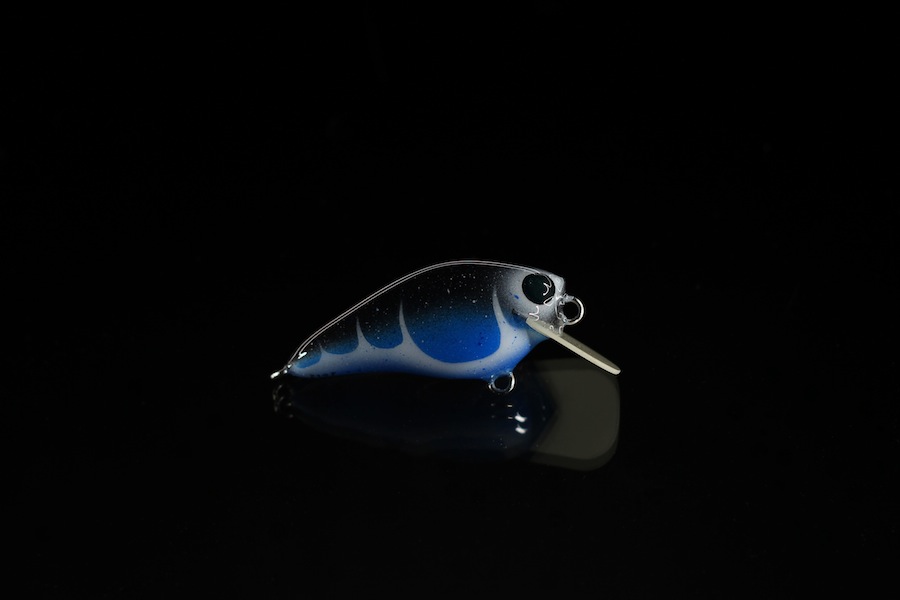
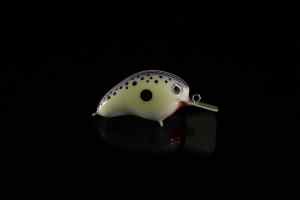 Cellmate
-
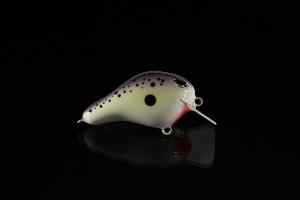 Mad Cellmate 2
-
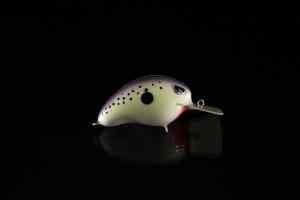 Mad Cellmate
-
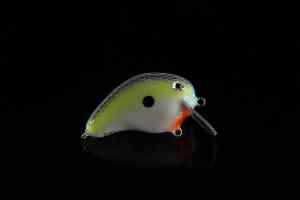 Chartreuse Shad
-
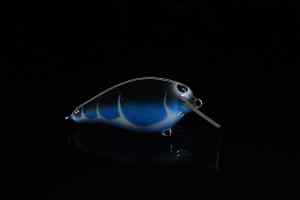 Aurora Craw
-
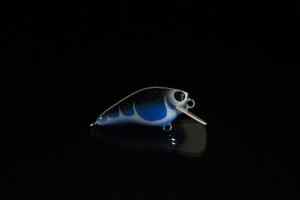 Aurora Craw
-
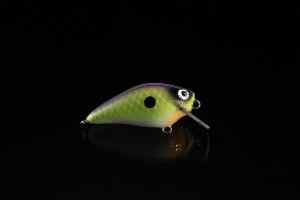 Tablerock Shad
-
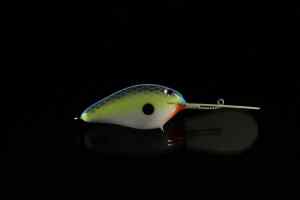 Chartreuse Shad
-
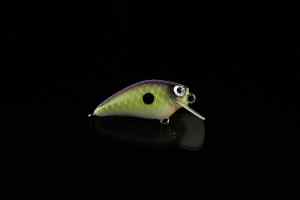 Tablerock Shad
-
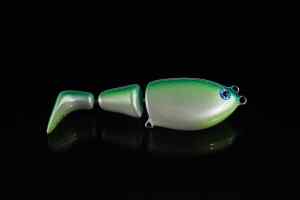 Citrus Shad
-
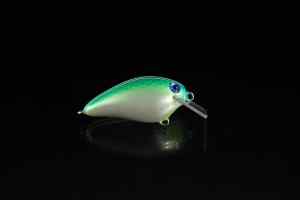 Citrus Shad
-
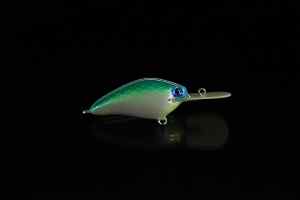 Citrus Shad
-
-
I have to agree with West Coast Bass. That first pattern looks just a little too green compared with all of the bass I've seen. The silver flanks on the third and fourth patterns look much more realistic (to me). But, go fish them all and see which ones the fish like.
-
No. Braid doesn't kink, so backlashes with braid don't damage the line. However, braid has no stretch and isn't as shock-resistent as mono, and a bad backlash in the middle of a hard cast can cause braid to snap. This is especially true with heavy baits or if the braid is frayed. Just the other night I made a hard cast with a swimbait, my reel loaded with braid backlashed, and SNAP! Goodbye swimbait. But, that doesn't happen much unless you're using larger baits (for me that's anything 1oz and up), and even then you shouldn't have problems unless you try to cast into the middle of next week. BTW I did get the swimbait back the next day; it was a floater, and I found it floating where I figured it would wind up.
-
Okay, but there are better and stronger materials available now, so why not use them? Theoretically graphite could be used to create a rigid reel, but you'd have to use more of it and thus end up with a bulkier reel. Aluminum is much more durable and rigid than graphite, and that means you can make a much smaller and more ergonomic aluminum reel that is just as strong if not more so than a graphite reel. I for one much prefer a small low-profile reel for most fishing, and while large reels have their place you'll find most fishermen prefer a reel that is smaller and easier to handle. With that said, I'd have to say that frame-flexing isn't the worst problem with graphite reels. The deal is, all of the big reel companies now use aluminum frames on their main-line reels and graphite frames have become associated with lower-quality reels. Companies like Shimano and Daiwa know this, and so they might not put quite as much effort into designing a graphite reel that works as well as a metal reel. Example: I've got an old-model Daiwa Megaforce, and those were $60 graphite reels. While it worked it was a nice, smooth reel. The frame did flex some when under load, but it could still handle fish just fine. What killed it? A bad clutch design. It eventually deteriorated to the point where you had to push up on the thumb bar to reengage the reel, and while it's still as smooth as ever you can't say it's a good reel. Now, that may have been helped along by an inexperienced *** [hmm, it won't let me say r-e-e-l mechanic] messing around inside (yours truly), but on the other hand I've taken all of my other reels apart and so far they're still working. And anyway, I've taken it apart recently and tried to fix it now that I know (more or less ) what I'm doing, but still no dice. If the clutch wasn't shot I'd still be using it, but a faulty design led to the reel failing in the first place. My point is that a reel is only as good as its internal parts, and if those are poorly designed they aren't going to work for long. Most graphite reels are built with cheaper parts than metal-frame reels, and accordingly they don't usually last as long with the same amount of use. If companies took the time to make a strong, well-designed graphite reel it would work just fine, but why bother when it's simpler to do it with metal? Sorry for going off-topic.
-
If you look at some factory baits, you'll see that most if not all of the ballast is located in the belly. The location varies by manufacturer, but the weights are generally in front of and/or directly behind the belly hook hanger. On some wooden lures such as Bagley's, a lead weight with an integral screw eye is used as a combination ballast and hook hanger. I don't use them myself, but if you look around you can probably find some. The amount of ballast for a given lure style varies. The shape, body material, size, and other factors all affect how a lure behaves in the water. For example, a round lure requires less ballast for its size than a flat-sided crank bait, and a deep-bodied lure will need more ballast than a lure with a low profile. I would start by getting some different weights and experimenting. BBs, ball bearings and split shot are all readily available and work well for ballasting lures, and can be easily installed by drilling a hole in the lure, sticking the weight in, and filling the hole with epoxy. I hope this helps.
-
Yes, from what it sounds like, you need to add ballast to your lures. The molded plastic bills from Jann's are much heavier than circuit board, and if you switch to the lighter material you may have to compensate by adding weight in another area.
-
Great work as always John! That sailfish is spectacular.
-
BASSclary, have you considered using garolite? I don't know what you're trying to build, but garolite (aka Micarta or circuit-board) is very strong and rigid and the only way to break the stuff is to take a hacksaw to it. I don't know how it compares to aluminum in weight, but it might be something to look into.
-
Sounds more like a catapult than a fishing rod. That reel seat insert is stunning!
-
These baits are floaters. PVC foam board is a bit less buoyant than cedar, so buoyancy is not a problem. PVC fishes no differently than a wooden or plastic crank bait - a good PVC lure will catch a lot of fish, and bad ones won't. All three materials give different actions to a given lure style, but none of those materials are better or worse than the others.
-
Thanks guys! Jeff, I use AZEK PVC board for my lures. AZEK PVC is an expanded PVC foam used for composite decking, and it's not anything like the PVC used for pipes!
-
Thanks for the response!
-
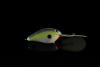
Pics say it all. Tablerock Shad Chartreuse Shad Aurora Craw




-
What about Pinnacle?
-
Very nice Big M! I love how your simple paint patterns look.
-
Check out this thread from earlier this year: The Bluegill Color Thread