
Team9nine
Super User
-
Joined
-
Last visited
Everything posted by Team9nine
-
-
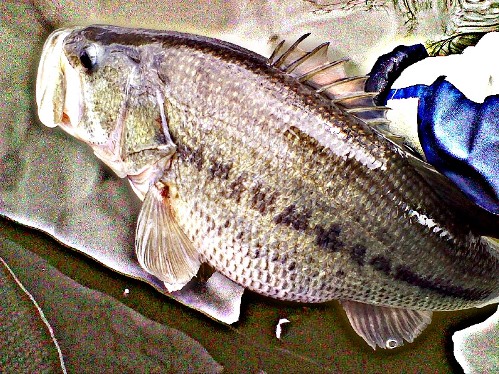
A few from this year's various fishing trips...


-
Thanks! ? -T9
-
Reread your topic title then ask yourself this question again ? Good to know variations of popular presentations, but don't get too wrapped up in the little stuff... -T9
-
Another good one to look at (actually several nice ties) is Andy's Custom Bass Lures. Nice mix of hair types and some creative ties available commercially. Caught many a fish with these. -T9
-
"Ditto" here on the Hyper Wires: I keep 2s, 3s and 4s on hand at all times. Depending upon your lure selection, 2s and 3s will likely get the majority of use. -T9
-
Your experiences listed above are perfect examples of "Optimal Foraging Theory" (OFT). That becomes the big benefit of having intimate familiarity with a particular water body and its resident fish population. It also doesn't conflict with using the general color theory I mentioned as a guideline for those without that level of knowledge, or at times when specific food supply isn't so prolific, especially when dealing with bass. In theory, "match the hatch" is nothing more than OFT lite Yeah, Rich's original primary finesse "go-to" colors were smoke, black grape ("grape"), black and motor oil. He uses "motor oil pepper" the most these days in soft plastics (dropshot Ribster and Swimfish) from what I've seen, along with black. I think he has pretty much given up on smoke for the most part though and gone to green pumpkin as you mention for grubs. I also concur with the very limited availability of black grape ("grape") these days as being more the reason for its lack of mention/popularity. -T9
-
Interestingly, the truth might be exactly the opposite. I've tracked down and read every color study I could find, both on bass as well as a variety of freshwater and saltwater species. If taken as a whole, and looked at for generalities, what you find is that the most compelling conclusion is that there are a bunch of "good" colors (no one "best" color), none more effective than another (statistically speaking), but there are also always one (or a few) "bad" colors, ones that do perform significantly worse than the larger "good" group (but usually still manage to catch a few). This is the reason for my own color selection theory I mentioned/wrote about in another post. Don't believe the data set is available for download anymore, at least not in its entirety. PM sent... -T9
-
-
Nope to moon phases - and there are a few other studies that back that up. I simply think the big fish are more vulnerable to normal angling pressure at that time of year due to them having to come shallow and spawn, and some anglers are simply better at patterning that vulnerability, or at least taking advantage of it, regardless of actual moon phase.
-
That is part by design and part by our failure as anglers. The program was originally set up as Dec - Apr because all they were interested in were spawners they could use for the program. They wouldn't accept any out of season bass. Then Mark Stevenson caught "Ethel" in November, and they changed the program start date to October. The percentage of Oct-Nov giant bass caught is tiny though compared to the other months, and even worse the rest of the year. Turns out anglers rarely catch giant bass (>13 lbs.) in Texas except during the prespawn/spawn period when they move shallow. -T9
-
-
-
Yep. When I analyzed the lunar data, no single day in the entire lunar cycle had less than 10 ShareLunkers caught, but none had more than 16 either. Every lunar day was within just a few fish of any other day and the chart looked like a series of gently rolling hills. The New, Full and last Quarter phases all appeared identical with no significant differences (statistically speaking). When analyzed by day caught, A Texas study showed Saturday was the day anglers fished most frequently, followed by Sunday and then Friday. Not surprisingly, the greatest number of ShareLunkers were caught on those 3 days in exact order of frequency. Tuesday had the fewest lunkers caught, but it was also the least fished day, so catches of giant bass were basically in direct proportion to effort. -T9
-
I agree, and I enjoy reading your thoughts and opinions on the subject. Just copied a whole series of your posts last week for my archives. Just realize you're one successful big bass angler out of many, and those others all have their theories, too...and when combined, you all don't create one happy Grand Unified Theory of big bass angling. -T9
-
-
-
As anglers, we refer to "color" because it appears to us as an obvious metric for distinction. In some of the examples given, if "color" was truly the difference, it shouldn't matter which brand, size or length of worm you throw, as long as you throw the same "colored" one as your buddy who is getting all the bites. My guess is it's rarely "color" alone that determines why a fish will bite in some instances when that at first appears to be the difference. This is also partly because anything with "color" has a variety of properties or metrics which play a part in how something appears well beyond simple "color." These include things like reflectance, hue, brightness, lightness, luminance, intensity, saturation, absorption, transparency and chroma (among others). Each is a unique and measurable metric of anything with "color." To argue over the importance of "color" without taking into consideration these other components/metrics of "color" seems rather futile and a gross oversimplification of the issue to me. Likewise, trying to take your fishing to a level where those metrics are defined for all your baits seems rather ridiculous, too. -T9
-
This goes for me too. Not brand loyal, but definitely have brand preferences. ? -T9
-
It all comes down to the wording in their contracts. Each pro has a contract with each sponsor of theirs. That contract is usually tailored to that individual. Not many blanket agreements where all pros have the same agreement, even for the same company. So, as an example (hypothetical), KVD's contract might state he only has to use Hummingbird products on his own personal boat, which would get him around using Lowrances on the MLF boats. However, another pros contract with Hummingbird might state he has to exclusively use only Humminbird products when competing, which would effectively preclude him from competing in MLF where the supplied boats use another manufacturers product. This scenario is supposedly why Terry Scroggins and G Swindle had to decline initial invites to MLF when it first started up. -T9
-
On their Facebook page. My guess is he was offered a slot last year, and either decided to step back for whatever reason at the first event or had to miss it for the "personal reasons" stated. I know he was one that was originally supposed to be a part of the MLF deal but couldn't because of conflicting sponsor restrictions (their truck sponsor vs his). -T9
-
Fishing is all a game of probabilities (at least, that's how I view it). On any given cast, with any given bait, you either will or won't get bit. Over the course of a day, if you can stack a few more probabilities in your favor (increase specific probability rates or percentages), you should end up with a more productive day. There are a lot of variables at play, all with their own probability. Color tends to rate fairly low on my list of probabilities. What do I mean by that? In another thread I mentioned that one of the 2 primary factors in why I own/throw whatever colors I have in my box for any given bait is largely based around what is pretty much "proven" as a standard color option. So, a black and blue jig is almost a universal thing. A green pumpkin soft plastic is too, as are things like shad or crawfish colored crankbaits, a white and chartreuse spinnerbait, or a black or white buzzbait. I'm sure you can name a few others. Day in and day out, those colors get bit most everywhere in the country. As such, I tend to have one of those standard color patterns tied on when I'm fishing, and I rarely change during the course of a day. But here's a logical way to think about lure color based on probabilities. If you're not getting bit, it's probably not because of color, but it also might not hurt your chances if you changed. Things can't get worse, right, so do as you like - I likely wouldn't change myself. I'd rather change locations, baits, depth, speed, etc. before changing color to try and increase my probabilities. On the other hand, if you are getting at least a few bites, changing color could go one of several ways - your bite rate might not change at all (neutral), or it could get better, but it also could get worse, and you actually might stop getting bit. In this case, which is likely the most common scenario for most while out fishing (getting a few bites now and then), I don't gamble and change my probabilities in that regard because there is a worse outcome if I'm wrong. Finally, if I'm with someone throwing a similar bait (different color) and they're getting bit and I'm not, then it doesn't hurt to change to whatever color they are using because your probabilities will likely either stay the same or go up - very little downside to changing color in that case. So that's my take on the matter. To stick with the OPs question; why do dark colored plastics catch fish in clear water? I say - Contrast. About everything swimming in the water (or tossed by anglers) throws shade/has a dark underside no matter what its actual color. Bass eyes are built to best see forward and upward. As such, black is a universal base color in my world - YMMV -T9
-
June 12, 2016 (according to MLF)
-
According to MLF, Swindle was the "missing person" due to personal reasons. I think Wesley just recently joined.
-
In actual muddy water I want my bait to be as "solid appearing" as possible, so I go old school with a Stanley blk/bro/red/orange original living rubber jig - silicone skirts need not apply. Stay shallow as that's where red, orange and brown colors will shine, and a bass' limited eyesight will help. The same goes for my trailer - old school pork in most instances. -T9