
Josh Smith
Members
-
Joined
-
Last visited
Everything posted by Josh Smith
-
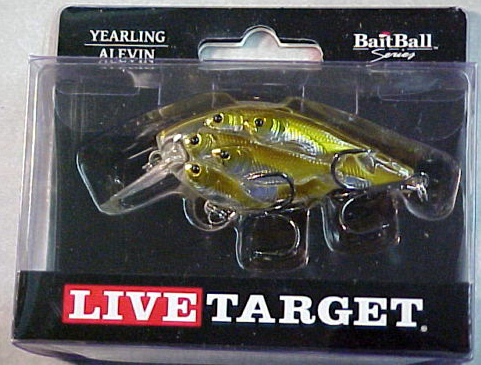
Hello, I'm becoming a fan of Live Target lures for good ideas. I found the above and am awaiting delivery. Seems like a good idea due to a bass's propensity for swimming through schools of baitfish. Sort of an umbrella rig in a crankbait. Josh
-
Hi Folks, Ice out is happening. I can fish the edges around the ice if I wish. The question is, is it worth doing so? I would assume that the bass are moving up to where this melted water is, due to warmer temps and food at the drainage inlets. (This is a flood control lake.) Sound about right? Go slow with jigs, twitch jerkbaits, and jig spoons and spinnerbaits? Thanks, Josh
-
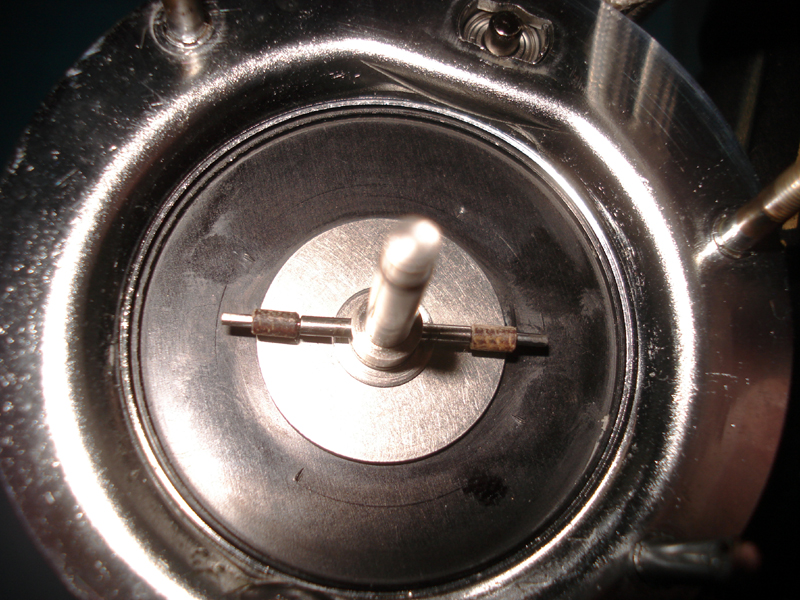
Hi Folks, I noticed my Savage MkII wasn't acting right, so I parked it until I could take a look at it. A couple weeks ago a decided to resurrect it. It is a good-shooting rifle. A new trigger was a must, so I ordered a Rifle Basix. I was aware of some bouncing going on when the bolt was closed. I figured I'd look into this when installing the trigger. I washed grease away (I keep camming surfaces greased) and found this: I can't believe Savage (Lakefield) would make a piece like this, this soft. This is negligent. Going through the cocking process, the rifle being a ****-on-opening: 1. The bolt handle is lifted. At this time, the rear of the bolt cams against the guide pin, which bears considerable weight as the striker is moved back. 2. The bolt is moved rearward, extracting and ejecting the empty shell. 3. The bolt is moved forward, stripping and chambering a new round. 4. The bolt handle is lowered, allowing the firing pin pressure to transfer slowly to the sear. The guide pin holds the striker back until it transfers it off on #4. The sear on this particular rifle is at a negative angle. That's OK; it's designed this way so that the bolt can override the sear spring when the trigger is pulled. However, with the guide pin worn like this, the striker is far enough forward that it will strike the sear quickly. Striking the sear quickly, in this design, bounces the sear. Sear bounce is bad. In this design, it bounces the sear right off the trigger and onto the Accutrigger blade. I'm starting to suspect I know why the Accutrigger blade was invented... Enough of these bounces ruins the sear faces. As well, you cannot cycle the rifle quickly and expect it to stay cocked. Even with the Accutrigger, this is a dangerous condition. Now, let's look at #3 specifically. Between the time the round strips from the magazine and the time the bolt handle (which is the locking lug on this rifle as well as most .22LR bolt actions) the potential exists for the guide pin to break and send the firing pin crashing into the rim. Remember, the tension on the guide pin is released only when the striker spring's tension is transferred to the sear, which doesn't happen until the bolt handle is in the "down" position. A worn guide pin is hard to detect during a cursory examination for a few reasons. The fact that it's not supposed to wear is the most obvious, but the other reasons follow: • First, the wear is hidden. Symptoms (slipping of the sear to the Accutrigger a lot, for example) are generally all you get. The top of the guide stays intact and it doesn't appear anything's wrong with it. In fact, the symptoms would lead one to first suspect problems with the sear engagement surface on the hammer, which is generally peened and sloped by this time from sear bounce, further reinforcing the idea that it's a problem with the sear and/or the trigger. This is further compounded by the fact that the trigger assembly appears soft (at least on my example). • Second, it wears slowly enough that metal shavings (or in this case, powder) are generally wiped away with a cloth during field cleaning, or is carried into the bolt body when the striker drops. • Third, this bolt is not easy to take down. It's doable, of course, but not nearly as easy as, say, a Mosin-Nagant bolt or a Gewehr 88 bolt, or for that matter, a Lee-Enfield, Mauser, Arisaka, 1903, or dang near any other bolt I can think of off the top of my head. A lot of folks have troubles taking down even their surplus rifle's bolts, and would never attempt something like this. You don't take the bolt down, you don't realize there's a problem. So, the symptoms point to something else, masking the true problem, and the problem is visually hidden from sight. I wonder how many of these are floating around out there. Heat treating is done in batches, and so mine cannot be the only one. For reference, the my MkII's serial number is 1302XXX . __________ Day 2, Repair: I'm skimping on pics today. All I had is the 3mp camera I keep at the shop, and the pics aren't the greatest. Refer to the numbered pic below. To disassemble, rotate the bolt to the fired position. Chuck an 8mm open end wrench (3) into a vice. Pull the front (7) and rear parts of the bolt apart against spring pressure, and lower the exposed nut (8) onto the 8mm wrench. Spin the front section of the bolt off the nut. Set it aside; the front doesn't need to come apart further for this repair. Pad the vice and chuck the rear section of the bolt (10) into the vice. Compress the spring using your fingers or a 7mm box end wrench and pull the E-clip off the striker. Slowly release the spring so it doesn't go flying. You can now pull the spring (5) and nut (8) off. Pull the striker (9) back until you see the sear contact pin (6) through the witness hole. Push it out with a punch; it's not a press fit and should readily come out. You can now pull the striker (9) out of rear of the bolt body (10). Tap the tension pin (4) out of its hole with a 1/16" punch. This will release the guide pin (2 -- shown in two parts because it broke upon disassembly!) Upon inspection, I found the cam surfaces to have a rough and jagged edge, much like a file. I took some time with my stone set and smoothed those out. The guide pin should turn in its socket without catching. Mine didn't; it caught with the tension pin in place. I took time to polish the guide pin hole with first 800 then 2000 grit wet/dry, and I polished the tension pin as well. The guide pin received 2000 and 3000 grit polish, as did the bolt sear contact pin. After you're satisfied with the fit and polish of parts, assemble them, checking again as you go. Nothing to it! It's not as irritating as some bolts, but not as easy as others. I would rate the Mosin-Nagant, Gewehr 88, and Mauser 98 bolts as a 1 in difficulty on a 1-10 scale. This would rate about a 3 in my opinion, due to the need for tools. Hope this helps someone. Regards, Josh
-
Well guys, I'm sick. Was throwing up earlier and my temp was pretty high even with ibuprofen. It's coming under control now, but I was both dehydrated and dealing with a high fever. I don't get sick often, and so I don't handle fevers well. I tend to hallucinate. When I closed my eyes, I didn't really sleep. Time passed quickly, but I was definitely seeing things that weren't there. Abu Garcia Ambassadeurs, folks. Old ones, mostly, but some new 5500 and 5600 models. They were right there, behind my eyes. Pretty messed up. I thought ya'll might enjoy, though. Josh
-
Sufix 832 50lb with fluoro leader, or tie direct to the braid. I throw these in weeds mostly and the braid doesn't hurt these times. When it might be an issue, the leader's tied on. Sufix 832 is very smooth, as is Spiderwire Stealth (my other go-to). I understand Power Pro is pretty smooth as well. What do you mean by abrading? What's it wearing out? Josh
-
Hi Folks, I was fixing up a reel that I'd fished last year. It needed a few things altered inside, chief among those being the brakes. I had regular, medium-sized brakes in there (part number 1880). I'd ordered small brakes (part number 1844). When I dropped them in, I realized they weren't as small as I like. After supertuning these reels, the brakes have an amplified effect, and many folks back "in the day" would simply run without brakes altogether. That's not an option for me. I run with about half the spool tension most folks do, and have found that if I don't run brakes, I dang near burn my thumb off at the beginning of the cast. I really need something to moderate. However, those small 1844 brakes are simply too big. Thinking I hallucinated the tiny brakes, I tore into the reel I had initially installed them in. Sure 'nuff, there they sat: Digging back through my notes, I have it written down that they are part number 10267, used in the 1500c, 2500c, and 3500c. My fault of course. I'll be ordering the correct ones. However, I thought I might post this here as I know there are others who enjoy these old reels. These fall perfectly between no brakes and small brakes for the 5000 series, and let you run a bit less tension without burning your thumb at the beginning of the cast. As a side note, I've been playing with magnets in these to soften the end of the cast, but I still can't find a magnet setup I like better than simply using my thumb. Hope this helps someone! Regards, Josh

-
Hi Folks, I have a Japanese Quantum IR3. Going through it, it looks an awful lot like a Daiwa. Were these made by Daiwa while they were still in Japan, or were they made by the same plant..? Or someone else? Thanks, Josh
-
I'm looking at the 1500 series. I'd like to try to mate it to a medium-light rod; should be interesting. Problem is that I keep coming across killer deals on 5000-size Ambassadeurs. I was looking at reels on eBay and that night, I was contacted here by someone with a killer deal on a 5500c3 and another reel. I simply couldn't pass that up! So, I'm saving again for a 1500c... Josh
-
-
I'm fixing up a spool with the two plastic brake blocks to run in a 2014 5000c3. I won't get to finish it for a while yet. Been busy with a business I run. I have a feeling it will work just fine, but funny things come up. I don't know why the two or four brake block system would be better than the captive six system, though. The six captive blocks seem a bit cheaper, but I like the fact they're captive and not easily lost. (I love old Ambassadeurs but lose the fiber blocks all the time!) If you supertune the reel, you just should not need that much braking. Got a question for you: I'm seeing different colored brake blocks for the two plastic block system. I'm used to the three types of fiber blocks on the older Ambassadeurs and the captive blocks on the newest ones. Can I get different weights for the two plastic block system? My 5600 came with white blocks, but I'm seeing blue blocks for sale. Thanks, Josh
-
I just watch for increased Adam and Eve deliveries to the lake. That's a pretty good sign.
-
I might try it. Looks like it's limited with regard to the number of different knots it can tie. I only use the clinch knot in limited circumstances. Josh
-
Thank you, Will. I guess I'll open some up. Was concerned about weakening the wire as I don't know if it's bent hot initially. I'll also loo into those kits. Sounds fun! Josh
-
Well crap. I was hoping they still had a Swedish line, like some of the baitcasters. Josh
-
Hi Folks, I have a few of the discontinued Bush Hawg spinnerbaits. I really like them because I can change out the leaves easily due to the snaps. Bush Hawg seems to be out of business. Anyone make them like this these days? Easily interchangeable leaves? Thanks! Josh
-
I generally run a fluoro leader for slow applications and lures which stand a high chance of getting hung up, just in case I have to break off. If I'm fishing fast looking for a reaction strike, I generally tie direct. Josh
-
Not for me. Too flashy. I do like the bobtailed looks of the ultralight Pflueger President line. I do not like the fact that they're made in China. Currently looking for an UL reel made elsewhere, say the USA, France or Sweden. Probably should check out Abu Garcia for that. Josh
-
Dad's the "Fish Hear Everything" guy. I don't see my type in there. Sort of disappointed! Josh
-
For the ones which do, would some of that knot glue I used to read about help? Never used it.
-
As full as possible without causing problems. I generally get my best performance at about even with the lip to 1/8" below the lip, but any further down I respool. I prefer my spool to spin slowly but with a lot of mass. Less line = more speed and therefore more braking. I get more consistent line feed during the cast with a full spool, and the spool starts up easier to boot. Josh
-
50 Shades of Chartreuse? Josh
-
-
Hello, Today I was testing out the deep crank setup I've been working on. We still have snow in Northern Indiana, and whenever you have snow, you have voids in the snow. I was just casting out and retrieving when the plug fell through one of these voids. I automatically set the hook! I felt kind of foolish, but realized this could be good practice. I'll probably get around to doing this with my walleye rod as those critters can bite light! Josh
-
I just did. Me: "I need to buy a stripper." Her: "Why?" In all fairness, she's heard the word "stripper" thrown around here quite a bit. She wasn't sure what I was talking about. She told me her first thought was a "stripper clip," which is used to load Mosin-Nagant, Gewehr 88/05, and Mauser 98 rifles. She's also tolerated me in bed with one or another fishing rod lately. She's been reading or crocheting, while I was stripping old line and filling new next to her. This is usually my reading time, but she knows I love tinkering with reels. We have separate dressers, and I have a screw driven into mine that holds the new spool; tension is by o-rings. I can sit in bed and fill my reels! She is a very understanding wife. Josh
-
One hand in back, or on, the reel, and one and in front. Some of my biggest fish have been taken with a lowly Daiwa Bill Dance Spinnerbait rod. Bass, catfish and carp. Check out old Roland Martin YouTube vids. He has some full-length up on there. You'll see how they work. Regards, Josh