Everything posted by MIbassyaker
-
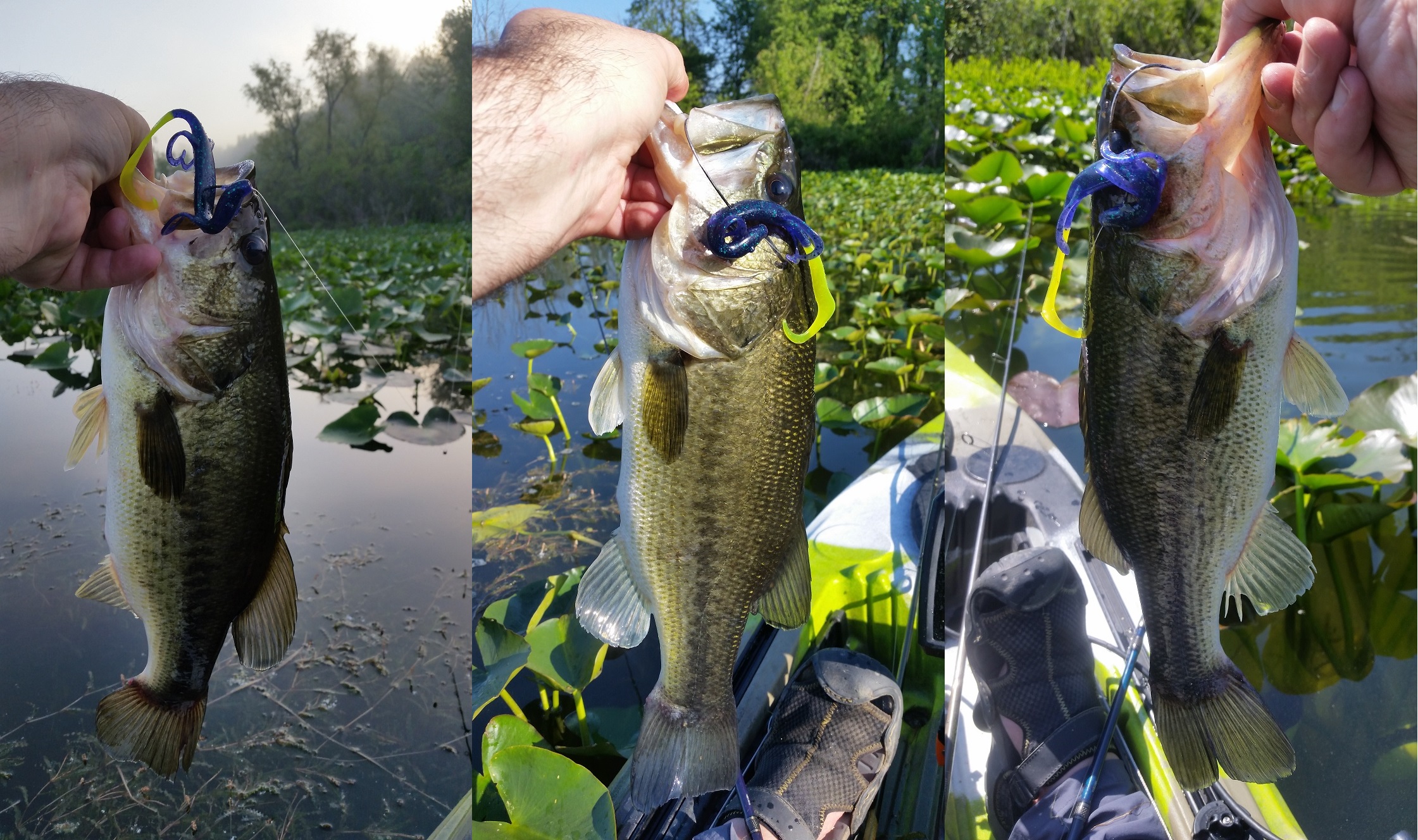
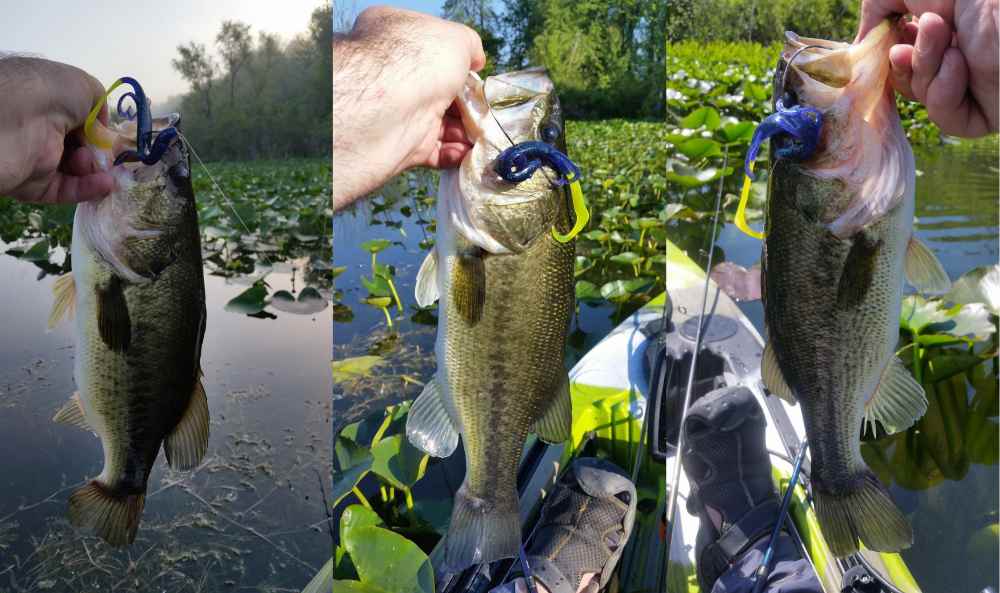
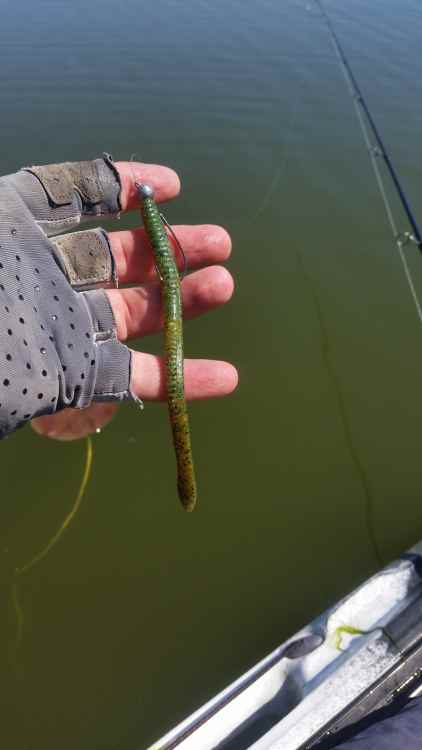
I don't fish black and blue much -- not because it's ineffective, but because I feel there's usually a better option....junebug, for instance, which is one of my most productive colors. Yes, even in clear water (I use chartreuse tails mostly in dark water). That lake in the pic is not the clearest water I fish -- it has about 4-6 feet of visibility and somewhat algae-stained. It's also heavily vegetated as you can see -- thus there is a lot of dark cover, and much of the bass habitat is well-shaded. I think this is the sort of situation where junebug shines up here, regardless of overall clarity. I am convinced the green flake is the key -- the environment in these weedy, algae-stanined lakes is distinctly greenish, and thus much of what bass eat here are also kind of greenish, as critters tend to take on some of the tints and hues that surround them in the environment as camouflage. A junebug bait slinking through the weed-stalks and pad stems is a dark silhouette that flashes green brightly as it catches stray, dappled rays of light shining through, and I think this green flash sometimes acts as an added trigger. Is any of that true? I don't know. Seems as good an explanation as any. It's definitely true that junebug is productive for me though...at least for Largemouth in weedy natural lakes.
-
Awesome looking trip, boostr! Errrr........yup, no Junebug north of the Mason-Dixon line, especially Michigan. Complete waste of time, so let's hear no more about it! Move along, please. Nothing to see here.
-
Possibly. Experiments like this control for intensity differences (bright vs. dark) in order to test for a causal effect of the color factor itself. But your lures were not created to be part of an experimental manipulation. When you're out on the water and you swap the white crankbait for the chartreuse one, you're never just changing the color and nothing else.
-
You're overstating this. The results were not entirely predictable -- rather, they were within a reasonable range of expectations given prior findings pointing to a two-cone visual system, and given the model of cone sensitivity they fit to the absorption data. (for anybody following along, the article again is here: https://academic.oup.com/cz/article/65/1/43/4924236 ) Cone responses are not categorical, but graded, with peak sensitivity to particular wavelengths. for any particular wavelength you get a degree of response out of all cones (provided it is intense enough), and the degree of response simply varies between the cones according to how close it is to the peak. Thus, we do not have really have "Blue", "Green" and "Red" cones, and using those names as shorthand is misleading -- the three cones just have peaks at different parts of the visible range, and the perception of any color depends on a distribution of responses across all three. If you want to know whether a bass distinguishes any two particular colored stimuli, you need to first know what the distribution of wavelength reflectances are of the stimuli. Then you need to know what the response curves of the cones are. You can measure stimulus reflectance more or less directly. That's shown in their Figure 2. But the response curve of the cones cannot be directly determined in the same way -- must be modeled from much noisier observations of the light absorption in the photoreceptive cells. This is what's shown in figure 3. Then the model must be tested. A model could fit the absorption data reasonably well, and still be wrong. The point of using confusable colors in the study was to test that model in terms of its behavioral consequences. If they found bass could distinguish blue vs. black and white vs. yellow as well as green vs. red, that would have falsified one or more assumptions of the model. It is notable that it didn't -- the results are basically in-line with with the model of the 2-cone system. But there was no absolute guarantee it would come out this way. And, as the authors point out, some aspects of the results are not anticipated by the model, such as the blue and black confusions when trained on White and Yellow (Look at figure 4, exp. 2, panels E and F). The model doesn't quite accommodate this without some additional assumptions -- a plausible explanation consistent with the model is that bass attach more meaning to hue differences than intensity differences -- in the 2-cone model, white, yellow blue and black differences exist only in intensity; essentially the same as grayscale. I see nothing here to indicate the authors "missed" anything about the significance of the having no cone with peak sensitivity in the "blue" range. On the contrary -- they have been careful to not to overgeneralize and overstate implications. Well, this is really just because of oversimplification. As light travels through water, long wavelengths are absorbed before shorter wavelengths, so all else equal, in clear water red fades to black first as you descend then gradually the others follow. This is true and well-understood. But natural waterbodies also have dissolved or suspended matter (e.g., algae, soils, tannins, etc.) that reduce clarity and stain the water, adjusting the absorption profile. In really muddy water for instance, red may end up penetrating the furthest because all the stuff in the water absorbs the other wavelengths even faster. This is basically right, although technically we don't have any basis to infer what they see it as ...it would be just as accurate to say they see yellow as white, since the both inputs result in the same distribution of cone responses. A more accurate way to describe this would be that what we see as yellow and white are perceptually indistinguishable to bass.
-
Good-looking rig!
-
My objection isn't about laws or regulations, and it isn't about individual anglers using an allowed tool or technique that can give them an advantage -- their role is to compete, and so they must use the tools at their disposal to compete. It's not even entirely about sight fishing beds, which I don't like, but accept because in most events it is not anywhere near this easy, reliable and lucrative as a strategy. But in choosing the timing, location, rules and format of this event, MLF seems to have decided that an exercise in barrel-shooting would be a sporting activity worthy of professional competition and spectatorship. Were you entertained? I was not. I tried watching a little, found very little entertainment value in it, and turned it off. There is also @RichF's point that being stuck multiple times (which they are at high risk of) is likely a death sentence for many of these fish. While obviously there is no law against this, and the fishery as a whole is almost certainly far too healthy (and massive) to suffer noticeably from some delayed tournament mortality, it is still arguably inconsistent with MLF's ethical stance on fish care and high standards of fish-handling.
-
I have no desire to watch this.
-
https://www.mackinacbridge.org/ Like all bridges, you cross it to get to the other side.
-
I have heard that the Devil's Horse and other long thin propbaits are especially deadly in Florida because they mimick needlefish.
-
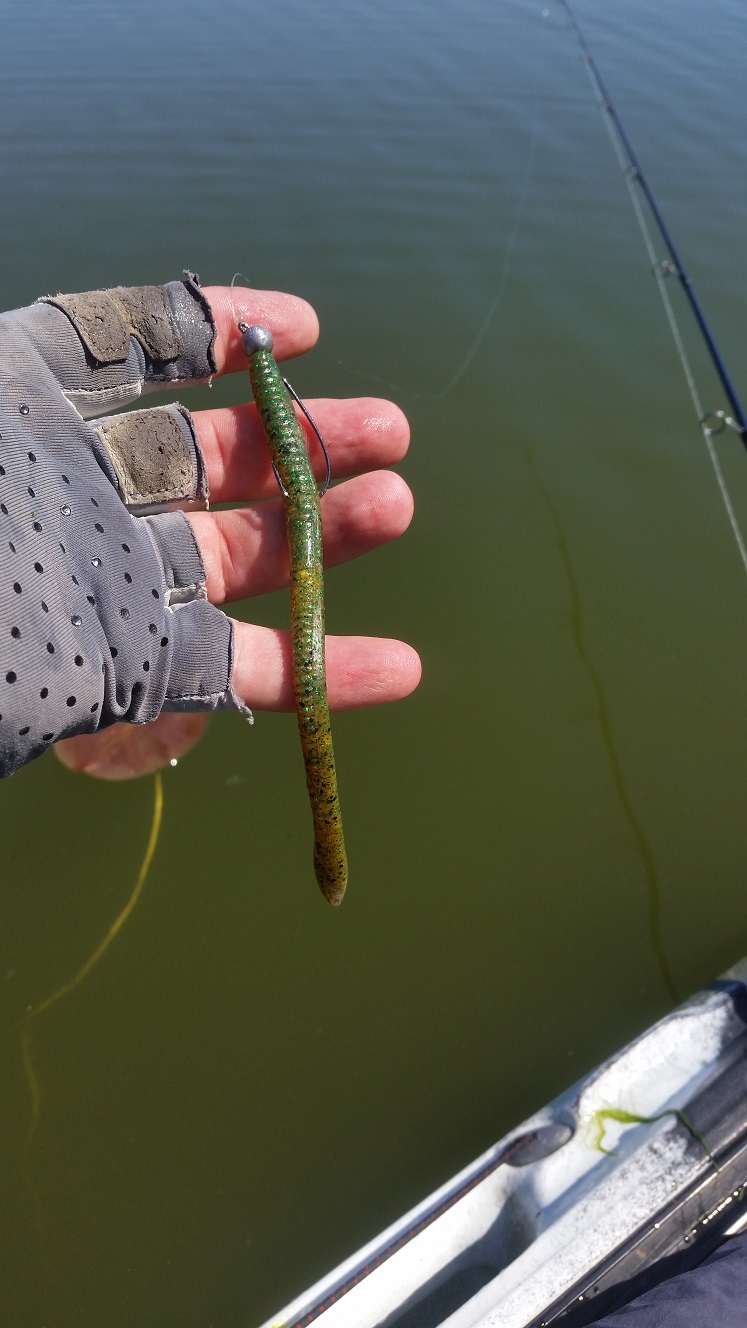
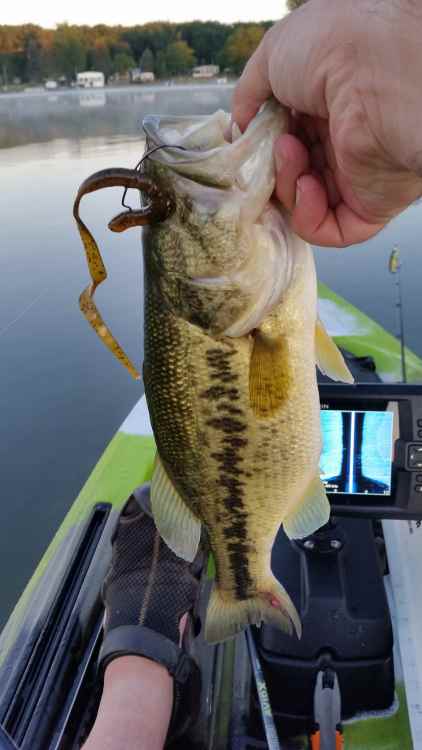
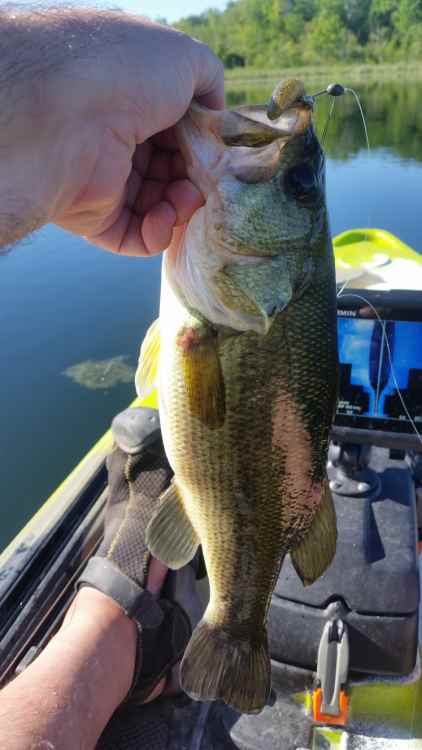
The worms came out again today after more horizontal presentations --a rage swimmer and a pop max-- did not generate any interest. The key, as usual in most waters I fish, was to find the bluegill...and when I did, they were suspended a few feet deep in the cabbage that clings to the slope of a drop from 4 to about 20 feet, that winds its way irregularly around the lake (You can sort of see both the break and the vegetation in the Garmin SideVu image in the background of the first pic below). Working a t-rigged ribbontail and a weighted wacky worm mostly vertically down that drop, I was able to coax bites from 10 modestly-sized green bass, the best of which were a couple in the 15-16 inch range:
-
Good excuse to post another link to this gem:
-
Where I fish crankbaits are only situational, as there is vegetation almost everywhere. But I have a bunch of Strike King and Lucky Craft 1.5s and 2.5s ready to go in case the right opportunity presents itself -- mostly craw (brown or orange), and sunfish/bluegill/perch patterns. If I wanted nothing but numbers, I'd put on a weightless t-rigged 4" senko
-
Typical 5-rod starting lineup for kayak trips to lakes/ponds/bayous/gravel pits: 1) weightless plastic (senko or fluke) 2) weighted texas rig (worm or creature...start with 1/4oz) 3) jig (for swimming, pitching or both...start with 3/8oz) 4) Topwater (buzzbait or popper) 5) small plastic body on a jighead (usually a jigworm/shakyhead, but sometimes a slider, ned, or grub) May sub in a frog, swimbait, or occasionally a crankbait or drop-shot, depending on time and place. For river floats I bring 3 and these have been getting the starting nod: 1) Senko- or fluke-style weightless plastic 2) plastic grub or swimbait on a 1/8oz jighead 3) topwater (usually a whopper plopper 75 or 90)
-
?????? I fish senkos in weeded cover on medium spinning gear, but 15 or 20# braid instead of 6# line. They must be worked out carefully rather than horsed, and some places are too thick for it and need a stouter rod.
-
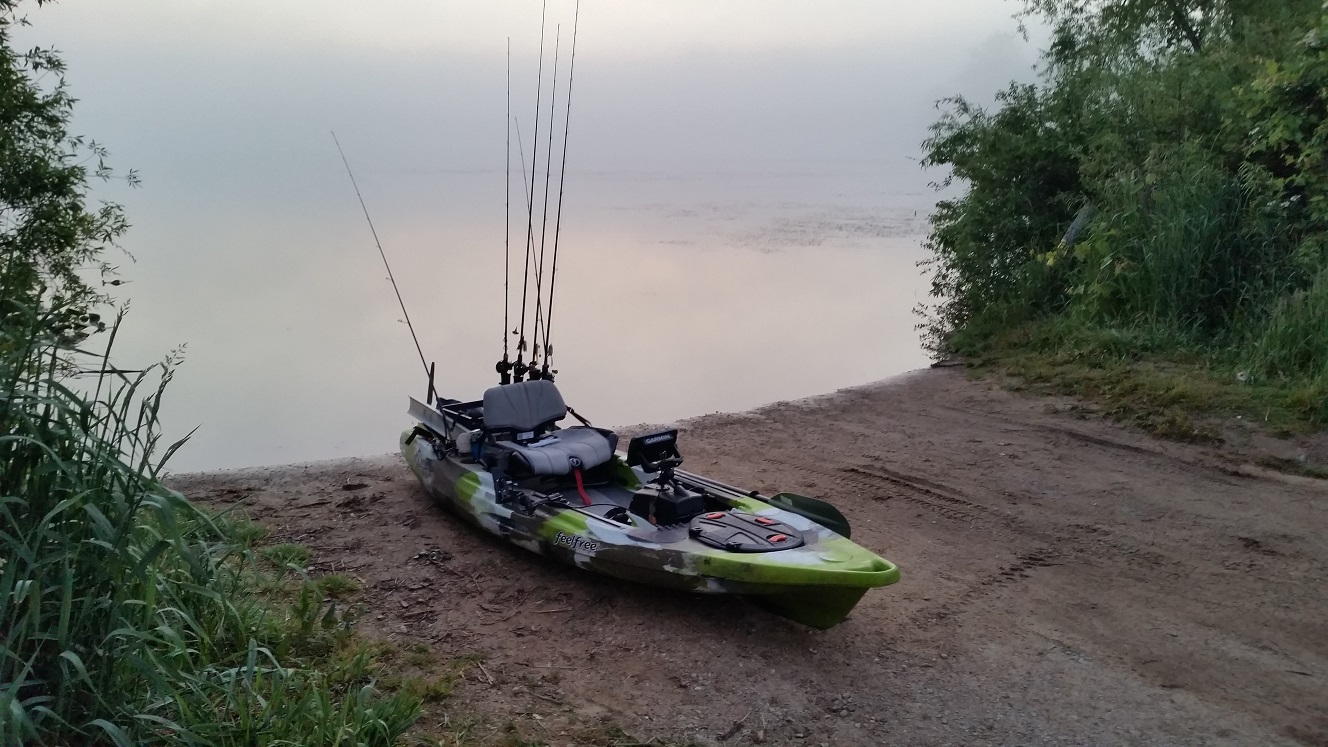
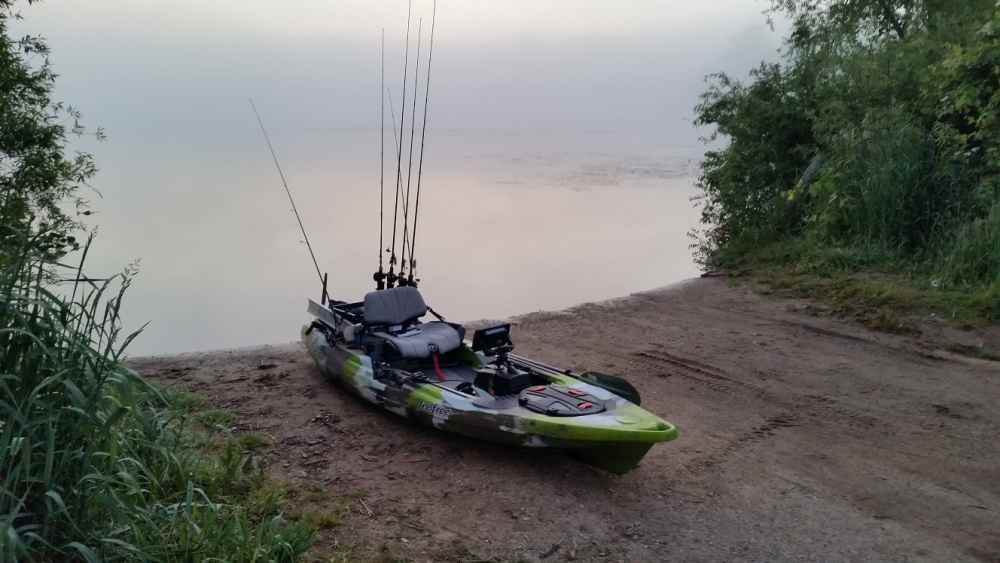
Launch site, 6am: Foggy and dead calm. What will the morning bring? Found a few that liked what they saw in this Junebug Zoom Lizard with the chartreuse tail, when flipped into the arrowheads:
-
Yay, all the way. Even a basic unit with traditional sonar and mapping is huge value-add for just a couple hundred bucks -- in addition to depth, you can see bait, weedlines, the thermocline, distinguish hard from soft bottom, and so on. You can find subtle depth changes on an otherwise featureless area that fish will relate to, but may not show up on navionics or official maps. With GPS ability you can mark and save waypoints when you find a good spot, so you can navigate back to them easily.
-
Classic Team: A. Palaniuk B. Chris Johnston C. Card D. Arey E. Lehew DTL: Mosley, Benton, Palmer, Cox, Blaylock, Zaldain, Canterbury, Wendlandt
-
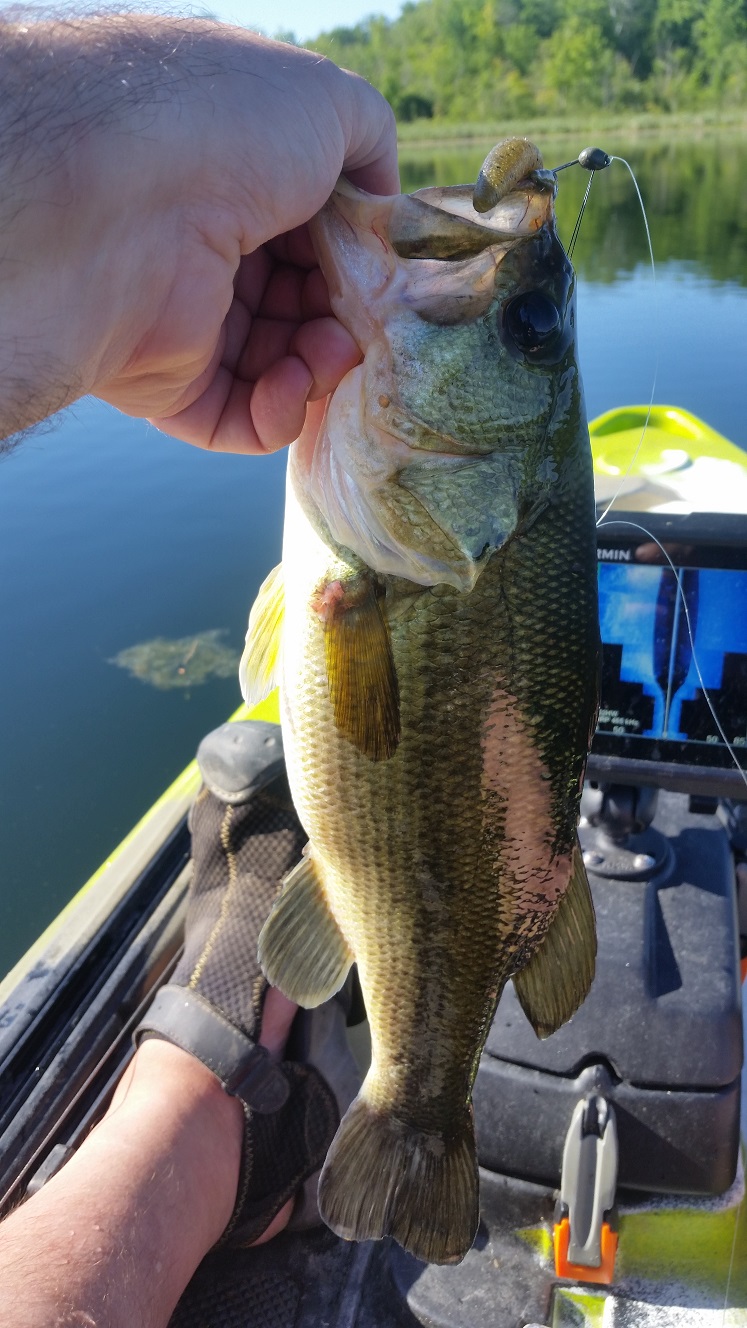
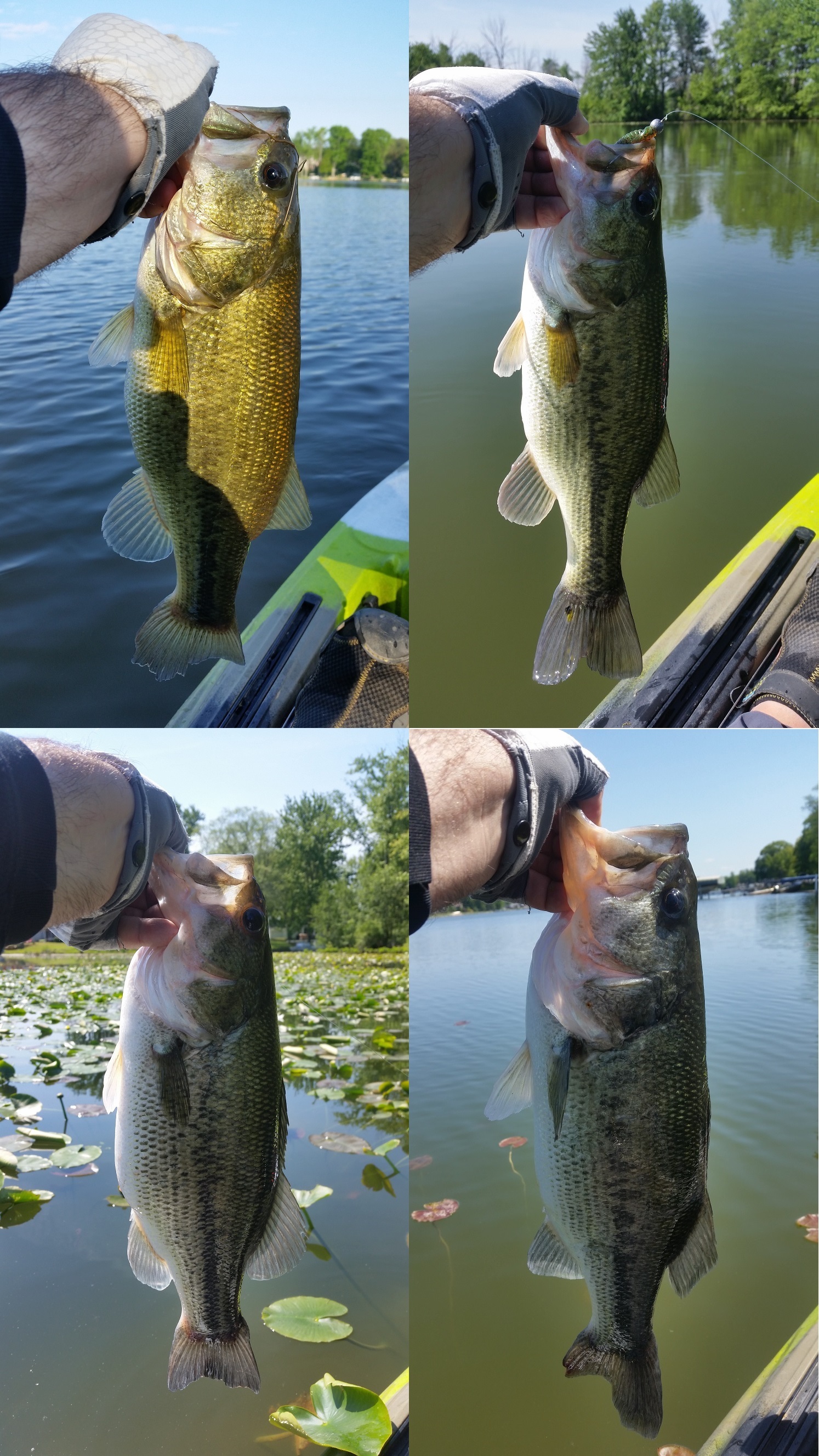
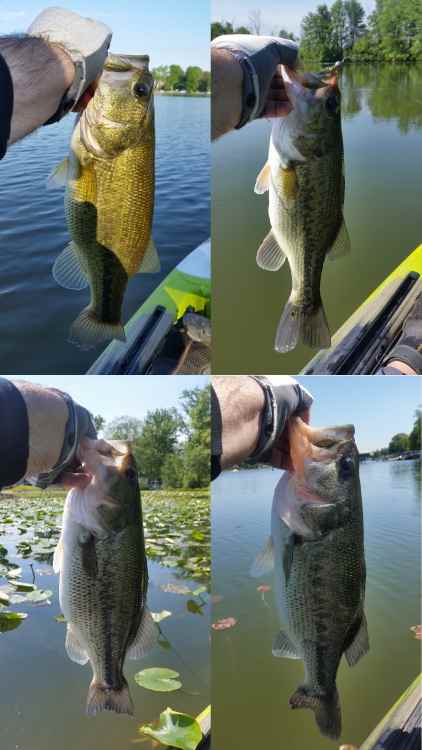
Leave it to me to show up to a popular recreational lake Tuesday morning following Memorial Day weekend, after it just got hammered for three days straight. I did manage 5 in as many hours, with 4 decent ones. All finesse today, as nobody was in the mood for chasing topwaters or chatterbaits (of course, I wasted a fruitless hour trying). Instead, it was a literal One-Worm Show, with a Strike King 3x elaztech finesse worm that has been in service going on 3 years, on an 1/8oz owner ball ultrahead. I never felt any of the strikes, and only once saw the line move...otherwise, just a slight heaviness a few times when I lifted to move it after it had been sitting on the bottom for a few seconds. Bottom right is my first bass over 3lb in 2021 -- talk about a slow, small year so far:
-
First bass ever at about 12 or 13 with a live nightcrawler under a bobber. First bass on a lure took a purple 3" Mister Twister Meeny grub on a jighead.
-
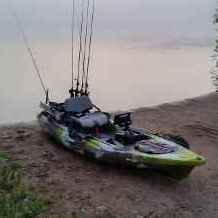
(Raises hand) Me! My first fishing kayak, 2009 model I think -- still have it, still use it for a few trips per year, especially small river floats where I need maneuverability. The seat leaves something to be desired, but it's nimble, stable, sturdy, and car-tops with almost no effort.
-
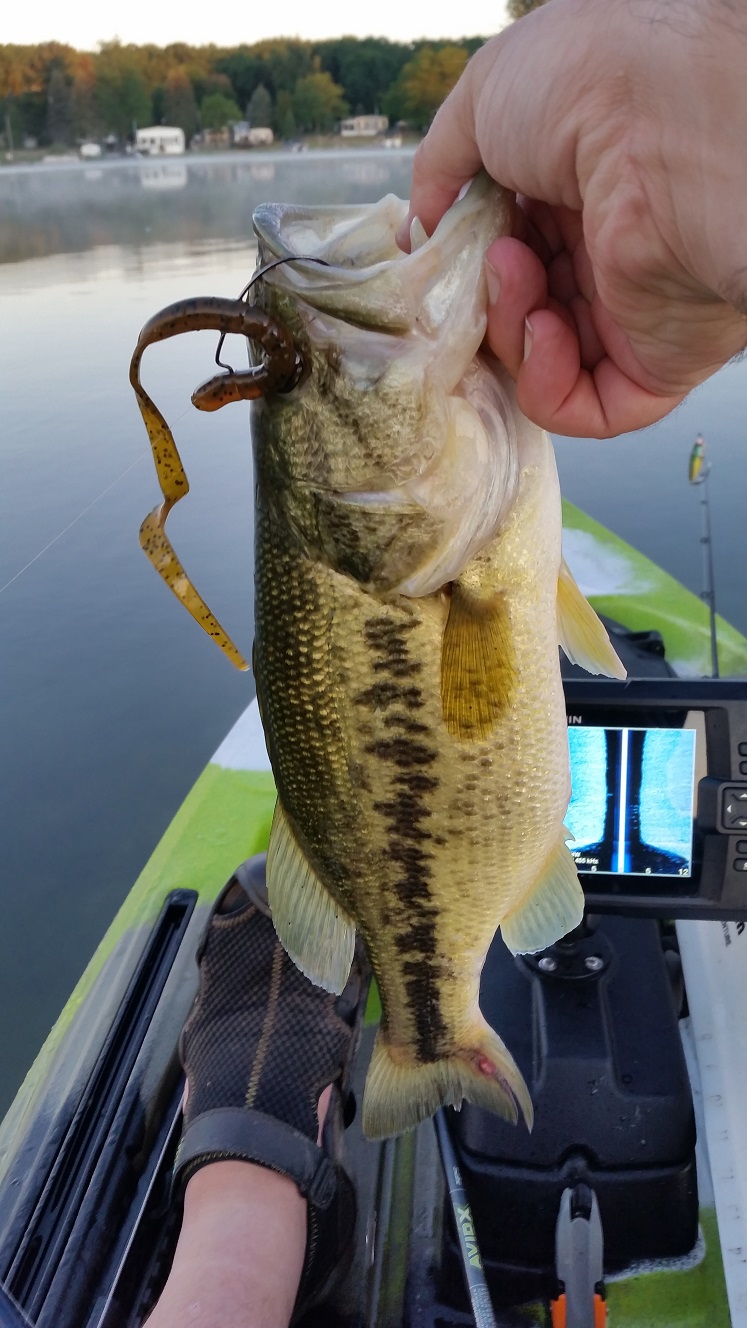
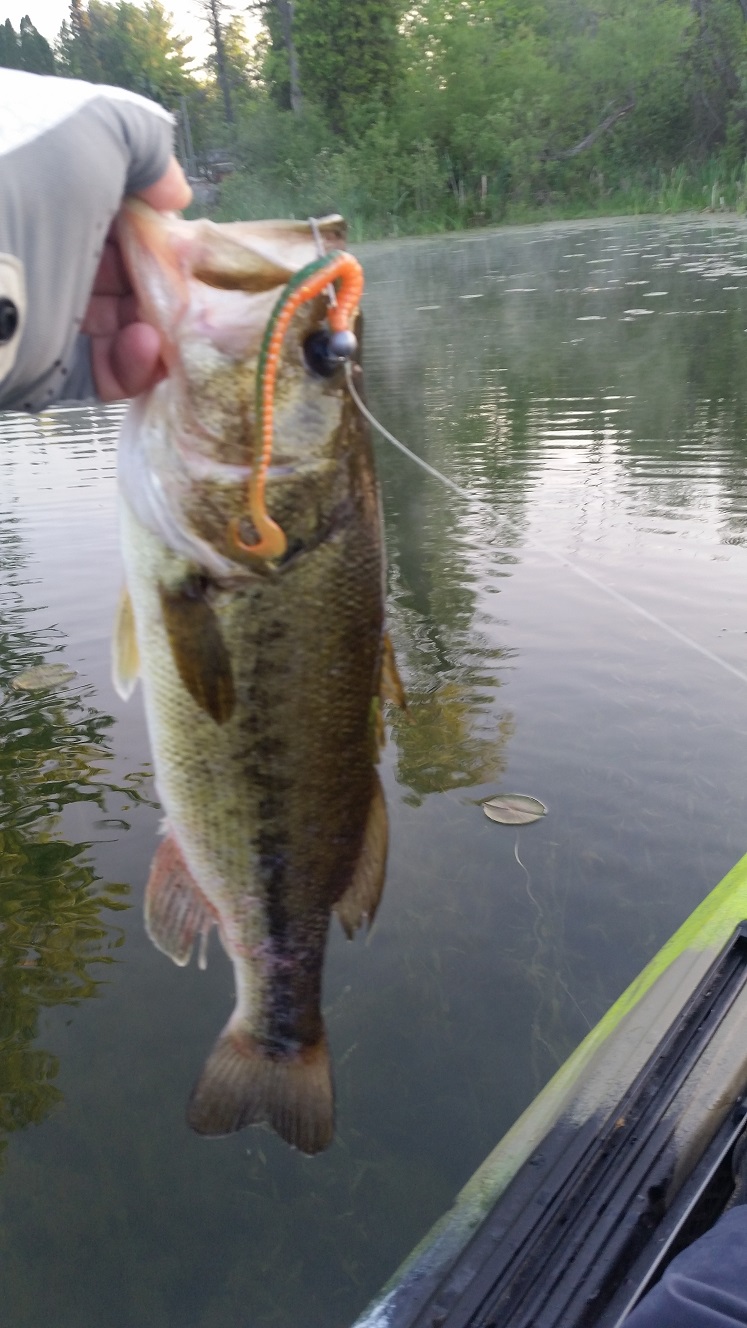
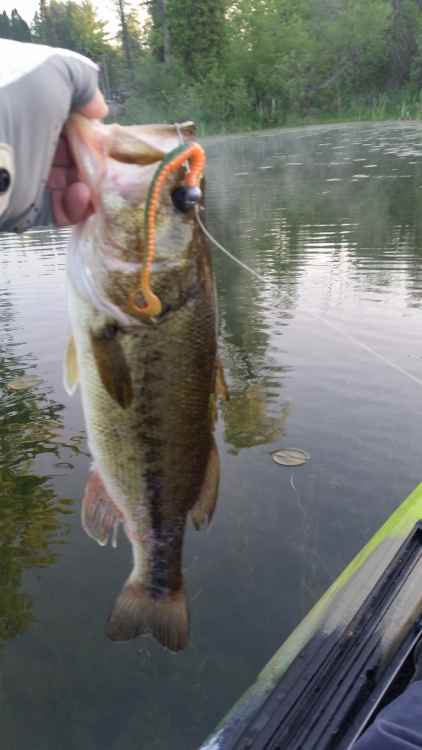
Only one decent one out of nine this morning...a skinny 17". Air temps dropped about 30 degrees overnight -- it was a chilly 40 when I launched (you can see the steam fog in the background). Went old-school with a Mr. Twister Phenom Worm on an 1/8oz jighead:
-
Seems about right, now that you mention it - not being from the south, I could tell what was meant generally by "bream", but always wondered what the "boundaries" around the term were. Seemingly, a bluegill, green sunfish or redear could all be "bream", but not rock bass or crappie. "sunfish" up here is used approximately the same way, except for bluegill which are typically identified as bluegill specifically.
-
Nice job! Looks like the stuff you always throw works just fine. Does nobody in the club fish the pond with chatterbaits? If not, I suppose the fish there really wouldn't have seen one before.
-
I think that's (1) true, and (2) not actually an unpopular opinion. Speaking for myself, I just have favorite colors anyway and can't help myself....
-
Spawning.