papajoe222
BassResource.com Writer
-
Joined
-
Last visited
Everything posted by papajoe222
-
I've found that a bobber stop behind a Carolina Keeper keeps it from sliding down when using heavy weights. Your 'system' is a great alternative to crimping a split shot on your line when rigging. A split shot rig.
-
That all depends on the dynamics of the lure, but generally speaking, it will be somewhere from the middle of the bill up. You'll notice too, that baits with smaller bodies have bills that are wider below the line tie than bigger baits with a 'normal' dive angle.
-
Yes. The angle and shape of the bill, size and shape of the body and placement of the line tie all affect how quickly and how deep the bait will dive. Most deep divers that are designed to get to max depth quickly have their diving bill extending almost straight out the nose and the end of the bill will curve slightly up. Their bodies are generally smaller than other deep divers.
-
My assumption would be that the bass are still in early to mid prespawn. They may move all the way up on a spawning flat if the sun has been beating down all morning. Chances are that even if they do, the majority of their time will be spent feeding and roaming just outside one of the spawning areas and they'd go deeper if the weather turned The shallower you fid them, or start your search, the faster the presentation. Spinnerbaits and lipless cranks shallow, blade baits and swim baits out to the first drop and jerkbaits, suspending cranks and hair jigs if you think their activity level has slowed. Jigs, of course will produce no matter where you locate fish, bot keep the speed/depth formula in mind.
-
-
Cabela's has their Fish Eagle 50 casting rods in the bargain bin for $45 in a 7'6" XH and a 7' H. I have the 7ft. heavy and use it for bucktails and Jakes.The also have their Tourney Trail Musky casting rods for $56. My partner has the 7'6' heavy and it's a little stiffer in the tip, but handles some of the bigger baits better. but for the 1oz and under you really have to work at casting out any distance with it.
-
It all depends on how deep you want to fish them and how big a profile you want to present. 3/8oz. or 1/2oz. can cover most depths depending on the blade style and size.
-
Are you talking boot tailed swim baits? I couldn't comment on paddle tailed swim baits as I think of a paddle tail like a netbait Thumper worm or Zoom SpeedWorm. If you're talking baits and grubs like a SuperFluke, I like them on an exposed jig head, hopped along to get the tail moving. They also are great trailers for spinnerbaits and buzzers. About the only other application I'd use them for would be an umbrella rig, but I prefer curly/ribbon tail grubs.
-
I would think that the frequency of trips to a pond will have more of a negative effect in the long run than occasional long trips. I strongly believe that if they're getting a regular diet of the same baits, you can have more positive results if you mix it up. You'll likely be targeting the same areas either way and on the occasional longer visit you may need to go through a few presentations before you figure out their mood. Ponds, in general, are small bodies of water and hitting them regularly would be like making a milk run on your favorite lake and only stopping at the first spot every trip. I'd treat your ponds the same way and stop one this trip and a different one the next, etc.
-
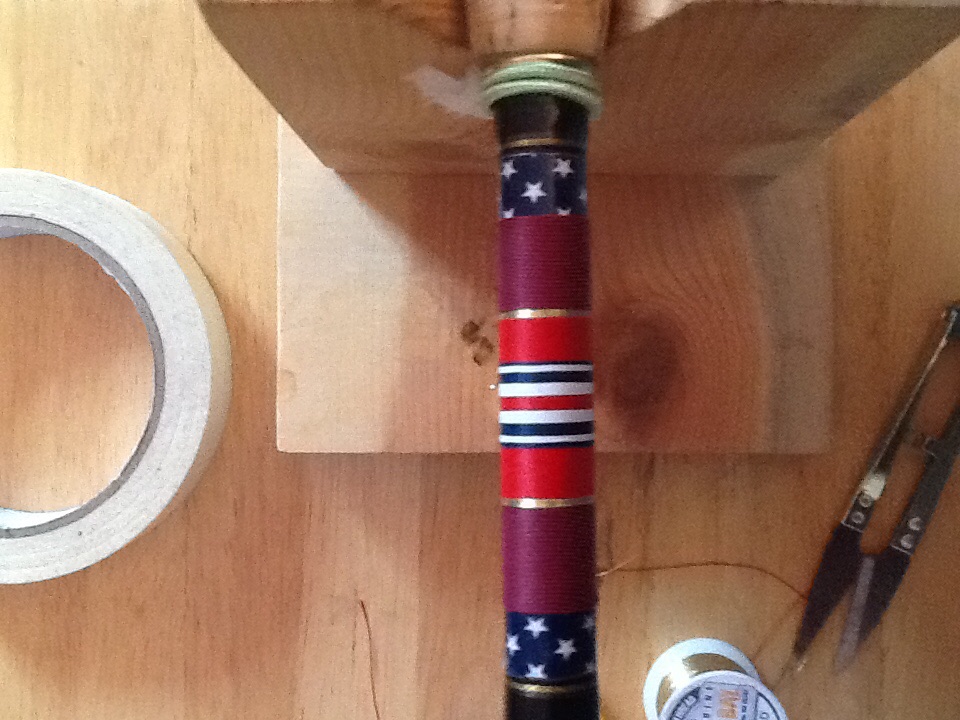
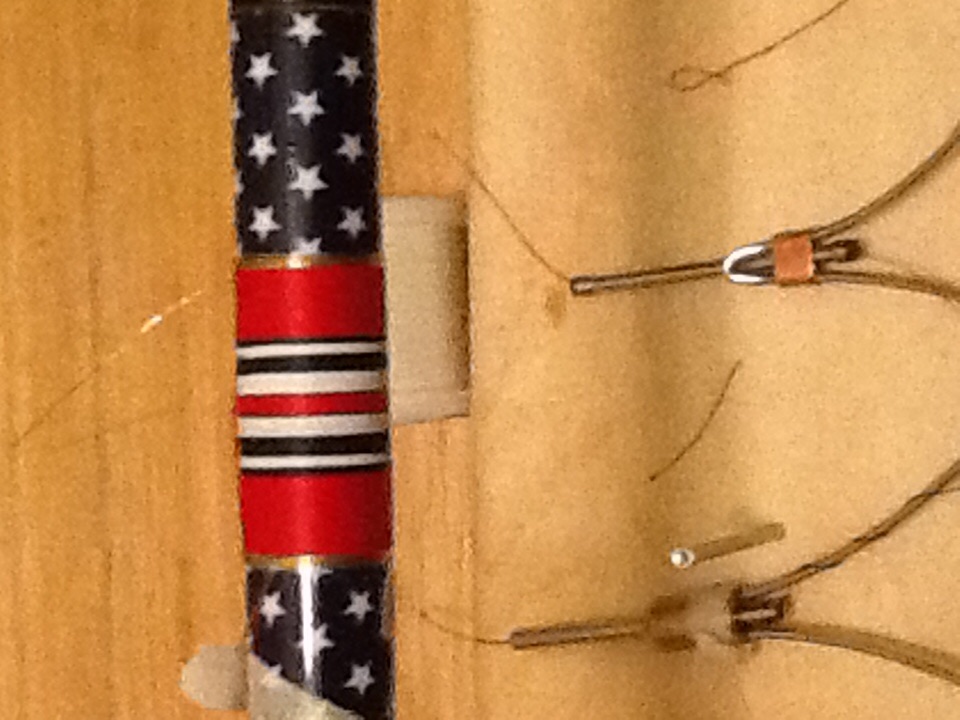
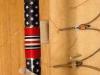
Personally, I think the star field is a little too much. I may add a short red/blue tiger band on either side of the gold which will leave only about a 15mm band of that star field at each end.
-
I'm leaning toward two coats of the U40 as it's water based, but I'll do a test for sure. Thanks
-
I just finished a wrap that has white thread (color lock) adjacent to both red and blue and I want to make sure those colors don't bleed into it. I have both UV40 and Cason's Crystal Clear Color Lock. Which of the two would ensure no bleeding?I don't trust the Color Fast Pro Wrap.
-
First baitcaster? Adjust the spool tension knob first and the brakes after you've made a cast or three.
-
The ice is finally melting and even though I won't be able to fish for another couple of weeks, I'm reviewing some of my notes in anticipation of doing so. In water temps below 50 or so, blade baits seem to have produced better that lipless cranks, especially in clear water. Have they gone the way of tube baits in that you don't hear much about them, but they're fish catchers? Did I just let a secret out of the bag?
-
Up until the last six years or so my tow vehicle was a car an aside from my flipping stick, all my rods were two piece and fit in my trunk. Now I have a truck and the rods I have that are too long to fit in it are kept on the deck of my boat. The only advantage I can see to one over the other is portability. I imagine a shore bound angler would prefer the two piece if they need to walk any distance to their favorite honey hole, too.
-
I'd do what I always do when their activity level goes from active to inactive. You did good while they were feeding, what presentations do you use when they aren't?
-
I've been fishing strip pits here in Illinois for almost 40 years and they can give you a headache trying to figure them out on most occasions. The bay you mention is likely the area that bluegill and bass will use for spawning and will also be a great area for holding forage, especially if it has weed growth out to the 15ft. level or so. There is likely another area at one end or the other of the pit with a slow taper that would be similar. I would work that deep weed edge in search of active fish and move out of the bay if I don't encounter any. The brush piles will hold fish, but once the weeds show up the forage will relate to them and that is what I target. The area just outside that bay may have a wider shelf than the majority of the pit which will be evident by the weeds extending out farther from shore. Non-active fish will be suspended just off of that shelf in that 12-15ft. level. Parallel the drop off with your presentations as much as possible and look for stair stepped drops and small outcroppings of rock to hold more fish that a straight drop. Topwaters worked parallel to the drop work all day after post spawn and floating worms worked over the grass with pauses can have a dynamite affect.
-
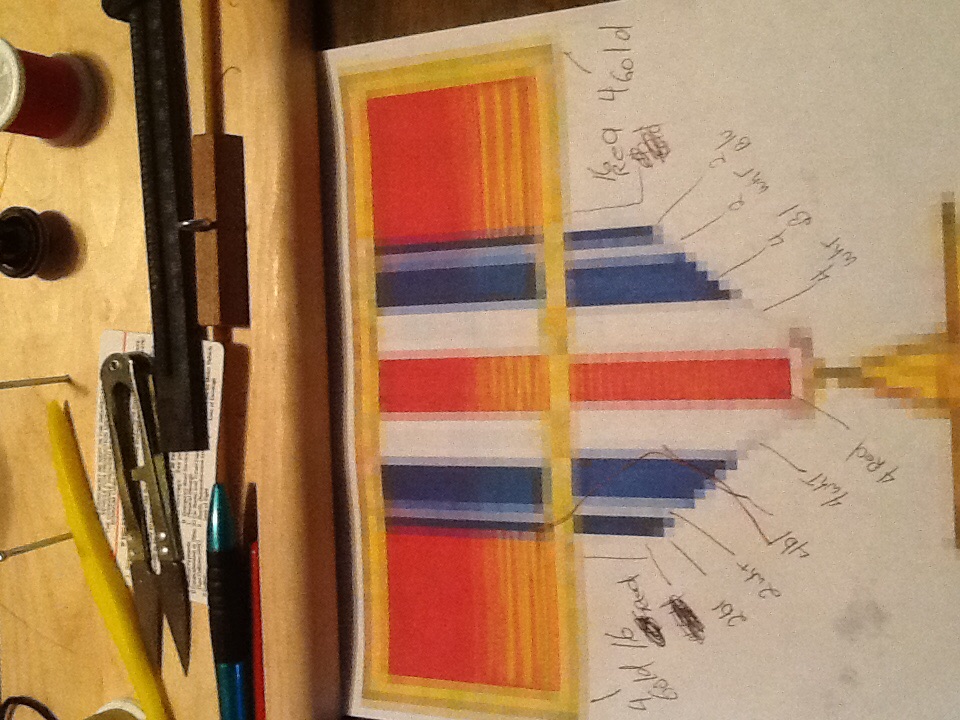
Yes it is.The VUA is awarded to the entire unit en lieu of the individuals in it and so it was designed with the Silver Star's ribbon at it's center. The same criteria must be met, but the unit is considered as an individual when doing so. Similar to the Presidential Unit Citation only in that there is no medal awarded and it is worn on the right side.
-
I'm not as good as I once was, but I'm as good once as I ever was.
-
I've done something similar, but found that adding an extra split ring, or small split shot to the front hook was, not only easier, but allowed me to remove the added weight when needed.
-
Check out the bottle cap lure. Easy to make and they catch fish.
-
I'll be attempting to do a wrap for a vet on his favorite rod. It's a split grip and this will be going in the split area. I'm thinking of going with a field of stars under the ribbon which is a VUA. The cork and finish on the rod are in need of some attention,but I figure I should be finished by opening day.

-
Really??? I love the guy, but................. come to think of it I gotta agree.
-
In the spring (pre-spawn), my choices would be a jerk-bait, lipless crankbait/spinnerbait and a jig. Using the same rods during post spawn through fall, A tube jig/stick worm, crankbait/topwater and a jig. In the fall it would be a soft plastic jerk bait/tube jig, spinnerbait/buzzbait and a jig. There was a time back in the day when I only used one rod, but as my selection of baits and presentations grew, I found it easier and more beneficial to have my gear a little better matched.
-
'Lunkers Love Nightcrawlers' Insight into both fishing with and raising nightcrawlers and an in-depth tutorial on structure and how bass movements are related to it. The book was written over 30 years ago, but the information contained within it's covers is still, not only relevant, but a great read for beginner to accomplished angler.