lilfish
Members
-
Joined
-
Last visited
-
I was given these instruction a few years ago from another member: I will make the assumption that you have never used the baitcasting reel; I know by your posts that this is not true however to keep things simple I will start from scratch. So you have rigged up your rod and have no doubt heard the correct adjustment of the mechanical break is essential in the prevention of backlashes. Experienced' baitcasters adjust the brake so that the lure slowly falls to the ground when the thumbar is disengaged.' This is a mistake' in the early stages of learning to use the baitcaster as backlashes can easily occur with only the slightest of errors. In the early learning stages of using a baitcasting reel the mechanical brake should be set tighter than normal. To get this right can be a delicate' operation but it is essential that this is done correctly so that if mistakes are made a backlash will not' occur. As I do not know what your rod lure specs are all I can say is to use a weight that is at the top end of the specification. You will need a weight that will cause your rod to bend with as little effort as possible. With the weight tied to the line adjust the mechanical break so that the lure falls to the ground and the spool stops instantly. This will give you a guideline so that you can to set the brake even tighter. Now take the line between the first ring of the rod and the reels line guide and jerk it forward gently. The line must be jerked. You will find that the spool will over run. Tighten the brake and jerk it harder. What you want is a good solid jerk with the brake set so that it does not cause the spool to over run. The idea is so that if you make a mistake a birdsnest will not occur due to the increased tension on the brake. Remember that the heavier weight that what you would normally use will counter the increased tension of the mechanical brake when you make the cast. The setup that you want is one that will cast the lure but should you make a mistake the spool will not over run at any stage during the cast. Jerking the line and adjusting the brake tighter than normal will prevent birdsnests at any stage in the cast. (early, middle or late) This setup is in excess of what an experienced baitcaster would do. It is also a good idea not to use a spoon that causes a lot of wind resistance. My advice would be to go to the park and use a lead weight. If you do this remember to place some tension on the line as you reel in. Failure to do this on grass etc will cause the line to respool with an uneven tension on line wraps. Just not good. The single and most important aspect of casting with a baitcaster is rhythm. It is essential that the cast be made in one movement. There should be no pause between the backward movement and the forward movement of the cast. If you do this now is the time to stop. The action of the rod will project the lure out with only a little effort on your part. Disengage the spool by depressing the thumbar and keeping your thumb on the spool bring the rod back over the shoulder and in the same movement bring it forward and release the spool. Do not try and cast for distance. These early casts are teach your thumb when to release the spool so the weight arcs' out over the water. Too much aggression in the cast will cause mistakes. With the heavier than normal weight a softer caster will bend the rod so that the rod's action will assist the lure to travel in an arc. If the thumb release is too early the lure will act like a mortar bomb and if the release is too late the lure will travel flat like a bullet. You want the lure to travel like and artillery shell. Remember in these early stages do not try for distance. Keep the cast slow and smooth. Too much power in these early stages of learning will cause difficulties. You need to educate your thumb to release the spool so that the lure travels in an arc. When you feel confident apply more power to the cast but at this stage do not readjust the mechanical brake. Only when you feel confident in your casting and you can achieve an arcing over the water/grass etc. should you lighten the weight and readjust the brake. You can if you wish still set the brake by the jerking method but remember with the lighter weight that you are now using the brake will have be to set 'lighter' too. As you apply more power to the cast learn to use your ears. Listen to the spool. It will tell you when you get it right. In the early stages of the cast the spool will have a high pitch and as the spool slows down the pitch will decrease. Listen to the pitch of the spool when the lure hits the water. Learn to recognise the pitch of the reel when this happens. It is invaluable for night fishing when you can not see the lure or when it hits the water. Knowing the pitch of your reel can save a lot of frustration. When you can cast the lure so that it arcs out over the water start training the thumb to stop the spool as the lure hits the water. With your new found confidence you can start to apply more force to your casts. This will give you slightly more distance but do not try and over do you capabilities. Remember to keep you casts soft and smooth. Now it is time to practice stopping the spool with your thumb as the lure hits the water. As you become more confident you can lighten the lure and set the mechanical brake to a more acceptable tension. Somewhere in this learning curve begin to teach yourself to feather' the spool. This is a simple technique that allows you to detect over-runs before they get to bad. You can feel the loose coils revolving around the spool. If this happens stop the spool instantly. Feathering can help in controlling distance where accuracy is required. As the spool revolves in the cast just keep the thumb on the line very lightly. But before you try this get the other factors right first. Don't try and rush the feathering as to do this too early can confuse' the thumb. Teach the thumb one' step at a time but teach it well. Proficincey will not come over night. But with paractice and attention to what you are doing you will learn faster than you think
-
Great shot, I need remember to bring my camera when get out there. I missed a chance to get a shot of a river otter the other day.
-
I guess its true what they say "the meek shall inherit the earth"
-
Mine was spent before I even got a chance to think about buying some more tackle >
-
Finally got a chance to spend 20 minutes on the water, I know its not much but I landed 1 toothy critter and a small brook trout using a small gold x-rap. Hopefully I can get a reasonable amount of time to get some more fishing done soon
-
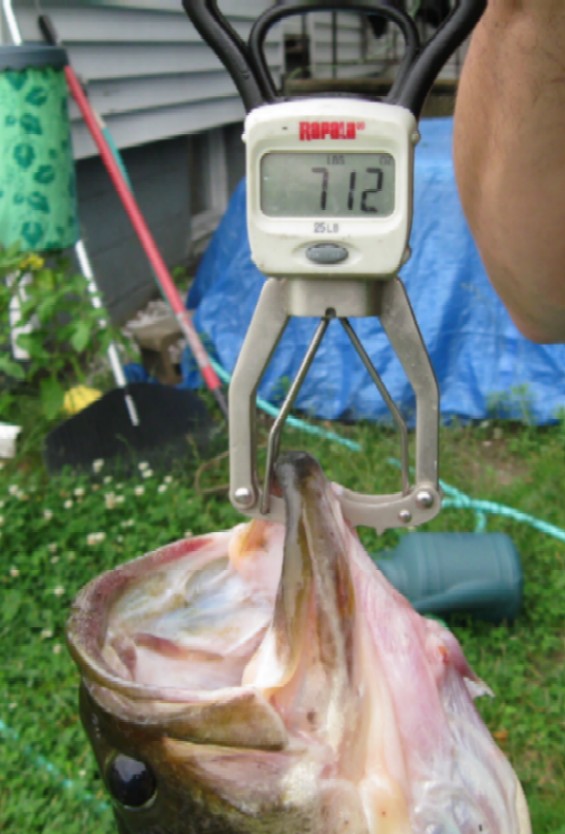
It works great just make sure the battery is good before you go out and find out its dead. I had to change out the battery today before I got to weigh the fish luckily I was fishing behind my house. In hind sight I think I would go with I nice mechanical scale such as Bogas. For now I'll just keep a fresh battery in the tackle box
-
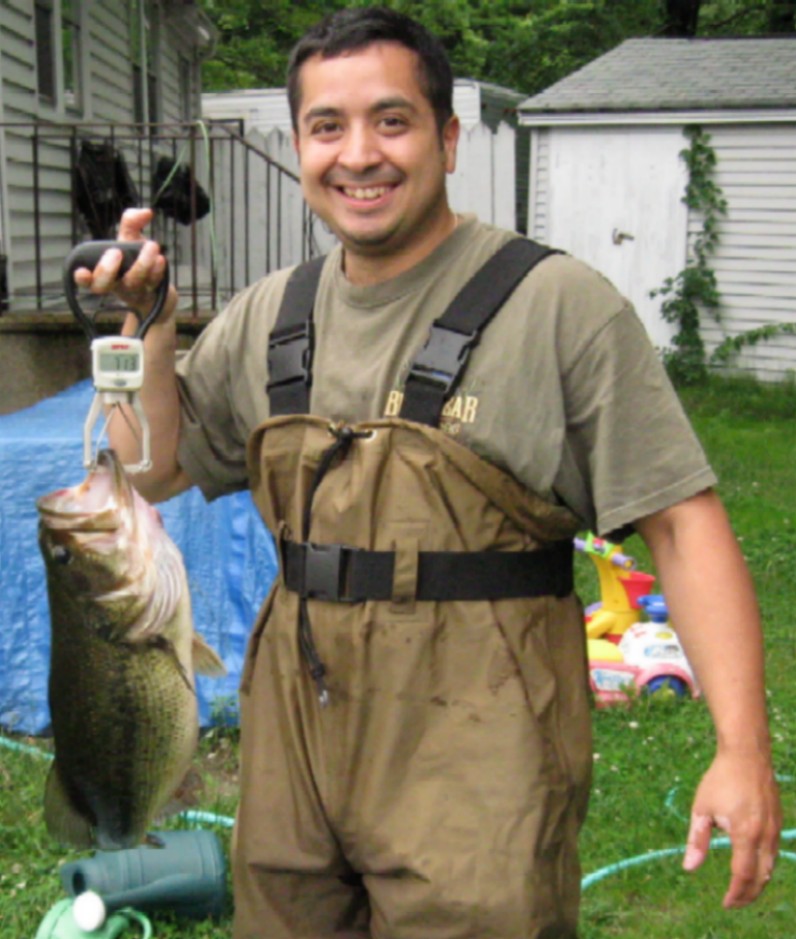
Caught my personal best today. My previous PB was 6lb 4oz . I was out in stream that runs through my back yard and this one slurrped down a Stanley ribbit. Not too often you get one this big in Southern NH. I was using my travel set up Daiwa Advantage 2pc 6'6" MH, Pinnacle Matrix 35 reel . It was safely released


-
ICE > Mitchum (marine) "so effective you could even skip a day"
-
This is an excellent step by step that was PM'd to me be someone from another forum, I've passed it on to others. Lillfish I will try and explain the use of the baitcasting reel as simply as possibly. In an ideal situation I would be by your side and could correct any bad habits that you may or may not have in your casting technique. As this is not the case I will make the assumption that you have never used the baitcasiting reel; I know by your posts that this is not true however to keep things simple I will start from scratch. So you have rigged up your rod and have no doubt heard the correct adjustment of the mechanical break is essential in the prevention of backlashes. Experienced' baitcasters adjust the brake so that the lure slowly falls to the ground when the thumbar is disengaged.' This is a mistake' in the early stages of learning to use the baitcaster as backlashes can easily occur with only the slightest of errors. In the early learning stages of using a baitcasting reel the mechanical brake should be set tighter than normal. To get this right can be a delicate' operation but it is essential that this is done correctly so that if mistakes are made a backlash will not' occur. As I do not know what your rod lure specs are all I can say is to use a weight that is at the top end of the specification. You will need a weight that will cause your rod to bend with as little effort as possible. With the weight tied to the line adjust the mechanical break so that the lure falls to the ground and the spool stops instantly. This will give you a guideline so that you can to set the brake even tighter. Now take the line between the first ring of the rod and the reels line guide and jerk it forward gently. The line must be jerked. You will find that the spool will over run. Tighten the brake and jerk it harder. What you want is a good solid jerk with the brake set so that it does not cause the spool to over run. The idea is so that if you make a mistake a birdsnest will not occur due to the increased tension on the brake. Remember that the heavier weight that what you would normally use will counter the increased tension of the mechanical brake when you make the cast. The setup that you want is one that will cast the lure but should you make a mistake the spool will not over run at any stage during the cast. Jerking the line and adjusting the brake tighter than normal will prevent birdsnests at any stage in the cast. (early, middle or late) This setup is in excess of what an experienced baitcaster would do. It is also a good idea not to use a spoon that causes a lot of wind resistance. My advice would be to go to the park and use a lead weight. If you do this remember to place some tension on the line as you reel in. Failure to do this on grass etc will cause the line to respool with an uneven tension on line wraps. Just not good. The single and most important aspect of casting with a baitcaster is rhythm. It is essential that the cast be made in one movement. There should be no pause between the backward movement and the forward movement of the cast. If you do this now is the time to stop. The action of the rod will project the lure out with only a little effort on your part. Disengage the spool by depressing the thumbar and keeping your thumb on the spool bring the rod back over the shoulder and in the same movement bring it forward and release the spool. Do not try and cast for distance. These early casts are teach your thumb when to release the spool so the weight arcs' out over the water. Too much aggression in the cast will cause mistakes. With the heavier than normal weight a softer caster will bend the rod so that the rod's action will assist the lure to travel in an arc. If the thumb release is too early the lure will act like a mortar bomb and if the release is too late the lure will travel flat like a bullet. You want the lure to travel like and artillery shell. Remember in these early stages do not try for distance. Keep the cast slow and smooth. Too much power in these early stages of learning will cause difficulties. You need to educate your thumb to release the spool so that the lure travels in an arc. When you feel confident apply more power to the cast but at this stage do not readjust the mechanical brake. Only when you feel confident in your casting and you can achieve an arcing over the water/grass etc. should you lighten the weight and readjust the brake. You can if you wish still set the brake by the jerking method but remember with the lighter weight that you are now using the brake will have be to set 'lighter' too. As you apply more power to the cast learn to use your ears. Listen to the spool. It will tell you when you get it right. In the early stages of the cast the spool will have a high pitch and as the spool slows down the pitch will decrease. Listen to the pitch of the spool when the lure hits the water. Learn to recognise the pitch of the reel when this happens. It is invaluable for night fishing when you can not see the lure or when it hits the water. Knowing the pitch of your reel can save a lot of frustration. When you can cast the lure so that it arcs out over the water start training the thumb to stop the spool as the lure hits the water. With your new found confidence you can start to apply more force to your casts. This will give you slightly more distance but do not try and over do you capabilities. Remember to keep you casts soft and smooth. Now it is time to practice stopping the spool with your thumb as the lure hits the water. As you become more confident you can lighten the lure and set the mechanical brake to a more acceptable tension. Somewhere in this learning curve begin to teach yourself to feather' the spool. This is a simple technique that allows you to detect over-runs before they get to bad. You can feel the loose coils revolving around the spool. If this happens stop the spool instantly. Feathering can help in controlling distance where accuracy is required. As the spool revolves in the cast just keep the thumb on the line very lightly. But before you try this get the other factors right first. Don't try and rush the feathering as to do this too early can confuse' the thumb. Teach the thumb one' step at a time but teach it well. Proficincey will not come over night. But with paractice and attention to what you are doing you will learn faster than you think If you have any queries PM me. Bernie
-
-
Hello to everyone, I've been lurking around on this forum for a few weeks now, there is a wealth of good information to be absorbs here. I agree the Clarks Guide is a must if you fish NH waters, and are very easy to find, my local Walmart carries them and Northern Bass Supply also has them. Hopefully the snow won't be too bad this thursday. I'm sure I'm not the only one that would like to know how your Canobie excursion turns out. If you get the chance to go out please post back. Hopefully I'll bump into a few of you guys this year while fishing. Good luck and keep those lines wet..