
Team9nine
Super User
-
Joined
-
Last visited
Everything posted by Team9nine
-
Think in terms of a kite. Long legs on a frog is like a long tail on a kite - it helps stabilize the main body. Shorter legs and shorter kite tail lets the body get a little less stable, which on a frog makes it easier to walk. One leg shorter than another is to change the amount of drag on the legs so the frog has a tendency to naturally want to start rotating slightly making it easier to walk.
-
I can tell you I never shut mine off. The info gleaned more than offsets any negatives I might have experienced. Look at all the shows and pros who "video game" fish as one example. Not saying there isn't a body of water somewhere, or case where it might really make a difference, but if it exists, I have to believe it is in the minority.
-
While a long standing belief, it is largely considered just an attractive myth these days, as there is very little support for the story. The generally held concensus is that of some 400 suggestions from a DuPont committee, "No-Run" was actually the leading candidate name, but after some consideration, nylon won out. The more generally accepted explanation is that "nyl" was unique but arbitrary, while "on" kept the format of other popular materials of the time (cotton, rayon, etc.).
-
1/16 (1/15), 1/20 and 1/32 mostly, in that order. You'll still catch plenty on a 1/10 though.
-
Too big, but you'll be fine....
-
Somewhere between 15 - 35 years of normal use and storage conditions based on similar component material studies
-
In a hearbeat - Don't fight the bite!! -T9
-
Look up the term "feather" or "feathering" - it's the equivalent for spinning reels. Several YouTube videos you can watch. Basically using your index finger to control line.
-
Everyone tends to think being a professional angler is a great gig, but they forget that you have to promote certain baits of your sponsors, often on camera and at shows, and you end up like poor Lane, Surman and Christie. Same with the Livingston guys. I don't think I could do it - lol
-
Which, of course, then makes you wonder why they left the 'L' in Teckel, doesn't it, being a Japanese company, and all.
-
I agree with this....and PT Barnum
-
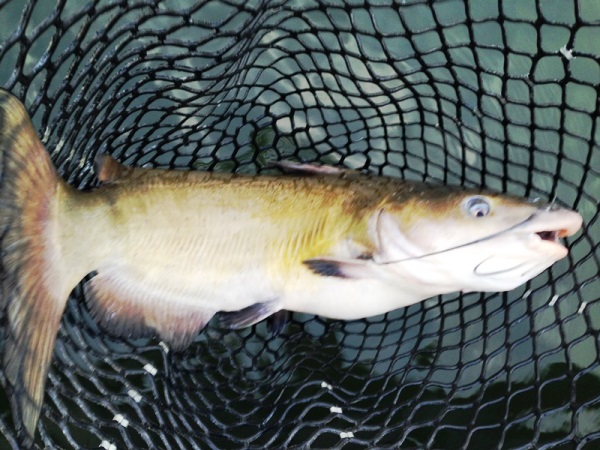
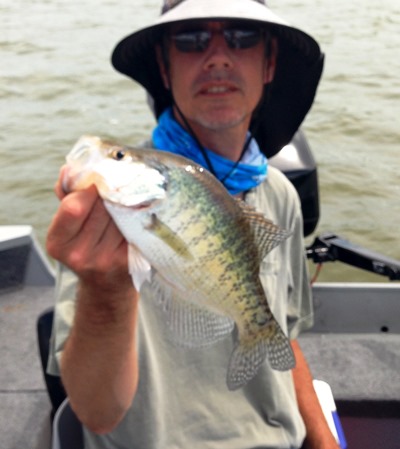
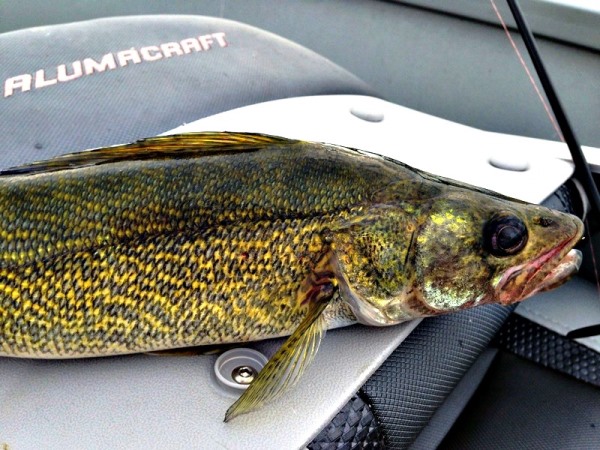
Getting a bunch of mixed catches now that summer is here. Here's a few: walleye, crappie and channel cats
-
I respool with fresh line. I don't like low spools, personally. You can leave much of the original line on as a constant backing, then simply add 75-100 yds of fresh line (connect the lines together) whenever you start getting low. That helps keep cost down.
-
When I use a net, the rubber style is all I use. Much prefer them to traditional nets
-
Not sure what you're doing wrong, 'cause I'd like to help you out. My experience has been 180 degrees opposite of yours with lighter braid (why I use it so much). I've landed 50# grass carp, 40# buffalo, along with low teens channel cats and wipers on nothing heavier than 8# braid and/or leaders, with 5# getting the majority of use. I don't intentionally go looking for fights in heavy cover, but I'm not scared of what a fish might do based on what I've been able to land.
-
-
15# is fine for just all around use, say 1/8 oz and up. However, if you start downsizing and throwing 1/16, 1/32 or 1/64 oz baits instead of your normal stuff, lighter line will perform much better. I personally use 3#, 5#, and 8# braid for all my lighter stuff with 4, 6 or 8 pound leaders. -T9
-
Here's my tip - become a more experienced/better caster ...and I don't mean that negatively. I am almost 100% fluoro on every baitcaster I own, ranging from 8# up to 25# test, throw everything from Shad Raps to A-rigs, and I don't have any issues - never used line conditioner. It might help you initially while learning, but you don't need it. Simply become a better caster and your fluoro "issues" will go away.
-
You often have "homers" and "roamers." Some bass, often including the biggest in the lake, won't move any farther than they have to between spawning areas and summer/fall home areas. Other bass like schoolies may roam for miles at times, but they tend to run much smaller in size. Not the best conservation of energy strategy, but they're likely younger and make it work. That said, every lake is different, and bass will do what they have to to survive, so don't write it off (what you were told), but also don't consider it chiseled in stone
-
I can tell you that on my worst balanced rods (long, heavy sticks) that I have added butt caps and weights to to balance them, while you end up getting the desired balance, you can definitely feel the effect of having the added weight on the back end of the rod when you cast. Additionally, since most casts aren't simply wrist rotation, but also involve some arm movement, the momentum/inertia feeling just made things seem really awkward for me. Add in the loss of sensitivity, and I have since removed and stopped using any of the aftermarket add-ons for rod balancing. You are correct that the longest rods I own (7'3"-7'6") have the "worst" balance (relatively speaking), but not so much on the price point aspect. My best balancing spinning rods range from 6'2" - 7'0", and have a price range between $49 (Berkley Lightning Rod) and $270 (Loomis & Custom builds). My best casting rods range from 6'0"-7'0" and have a price range from $40 (Lightning Rod, again) to $230 (Loomis). On the balance point, if you start with just a rod blank and give it to two different builders/manufacturers, you can end up with two very different balance points for the same rod based on the components used and things such as guide number and spacing, materials, reel seats, butt length, etc., etc., so I would say you can have a big effect on that balance point, which goes back to my point of the best balanced rods are already built toward that end. By measuring several parameters of all the rods I own, I have come up with a formula that lets me know pretty well how balanced a rod will be before I even buy it, assuming I can get those parameter measurements in advance. Not too difficult in a store, but much more challenging if buying online. It works for me... and things like reel weight and lure weight don't seem to play as big a role as some might think.
-
You can like the feel of a rod without fretting over the counterbalance method. However, if you don't like the feel, I wouldn't add extra mass after the fact to try and get better balance. A builder has options from the beginning, the purchaser is usually pretty restricted. Adding mass hurts sensitivity, regardless of where you add it. Adding it to the butt of the rod compounds the problem because of excess at the farthest end, creating additional issues with inertia and momentum that could potentially be avoided with better build quality.
-
I guess I would push back and say that it depends how you define 'balance.' Every rod has a balancing point somewhere along the blank, reel or no reel, long or short. As you mentioned, adding a reel shifts that balancing point, but doesn't necessarily make a rod "balanced." For example, where you hold the rod (and many of us hold them differently) will affect whether a rod feels balanced to you. Which reel you add will also affect this. My point was that the rods that feel and fish best to me (are "balanced") require no modification on my part given the reels I use and how I hold my rods. They are great right off the shelf. Many are not, and they get less use, or are tolerated or sold.
-
First highlight - depends upon your definition of "improve." Many would argue adding weight isn't an "improvement," even though you'll get better balance. There's more to it than just achieving balance (IMHO). Second highlight - been systems along that line over the years; short answer to question: "yes"
-
Balance is nice, and almost all my favorite rods have it, and it's not anything price/quality/weight dependent. I've got $40 rods that are a joy to fish with, along with $240 rods that are, too. The best way to achieve it is to buy it that way in the first place Everything else I either live with it "as is", or sell it. I won't add weight, but also believe there can be such a thing as "too light."
-
These guys change their opinions as they change their systems over time. GY using longer leaders was from back in 2008 when he used lighter test lines for both braid and leader, and wanted to protect his leader knot connections. Now days, he's upped everything and recommends 5'-6' leaders, 8' max. Yamamoto On Shorter Leaders -T9