SirSnookalot
Super User
-
Joined
-
Last visited
Everything posted by SirSnookalot
-
I am a terrible knot tier, that said my basic knots hold all fish I catch from freshwater to offshore ocean, knot failure is rare (rare doesn't mean it never happens). I do not tie line to leader unless I target fish that will attack a swivel as readily as the lure, case in point spanish mackerel. These are my knots: joining mono to mono, back to back ordinary clinch knots 6 wraps. Leader to swivel: ordinary clinch, then to lure a loopknot with 2 wraps. Joining braid to braid: back to back improved clinch knots (if targeting fish over 50# an extra wrap on each side). Braid to swivel: improved clinch, an extra wrap when targeting bigger fish. When I do tie line to leader it's the alberto. Leader to a bait hook, again the ordinary clinch doesn't fail for me, that's my knot arsenal. Any knot must be tied correctly, not unusual for me to tie 2-3 times until I'm satisfied. I moisten the thicker monos. I do not use f/c lines and seldom use f/c leaders, in my experience I do not catch any more fish and the knots are not nearly as good.
-
I'm not familiar with shore fishing in that area, at least the predominate species and times of year when they are running. Bassn covered the basics perfectly, nothing to add to that, except I'd prefer 15-20# braid over 10-12# mono, but that's a personal choice. If you plan on beach fishing with bait I'd make a rod spike (rod holder) from a pvc piping, take a towel so you don't place your reel in the sand, sand is the #1 liability for your reel. If you plan on using artificial, I'd stick to the basics, you do not need any thing else. Spoons, topwater plug, 1/2 oz bucktail (a bass jig would work too) and soft plastic flukes on a 1/4 oz-3./8 oz jig head. I have caught many on Zoom flukes as I have on ones designed for saltwater. I'm only guessing because of the way it is here, most species just come and go, they do not hang around structure unless you are next to a jettie or pier. I always watch the water and sky, that gives a good idea of what's going on, bait breaking, birds circling and feeding and most important FINS. Keep on the move, walking and casting, it may dead in one spot but 200 yds away the action could be good, you just never know. I've had times where I've gone several weeks without a strike on the beach and I've had times where it's a fish a cast.
-
I went out and did a bit of bass fishing yesterday PM, the bass were on the slim side and I had one that may have been 18-20", not more than 4#.
-
I would call Pure Fishing, good bet they will send you a shipping label. Fill out the return form http://www.purefishing.com/sites/default/files/abu_garcia_product_repair_form.pdf they are very accomodating, but they do handle the service for many manufacturers, be patient I'm sure it will work out fine.
-
19# of drag for bass fishing is overkill, I've never had a bass been unstoppable using less than half that drag. My typical set up for bass is 15# braid and 20# mono leader( which is pretty much the same for my snook fishing), I don't use f/c leaders for freshwater. IMO you were effectively fishing with 14# test, as mentioned that's the weakest link. Not all line breaks at the same strength, this site, although not done by a testing company, will give you an insight to where lines break, this one is for 10# lines, the other one for 20# lines, too bad it's a little on the old side but still good information. http://www.gamefishi...es/linetest.htm http://www.sportfish...-break-strength
-
Strictly my opinion. I'm sure many will agree with your thoughts, but I have not seen through my experience that manually closing the bail will reduce twist. I will say my freshwater reels get very little line twist except with in line spinners and spoons, lures that I don't use too much of. I probably use more hard jerk baits than anything and the braid is without a doubt a strong asset in twist preventive. I have also noticed that too light a bait will generate a loop in the line sometimes causing a windknot, keeping tension on the line as you stated does help too and bit heavier lure is an aid in that prevention as well.
-
I pretty much agree with Hooligan. I do not freshwater drop shot ever, but I do it all the time in saltwater and the problems are exaggerared even more there. Braid does twist and quite true, when you notice it, it's too late and it does not troll out like mono. I love braid, but for certain applications it isn't my best option. My stradics and daiwas(Penn conquer too) have never had a wind knot...........period !, in over 3 years of use, I can't make the same claim for other brands. I'm a swivel man and I do feel BB swivels are much better than barrels, but even still it isn't not a cure all. Line twist is caused by several reasons, none of them have anything to do with hand closing the bail, a prime example would be a bailless reel like a Van Staal. Twist occurs from the rotation of the line wrapping around the spool on retrieve, b/c do not wrap around the spool, reason is the way the spools are mounted on the reels. If a spinning reel's spool was mounted sideways like a b/c I think twist would be reduced. Also a bait that revolves around itself like an in line spinner, trolling certain kinds of spoons and even bait fishing where the drift is constantly moving the bait, you will get line twist, braid or mono. I always hand close my bail because it's easier and I think there is less wear and tear on the reel.
-
I have had no problems with PP, that said I've no problems with any other braid. I favor the ones on sale, they all seem to fish the same and one doesn't produce more of bigger fish than another line. For me, if I'm using a brand that can handle ocean fish over 20# on 15-20# braid, with little or no wind knots and knots that don't fail, why would I want to change!
-
I've only accessed BR from my phone when I'm sitting in my car waiting for a rain storm to end. I have had poor success even logging on, for me I'm only interested when I'm home at my desk on my pc.
-
I dealt strictly with industrial scrap, I did no salvage whatsoever, so I'm no expert. Just briefly what an auto salvage yard does is completely strip a car, truck, or in this case a mobile home, removing the wheels, tires, radiator, radio, doors and anything else than can be sold retail to a customer walking in. The scrap metals like aluminum, insulted wire, die cast, and the steel frame are then sold in volume, so the yard can get the best price. This can be a highly lucrative business. To be honest, I haven't the faintest idea of how much weight is involved, or the size of this trailer, so whether it's worth the time and effort to strip it down, I can't say. My guess tells me there isn't as much copper as one may think, and what's there probably isn't clean copper, meaning it's going to be attached to some steel, reducing the value. The outer shell of aluminum is nothing but siding, not a real expensive item and weighs little. I looked at that web site with scrap prices, seemed low to me, however scrap prices do vary from region to region, non ferrous prices flucuate daily and non ferrous monthly. Rural prices are never the same as urban prices. Another issue may be ownership, is there a title and does the neighbor own it? I would check out the legality before I did anything, an ounce of prevention is worth a pond of cure, especially if the bucks aren't that big. From a personal standpoint, I wouldn't be involved, let the neighbor deal with it..........he's going to want most of the money anyway. Curious......who has been paying the utility bill for the trailor? If the unit has been abandoned and the neighbor has been paying the electricty, he may be able to get a mechanics lien, as I mentioned, do the legal first.
-
Easy to see who is the real fisherman in the family.............nice catches.
-
Can't say whether they work or not, but the last thing I would do is plan my outing around it, I'm going fishing anyway. Some of the greatest fish I have caught have been when all the factors were against me, wrong or no wind, wrong tide, clean water, wrong weather or barometer, even wrong equipment. Personally speaking, the bane of many fishermen is over thinking, just do it.
-
You're not doing anything wrong, the back is the best place to place the hook for cudas, 30# wire is not bad idea either. The nature of barracudas are slash hitters, cutting their prey in half vs an inhaling fish like a LMB, tarpon or snook. Using rubber bands is a very popular method when using live bait, but not fore cudas. The purpose of the rubber band is to keep the bait fish alive longer and swim naturally when fishing for billfish, goggle eyes cost $10 a piece here in Florida. A wide rubber band is placed around the girth of the bait fish, hook placed under the band, not entering the flesh. Line from a second rod (short rod called a kite rod) is fed up to a kite in the air, down from the kite clipped onto to the mainline, fish hits and kite line gets detached.....cool stuff.
-
What I find is amazing is that it is 2 different brands having the same of very similar problem, I might be looking at the place that serviced the reels as the underlying culprit.
-
Nice catches on the freshwater fish as of late. My freshwater has been pisspoor, haven't gone in several weeks except my home pond, which has yielded next to nothing.
-
-
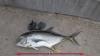
Fished the outgoing and caught a nice 30" slot snook on a windcheater. Later on soaked a pilchard on an Avet mxj 30# mono line, and got hit by this jack. I couldn't land him, about 20 minutes into the fight I ran out of steam( almost line too) and handed the rod to my buddy, it took another 20 + minutes to land this beast. Pound for pound, as good as it gets.
-
Only thing you can really do is to do your own part in keeping areas clean. I would not approach people in order to reprimand them, lots of unstable characters out there and a confrontation may be unwise. Calling the authorities may be the best thing you can do.
-
Stripers are very much like the snook we catch here in Florida, with the exception that stripers have the potential of being larger I use pretty much the same gear for each. My pretty much standard set up for inshore fishing (casting and retrieving of lures) is a mh 10/20 spinning rod, 4000 reel and 15-20# braid, a live bait set up I would be using a heavier rod. My choice of rods has a much to do with where am I'm fish as to the baits I'm using and target species, different species fight differently. Shore fishing like from a beach I can use lighter gear, a fish can't run deep as the water is shallow, they run out distance. Fishing from a jettie, a heavier rod is needed to keep them out of the pylons. There is also quite a difference between an inshore and offshore boat rod even though the line and lure ratings may be similar. My good rods don't break the bank and don't break when handling a hefty fish, most of my rods are around a $100.
-
Shore fishing, 1 rod Jettie fishing, usually 2 sometimes 3 Boat offshore, 3. 1 conventional, 1 boat spinning and 1 hvy inshore spinning. Rods are never on the deck, must be in a rod holder when not in use, need room to move without tripping over anything.
-
I don't recommend specific brands, my pleasure may not be yours and I don't need that on my conscious. If I were buying 1 spinning set up for freshwater (none of mine cost $300), my rod would be a med that fishes heavy or a mh that fishes light, in other words I want something kind of in the middle. My reel would be a lightweight 35 or 4000, for line capacity and more horsepower if needed for other species, agree with Stasher on the braid. For me, being primarily a saltwater fisherman, that kind of an outfit feels like a toothpick to me, pretty lite. I have that set up in my garage right now, I can fish it all day long and never get tired.
-
You're as good as the water you are fishing on.
-
I've loaded up reels at tackle shops, very seldom does the actual amount of line I've spooled match the numbers on the reel, reel manufacturer was irrelevant, I use the numbers as general reference only. I've yet to come up with any concrete reason to change my brand and size of braid, except if something is on sale.
-
I never thought about either, setting the hook should be a natural reaction with no thought involved. My rod may not always be in the same position when a strike occurs, you have to be ready at that moment. I would consider using a left hand crank reel instead of the traditional right, that should give you more agility, strength and reflex time at any position. A second recommendation would be to strengthen your left arm, simple excersize would be to use an elastic band on a door knob for your triceps. Do some wrist and forearm excersizes too. I would actually mimic excersizes that golfers use to add power to the left arm on the downswing. IMO a fish does not always strike from the same position, from the back, the sides, and from different places in the water column, pretty hard to plan for that, best just be ready for what happens and react accordingly.
-
Why I like bass fishing Seldom get skunked Light tackle Not much strain on my body Most relaxing kind of fishing I do, I don't keep it intense I like setting the hook, something I don't do much of in saltwater