enforcer
New Member
-
Joined
-
Last visited
-
I'm not sure how do'it's new essential series is but I found that their other plastics had decent strength but were terrible for yellowing . I think premium is only in the pricing ! Heat stablizer helped some but not nearly enough for my satisfaction . If they have minimized the yellowing in the essential series then it should be pretty decent plastic Lurecraft has a great plastic , I've used the 502 medium which is quite durable and makes a good bait , but at this point I'm using the plastic from bait junky which is also pretty good . Both plastics are better than do-it in my opinion , they are cheaper and they last longer before burning up . I test a lot of molds and my plastic gets tortured from being reheated a rediculous amount of times , far beyond what would be considered normal use , so I need a tough cheap plastic since most of it eventually lands up in the garbage Bait wise , I've been happy with the action of both mentioned plastics . I fish a lot of nasty areas and they stand up to the abuse and the baits behave as they should
-
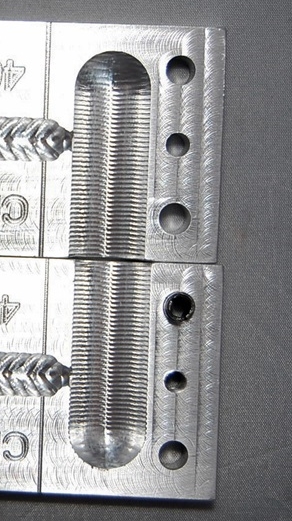
the sprue is the injection port
-
the bait will draw plastic from the sprue as the bait cools , and if theres not enough reserve in the sprue then it'll draw what ever plastic that it can , then it'll suck in air . best thing to do is to keep the sprue topped off and don't over heat the plastic
-
if you can push a wire thru the worm then you'd be able to suspend it , Fill 1/2 way up the worm , Let your material cure then pour the other other 1/2 over top . at some point in between you may want to add a couple locator pins or something so that your molds close up properly located every time . Its possible that your molds won't be tight enough to need venting , but if you are getting air locks then a hacksaw is a quick venting tool . a single side pour would do for most flukes
-
Thanks for the welcome and the compliment .
-
there is cost efficiency in making ones own baits , the materials are fairly cheap , but most important is the resale value is quite high if the equipment is taken care of during largie season I found that I shreaded so many baits that I needed to make my own . I've spent so many days after work and on the weekends that I averaged roughly 5-6 days on the water . Cost of baits wasn't as much of a factor as selection and the reliability of the products still being on the shelf mid season , I loved the gulp worms and I'd easily blow thru a pack a week since the summer bassing here is soo productive , but I had too many experiences of them being sold out . So I looked into my own baits , plastic is relatively cheap and I simply started machining my own molds since I have the right machinery . Bait choice is almost instant , color of the day is at hand . if affordability is a problem for a guy/gal , then there are a lot of materials that can be used to hand craft molds , a lot of people are using silicone bondo etc , Personally I found the two part urethane from smooth-on to be extremely tough , durable and fairly easy to work with . It's not as easy to have as perfect of baits as a machined aluminum mold , but at the end of the day we are probably more picky about our baits than the fish are . I made my first few molds with plasticine and urethane , I'd model the bait then cast it . It worked ok except the urethane gets pretty warm while curing and the plasticine melts some , so it was a bit of a mess to clean the finished product but where theres a will ............ . I'm sure that any fly tyer will agree , we have more money worth of hooks , feathers and hair than if we just bought bags of flies at the tackle shop