


Turkey sandwich
Members
-
Joined
-
Last visited
Everything posted by Turkey sandwich
-
About to dig out the hunting boots to clear my car. We have well over a foot last I checked here in Philly.
-
I don't have an Ike series, but I do have a 7' medium Veritas I cranking rod and compared to the St Croix rods I'm used to, is very soft and lighter in power. That said, It's a great rod for shallow Crankbaits. For deeper running cranks (over 10'), I'm likely going to pick up a moderate action MH St Croix in the 7'6 range.
-
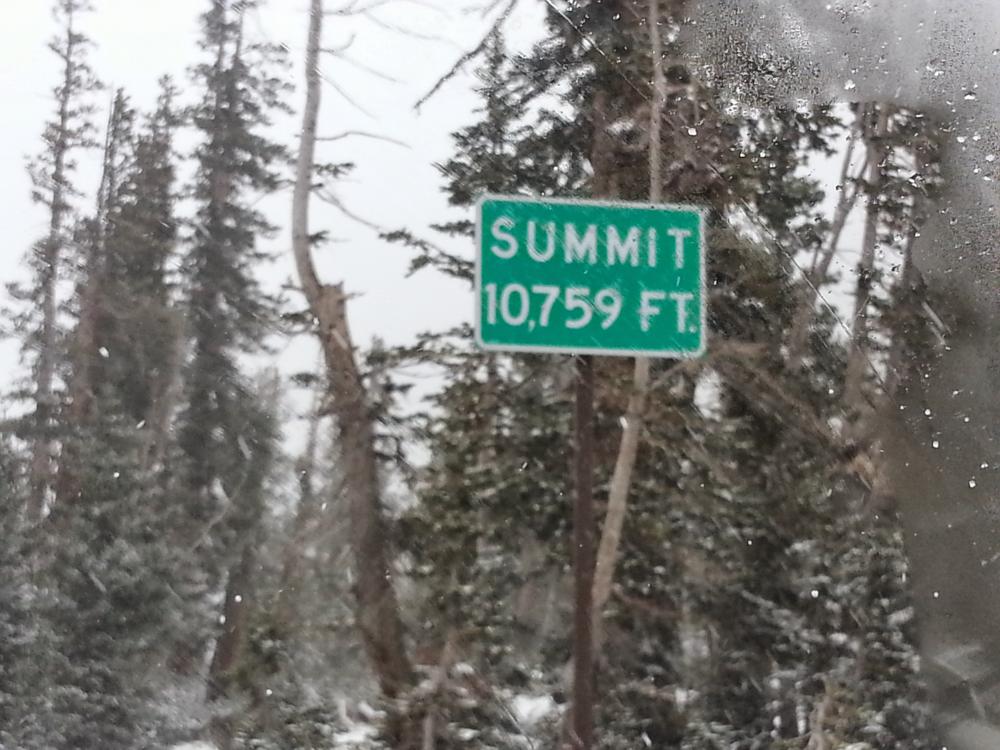
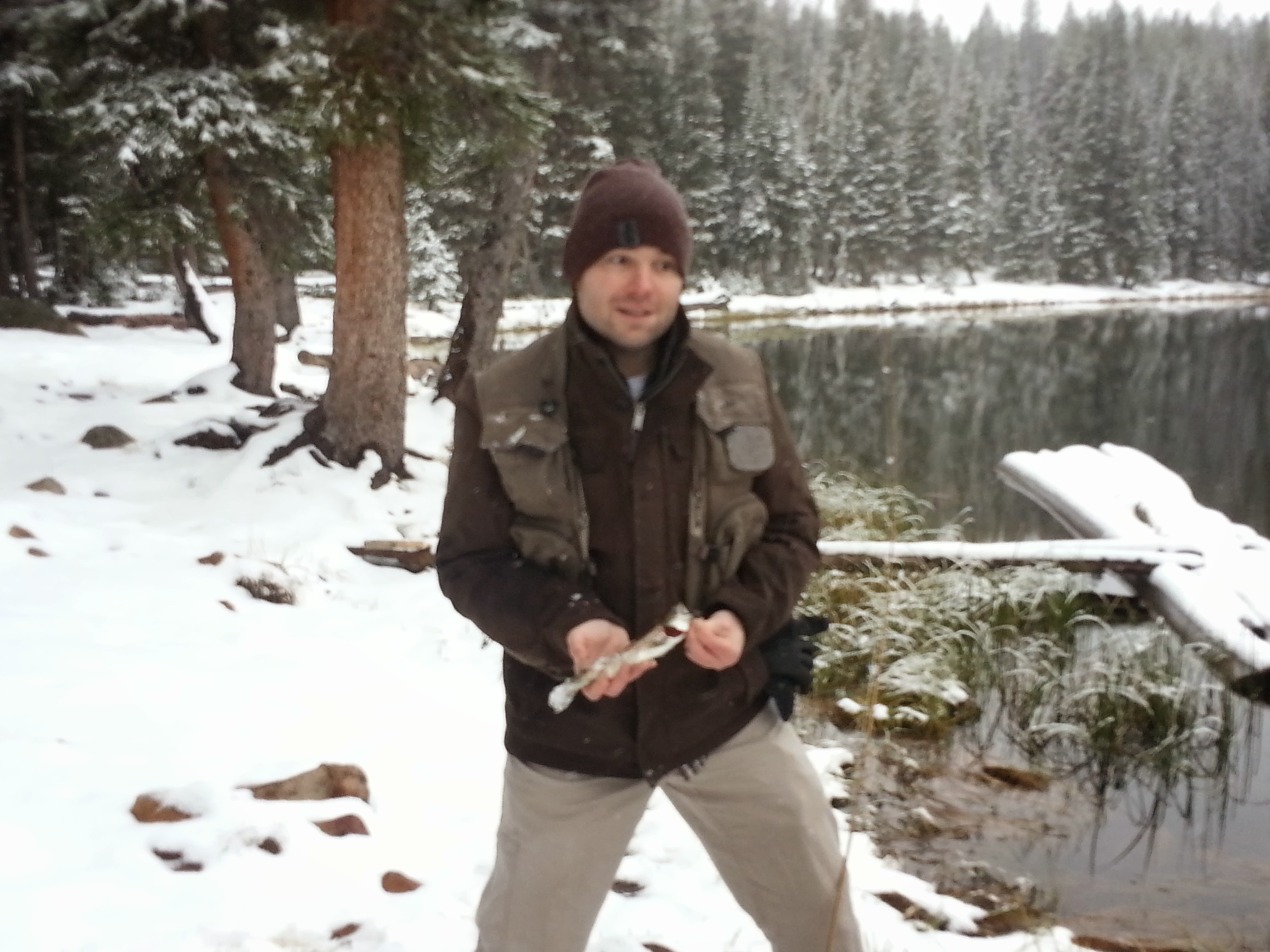
Here's a tiger trout on a 3 weight in the snow in Utah. Little guy, but amazing color!
 There are Dorado streams up north, right?Argentina seems amazing. Any trips out with the fly rod?That's a win!The photoshop is strong with this one.I'm not having the easiest time building a mental picture, but I'm assuming it's primarily smallmouth you're after and that your question has to do mostly with keeping your bait in the strike zone the longest. If that is the case, I'd focus on casting jigs, tubes, t-rigs, drop shots, etc from shallow to deep, making notes of any cover and the depth I'm catching fish off of. If you you have a picture or a topo map, I can probably be more specific. Also, welcome to the forum!I have a Rage MH XF worm and jig rod that's built on an SCIII blank and it's really stiff.I have Tim Holshlag's book. It's a pretty good intro River fishing for smallmouth, and it's covers all the basics. The In-Fisherman handbooks for large and smallmouth have been around in various forms for quite a while. Some of the techniques and gear referenced are a bit outdated, but most of the material is still really good. I'd suggest them for anyone who wants to go beyond the basics.KVD, Bomber, Rapala, etc all have square bill options for that price range. Sometimes you can find Storm Arashi squarebill cranks on sale at Dicks. Balsa floats faster than plastic. I like having both, they provide different looks. You can argue that plastic stays in the strike zone longer, while balsa forces a faster reaction on the pause. The flat, square lip is designed to flip it up and over hard cover versus bumping it's way around it. They're typically much more weedless and a great reaction bait, especially in shallow water.So, I was thinking about how much easier it is to find information now versus 15 years ago. Forums, youtube, etc are super helpful, but most fishing videos are more commercials than useful information and a lot of what's shaped my fishing off the water has come from books. I think it would be helpful to post a list of books and some notes on them. Some me that have helped me: In-Fisherman Largemouth and Smallmouth Handbook and Strategies these are both good introductions to seasonal patterns, lake types, and breaking down water. They're pretty reader friendly, and Al Lindner makes a lot of complicated things seem pretty simple. Smallmout Bass in Streams : Second addition by John Tertuliani mostly fly oriented, but provides a lot of quality info about locating smallmouth in streams, how to present in current, and a just different perspective that's been really helpful in understanding streams. Why Fish Don't See Your Lures: How Fish Vision Affects Intelligent Tackle Color Selection by Greg Vinall - the bulk of the book is about color visibility at depth, in different water clarities, etc.. If you want to know what colors to fish, in what light conditions, at what depth, etc this is a great book. Fishing The Big D by James McKay - cool book that breaks down the sections of the Delaware River, but also gives a TON of regional history. These are a few that are sitting in front of me. Anyone else have any favorites?Figured I might try to get my money's worth :). What "best of"? I don't know if I've ever noticed one.Congrats! Those are monsters!I don't understand the above post at all. ? as for the Veritas rods, I have a Med crankbait (slower action, or a "bendier" rod) Veritas 1.0 that I bought a few years back and though it's pretty under-powered compared to say, St Croix, it's a great rod for shallow running Crankbaits, jerkbaits, and lighter lipless cranks. I've actually grown to like it a lot for an inexpensive rod. Every manufacture has different power and action ratings. One company's medium is another company's medium heavy. One company's fast action is another company's extra fast action, etc.As for PFDs, I have a Cabelas guide wear self inflating that is ridiculously light, totally out of the way, and very, very easy to maneuver in.Your Toledo Bend thread is essentially a problem solving book on fishing that lake. How do you typically differentiate between productive humps and points versus maybe more secondary options? I like your notes on boat positioning and presentation once you get there, but what do you find makes on point, cove, or hump more attractive for large fish than other, similar structure? Even in deeper lakes, do you ever adopt a strategy of fishing heavy shallow cover versus deep weed lines and offshore structure?Another suggestion - for fishing finesse soft plastics either weightless or on light jigs/bullets, a high vis braid makes a great main line for line watching and offers great sensitivity.Great tip. It'll also help keep your fish on the line. Anywhere you'll be fishing around rocks, clam beds, or submerged razor wire, Hybrid leaders are tough to beat.Anyone else watching the Informative Fisherman YouTube channel? Between that, and the Navionics webinar channel, I've been addicted for months.Welcome to the forum! some notes on tubes: - I don't have any one brand allegiance, but I do like Zoom Salty Super Tubes, Strike King Coffee Tubes, Gitzits and a handful of smaller brands. Dry Creek makes some pretty cool laminated colors. Havoc's Iaconelli Smash Tubes also have some great colors, but they're huge (over 5") and not my go to most of the time. - size is probably more important than anything. Having tubes in 2.5-4" will serve you best the vast majority of the time. - colors - generally, think of tubes as a crayfish/sculpin/goby imitation. Colors like root beer, Watermelon, green pumpkin, and some basic variations with greens, reds and oranges will cover you 75% of the time. I also have colors like junebug, watermelon slice, and fire tiger for darker days/more stained water. Also, are you fishing weeds? Rocks? Tubes are super versatile and can be rigged a ton of different ways with and without rattles/beads.I think one thing, that I am better than most at, is smallmouth fishing on rivers. I grew up on the Susquehanna and still know miles of it like familiar highway. These are are some notes that I have: -bass fisherman can learn a lot from trout fishermen about how to read a river. Paying attention to things like inside/outside bends, changes in current, converging currents, and current breaks are huge. If you learn basic seasonal patterns and can read the river, you can eliminate a lot of dead water. I've even watched guides on local/regional outdoors shows waste a ton of time fishing dead water. If you have an outboard or especially a jet boat, you can be very, very efficient in the summer and fall. - as kind of a follow up, in rivers, depth is all relative. Often, fish aren't going to be able to drop down to 20-30' of water after a spawn the way they might in a lake. A 3' drop, with access to current might be equivalent to a 10-15' drop along a point or bluff wall in a lake. Remember, moving water provides food, current breaks provide resting/stacking points, and in moving water, depth doesn't always provide the temperature changes it does in ponds or lakes. Also, remember, in current fish need to eat more frequently and be closer to a consistent food source. A 20' hole or deep bend may look promising on a graph, but unless it offers close shallow water access with current and/or a hard bottom with current breaks, it's likely dead water. If you are marking fish, they're certainly worth a few casts, but they also aren't likely the most active fish. - in many rivers during the summer, helgramites and madtoms/stone cats are king. Tragically, there aren't a whole lot of great soft plastics out there that represent them well. Outside of using live bait, some of the best imitations I've found are fishing worms with small appendages near shorelines (ideally with some depth) with either a very light nail weight or drop shot (especially with the dropshot, you want the weight light enough for your bait to still drift in current) between riffles and rocky shorelines (helgramites) and fishing fat grubs or small paddle tails like Confidence Baits' Bird or some goby imitations on small, weighted worm hooks in current make a decent culpin/madtom imitation. In all cases, bottom contact is huge. Another cool strategy to emulate helgramites is drifting black/brown/olive bead head wooly buggers on a 4-6 weight fly rod. -here in the north, big smallmouth love perch (and why not? They're delicious). If you can find a school of perch, it's pretty likely that you'll find smallmouth nearby. Crankbaits, jerkbaits, and spinnerbaits with or without Keitech trailers can be a great way to pick up a kicker fish. - smallmouth do not require small baits! They will crush full sized spooks, 3/4oz spinnerbaits w/trailers, and even big crank baits fished aggressively when conditions call for them. - when in doubt, be simple. The reason you can still see small spinners, grubs, and tubes everywhere is because they catch fish almost anywhere. Spinners aren't typically my go to for size, but they're a great way to locate fish when you can't seem to buy a bite. Also, with the grubs and tubes, the size and weights used are typically much more important than the colors. - smallmouth are super competitive in almost any body of water. You'll often get fish following right to the boat. I will almost always keep a light or ultra light rod rigged with light mono and a grub on an 1/8oz ball head to flip to following fish or short hits. it's almost unbelievable sometimes how many fish you can boat following something like a rattle trap with a finesse grub. I hope this is helpful to some of you guys, at least in terms of getting more efficient on a river, and getting a better picture of what's going on down there.There's a lot of really great info on here! There are a ton of you guys I'do love to get on the water with and pick your brains. The thing that I'm probably best at doesn't necessarily have to do with time on the water, but likely learning efficiently instead. I was always pretty analytical, but I was extremely lucky in college to be able to study under and work with a leading researcher in learning, problem solving, and the development of expertise... Or I guess simply "how to learn". It was a really humbling experience to actually break down the process, especially with common "genius" cases like brilliant musicians, artists, and innovators. Interestingly enough, the same ideas have really benefitted me in everything from my career, to how I teach Brazilian Jiu-Jitsu, to how I approach my time on the water. The really short version of lots of research and case studies is that hard work plays a big role, but so do things like structured practice, tiered and evolving goals, engineering or troubleshooting a problem space, etc. For me, it was really motivating knowing that inherent "talent" isn't nearly the factor it's made out to be, and that most of time we just limit ourselves at what we decided to get "good" at. I think, also, it may give me a different perspective than most when it comes to how I pursue my time on the water. I don't get as much of it as a lot of you guys, so I spend a lot of time learning a body of water before I get there. I'll typically have topo maps (if available), DNR fish surveys, YOY surveys, reports on water quality/silt/blooms/nutrients, etc, before launching the boat or putting on my waders. When I do get on the water, I'm paying attention to the sizes of baitfish, what's living under rocks, the colors of crayfish, relative water clarity, weather, etc. This also taught me to learn more techniques and diversify how I fish (for years, I was a jig/worm guy) without getting too tied down to just one strategy. I keep notes on how/where they were caught, but focus probably more on what/how I was imitating than just the lure I was doing it with. The result might be similar to how a number of you have expressed having an engineer's approach to fishing. For me, it's the process of learning as efficiently as I can. It certainly doesn't make me a better fisherman than most of you guys, but I think it's ultimately given me a better than many understanding of what's happening under the water in the amount of time I've been back to fishing regularly. That said, I would love to get out on a boat with a lot of you guys and see how much I don't know.


Important Information
We have placed cookies on your device to help make this website better. You can adjust your cookie settings, otherwise we'll assume you're okay to continue.