



Captain Phil
Members
-
Joined
-
Last visited
Everything posted by Captain Phil
-
Whenever you look at any new water, first look at the water clarity. This will determine what tactics work best. Clear water means light line, top water and finesse baits. Dark or cloudy water means spinnerbaits, rattle traps and paddle tail worms. When fishing a small lake you have an easier task as the fish can't get away from you. I would concentrate on the weedy areas first. Are there any boat docks or structure in this lake? How about culvert pipes? I fished many small residential lakes when I was a kid and some of them were great. Golf course ponds can also have great bass fishing. Good Luck!
-
The water in John's lake is pretty clear. My buddy that lives on the lake likes soft jerk baits (flukes) and does pretty well. Good Luck!
-
Thanks for the info. I had heard that they were considering filling L67 at one point. Then I heard they were going to put weirs across the canals to force the water out into the Glades. Has any of this work affected the fishing? I have fond memories of L67 in low water when we caught so many bass our arms were tired. The mudfish were so thick you had to run a stainless prop just to run the canal. When I was young and stupid I used to fish those canals at night alone. Yikes!!
-
I was a professional guide for a number of years. Guiding is hard work. The hours are brutal and the profits are minimal. Most local guides are tournament fisherman who guide to offset their expenses. Driving someone around the lake for a day takes up time. Showing them your spots takes money directly from your pocket. The following week you will have an entire bass club sitting on your fish. A full time professional guide needs all the money he can get to turn a profit. They wouldn't have time to do anything for free even if they wanted to. Many big time tournament pros pay guides for quality information and good information costs money. Guiding is a business and it's not all fun.
-
John's lake is a great bass lake. It gets a ton of pressure, so you have to fish a little differently. There is a lot of rocky structure in John's lake. The best way to fish these areas is with a Colorado rig. Start at the lake points and work down the ridges until you find fish. There is a great area on the left section of the lake. From the ramp when you get to the open lake turn left and run to where the canal joins the lake. This area is very rocky with a hard bottom. When the wind blows there is also current. Fish the canal opening and the entire area within 100 yards of the mouth. When you find the rocks you will find fish. Year's ago the hot bait in John's lake was a floating worm with no weight. I throw this bait on 8 pound test with a small swivel about 12" in front of the hook for weight. Fish it slow and let the bait float in around the weeds and stickups. The hot color back then was bright pink and white. I still have some of these worms in my garage. I haven't fished John's lake in a long time. A friend of mine lives on the lake and catches big fish regularly.
-
I spent most of my younger years fishing in South Florida. Much of the time I fished Everglades Holiday Park, L67, the Miami River and Alligator Alley. In those days you could run from Holiday Park all the way to Tamiami Trail and far out the Alley. All the canals were interconnected. Since they have been working on the Everglades, I'm wondering if you can still run these canals?
-
Every canal and/or ditch in Florida contains bass. Most residential canals in Plantation were dug some time ago and hold lots of fish. These canals are usually clear. Use a light spinning outfit and a Watermelon seed color Zoom Trick worm. That should get you some bites. Small top water lures work well also. If the canal is less than 20 feet deep, don't be afraid to fish directly on the bottom. You may be surprised to see what you catch.
-
If you want to catch big Florida bass in summer you should try fishing at night. I fished the Everglades and Okeechobee at night and caught many big summer time bass. My favorite bait was a 1/2 oz. spinnerbait. Bugs are a problem, but it's worth the effort. The best time is usually from 12:00 AM until dawn.
-
I'm with you. I would rather fish three days without a bite for a chance at one fish over 8 pounds. I used to fish with a guy who would cast out a big worm, let it sink to the bottom and smoke a whole cigarette before moving his bait. He caught a bunch of fish over 10 pounds. Most anglers fish too fast for big bass.
-
Yikes! I didn't know they had snakeheads in South Florida. This doesn't surprise me a bit. Keep them down there....
-
I lived and fished in South Florida for 40 years before moving to Central Florida. South Florida has big fish, but the canals are full of small bass. These small bass will jump on anything they can get into their mouths. If you want to catch 100 of them in a day, throw out a 4" Rapala and see what happens. The biggest canal fish I ever caught was 8 pounds but most were 12 inches. The good news is the number of fish in these canals is much greater than in a natural lake. If you want to target only bigger fish you should do a number of things differently. First is fish where they are and second use bigger bait. When I lived in South Florida I never caught a bass over 6 1/2 pounds until I started fishing with big plastic worms. Try a Zoom mag II or Ol'Moster worm with a small weight and fish it dead on the bottom. Slow down and fish quality not quantity. Larger top water lures also attract big fish, but you have to stick with it My favorite is a Devil's Horse in chrome with a black back and an orange belly. I had a good friend who made over $100,000 a year fishing tournaments with that lure alone. Many times I went to the scales only to see him standing there with two 8 pounders, one in each hand.
-
I have always wanted to fish this lake. I called a few years ago and found out it was off limits to everyone except for boat rentals. Why do they do this? I drive by the lake on the expressway and no one ever seems to be fishing on it. Seems like a huge waste of the resource to me?
-
I'll tell you a funny story about Loxahatchee. Years ago there was a tackle store in Broward County that used to run regular tournaments. They were buddy tournaments and very popular. At the end of the year they had a Classic for a big cash prize. As luck would have it my buddy got in a fight with the tackle store owner and decided not to fish the classic. This left me without a partner. The classic was at Loxahatchee and I had never fished there before. At a bass club meeting another member told me his brother also needed a partner for the classic and that he fished Loxahatchee all the time. I took him up on the offer. In those days I fished out of a high performance bass boat with a hot 150 Merc. At the time it was one of the fastest boats around. The day of the tournament I met my new partner and we were sitting in the marina waiting for a flare start. Back then they shot off a flare and everyone took off all at once. As you can imagine it was quite an experience. Anyway, before we took off my new partner told me to stay put when everyone else left. This was really annoying as I was used to charging off in a cloud of spray. After everyone left he told me we were going to fish the marina itself. I shut off my motor and we started fishing. The water was running and I fished down the outside bank with a Texas rigged worm. About 3-4 casts in I was surprised when I got a hit. I set the hook and put a 6 pounder in the boat. We fished that bank and put 5-6 pound fish in the boat all morning. The fish were stacked up in front of the marina and we were in plain view of the tournament officials. After we limited out we spent the rest of the day riding around. We won the classic easily and could had never fired the big motor. Great memories!
-
Years ago when flipping first became known, I couldn't believe that a fish would be right under the boat. I soon found out I was wrong. I practiced pitching into a coffee can at first. If you knock over the can you're not doing it right. In Florida, if you're not flipping or pitching you're not winning many tournaments. When people ask me about flipping I tell them to go out with a good flipper at first and watch what they do. This will give you much needed confidence. When I first learned to flip I left all my rods at home except for my flipping stick until I caught some nice fish. After that it was easy.
-
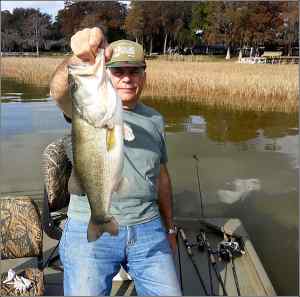
In Florida a 5/16 oz. weight is about right. Our grass and cover is fairly loose with small pockets here and there. I target these pockets and try to drop at least every three feet or so. Sometimes the fish are right next to the grass line. Other times they are much further back. When we fish team tournaments I flip 2-5 feet in and my partner pitches 10-15 feet. The only time we need bigger weights is if we are fishing hydrilla mats. I have fished these mats with 3/4 to 1 oz. weights, but it's not much fun. Fun or not, these mats sometimes hold big fish. I'm old school so I use 25 pound Big Game mono for flipping and pitching. You need heavy line in Florida as you never know what's going to be on the end of your line. I don't like braided line for flipping or pitching as the rough texture hangs on the cover and impedes the drop. Many of my friends use it without issues. It's hard for me to switch from something that works.Flipping and Pitching is most of the fishing I do. I can see no need to pitch over 15 feet or so. The whole idea of flipping and pitching is to have your lure drop into the water as quietly as possible. You should thumb your spool slightly as you pitch and raise your rod a little just before the lure hits the water. After some practice you should be able to place your lure gently on the water with very little splash. If you are getting a lot of loose line, you are not controlling your line as you pitch. The most important thing to remember when flipping or pitching is to not interfere with the drop. Let the sinker and lure fall naturally on loose line. It's the drop that triggers the strike.Your question about the effect cold fronts have on northern or southern fish is an interesting topic. Down South where I live the water never gets much colder than the high 40s. However, Florida largemouth bass turn off severely when this happens. We don't have a lot of deep water, so our fish dig deep in heavy cover especially wood. There are two cold front tactics that have worked for me over the years. One is fast and one is slow. The fast method is to rip a rattle trap or lipless crank bait and trigger a strike with a fast erratic retrieve. I don't have a clue why this works, but it does. It's tough work, but it has bailed me out of a lot of nasty cold front situations. This works best if the water is murky. The slow method is to slow way down and flip heavy cover with a small jig or soft plastic lure. Make as many drops as you can and give the fish time to find the bait. Some of my biggest bass came on a cold high sky day in January. Whatever you do, keep up your confidence and stick with it. You won't get as many bites after a cold front, but you may catch more fish than the rest of the anglers.Okeechobee and Toho are both huge bodies of water with very little in the way of bank fishing. However, I have caught some nice bass fishing from the rim canal near Belle Glade when the water is flowing. Other that that, I would definitely hire a guide. Make sure you tell the guide what kind of fishing you like to do and what you expect. When I was guiding most of the problems came from miscommunication. Not all of us are mind readers.The Harris Chain holds a lot of water. It can be hard to fish on occasion, especially in the warmer months. Griffin is the hot lake right now. Run up to the north end past the big islands and fish from the bank out to the boat. The fish are holding in eel grass in the open water. Pads hold the bigger fish. Don't be afraid to throw a plastic frog pulled over the top around pads and cover. Hold on to your rod!!I have been fishing Florida canals all my life. All bodies of water in Florida contain bass. When I was a kid I caught tons of bass from the back of a sewage plant in NW Miami. The water coming out of that plant had 2 feet of soap suds and bass were everywhere. Canal bass are much easier to catch than lake fish and will readily hit most any lure fished right. There are a couple of baits that you should try. The most effective bait for these fish is a 6-8" plastic worm. Try it without weight on a spinning rod with 8-10 pound line. Add weight until you find fish. The second bait I would try would be a Rapala minnow in gold or silver. Again, throw these lures on light spinning tackle. These canals are usually pretty clear, so downsizing your line will help. Any canal you can fish is worth a try. Good Luck!Nice spinnerbait bass from Florida's Harris Chain.Thanks for the welcome. I took some time off from fishing to work on some health problems. All is better now and I have been fishing Griffin lately. Hard to believe this was the lake it used to be. The water has cleared and the fishing has been great. We went out today and caught a limit to 5 pounds. Bass are schooling in Griffin State Park. The water has dropped some, but the clarity is holding. I'm so glad the big tournaments are finally gone. I'm not much for fishing in a crowd.
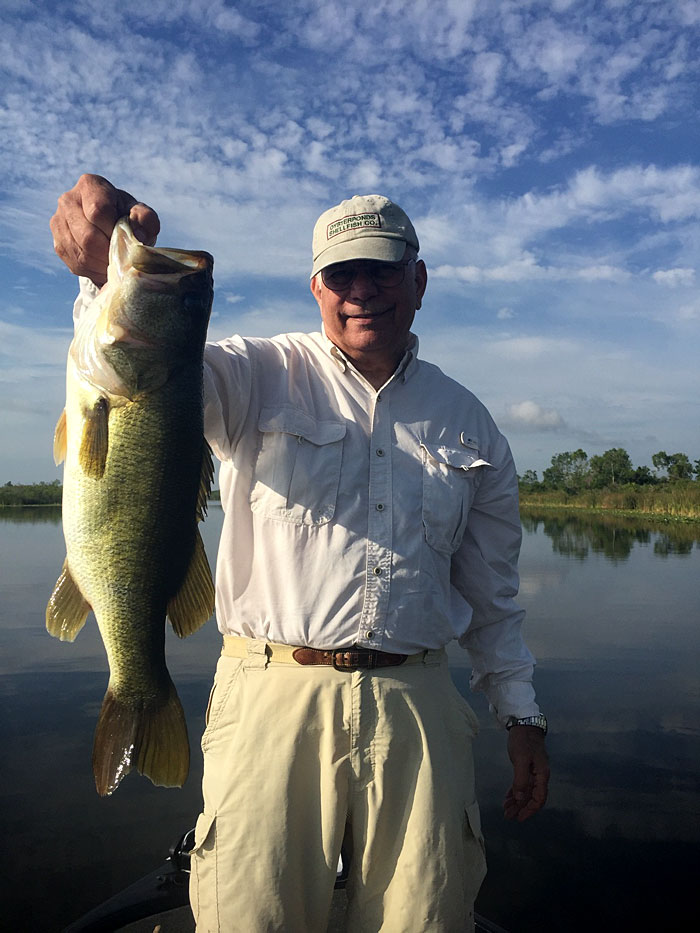
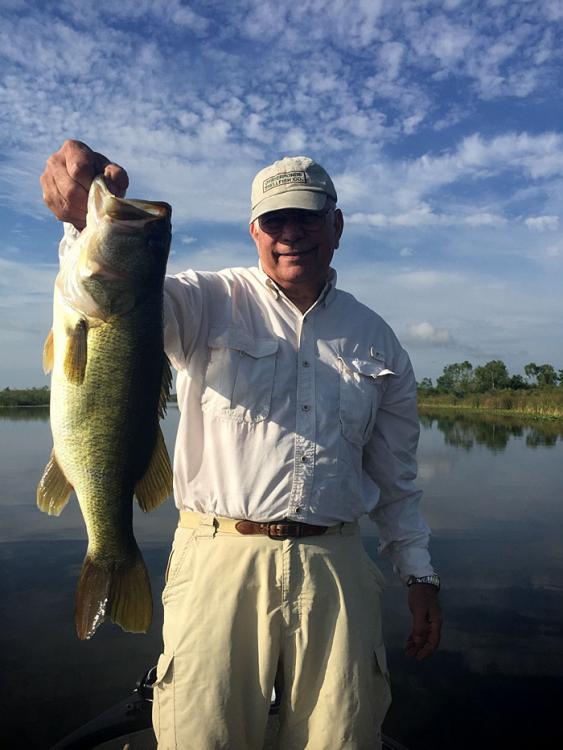 Some of the biggest Florida bass I have ever seen came from small orange grove ponds. However, this is where flipping has a huge advantage. A good flipper will catch bass from large heavily fished lakes and reservoirs that a casting angler will never see. There are more big fish in our waters than most people imagine. I have had the pleasure of riding with game officials during electrofishing and population exercises. In our waters, bass exceeding 8 pounds are not uncommon and are mostly buried up in very heavy cover.I have been bass fishing in Florida waters for over 50 years. I retired from tournament fishing some years ago, but I do still fish as often as I can. As you would expect, my PB is pretty large when compared to an angler from the north. Right now it's 12 pounds with 2 over 11 and dozens over 10. You definitely need to fish waters known for large fish. There are some big fish in every lake, but fishing trophy lakes gives you a better chance at catching one yourself. Larger bass do not hang out with a bunch of small bass. They are solitary fish and much more difficult to catch, especially on artificial baits. Bigger bass normally have a much smaller strike zone, which means you need to get closer to trigger a strike or draw them in with big natural baits. Traditionally, Florida guides use large native shiners to target trophy bass. I never used shiners even when I was guiding. It's an easy thing for a guide to hang a shiner on a hook so a client can reel up a big bass, but it kills too many fish. I also don't sight fish bedding bass as I believe it hurts the fishery. The vast majority of my biggest bass came from flipping heavy cover. I realize this may not be the best technique to use in a clear northern lake, but you did say you are in Georgia. Learn to flip from someone who is good at it. Find the deepest heaviest cover you can find. Use a large plastic worm or craw and stick with it. In our local tournaments, all the biggest bass are caught with this technique. It works! http://www.LakeCountyBass.com


Important Information
We have placed cookies on your device to help make this website better. You can adjust your cookie settings, otherwise we'll assume you're okay to continue.