



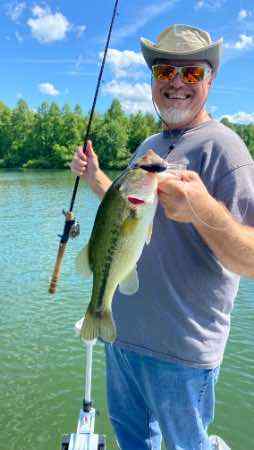
The Rooster
Members
-
Joined
-
Last visited
-
After I made this post I thought about the handle. It is a cork handle. I can sand it down and shape it so that’s what I’ll do. I can also measure in metric as long as I have a list of measurements to go by. How do I plan for specific guide locations other than the first guide being 51cm from the reel spool? As for rod balance, this is definitely a blank from yesteryear so some of the weight I feel might be in the blank itself. It’s about 30 years old now. But if I can’t balance it for use the way I want to then I have no use for it. For spinning rods I hold all of them by the foregrip in front of the reel. This is the point where all spinning rods balance and I find that it reduces stress and fatigue when fishing for long periods. Weight is still a factor but at least I’m not also fighting a tendency for a tip heavy rod to point downward when I need it upwards, stuff like that. I’ve seen some people hold their spinning rods right over the reel, with the reel stem centered between middle and ring fingers, or sometimes with one pinky behind it, and even worse, only one index finger in front of it. That last one makes for a tip heavy feeling no matter what. So I do have to think about balance for those reasons. If I can get a light set of guides to remove some weight out front then I can also use a lighter reel in behind, and theoretically maintain balance while also reducing weight.
-
I’ve went back and forth on this for years but lately I’ve developed more interest in building my own rods to satisfy my desires of what I think makes a good rod. This is mostly due to not being able to find very many spinning rods that have a grip that satisfies me, and when I do there’s availability issues, reel seat issues (think Fuji DPS seat flipped upside down with threads on top), hook keeper placement issues (can’t stand having it close to the handle) or sometimes price issues. And before anyone says it, concerning price, I know that making rods isn’t going to be cheap, but at least this way instead of spending $160 on a St. Croix Premier and having every rod in the rack always look identical, I would get exactly what I want in every one I make, right down to color choices, graphics, and custom matching the reels, and maybe even thread color changes to denote actions and powers to make it easy to tell one from another. I figure if I’m going to spend the money, it might as well be perfect in every sense of the word and offer options that I don’t get in branded and manufactured rods. But, before attempting a complete build, I want to cut my teeth on a lesser project. I have an old rod here from the mid 90’s, a Quantum Dance Class 6’6” medium/fast rod. Some might remember them, they had blue colored IM-6 graphite blanks with Bill Dance’s signature on them and had full cork handles. Very similar to the current St. Croix Triumph rods in color and feel, but somewhat heavier overall. This rod is kind of heavy at 5-1/4 oz and it currently has a cracked line guide. I’ve posted about it before, about just replacing that guide only, but I never did try it. It’s leaned in the corner for over 10 years now, just waiting. Now, instead of replacing that guide, I think I’d rather just strip all the guides off of it and go back with something completely different, as a starter project. I’ve studied up on guide placement and theory, and I understand that this rod currently has the old Cone of Flight design. It has a large 25mm stripper guide and has a total of 7 guides that get progressively smaller all the way out to the tip top. They don’t all line up either, due to placement and size differences, so it’s not even a smooth cone transition. If I’m going to replace all the guides I would rather put guides on that fit either the Fuji New Concept placement, or maybe even the KR Concept placement. Only thing that might make me choose one over the other would be how difficult it might be to remove the current tip top. I don’t want to damage the blank trying to twist that off. The New Concept system might allow me to just use a standard guide, not the KR style, and match the current tip top. I’m imagining that they make some standard guides that are lighter weight than these large guides it has now. I also don’t think it needs a big 25mm stripper guide. Something smaller diameter should do fine. I’ll use this rod with 8-10 pound mono line at the most, or maybe braid, though if I use braid then the KR guides would be better. For this project, my goals are: Make a useable rod from one that currently isn’t useable. Learn how to place and wrap guides and finish them. Possibly gain a lighter and better performing rod than I had before, and one that will balance with a lighter reel, something in the 7 to 7.5 oz range instead of the current 8.6 oz reel it takes to balance it now. I’ll consider a complete handle replacement too if there is a way to remove that. The current handle is fine, but it feels bulky in diameter. Something thinner and more streamlined might be nicer. I’ve watched a lot of videos online where people have removed guides and they managed to clean the blank up so well that the old guide placement wasn’t even visible anymore. I am assuming that the Cone of Flight guide placement might not work with the New Concept spacing since that concept involves using more and smaller guides placed closer together. So cleaning up the blank is going to be necessary since the guides would be in new locations. One final thing. I plan to build my own rod making station. I’ll buy the rotating and drying motor since those are already cheaper than I could build one for, but I’m an accomplished woodworker so building the other needed supports and thread wrapping devices won’t be a problem for me, and I already have some of the materials here that I’d need for that anyway. I also think that will make this whole thing even more enjoyable rather than just buying a thread wrapping station. I guess the point of this post is to ask if there’s any advice you could offer or maybe point out anything I haven’t thought of yet? I will post pics here to show progress and the complete project once finished.
-
This post is just for fun. Since it’s too cold to fish and rods have been on my mind a lot lately I thought I’d see where everybody is at on this. Whether you own it or not, I’m curious to see what rods people like best in the different price points. Under $50, $50-$100, $100-$150, and so on. For me the $150 price point is just about the ceiling. I would go a bit over to get a couple of specific rods but I’m usually well below that in price. My choices are: $150-$200 range: Spinning: Riding the line and coming in at just over $150 is the St. Croix Premier, and ONLY the spinning version. To me there’s no better spinning rod. It’s a good looking rod, the handle is made just right with a good sized foregrip, that hook keeper is up out of the way where it belongs, it has a sensitive enough blank without being brittle, and it was just redone to now include Fuji tangle free guides on a redesigned blank. There’s nothing more I could ask for. I have one of the pre-2025 versions. It has been excellent. Casting: Dobyn’s Sierra. I’ve not seen one of these in person yet but they come with good reviews, they look good, the handles look comfortable and they use a Fuji ECS reel seat. So far they are checking all my boxes. $100-150 range: Spinning: Lew’s LFS. This is an interesting series to me. I love the handle designs and the hook keepers are not in the way. They have Fuji components. Should be a good rod, but I have not seen one in person yet. Casting rods look good too, but there’s a casting rod that I like better. Casting: Dobyn’s Fury. Good looking rods, uses a no nonsense Fuji ECS reel seat with a large enough split cork grip to be comfortable. Rod feels great in hand. I don’t own one yet, though, but it’s on my short list. $50-$100 range: I shop in all of the ranges that I listed but this is the range I tend to buy in the most frequently. Spinning: Shimano Convergence. Made with a carbon blank and a small foregrip with the hook keeper located up out of the way, both of which allows for keeping a finger on the blank for sensitivity purposes, this rod feels like it would be a good bottom contact rod for light plastics rigs. Also for wacky rigging. If I needed a spinning rod today and wanted to save a little money, this is the rod I would buy. But I’m currently using a previous generation St. Croix Mojo for all of these same reasons. Casting: Shimano Convergence again. This rod fishes well above its price point. It has a full cork grip, a Fuji ECS reel seat, and a good looking black and red carbon blank with aluminum oxide guides. I have the previous generation Convergence which had a composite blank that made it excellent for crankbaits. The newest version’s carbon blank is better suited for bottom contact baits like jigs and plastics rigs. Shimano makes great quality rods at any price point but I’ve always thought they were the best available in the under $100 category. If you need a budget worm rod, this is it! Under $50 Spinning: This one will surprise you. My favorite spinning rod under $50 is not a bass rod, unless you like a little excitement in your bass fishing that is. My choice is the Shakespeare Micro Series. I just got a 7’0” light Micro for crappie fishing. This rod has to represent extreme value since it comes in at just $26 but performs so much better than that. You do have to shop the rack though to get a good one. I went through three of them in the store, even swapping the tip from one onto another’s butt section before I was satisfied. But once I got a rod with good straight line guides, I think it would be hard to beat for the purpose I’m using it for without paying at least twice as much. Casting: I don’t honestly have a choice for a casting rod in this price range for obvious reasons. If I was pressed to choose it would be a Berkley Cherrywood HD or Lightning Rod, if you can still find a Lightning Rod under $50. The Cherrywood really isn’t a bad rod, I actually own one for crappie fishing in a spinning version. But for bass fishing I think I would want something a little better so I don’t put too much thought into this price point for casting rods. If you know of one, let me know. Also, in this thread, the sky is the limit! Whatever your favorite rod is in any price range, post it up. I might not be able to afford it but I can drool over it.
-
I wanna add my thoughts here. Maybe it will help. Maybe I’m even echoing someone else because I didn’t read through the entire thread, however I did read about half of the first page of comments. The very first thing I’d suggest is that the rod and line size needs to be matched to the bait you are throwing with it. As an example, a rod that is too stiff for a 1/4 oz crankbait is gonna be nothing but frustrating while trying to cast it and it will never work right. For that I believe you’d need a flexible tip to help load and throw it. Any time I am building a rod/reel combo I take into consideration the line size and type that I want to use, what kind of cover or structure I’m fishing, the type of lure and its weight, even how I want to use that lure (bottom bouncing, dragging, topwater, swimming mid water column, etc.) and build based off of that, keeping in mind how I cast, how much flex I want in the rod to launch the bait, and so on. One comment I noticed here said to adjust the casting reel so that the bait would slowly fall with resistance to eliminate backlashes. I found that advice did NOT work for me. That setting frustrated me because of lack of distance, causing me to “whip it” harder which also caused backlashes and inaccurate casting. I didn’t start getting better with casting reels until I actually adjusted the spool so loosely that the knob was just barely tight enough to prevent side to side movement of the spool seated in the reel frame. With it this loose, a backlash can happen easily, but it also allows casting much easier as well, and with much less effort so that it requires very little motion from my wrist and arm to send the bait a good 70-80 feet. Keeping the spool tension loose means I can comfortably cast 50-60 feet with just a roll cast (rolling my wrist) all day long and be very accurate while doing so, even from a seated position where arm movement may be restricted. I’m letting the flex in the rod load up under the bait weight and help launch it. The loose reel spool doesn’t resist at all and the bait flies off with ease. All I have to do is aim. I have also always used my magnetic brakes set fairly high since I have nearly no spool tension from the knob. Up around 8-9 out of 10. Recently I bought some Lew’s baitcasters and noticed I could set the magnetic brakes around 5 or 6 out of 10. Either these reels are just better than the others I’ve had in the past or else I’ve gotten better. Dunno which for sure but it likely isn’t that I’ve gotten better. Truth is I have some very bad casting habits. Such things as not even thumbing the spool but holding my thumb just above it and just letting the bait fly through about half the cast, only touching the spool as I begin to feel line raising up as a backlash forms. That is the point where the magnetic brakes begin to lose effectiveness as the bait is slowing down in the air. That’s when I begin applying my thumb before a disaster happens. Having said all that, I myself have dropped back in casting vs spinning gear. I once had 7 baitcasters and only about 3 spinning rods. Now I’m down to 2 casting rods while up to 8 spinning, but that also is counting all my crappie and panfishing gear. For bass it is just 2 casting and 3 spinning. I use casting rods for crankbaits 1/4-3/8 oz in size, and also bottom bouncing jigs and plastics rigs, large spinnerbaits and buzzbaits, and that’s about it. Also, I’m noticing that the older I get the more I am enjoying spinning gear over casting and have even considered going all spinning myself. Not because of casting problems, just simply because I like them better. They are less expensive and more comfortable to hold because my hand is only on the rod handle, not wrapped around the reel also. A few years back I began throwing some crankbaits on spinning gear, and last year I also threw a spinnerbait on spinning gear as well. I’m not sure I will ever completely replace casting gear though because I just feel that heavier and more resistive baits require casting gear. With spinning it feels like there is too much drag on the rod and tension on the line for a deep diving crank or big Colorado spinner blades. But maybe I just haven’t found the right rod, reel, and line combination yet. Finally I want to say, with fishing time limited, use the rods you like best. If you want to get better with casting gear I’d find 10 spare minutes in the evening at home and do some yard fishing. My neighbors think I’m crazy, always chucking a jig at my mailbox, but I enjoy it when I haven’t been fishing in a few weeks and it hones my skills.
-
The Dredger is still available here where I’m at. Not sure if they are still making them but my local tackle place had a lot of them last time I was there.
-
Early last year I bought four brand new BPS Extreme baitcasters. All of them were geary, some way worse than others. I tried greasing them up but it didn’t help. But early this year I found the fix for it. I sold all four of them on FB Marketplace and bought Lew’s for replacements. Problem solved. Also, I have noticed that my spinning reels are smooth as butter. I have 4 different brands, Daiwa, Shimano, Okuma, and Lew’s, and none of them have any geary feeling to them. The Okuma actually came new with some geariness but I opened it up immediately and added some Super Lube and it’s been buttery smooth ever since, and I used it more this summer than any of the others. Even when used with a heavy deep diving crankbait (Berkley Dredger 17.5) with loads of resistance, my Lew’s spinning reel is still smooth. The two Daiwas have 4 years of use on them now and only one has required having a little grease added. Not even a strip and clean, just added a squirt to the gears and closed ‘er up. Smooth like glass again. Has to be in the design differences between a baitcaster and a spinning reel. It’s enough to make me consider going all spinning and forget baitcasters entirely. I cannot stand a geary reel.
-
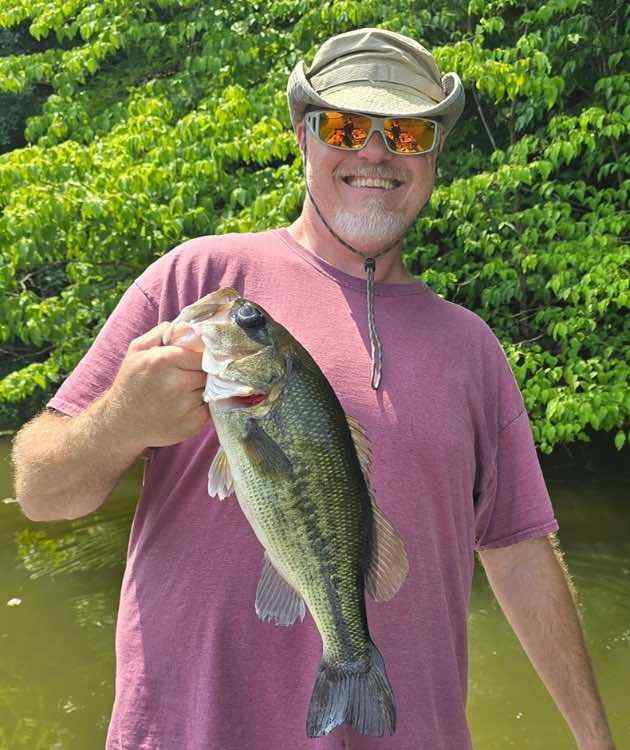
Got a new personal best yesterday. 3-1/2 pounds. Boy he’s ugly! One eye bugged out from disease, and the other put out long ago, probably by a fish hook. Oh well, he liked my crankbait and I liked him for hitting it!
-
I saw a rod online in a video that I really like the looks of, a lot! It is an inshore rod, Star Rods Sequence, 6’9” length, model SKT614S69. It is a light powered rod with a fast action. I read years ago that an inshore rod is about two powers heavier compared to the same rod rating in a bass rod. So I would assume that a light is closer to a medium (skipping medium light) in terms of bass rods. The line and lure ratings seem on par with a medium also, 6-14 pound line, 1/4-5/8oz lure rating. Would you agree? They also have a medium rod, rated at 8-17 pound line, and 1/4-3/4oz lure. This also seems on par with a medium, but if the two powers up theory holds true then this should feel like a heavy powered rod. Does anybody know?
-
For gears I just use Dawn soap and water and a toothbrush. Or you can use Simple Green if you want. I don’t think it makes any difference. I wouldn’t worry too much about what to use to clean it. Just clean it like you would anything else.
-
Why not use Dawn soap to clean with? I’ve done it for years without any issues from it at all. But I can say after reading this thread that I’ll be switching from what I use for bearings. Was using brake parts cleaner. Worked well and had no issues, but it emits fumes and cannot be used on plastics or allowed to contact them. The acetone is a cheaper and easier to get solution for this. $1 bottle of nail polish remover from the dollar store is 100% acetone. Thanks for the tip DVT and newapti5. For gear grease, I’ve been using Super Lube for nearly two decades. Cheap and effective. Also, on that trapped spool shaft bearing, I never remove it, I just fill a small container (usually the center part of the spray can lid) up with the fluid I use, previously brake parts cleaner, and just stick the shaft down in it so that the spool bearing is submerged. No risk of bending that pin like that. No need for special pliers.
-
I think I want a 6’0” medium spinning rod with a fast tip for hard and soft jerkbaits, and I also think the same rod would work for topwaters. I’m used to using 6’6” and 6’8” rods. For jerkbaits these lengths feel too long to me. I know many here use 7’0” and longer but for me a 6’8” is as long as I ever go, and for the tip down presentation of a jerkbait I want it even shorter. As for the topwaters, the medium power and fast action just seems right to me based on limited experiences working them (popping, twitching, walking). I feel this would be easier done with a shorter rod, and I’d make more accurate casts. Both of these type of lures are worked on a rod that is only under a load when either jerking the jerkbait, or working a topwater. When I snap the rod to move a jerkbait, that’s when I always feel the weight of a fish and this sets the hook. The rod wasn’t under a load until the snap so it has plenty of flex left in it to absorb the shock. A topwater is also barely bending the rod so there’s room to flex on a strike. This is why I think the two baits would work out well on the same rod, even with a fast action, and in spite of the smaller treble hooks they have. The fast action helps to work the baits better also, I think. My rod of choice would be a St. Croix Premier because of the foregrip design and light weight of it. Probably paired with a Daiwa Legalis 2500D-XH for a really lightweight combo. I’m unsure about line. Fluoro sinks and might be better for jerkbaits but not topwaters. Maybe a copolymer? Yo-Zuri Hybrid in 10 pound test is what I’m thinking. Maybe braid with a fluorocarbon leader? Braid floats, so maybe it would work better for topwaters not to have 50-60 feet of sinking line out. Mono also floats, but I want a line that I could get at least 6-10 feet of depth out of a Rapala X-Rap 08 deep diver jerkbait and still do ok for topwaters. I mostly want that specific rod for comfort but a Premier is a pretty sensitive rod. May as well not waste it. Depending on the line used, this rod could also do well for light weighted plastics rigs. Texas rig, wacky rig, drop shot, ned rig, and more. Opinions?
-
I took it out the other day and tried it with a 1/8 oz Roostertail. Didn’t catch anything but the rod didn’t feel overloaded with the retrieve so I decided I’m just gonna use it to the full capacity that I had planned on, and if it breaks then so be it. I got a year warranty period to find out how durable it is or isn’t so Ima fish it like it ain’t mine. I didn’t stay long enough to try other baits. A friend texted a pic of his brand new boat to me so I took off to go see it.
-
I bought a Bass Pro Shops Crappie Maxx Quick Tip rod. Got the 6’0” light power/fast action version. 1/32-1/4oz lure weight. I have 4 pound mono line on it. The rod has a solid carbon tip section about 18” long with 5 micro guides on that section. The tip flexes easily but below that there’s not much bend in the rod at all. I believe the rest of the blank is graphite. I was told this is a jigging rod for crappie, and would not be good for moving baits and be able to handle a strike well. But I want to use this rod for throwing smaller Roostertails for crappie and panfish. But there’s every chance that a good sized bass will hit it also. I’ve read reviews from people who said the rod breaks in the tip section, but that could be from anything, abuse, damage occuring from improper storage, or even damage from shipping before they ever used it. Anyway, I just wanted to ask if I should or shouldn’t use this rod that way.
-
I looked at this a little closer and my opinion has changed. Normally I don’t even glance at reels above my price range, but I did this time just to see what they had. I read Daiwa’s explanation of why they removed the air bail and went with the wire on the under $100 reels. Seemed to make sense, but then why leave it in place on the reels above that price, all the way up to $900 reels? It seems a $100 reel would now have the advantage, and this makes no sense at all. So I guess I just have to wade through the crap marketing hype and look at each reel individually and decide if it’s right for me or not. Currently I’ve found an under $40 Lew’s Laser SG reel that is actually more desirable to me than the current $100 Fuego. It weighs more, but it seems well built, and it doesn’t weigh any more than other similarly sized reels so it’s not heavy for its class. Daiwa is just lighter than others in that class, which isn’t always a good thing to me since rod balance beats overall weight reduction every time. Curiously the $40 Laser SG has a sealed drag just like the $100 Fuego does, while other lower priced Daiwa’s that are still a lot higher than the Lew’s do not. That’s what I mean by examining each reel individually. The sealed drag means nothing to me one way or another. I just found it interesting that it was a selling feature when I bought my Daiwas 4 years ago, to pull people up to the Fuego over the Exceler (clerk in the Cabela’s store tried that on me anyway) when a reel less than half that price now also has the same thing. I’m not saying the Daiwa reels aren’t good. But previously I wouldn’t have considered anything else. My first response here shows that. I was ready to just swap over to the newer design. But thinking on it a bit and realizing the explanation of the changes sounded like a pile of manure when wondering why they didn’t do the same thing for the more expensive models caused me to see it for what it is. A straight lie.
-
So it sounds like I should learn to like the unfinished rods, cause I do love a light weight rod. It does seem that sanding the blank would reduce weight further though, if only minimally. Also the Fish Eagle rod I have that is fully finished is not heavy at all. Very light in hand. I remember comparing it to the newer version but I wasn’t looking for weight differences, I assumed both rods were identical except in appearance and given a choice I wanted the smooth finished rod. It’s also difficult to tell much about weight and balance in the store with the multiple tags and cardboard papers stapled around a rod blank. Since I was recently shopping for a crappie rod and wanted a very light rod, I ripped all that off in the store before I bought it to see how it felt. Somehow I missed that this rod has a section of blank left unfinished though. Have to say it doesn’t bother me too bad since I had already decided I really like this rod. By the time I noticed it, it was too late for it to be a dealbreaker.

