
Team9nine
Super User
-
Joined
-
Last visited
Everything posted by Team9nine
-
Only baits in the arsenal being thrown right now for our “frozen again/thawed again” ponds are, in descending order of productivity: Ned rig, small suspending jerkbaits; SJ Action Jig, small blade bait.
-
Absolutely! A lot of great structure spots have been ruined over the years because guys felt like they had to load them up with brushpiles and such to attract bass ?
-
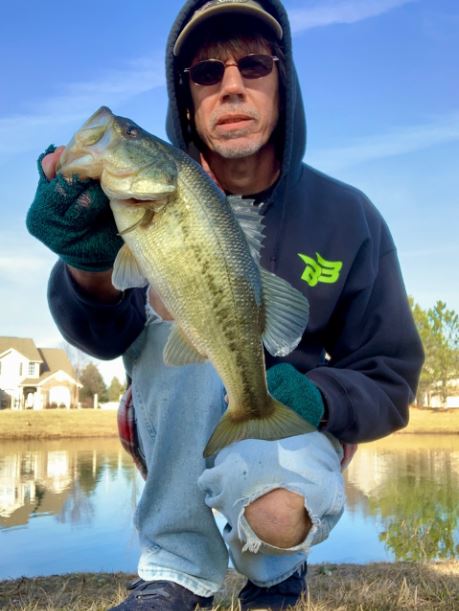
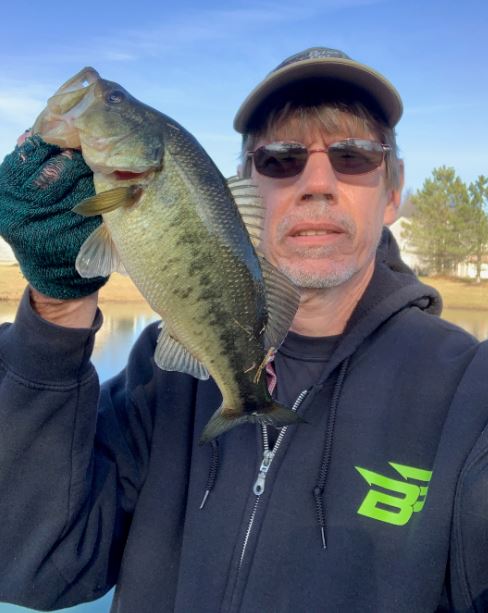
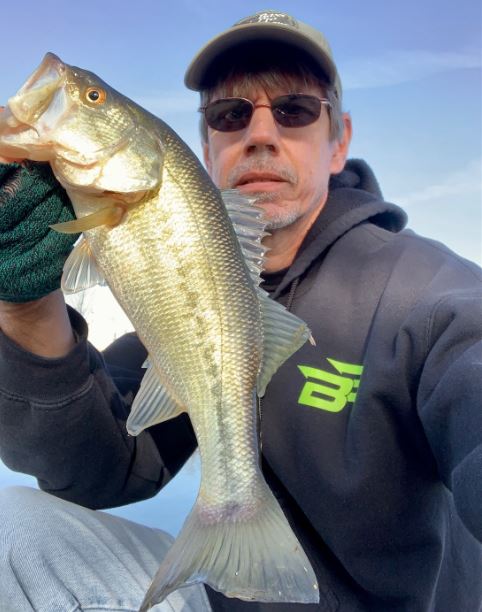
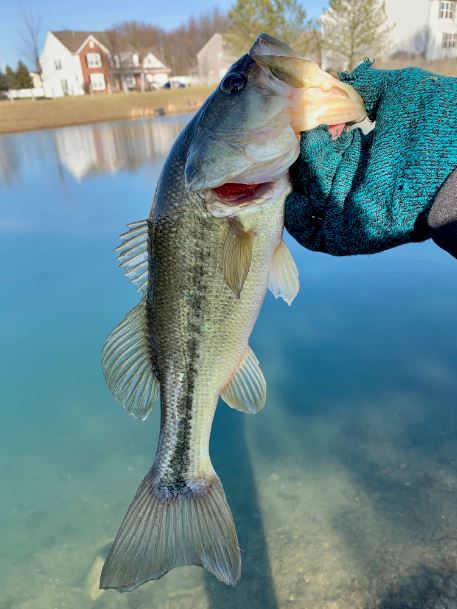
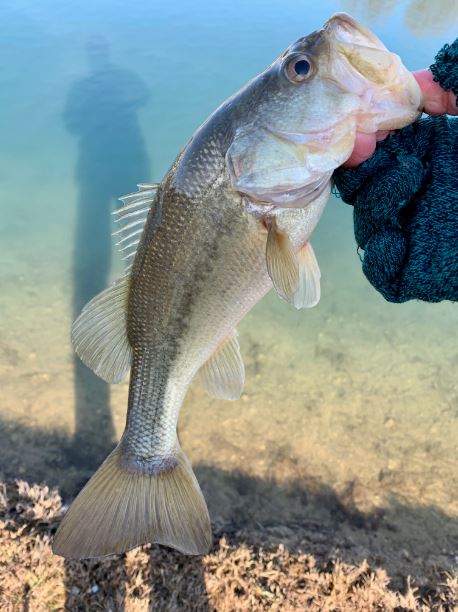
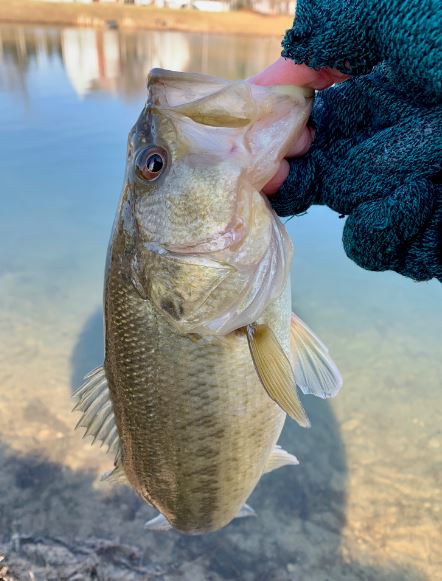
Any bass fishing in Indiana in January while fishing open water is always a nice bonus. A dozen today was pretty much above expectations given the recent arctic air blast that froze everything up. A couple on jerkbait, but mostly Ned doing work. Outside of several rainy days and a brief cold snap toward the weekend, the 10 day forecast isn't too bad for keeping things open and fishable. Working on getting a clothing sponsor to market a line of holey jeans for anglers I think the market is pretty much untapped at this point - lol. Here's a few...
-
They can do/be both, can they not? A FLxNorthern LMB cross would be an example of intergrade, and a Spotted x Smallmouth cross (which occurs naturally in places) would be a hybrid. Hybrids can then reproduce with their parent lineage by backcrossing. Numerous examples of this in the literature. Turns out wipers aren’t sterile and can backcross with parental lineage. Here in Indiana, the DNR stopped all wiper stockings in the state into locations with naturally reproducing white bass populations to avoid possible gene dilution once this was documented.
-
Don’t over interpret this. It’s just a hand drawn diagram. I marked the two points in red; “A” and the point on the other side of the feeder creek. Both points are formed by the merging of the two channels. Points come in all shapes and sizes - some long and narrow, others more rounded and wide sweeping, and everything in between. Think of it as an upside down capital “T” if that helps - two points formed where the two lines meet. Edit: I think I get what you’re trying to point out - is what we would call the inside turn of the main channel not also a point? And yes, you could make the argument there are 3 points in this diagram because of the bend in the river channel. However, the diagram shows no breaklines leading to the shallows on that inside turn, so that is why they are just focusing on the two. A ‘structure situation’ has structure, breaks, breaklines and deep water all related to each other and the shallows.
-
The points are on each side of the feeder creek where it meets the main channel - one on each side (2 total). Again, no scale, so in some waters they could be a good distance apart. In others, just a boat length or less. All depends on the size of the feeder creek and main river.
-
I’m guessing they are trying to focus attention specifically on the weedline for this example. These type drawings usually aren’t considered as to scale, so could be any distance, but I’d agree that both should be considered breaklines. Many cases where you’d only find one or the other.
-
Yes. Both are typically considered breaklines, though depending on specifics they could be one and the same or two different ones. Sometimes it’s hard to discern distances with any accuracy in diagrams unless specifically labeled or described.
-
Short answer is ‘No.’ Sufix 832 has a lot of the limpness and smoothness, but not as thin. It might sink some with the GORE fiber woven in - I’d need to test. Won’t be the same as YGK though. I still have an outfit or two with it on. The other option might be to go standard braid but smaller. I throw a ton of 3# and 4# braid (PP), having it on all my crappie outfits which I use with small jigheads and plastics. That tiny line cuts through the water well without offering much resistance.
-
I’ve been using 10 and 14 for the past several years without regret. I do have one spool of 20 I picked up when the others weren’t available, but haven’t spooled it yet. I will this year though.
-
Probably this ^^ In shallower ponds, sinkers of any kind are usually a bad thing unless the water is warm enough that you can just keep them moving. In our reservoirs, it’s not as big a deal except in those where we’re trying to keep the baits over submerged vegetation…sinkers also aren’t great in the standing timber we sometimes deal with.
-
This, pretty much ^^ Very situational based on a lot of variables. I just pull out the dots and strips as necessary. In most cases, I prefer a slow floater over a slow sinker. Much easier to work with and still get the desired outcome.
-
Looks like your article is hidden behind a pay wall, so I’m guessing no one here can read it. No idea where this got started, but weird theories get life and spread all the time on the internet. First, it makes no sense and would likely lead all crayfish to their untimely death - then the smallmouth would starve- lol - a smallmouth bass pied piper. Studies show crayfish react to smallmouth bass based on their perceived vulnerability to predation. Those that feel fairly secure in their habitat tend to go about their business a bit more regularly. Those that feel vulnerable restrict their behavior and movement. Additionally, they can use alarm cues to warn each other when predators are in the area, causing them to restrict movement or retreat further to avoid predation.
-
Hi vis; seems like very thin diameter; very supple and easy handling; 8 strand; sinks; casts great; good with knots
-
About the only braid I use these days for bass (spinning) is YGK SS112 sinking braid. Getting very hard to find, but I have no plans on changing until I can’t find it anymore. Wish it was more readily available, especially in the smaller sizes.
-
Whatever you throw your standard 110 sized jerkbaits on will probably work fine. Rogues are a little tougher to throw since they don’t have the modern day bearing transfer system, so lighter 8-10 lb casting or spinning gear should do the trick. They still work, and have had days where they out fished my MBs.
-
Remember, lake types are just a way of helping you to determine in advance what you might expect in the way of water color, depths, and possible structure situations. A guideline of sorts. Ultimately you have to check everything out once you get there. Your water clarity statement makes me suspect Lowland even more. Don trained under Buck, along with Tommy, but even so, there will always be slight differences in explanations and interpretations among individuals. When in doubt, I always fall back to Buck since he originated all this.
-
Yes - keep “speed” in perspective. Reeling in a crankbait, even with a 5:1 or 6:1 retrieve ratio is still a much faster presentation than fishing that same spot with a jig, worm or Carolina rig…and then there is always trolling
-
High 4s and low 5s are what I use for deep cranking. Don’t forget, Buck trolled, so summer speeds could be 5-8 mph or more, much faster than you could ever move a lure on the cast. Buck also didn’t use crankbaits in the traditional sense. You’re kind of comparing apples to oranges here, IMO. Bill Murphy mentions this same concept in his book. Lastly, speed is just another control that needs to be checked. Faster is usually better in summer, but not always.
-
Looks like an error on your lake with their reading…more like 200 ft above ‘minimum pool’ which is usually the level of the original creek bed. Try and find a USGS or COE reading if that lake has one.
-
The legal definition of full pool is: Full pool elevation means the maximum lake level attained before water releases over a fixed weir, spillway, or other discharge structure. In larger lakes and reservoirs, the full pool elevation is the maximum level established for management. I looked up one of my reservoirs on that same page you copied and based on its reading, they are basically defining full pool as the normal summer operating level of elevation (rightly or wrongly).
-
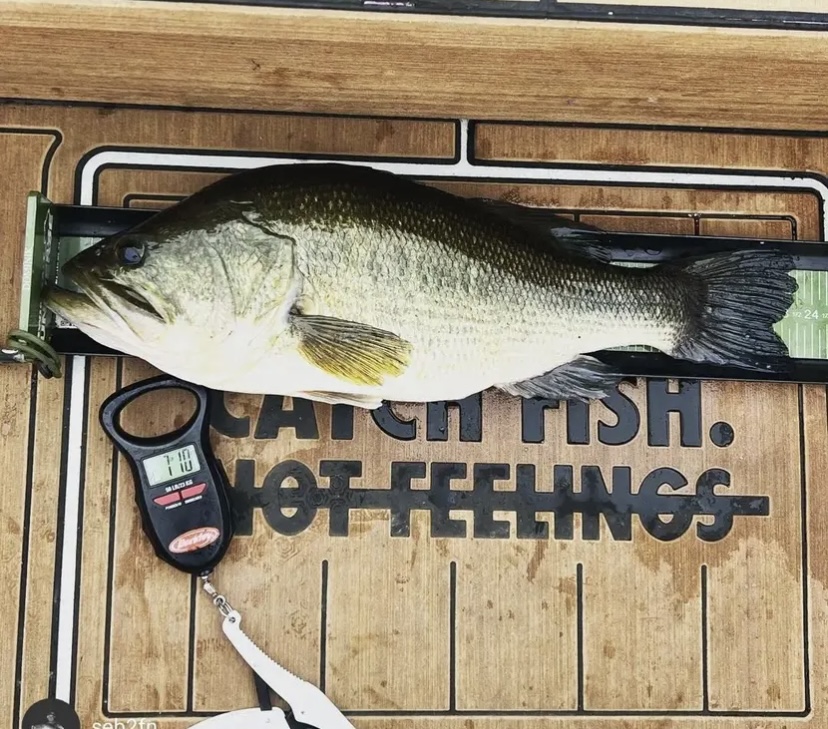
Got a chuckle and thought of this thread when this picture came across my feed this morning ? CATCH FISH, NOT FEELINGS
-
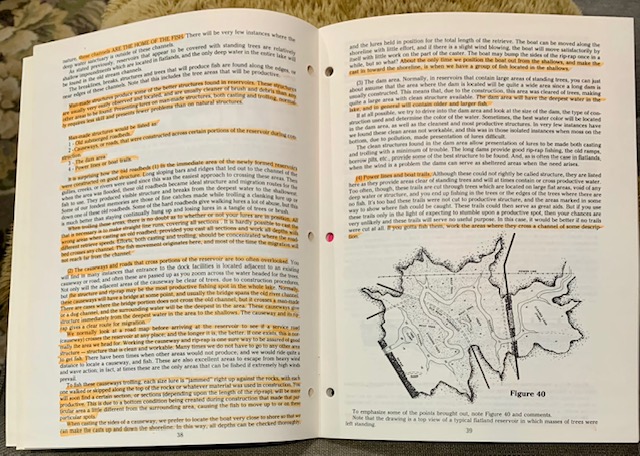
In most cases I’d say “yes.” Each volume goes into much greater detail on specific aspects (Mapping & Interpretation, Lake types, presentation of lures, etc.) and typically run 75-100 pages. There is also a “test” or “quiz” in each book that you can self grade to see how well you’ve grasped the material. All my Volumes are heavily highlighted ?
-
I’d agree with Lowland Type 1. If you read Buck’s Home Study course, Volume 6 is all about lake types. Nowhere does it state that a Lowland Type 1 has a maximum depth limit. In fact, they give two separate examples of this type lake, one traditional and one more long and narrow like Nockamixon. Only the Flatlanders are shown with depths typically not exceeding 30-35 feet. Next closest to your lake would be a Highland Type 2 if you wanted an additional comparison.
-