
Team9nine
Super User
-
Joined
-
Last visited
Everything posted by Team9nine
-
A good bunch of Al Lindner and company videos on bass are all done on natural lakes. Look up more current Angling Edge videos (Angling Edge) as well as older In-Fish stuff online. Should be plenty to see.
-
Throw something new every day to begin with and see which techniques show promise (get bites) for the waters you fish, then focus extra effort on mastering those. Just seems to make the most sense to me in your case.
-
Proper technique is proper technique, whether backreeling or relying to whatever degree on drag. I've got lots of 20-50 pound cats and buffalo to my credit taken both ways, so in the long run, whichever format allows you to execute that technique best is the right one.
-
All depends on where you are and the waters you fish on (and the species you fish for - spots, largies or smallies, IMO). Of the 6 you listed, and since you specified 'wind direction' and not wind "speed," I'd say water clarity might play strongest for my waters, especially on a seasonal basis, and the rest I don't care much about. I've made enough great catches under all the listed conditions to know that you 'don't know' unless you go
-
I'd like to say if you have to use a weed guard with your Ned rig, you're doing it all wrong, but I won't... Any time you introduce a weedguard into the Ned equation, I would think you are always going to introduce at least a slightly greater chance for a botched hook-up compared to a completely open hook presentation...and some days way more than "slight." But trade-offs abound with each approach, so just live with the consequences whichever way you choose to go. Proper technique and presentation can go a long way in solving many issues though.
-
I'll take proper mechanics and 'fighting technique' over drag most every time. I tend to lock my drag down on both spinning and casting gear (though not always), preferring to backreel or thumb-bar fish respectively. From previous discussions in these forums, this approach is without question in the minority these days, but no less effective, when done properly. As such, for most anglers, drag is crucial, but certainly not an absolute if your mechanics and technique are good.
-
In the big scheme of things, it doesn't matter. Some of it might be dictated by the type of water you have access to from the bank. Certain types of presentations and baits tend to best be presented on one or the other, and certain types of water clarities and cover might make one preferable, but will one type (spinning or baitcasting) make you a better angler over the other, or hurt your success more? Not really. A lot of fishing is simply how you choose to catch them. Some waters and days, for me, that's a baitcaster, and others, it's a spinning. If I could only pick one outfit for the bank, I'd take spinning any day over the baitcaster. Fortunately, I can fish either whenever I choose to
-
Just like many other things in fishing, there is an art to cranking weeds. Lots of factors to take into consideration including things like the depth, both rooted and growth height, thickness, "stiffness," sharp walls, flats, or tapering drops, crankbait running depth, buoyancy, lip size, season, species or type, and just a host of other things. All things considered, I'd much rather be hitting weeds than not with my crankbaits, though you can often get by keeping your retrieve/bait very close to them. The other beauty of crankbaits and weeds is even when the crankbait might not be the best approach, it is one of the best tools for finding the weeds in the first place, pulling them up so you can identify them, and giving you enough information to be able to make an informed decision as to what the best lure and technique to fish them might be.
-
Original Lunker Lure buzzbaits can still be purchased with copper blade configurations.
-
I almost never go less than ML for crappie. Have caught just under 3,000 of them so far this year, and nearly every one on a ML spinning outfit, the same ML rods that double as my finesse bass rods. You could go lighter still, but there really isn't a need for it. Saves a lot of extra money and equipment by pulling double duty
-
I personally prefer the Palomar, having used it on all line types for 25+ yrs w/very few issues. But, the Double-line Uni is a solid knot, albeit a bit large. I do use it on things like A-rigs though. Guys that fret over 5”-6” of excess “lost” tag line with a Palomar knot might go into cardiac failure with all the lost excess line from tying it though ? My guess is the elasticity of mono, and likely copoly, rarely ever comes into play in regards to necking. In fluoro, it doesn’t seem to be the tightening of the knot when tied that causes it (unless you’re simply over tightening your knots in general), as I have tested my fresh line knots with the micrometer and you simply don’t see it. But if you go out fishing for an hour or two, land some fish and have some good hard fights, then test the line with the micrometer, you’ll see it is there to varying degrees. I’ve seen some anecdotal testing that suggests as little as 3 pounds of pressure can be enough to begin to start this process in fluoro, so I think it is simply a difference in the elasticity and yield curves between the two line types. If only I had access to an Instron machine ? ?
-
I don’t throw mono/copoly, so haven’t tested it there, but with fluoro you’ll get “necking” that often extends more than 2”-3” from the knot/lure. You can measure it with a micrometer easily enough. I think this is part of the reason why so many people report sudden knot failures with fluoro. It’s actually probably not the knot, but the necking just in front of the knot, and you won’t feel any damage. It just occurs after a certain amount of stress-strain, and then suddenly you’re left wondering why your knot just failed on a hookset or large fish. Removing 6” each retie (necking usually occurs 1”-3” above knot) just seems to help eliminate the issue as long as you retie with reasonable frequency. Good to know. Just found his comment on that knot in mono interesting. He didn’t explain why he thought it not so good in that line type ?
-
Extra tag line has never been an issue for me as you should always be removing 6” or so of used/damaged line every time you retie anyway, especially with fluoro whether you feel damage or not. On the MK knot, while I haven’t tried it yet, I did come across a post by the person who claimed to have invented it that said he developed it for braid, and that’s where it worked well, but that it wasn't as good for mono (and hence, I assume, fluoro). I thought that was interesting considering I haven’t seen any strength test results on that one.
-
Leave it loose. Maybe this is why so many people are having issues with the Palomar. Everything should all cinch tight with one single pull when done correctly with almost no friction.
-
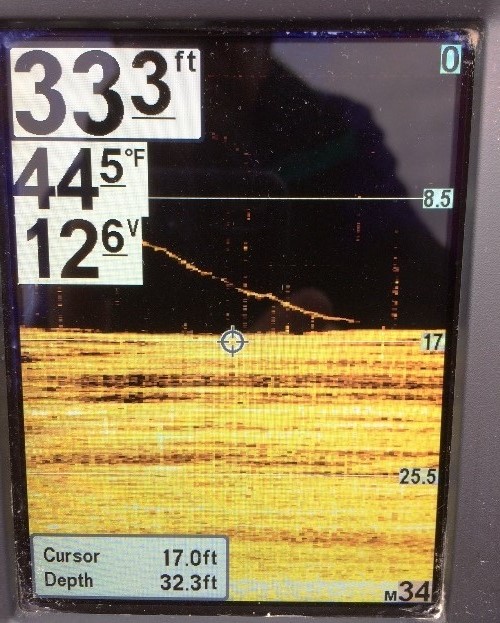
Agree with those that say it can be done. Cone angle is a biggie, as it won't pick up if it's not in "the cone" to begin with. This can become complicated quickly in a boat setting when compared to a more permanent ice fishing type situation. It can also be down via down-imaging, but that's even tougher since it's more a 'slice' than a 'cone.' The pic attached below though is a 1/16 oz crappie jig picked up on DI on my 5" H'bird unit as it is falling into a school of crappie (while out on the boat), so it can be done. Also watch your noise reject settings. Might have to take them out of auto or turn them off completely. On frequency, it should be easier to see on lower frequencies as a generality since lower frequencies tend to have wider coverage (bigger "cones"/cone angle). That said, on my Garmin, I usually get the best overall readings using the CHIRP variable setting instead of a specific frequency. You'll just have to keep playing around a bit.
-
I've used them all, but if I could only pick one action, I'd go more mod-fast (neither of your above mentioned options). I like the "slower" actions better, especially since I'm more of a traditionalist and stick to smaller, lighter wire hooks most days.
-
Launched at 2:00 PM and was back at the ramp by 6:30 PM, and this is typically a somewhat stingy body of water. Only 8 were “keepers,” but that’s pretty good for July on most of our reservoirs. Looking forward to the next trip out, hopefully later this week.
-
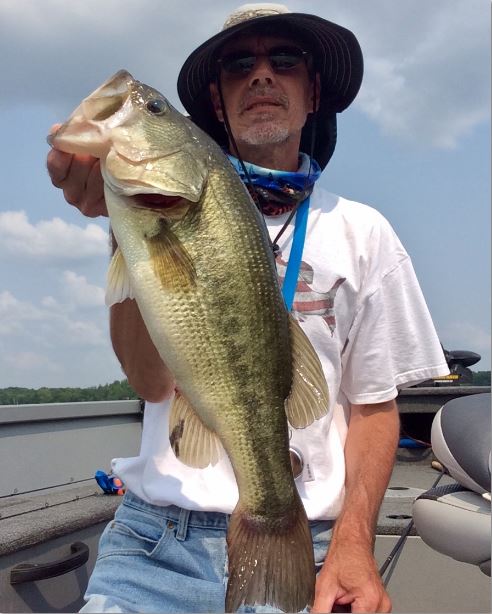
Hit the local reservoir this afternoon under some really nice post-frontal conditions. Sure beats the heat and humidity we've had recently. Happy to report a steady bite, landing 33 bass, topped by a 4.58 pound fish that crushed a deep crankbait.
-
Saw this posted elsewhere, and looks like it’s been out for about a month, but I thought it was a pretty good take on line and line types, when to use certain types or sizes over others. Seems pretty reasonable, and falls in line with a lot of my thoughts, such as, “braid doesn’t belong on a bait caster except when it does.”
-
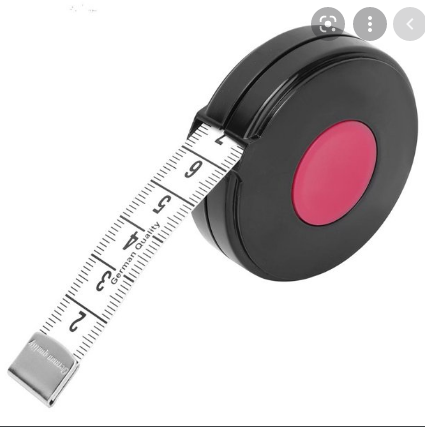
I bank fish a lot and have found the easiest thing to do is just carry a $2 retractable (cloth) sewing tape measure in your pocket with you. They weigh next to nothing (plastic), and are about 2" in diameter and about 3/8" wide. You can measure the fish very accurately while holding it vertically in a matter of seconds, easily get a girth measurement if necessary (I rarely do), then snap a pic. When I get home, I use a relative weight table prepared by my local/regional fisheries biologist or similar type study that I have saved on my computer to get an accurate "guestimate" of the fishes weight if I'm curious. Very quick, accurate enough, and the fish is handled minimally, never touches the ground, and gets released promptly.
-
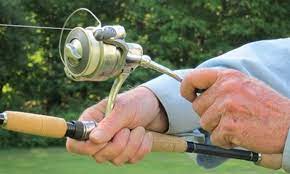
That’s right. I wish people at the lake would just leave me alone and mind their own business ?
-
In the mid to late 90s, I was running a Stratos bass boat. I had in-dash Lowrance flashers front and console. On the front unit, I had the mechanic shave the puck mount base so it shimmed out (forward) at about a 12-15 degree angle when mounted to the troll motor, which was a 24V Johnson around 55 lb thrust. Anyway, this allowed me to rotate the troll motor head with the foot pedal and scan a circle around the front of the boat without hurting the performance of the flasher in regards to accurate depth. In 20-30 ft of water, I could scan about 7-10 ft in front of the boat, which allowed me to pinpoint things like stumps and brushpiles before rolling over them, and subsequently be able to pitch a bait to them. It was also killer for following weedlines, breaklines, dropoffs and channels long before GPS mapping allowed. In essence, it was FFS before there was such a thing, and it worked great - and probably still would today. To my knowledge, I was the only guy in the area running such a setup, and never told anyone what I was doing.
-
At those depths you might consider going vertical with a drop shot, jika or spoon, etc., that way you could use your front unit to just stay right on top of whatever object/fish you’re fishing and maintain a more direct connection to bait and bass.
-
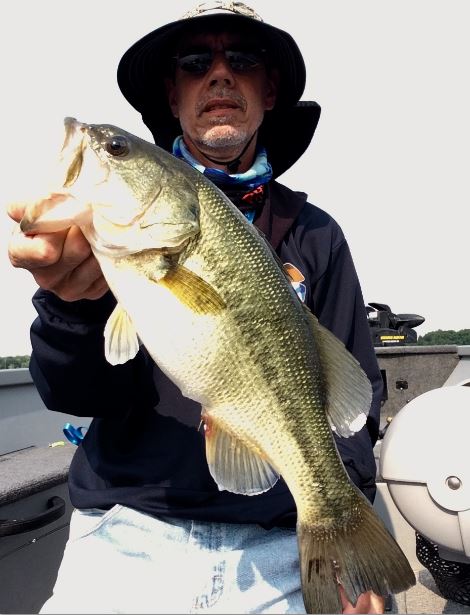
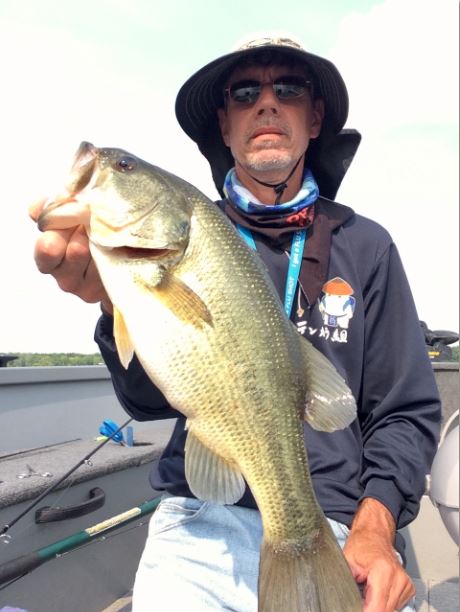
Cold front effects are over, as water temps here back up around 85 degrees. Spent a little over 4 hours on a local reservoir chasing bass, mostly with jigs. Managed 18 total. Lost the best fish of the day when it jumped and threw my jig - probably between 4 and 5 pounds. Was talking to a catfish angler who pulled up and anchored within half a cast of me when he hit. That's what I get for not paying better attention. Did get a couple other nice bass though, and they came cranking a DT10, both off the same point.
-
...or just spend a little extra time in the backyard practice casting so you can buy and use any fluoro you want ?