Goose52
Super User
-
Joined
-
Last visited
Everything posted by Goose52
-
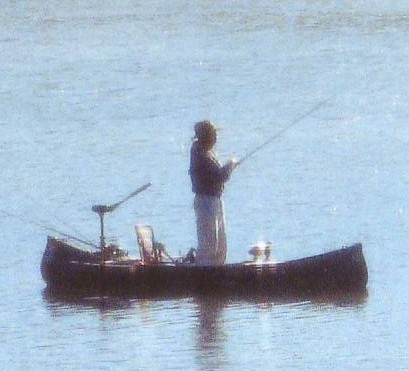
I don't think there are any "pluses" - and there are a tremendous number of "minuses" ! You might be able to cover some very shallow water that keeps out the folks with bigger boats - if you stiil have some post-spawn shallow fish, that might be a slight plus. What are you going to do about a livewell? BTW - I fish from a heavily accessorized canoe (trolling motor, DI/SI sonar, etc.)...but I wouldn't ever consider it a tournament boat...
-
The early production reels had a manufacturing issue that lead to the grindy feeling - once per rotation of the reel handle. I haven't a clue as to whether this has been resolved in current production. In my case, I purchased two of these reels - both in 6.4:1. One was grindy feeling out of the box, the other wasn't. I chose to put the grindy one in service first. While actually fishing, with the reel under load, I didn't notice the grinding and just fished the reel. Great caster, good drag, really light. Don't like the external adjustment for the centrifugal brakes - they should have just kept the PQ system. After fishing reel #1 for a while, I put reel #2 into service. Unfortunately, after as little as 20 hours of use, I noticed I was l was losing casting distance on reel #1. I removed and soaked the spool bearings - they wouldn't spin, Did it again - all night - they wouldn't spin - not a turn. Replaced the stock bearings with some Boca ABEC5 stainless that I had on hand - casting distance back. Reel # 2 still has the stock bearings but has had very little use and will end up on a "niche rod" where it will only see occasional future use. Verdict for me? I will fish these reels until they are "used up" - but I won't be buying any more until I see some solid evidence that all problems are resolved. Even then, I don't like the centrifugal brake adjustment scheme so that limits my interest as well. I have a whole bunch of BPS BC reels and they have proven to be good values that give good service commensurate with their price. However, in the case of this particular reel, I can't give any positive endorsement....
-
IMO - the optimum reels for deep cranks and lipless cranks are two different animals. I use a 4.7:1 (19ipt) or 5.2:1 (21ipt) reel for deep cranks. My primary gear ratio for lipless cranks is a 6.4:1 (26ipt) and at times I use a 7.1:1 (29ipt) reel when I want to get them moving a bit faster in open water. While I could make do with a 23ipt reel for deep cranks, I know I wouldn't be happy trying to use it for lipless...
-
I've bass fished off and on since around 1959 and have some good memories of catches, both big and small. But I guess the favorite would have to be my PB (the fish in my avatar). Here's the story as told in the Fishing Reports forum last August 28th, 2012: Fishing from the bank on the dam of one of my small (11 acre) neighborhood lakes this evening. It was that "magic time" - about 15 minutes after sunset, moon up, and three nights before full-moon. Cast a lipless crank diagonal to the bank, splashed down in about 10-12 FOW, counted it down about 5 seconds, then started a rip-n-pause retrieve, trying to parallel the dam. On the second fall - BAM. Probably in less than 8 FOW by then. Drag pulled, fish jumps, HUGE bass, she heads for deep water, pulls more drag, she jumps again, HUGE bass - gills flared on the jump - head shake, dives, pulls drag for last time, makes a run to the right, got her stopped, she runs to the left, got her stopped, then a few seconds later, at the bank, lipped, and it's over. Quick photo (doesn't do her justice), measure length at 25 3/4", weight on the scale - 9.54. Back in the water, she swims right into a thick mat of slop and gets stuck. Off with my shoes and socks, into calf-high water, pull her out, had to clean snotgrass out of her mouth and gill slits. Not looking good - she's laboring. Held her upright for a LONG time. Three other anglers come over, one offers to eat her if she doesn't make it. No way, says I - keep holding her upright. She's breathing. Time goes by. Full dark by now - mosquitos out - getting bit. Lift her head out of the water for another quick photo - HUGE mouth and gills. Then, she lets me know that she's ready to go. Point her to deep water. Let her go and touch her tail. FLASH - she's gone.
-
I got an 893 a while back. I don't normally use MH rods that often but this one is growing on me. It could easily fill just about all my bottom-contact needs - both soft plastic and jigs. Outstanding rod...
-
I have had excellent service from the Rapala Mini-Digital scales - I have three of them. Here's a link to my last report on them: Rapala Mini Digital Scale - Load Test Report
-
Yup - saved you from getting wet (or worse)....and from losing all that gear. Ah, you didn't mention it, but you DID have a PFD on, right !
-
My favorite baitcaster is the one with a 14lb 9oz bass on the end of the line...
-
I use the green...but only as color coding (I'm not convinced that line color makes that big of difference). Green = YZ Clear = nylon mono (and sometimes flouro...)
-
-
Mike - the outrigger crossbar is secured to the gunwales by clamps with two thumbscrews on each side. This is a "store-bought" system made by Spring Creek Outfitters.
-
The usual recommendation for most boats is to get the highest thrust trolling motor that you can afford. However, for a canoe, especially one that's only 12ft, weight of the motor and the battery come into play. I run a 12v, 45lb thrust MK Traxxis variable speed TM on my 11'6" canoe. Plenty of thrust, will move the canoe at about 4.5mph or so, and I can run all day on a Group 24 battery. More thrust and the motor weight goes up and possibly the need for going to a Group 27 or 29 battery. Check out your canoe's load rating, weights of the TMs that you might be considering, and battery weights to determine how much weight you might be adding to the boat. You don't NEED a lot of thrust to move a 12ft canoe at a pretty good clip. Lastly, if you can afford it, a variable speed motor will give you extended battery life as compared to a 5-speed motor, another factor that allows the satisfactory use of a (relatively) light Group 24 battery.
-
I bought my Radisson 12' new and didn't receive any kind of manual - just the Radisson brochure. As always, a factual and useful response from Hanover_Yakker. The hull is indeed very thin - it will bend if you look at it mean... An open water boat for sure. I have some dents in my hull...but no puctures or tears. I do try to be very careful when launching/landing to avoid rocks and find the 'soft' spots. I'm on my 4th season with this boat - about 115 times on the water - so far, so good. Regarding the foam (both the interior foam lining, and the sponsons), a good point about protecting them from exposure. I store my boat inside my garage so I've had no problems. When on the water, I do place a rubber mat at my seated/standing position to protect the interior foam from foot wear. The only maintenance that I perform is to wipe the hull down with a sponge each time I pull it out of the water and then clean the hull exterior and the interior foam at end of season. I have mounted a few gadgets on my boat: And, the indoor storage:
-
I intitially started this thread about the Cumara A in the middle of the winter, with limited opportunities to actually catch anything with the rod. With the new season well underway, I've been able to fish, and catch, with the rod. A reminder that this is the 7'2" mf rod in the jig and worm series (recommended by Shimano as a worm rod). Here's my thoughts after having it on the water for a while. Color: Controversial, but basically a non-issue with me. I can see where some color reels would look just awful on this rod however... Construction: No issues - top quality. Guides: Interesting is that while the rod uses microguides, there are still only 9 guides plus the tip-top. Many 7' microguide rods have 10 to 12 guides. So, while Shimano did go microguide, it didn't increase the number. The line DOES rub on the blank when the rod is under load. I'm not sure why Shimano designed the rod like this - other than perhaps going after the last fraction of a gram in weight reduction. Grip: I like the reel seat - lots of finger contact on the blank. As I mentioned previously, the grip surface behind the reel seat is absurdly short. It's something you can get used to...but why should you have to? How much extra weight would another 1.5 inches of EVA weigh? Length/span from the front grip to rear grip - too long for me - longer than any of my other rods in this power/action class. Perhaps this span was chosen for balance purposes - but I would personally prefer it to be an inch shorter and live with the balance shifting a tiny bit toward the tip. I'm hearing that many other anglers are also complaining about this grip. This grip is not a deal breaker for me...but it sure doesn't float my boat. I have a feeling this issue might be causing Shimano to lose a lot of sales on this rod series. Sensitivity: I think it's pretty dang good for this price class. I've now had a chance to fish this more and bounce baits off cover and structure and I'm feeling more than what I'm using as my worm rod right now - a Loomis GLX MBR842C. As I mentioned before, I'll defer to other, more experienced anglers than myself, regarding comparing the Cumara A to other rods in its class. Power/Action: I was wrong in my initial impression on this particular rod - thinking that it felt like a medium-light. As Hooligan said above, there is a lot of power in this blank. The tip is soft enough to load well with lighter baits but under load you get to the backbone part of the rod in short order. Summary: Performance-wise, this is a great rod and it will become my primary light t-rig rod, bumping the MBR842C to other duty. Ergonomically, however, the whole grip issue, while you learn to live with it, is just a thorn that will most likely preclude me from looking at any other Cumaras. If one could live with the grip, this would be a terrific rod series to build a top-notch arsenal around. At the end of the day, the most important review comment that I can make is that "it works, catches fish" ...
-
Some of the BPS rod series and the St. Croix Premier series have pistol-grip models - usually in the 5' to 6' length range. There may be others as well....
-
Yeah - sorta like one of those tools with all the blades/tools extended... Reminds me of one time when I pulled up to the lake with the canoe on the roof of the car. A guy fishing there said: "nice little canoe." He didn't pay any more attention to me and about 12 minutes later after I was fully rigged and launched - I passed by where he was fishing on the bank and he said: "where the heck did all that 'stuff' come from!"
-
Yeah - I got sloppy Jeff. Forgot all about weighing the label until after I finished the test - throws the whole test into question doesn't it.....................
-
Thanks - I know how to do it, but lakeside it can be a pain. It would be nice if there was a switch to set the units. Sometimes you have a wiggling bass in one hand, the scale in the other hand, and you look down and the unit is in kilos. So, instead of powering down, powering back up, and hitting the switch to toggle the units, I just record the weight in kilos and get the fish back in the water... Still, at this price point, it's a pretty nifty scale...
-
The fishing log in the Tools section will give you lots of ideas: BR Fishing Log For me - I record catch data in an Excel spreadsheet - including: Date Location Qty and type of fish Length of fish Weight of bass 14" and over Tackle used (rod, reel, bait, line type and lb. test) Surface water temp and a misc. section for anything else I want to record...
-
-
I have had good results with my 3 digital scales and perform load tests on them periodically. When weighing known weight test loads (weight known within a tiny fraction of an ounce) - all 3 scales are very accurate. The last test I performed was with a known weight of 9.804 pounds - all scales were within one ounce of the test load. My report on this load test, including the test procedure and photographs of the test in progress, is here: Rapala Mini Digital Scale - Load Test Report
-
-
-
I think most folks have "collateral" catches while fishing for bass. As WRB said, there's lots of predator fish in the lake...and even bream get a bit territorial and hit a bass plug going by that's nearly as big as they are... For me, while fishing for bass, and using typical bass baits, I have caught: bluegill, readear, bowfin/mudfish, chain pickerel, channel cat, grass carp, crappie, rainbows, warmouth, white bass, and yellow perch. Notable was the 33" channel cat that I caught on a light-power spinning rod w/6lb test while tossing a 1/4oz roostertail for dink bass. ...here's a 48lb grass carp that was foul hooked in the tail with a lipless crank on 10lb test.
-
I fish from the bank quite a bit as well and certainly casting distance can be important. I don't have a set formula for any of my reels (like two brakes on and a certain spool tension). Each reel type is a bit different, and of course weight and type of the bait being tossed makes a big difference. For max distance with something like a lipless crank, on a centrifugal braking only reel, I usually start with two brakes on and less spool tension, but I'll also try a single brake and more spool tension. With bullkier baits like big cranks or spinnerbaits, I might have 3 brakes on and juggle spool tension. On dual-braking reels, I might use 1, 2, or 3 brakes, little to mid-level mag braking, and juggle spool tension. Sometimes I never seem to find an ideal setting...but occasionally I hit a sweet spot and the reel just sings. My PQ 5-Year Challenge test reel, for instance, has a sweet spot with a 5/8 oz lipless crank of 1 centrifugal brake, just enough spool tension to limit sideplay, and mag braking between 2 to 6 - depending on wind. Of course - all of this is somewhat dependent on a consistent force casting stroke. On thumbing the spool at the beginning of the cast - I usually let the brakes take care of the early part of the cast. The only time I start to feather the spool as soon as I release it on the cast is in high wind when I want to keep solid control of the spool and stop it if I feel a backlash starting that I can't catch in time. And then there's the Daiwas - on those I set spool tension to limit side play and then start with heavy mag braking and keep lightening up the braking untll, during a "trying to reach the other side of the lake" cast, the line starts to fluff up on the spool during the cast, then I add back one click of braking...