RoLo
Super User
-
Joined
-
Last visited
Everything posted by RoLo
-
-
@HeavyTwenty A bladed jig I like is the "Phenix 5/8 oz Casting Wobble Jig". It has a weedguard that's reasonably weedless, which is appreciated in central Florida. I remove the skirt and add a "Kalin 5-in Lunker Grub" trailer (the grub doesn't overwhelm the spinner blade). Ride-up is not excessive, and it holds a pretty deep track when slow cranked. Roger
-
In the beginning, I just laid a board on the floor to confine the spool's travel, but when it hopped the board, I tossed it in a waste basket...problem solved Roger
-
From what I've seen, contagion and immunity to poison oak, poison sumac and poison ivy are 'highly variable'. I've traipsed through all 3 toxic plants between the deer archery season and the rifle woodchuck season but never experienced a problem. When I took my friend hunting with me, he got poison ivy so bad he ended up in bed, and was swollen like a blow-up doll. The following year, it happened to Vinny again and he decided to give up a sport that he loved, and I in turn lost a good hunting companion. Mother Nature is a tough hombre. Roger
-
-
You mention "brush-piles" in your post, but vegetation decomposes over time, providing a reef with a truncated lifespan (In about 3 years, a softwood brush pile will be sharply degraded). No matter which reef material you choose, you're still going to be undertaking the ambitious tasks of loading, hauling and scuttling heavyweight material. So you might as well choose a durable material that will at least outlive the founder DNRs, clubs and individuals have all gotten away from vegetable reefs and replaced them with long-lasting mineral reefs. Examples of long-lived reef materials include cement blocks, PVC tubing, concrete rubble from demolished roads or bridges, and the list goes on. Roger
-
Unlike the hooks of yesteryear, every premium brand hook today is an excellent hook, otherwise it would cease to exist in today's highly competitive marketplace. For years anglers looked down their noses at Eagle Claw hooks, but suddenly they love Trokar, the new Eagle Claw. I have no brand loyalty, which is a moving target, but admit to a bent toward "Owner" hooks. All the same, most of the hooks that found their way into my tackle box are "Gamakatsu" hooks. The reason isn't brand-loyalty, but it's because Gamakatsu produces hook styles that satisfy the features I'm looking for. Roger
-
My initial response addressed anglers who use a leader, but don't want the connection knot to cranked onto the line spool after every retrieve. If we open the floodgates to include the entire range of leader length, the range is from ZERO LEADER to ALL LEADER. As a case in point, my fluoro leader is 'zero' feet long, because I tie braid directly to my lure (knot-free setup). This is the case in murky, dingy or gin-clear water. Yet, in spite of this atrocious, antisocial practice, I manage to catch a bass now & then Roger
-
Congratulations to both of you! It's plain to see that you boys did your homework, and did it right. Roger
-
How well a spinnerbait resists bending depends on the wire used to form the frame. Fat wire will resist bending, but it also tends to dampen the throb of the blade. For this reason Stanley uses tapered wire, and other brands use thin titanium wire. Titanium wire has virtually 100% memory, but over time the thin wire cam crystallize & break. Roger
-
To maximize the life of a leader, it should equal your average lure overhang (distance between tiptop & lure) plus the distance between the tiptop and your reel. That'll give you a leader about 6 feet long. Roger
-
John, I think your picture says a thousand words. The human eye tends to gravitate to the obvious compression points around the 40-ft contour line. Yet, broad shelves like the one in the lower right corner usually provide the best population dynamics. You may recall, when Paul Roberts posted a chart and asked everyone where the best spot was located. In that case too, the best site was related to a broad shelf, and not to any classic 'jump out' spot. Many years ago I spent two weeks on Bass Islands, Lake Erie (took my bass boat over on the ferry). The best spot I found was somewhat similar to your chart above. Most boats were scattered offshore of Middle Bass Island, while we fished a boulder flat in 15 ft of water that produced day-after-day-after-day. This was pretty much the same point I tried to make in another thread: https://www.bassresource.com/bass-fishing-forums/topic/191757-understanding-how-to-read-water/#comment-2165275 Roger
-
What a great send-off....congratulations! Roger
-
Assuming that you are a 'line-watcher', gut-hooking is only a problem on days when bass are highly aggressive, which is not the norm. The chances are good that you won't encounter a similar day for quite a while. If you continue dealing with gut-hooked fish, crimping the barb on your hook will make it easier on the fish and the fisherman. Roger
-
That's for sure. It's not 'line pressure' that causes a fish to jump, it's the foreign object they feel stuck to their lip, throat or gullet. Fish instinctively know they can generate much greater head-speed in the atmosphere than underwater. So when the line starts slicing upward toward the surface, you know what's on her mind Roger
-
The word "primitive" refers to the fractional system, and by association, people willing to adhere to a primitive system (you & me). Roger
-
Blame it on the United States. I well remember when we voted on adopting the metric system, but we voted down. Today, we're one of the only primitive countries left who still toy with the outmoded fractional system. Roger
-
The process begins with plankton. Phytoplankton (vegetable life) is totally immobile, and at the mercy of wind, waves and current. Zooplankton (animal life) enjoys marginal perambulation, but is no match for wind, waves & current, and is swept down-current right along with phytoplankton. 'Forage fish' applies loosely to juvenile fish and fish that are small at maturity. 'Plankton' is the staple diet of forage fish, and they follow rafts of plankton like a dog on a leach. In a brisk, steady breeze, plankton & baitfish eventually pile up against windblown barriers such as islands, shorelines, underwater ridges and so on. Whether game fish actually follow baitfish or plankton is blown into game fish habitat the result is the same, a feeding frenzy. Roger
-
In my opinion, what you described is the most vital key to location on any lake or stream. It amazes me how many experienced anglers make the costly mistake of beginning a chart search by looking for deep water. Actually, deep water is where chart study should 'end' not begin. A slow-tapering bottom provides the vital food-shelf, whereas a fast-tapering slope provides the beloved "drop-off", but a drop-off by itself is not self-sufficient. In the interest of population dynamics, the first step of the chart survey is to isolate all the best food shelves in the body of water (broad shallow flats). This is where life begins, this is where forage proliferates and this is what makes an adjoining drop-off a sweet-spot Roger
-
Largemouth bass are abundant in Farrington Lake and Weston Mills Pond. Roger
-
Andy, my first Loran-C unit was a Texas Instruments "Single Readout". Talk about exasperation, every time I looked down to check my latitude, it was displaying my longitude, and whenever I wanted to check my longitude, it was displaying my latitude. That unit ultimately ended up in the repair shop for several weeks. Without any Loran, I was scheduled for a Mako Shark Tournament out of Manasquan. Well, my wife, daughter & myself motored 42 miles offshore with nothing but an RDF radio (Was really nice seeing the horizon again on the way in) Roger
-
In the early days, I ran a 14-ft Starcraft around the ocean (Sandy Hook to Shrewsbury Rocks). At that time I owned both Lowrance and Humminbird depth sounders. Over time the Humminbird stopped working, and when I disassembled the unit I found the offending rust spot (supposedly non-corrosive components). Meanwhile, the Lowrance gave me several more years of saltwater service. That left a bad taste in my mouth, and I didn't purchase another Humminbird until many years later. Then I sprang for a Humminbird Onix, which probably did more things wrong than it did right. Humminbird admits that the Onix was rushed out the door, but hey, this was their 2nd strike. I begrudingly replaced the Onix with a Lowrance Elite Ti (touchscreen) which blows the doors off the Onix, and for much less money. I'm afraid I won't be giving Humminbird an opportunity for a 3rd strike. Roger
-
If you're looking for the simplest approach to spooling, just toss the supply spool into a small plastic waste basket. While you're applying the line tension you desire, the spool will roll around in the basket, but cannot get out. Roger
-
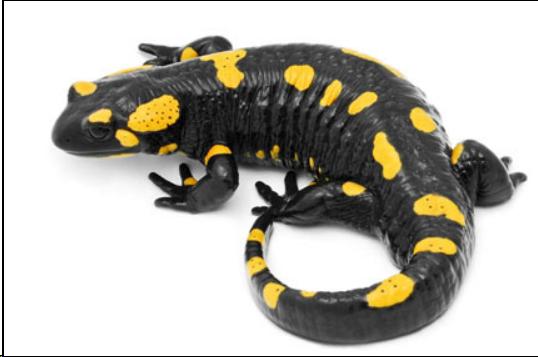
I realize this thread is about "lizards", but it seems more centered on the length of soft-plastic baits. The lengths specified in this thread could also be applied to plastic snakes, grubs, creatures or leeches. Actually, "lizards" are land animals that quickly drown in water. In fact, all species of American lizards live on land or in trees. Salamanders are aquatic creatures, but they're built noticeably different than lizards. Roger
-
As you know, true floating worms are hard to come by