MIbassyaker
Super User
-
Joined
-
Last visited
Everything posted by MIbassyaker
-
Sounds like the issue is whether you want the third rod to cover heavier presentations, or cover lighter presentations than what what you're using the other rods for. I suppose it depends on what kinds of presentations you use the more in your waters, and where you think the other rods can pick up the slack. I personally get a lot more mileage out of lighter gear for weightless plastics, jigworms, shakey heads, split-shots, drop shot, etc. than I do heavy gear, but that's because I don't do a ton of frogging (although I do some) and virtually never flip or punch really heavy stuff, or use lures over an ounce; of the heavier work I do, I find I can get by just fine with an MH/F.
-
-
3lb-ers make my day. I've never been consistent with frog hook-ups.
-
As of this morning, my best of 2015 is also a pb: 5lb, 2oz:
-
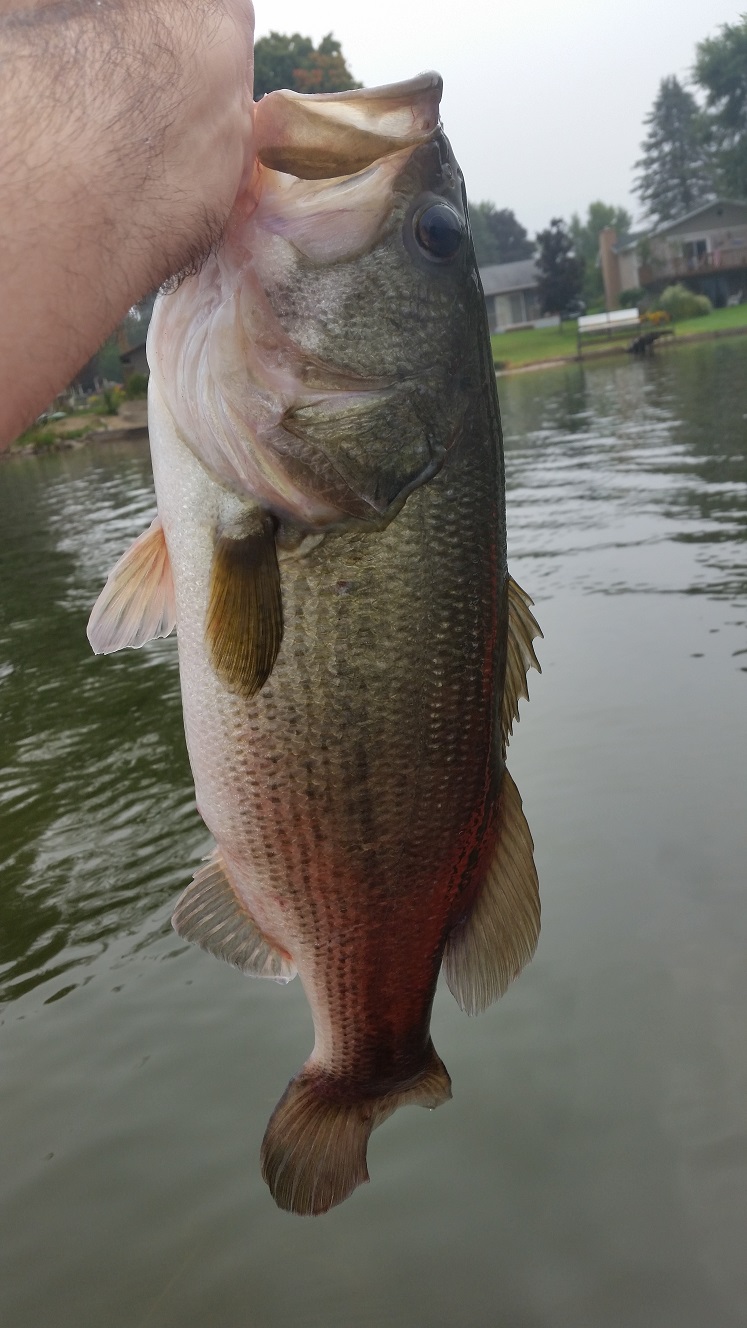
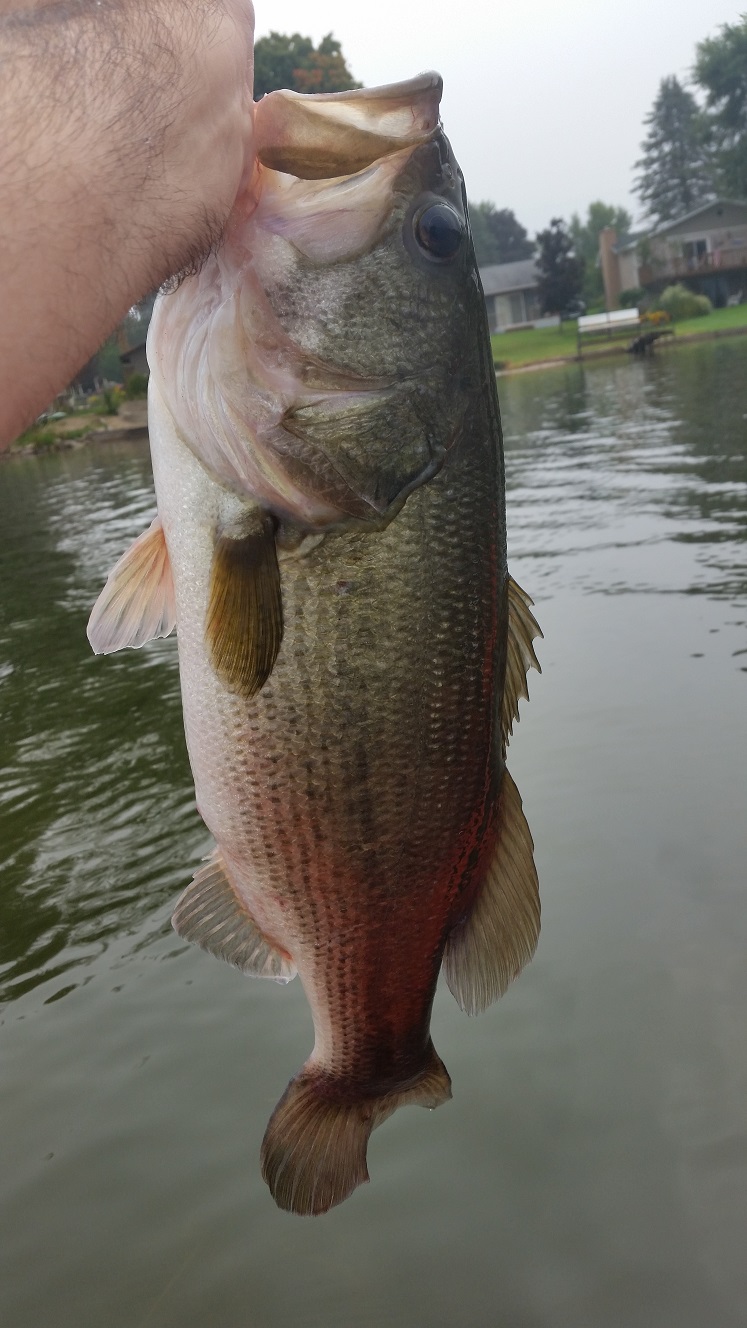
Left home at 6. On the water by 7. PB at 9:35. Made it to work by noon. At least I think it's a PB; It's my longest bass and the heaviest I've weighed with an accurate scale. 5lb 2oz, and just short of 21" The pic does not do it justice: On a 3/8 Cavitron, black on black.
-
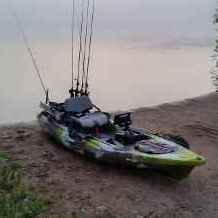
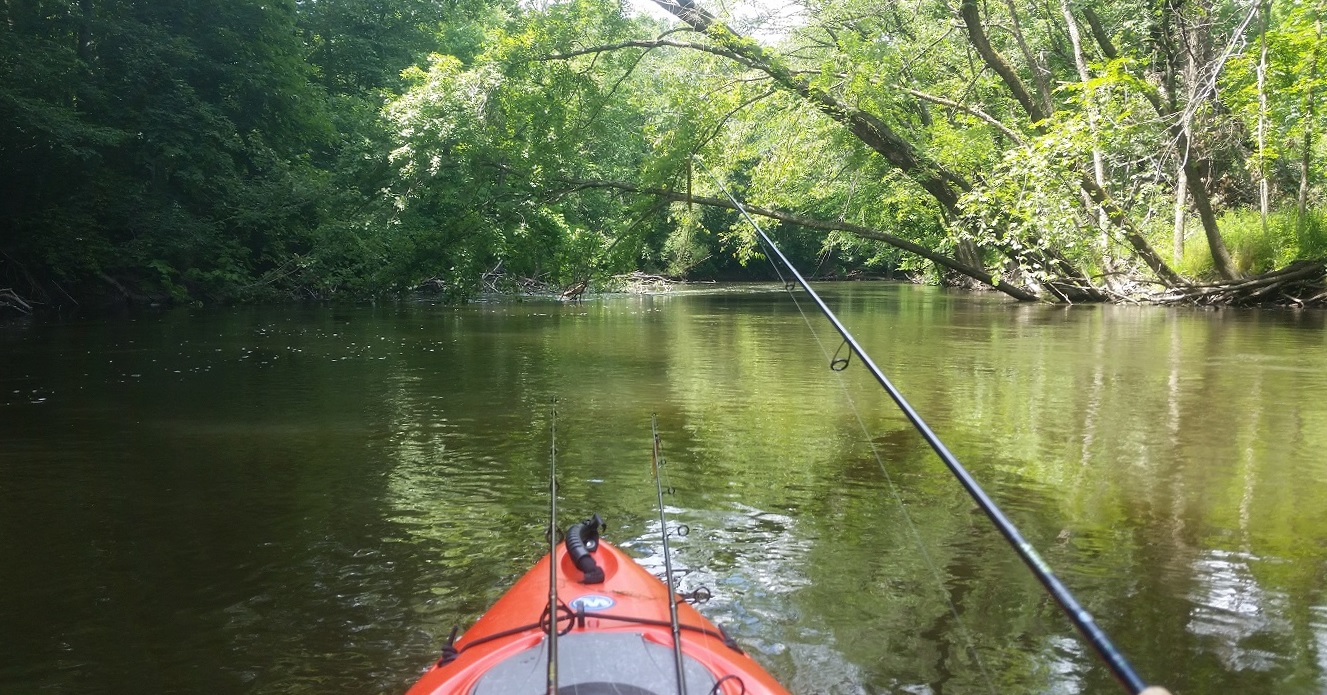
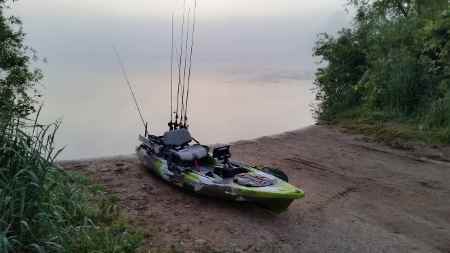
Earlier this summer I met an old guy fishing out of a kayak who gave me a tip on a "hidden" lake not far away, but I had never heard of. No public access, but you can paddle in 1/4 mile from a small creek, accessible from a gravel road out in the middle of nowhere. Part of me wanted to say, "Dude, stop talking! You don't know who else I'm going to tell!" But after visiting the place, I saw why he didn't mind letting me know about it -- it is awkward to get to, and importantly, there is no way you can get to it on foot, or in anything wider than a canoe or kayak. I've been there 4 times now, and never seen another person on it. I'm not sure yet whether it's a Honey Hole, exactly, but there are some decent fish there. Suffice it to say, I haven't disclosed it's location to anybody yet...
-
The simple answer is, I don't flip jigs into really heavy vegetation, kayak or no. I tend to think that's a job for a streamlined plastic rigged weedless behind a big bullet or punching weight. And In lighter weeds, I have better luck with heads that have less of an angle on the tie, like 60 or even 30. An arky, brush or perhaps ideally a bullet head.
-
Almost 100% of my fishing this summer has been over weedy bottoms. The ned will hang if you throw it in really thick stuff, and it does get caught here and there in lighter weeds, but usually It's so light it doesn't dig in and a quick shake gets it out. I have actually been impressed by how little it hangs in moderate submerged weed growth. It's wood and rocks that have been my real nemesis. I can get the hook to bend out of wood, but I've had the hook break when I try to bend it back.
-
Denial is always the first stage...
-
Yeah, the little pond magic spinnerbait is the only Booyah one I have and I like it quite a bit, never had a problem. Did the blade arm actually break, or did the wire bend out, or the split ring fail?
-
I do not fish tournaments, so I can't really comment on tournament strategy. And I've never fished in Kentucky, and only very rarely fish reservoirs. So none of this may be useful. But it seems to me, if you don't know how far along the transition is, you should bring enough things that will cover multiple depths and speeds. If you need to cover water, consider a fast-moving topwater like a buzzbait to work along the banks or spook over more open water. If there is very little wind, I can sometimes use the drag of a big moving bait to pull my kayak along with just enough progress to work a small area without pausing to paddle. Subsurface, a bladed jig or spinnerbait would provide a similar effect, or a larger lipped crankbait. You will want something to work slowly at these depths as well -- a fluke or other soft jerkbait could double as topwater and subsurface, and may be a good choice for a forage base of bluegill and shad. Bring worms, weights, heads appropriate for shakey head and/or drop shot in case they are still deep and sluggish. All-arounders like Jigs, texas rigs, and/or wacky rigs should always be in the mix. Edit: Ha! Just saw the date -- you probably already are on the water or already had the tournament. Come back and tell us what you did and how it went.
-
The true fixation is not on minimalism, it is on always bringing everything and encumbering yourself awkwardly with things you don't need and won't plausibly make use of during an outing. By selectively downsizing you save energy lugging it around, you reduce frustration of keeping track of it all, you save time searching through your stuff and making decisions about lure selection, and you cut the risk of losing or damaging some of it. You spend more time fishing and catching, and less time fiddling and fumbling with your equipment.
-
I always have to confront this issue, as I am limited to one backpack on the bank, and one backpack plus a part of a crate and a small hatch in the kayak. Usually I've got 2-3 plano 3500 (or 3600) boxes for hardbaits and terminal tackle, and a bunch of plastics in their original packs inside the backpack. To choose baits to bring, the first thing I do is make sure I have covered three areas of the water column: topwater, mid-depth, bottom, maybe a few of each. Then I want to make sure I cover different speeds. I want some faster moving baits to swim, buzz, walk, jerk, and some slower baits to fall, hop, drag, twitch, shake, or deadstick; preferably some of each at each area of the water column. For instance, consider this combination of 6 baits: Buzzbait (fast top), Popper (slow top), crankbait (fast mid), wacky-rig senko (slow mid), jig (bottom), texas rig worm (bottom). That might cover the basics. Of course, you'd adjust depending on conditions, type of cover, forage, etc. Maybe bring an alternate or two of each kind. What I don't do is bring an entire box of poppers or entire box of crankbaits, or 7 packs of senkos. One or two of each, three max, maybe different to cover different sizes, shapes or styles. For color, I choose based on water clarity and light. For clear water and bright days, I want natural colors -- greens, browns, and forage patterns (bluegill, perch, shad, craw, etc.) -- and flashy things that catch the light -- silvers, chromes, and flake patterns. For murky or stained water, or overcast/dark I want darker or bolder colors for contrast and visibility-- purples, blues, reds, golds, chartreuses, firetigers. When in doubt, black is never the wrong color for any condition. I avoid bringing multiple colors of exactly the same bait.
-
I have never understood the fixation anglers have with "best times vs. worst times", aside from general seasonal patterns. Local weather patterns, local temperature trends, and local ecological conditions will overwhelm other general trends, On top of that, an angler's ability to find fish, choose and execute effective presentations will be the main drivers of success. In principle, it would be shocking if moon phase didn't exert some effect on fish behavior, and therefore affect fishing. Holding everything else exactly constant, I'm sure it does, if for no other reason than moonlight intensity influencing the amount of light penetration. In practice, though, none of the other things that affect success are ever constant. I have never found it useful to look at moon phase and say to myself, "well I'd like to go fishing, but I won't because the chart says the fishing should be bad."
-
The only color dilemma I encounter with senko style baits is whether or not I need the chartreuse tip. Stained/murky = yes, clear = no. Otherwise, it's a plain green pumpkin, plain watermelon, or black, and the three are mostly interchangeable.
-
I don't do it much, but sometimes I'll backreel instead of loosening the drag if the drag seems too tight for the fish, just momentary; I don't land them with the anti-reverse switched off, though.
-
Digression: I don't know anything about tying jigs, but I have discovered my wife has tons of crafting wire. Suppose I ask her if I can "borrow" some for exactly this purpose; what should I check to see what she has?
-
yeah, pike are quite edible, but annoying to clean. I never keep them though.
-
late spring/early summer -- weightless flukes and other soft jerkbaits midsummer -- jigworm/shakey-head worm late summer -- worm or craw on texas rig early fall -- poppers and propbaits october through april = almost no fishing (sad)
-
Several years ago, Field and Stream listed the curly tail grub the greatest lure of all time: Http://www.fieldandstream.com/photos/gallery/fishing/bass/2006/04/50-greatest-lures-all-time Along with in-line spinners, 3" and 4" curly tail grubs on 1/8 oz jigheads were the first artificial lures I ever regularly caught fish on. Granted, it wasn't always bass -- I have caught crappie, rock bass, white bass, yellow perch, walleye, pike, and channel catfish on them too-- but they'll definitely catch both largemouth and smallmouth. You can fish them any way you fish any other plastic bait (especially a tube), although they've always seemed to work best hopping or swimming. I like using a yo-yo retrieve -- cast, let fall, lift by raise with the rod tip to 12 o'clock, drop the rod tip while reeling the slack, raise again, etc.. Or swim with a crank-pause-crank-pause...etc.
-
Right, ok, it's not so much that I think those things are not worth it, it's that I want to get a handle on what they actually are. I can walk a Storm chug bug or a Heddon chug'n spook (although I don't use walking baits very often). Does a Pop Max walk better? Does it walk $10-$12 better? Spitting and chugging...I'm not sure what better vs. worse actually means for this sort of thing. Does a high end popper have better durability? I've got old hula poppers and Rebel Pop-rs that have taken a ton abuse, over many years, and still catch fish; I see no evidence they lack of durability. Do you see what I'm saying? I'm not against paying more for a better lure. I just want to get to the bottom of what the added value per added price over the ol' cheap stuff actually is.
-
Um...could I hear some explanation as to why I would want to buy a "high end popper"? This is a serious question -- for the particular model you like, what added value, exactly, would I be paying a high-end price for?
-
I've got the 10'-diving baitball crankbait -- also from a subscription box. I have only used it a few times and haven't caught anything with it. Although it looks great in the water and I'm sure it catches fish just as well as any other crank of similar size and depth. I can't imagine myself choosing to buy one, though, given I can get 2 Shad Raps or DTs for about the same price.
-
The random pack seems like a gamble but it really isn't -- you know everything is going to be quality.
-
You can get that deep throat hook on other heads from Siebert too. Look for the Dredge series While it's not my latest purchase, check out this Random Jig Pack I ordered from Siebert Outdoors back in June: Clockwise from top left: 3/8 Green Craw Grid Iron 1/4 Caldwell Special Brush 1/2 Sapphire Shad Swim 1/2 Falcon Craw Dredge Brush 1/4 Pumpkin Orange Bullet All randomly chosen by Mike -- I didn't know what I was getting until they showed up...notice the hook on the bottom right!