MIbassyaker
Super User
-
Joined
-
Last visited
Everything posted by MIbassyaker
-
Thanks -- I found this in-fisherman article too: https://www.in-fisherman.com/editorial/hybrid-black-bass/154884 I would speculate (to answer my own question) that most of these hybridizations in the wild may have come about following stocking, where the native and introduced species must now share the same spawning habitats. In the species' original waters, there is probably a lot less sharing of spawning habitat; the very reason there are multiple species in the first place is because of the different ecological niches in their original waters. I would also expect Spot/SM hybrids to be a lot more common naturally, given the Spots and Smallmouths are more closely related to than either species is to Largemouth. Here is a plot of the bass family tree estimated from a genetic study of bass sampled from various locations around the country (Near et al., 2003, Speciation in North American black basses: Micropterus (Actinopterygii: Centrarchidae)): Notice how much closer spots (M. punctulatus) and smallies (M. dolomieu) are to each other than to largemouths (M. salmoides).

-
Serious question here: If "Meanmouth" is a SM/LM hybrid, why do we not see them caught other places that have good populations of SM and LM occupying the same water? I only ever hear of meanmouths coming from ozark lakes, usually Table Rock. Why is this? This would make a lot more sense if they are SM/Spot hybrids.
-
Senko & paddle-tail swimbait. Ultra-shallow 60-acre natural lake, all just off shoreline reeds, around a field of emerging pad about 1-2 feet of water. late afternoon. Last year, same time frame (end of april): Trip 1: Lake "B", 3.25 hours, 52deg wt, 5 bass (jerkbaits) Trip 2: Riverbank "X", 2 hours, 3 bass (paddle-tail swimbait) Trip 3: Lake "C" 3 hours, 58deg wt, 16 bass (mostly chatterbait) Trip 4: Lake "A" 3 hours, 56deg wt, 9 bass (mostly spinnerbait)
-
Trip 1: Lake "A", 2.5 hours, 40deg wt, 1 bass Trip 2: Lake "B", 3 hours, 44deg wt, skunked Trip 3: Lake "C" 2.75 hours, 48deg wt, 7 bass Trip 4: Lake "A" 3 hours, 42deg wt, 1 bass
-
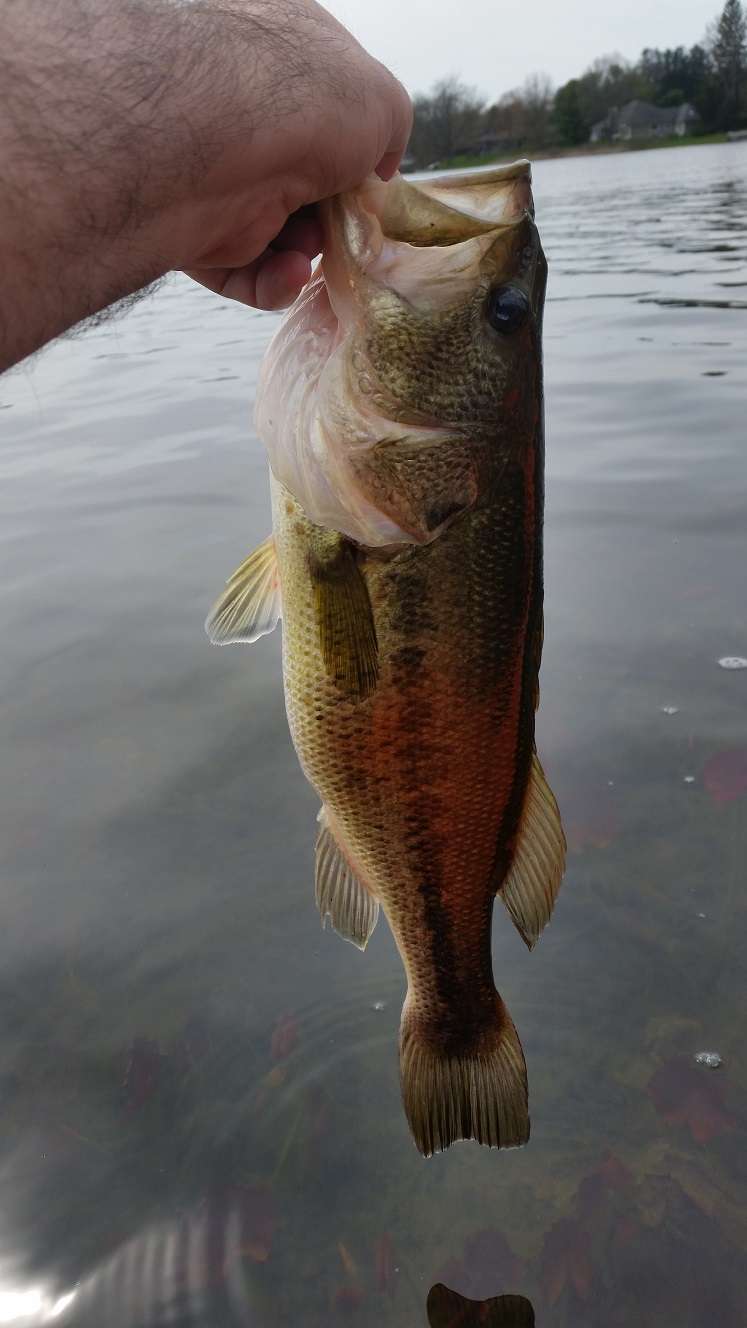
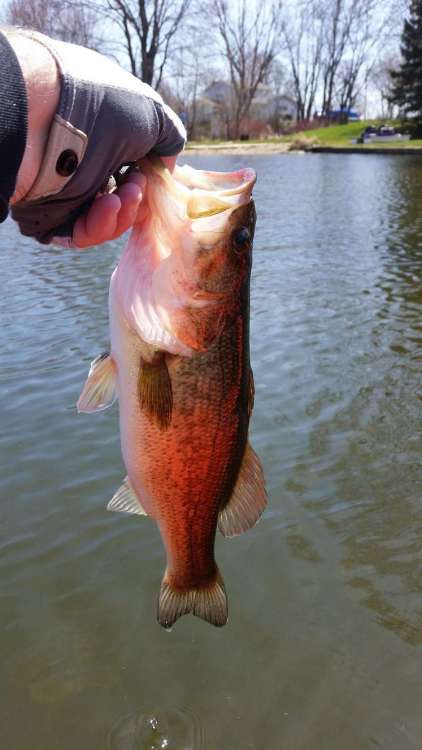
Slow start to the year. I've been out just 4 times, all in the last couple weeks to three small lakes. Water temps have been colder than usual, and I haven't seem them crack 50 yet -- 10+ degrees below what it was the last few years around the same time. My First 2020 bass on 4/20:
-
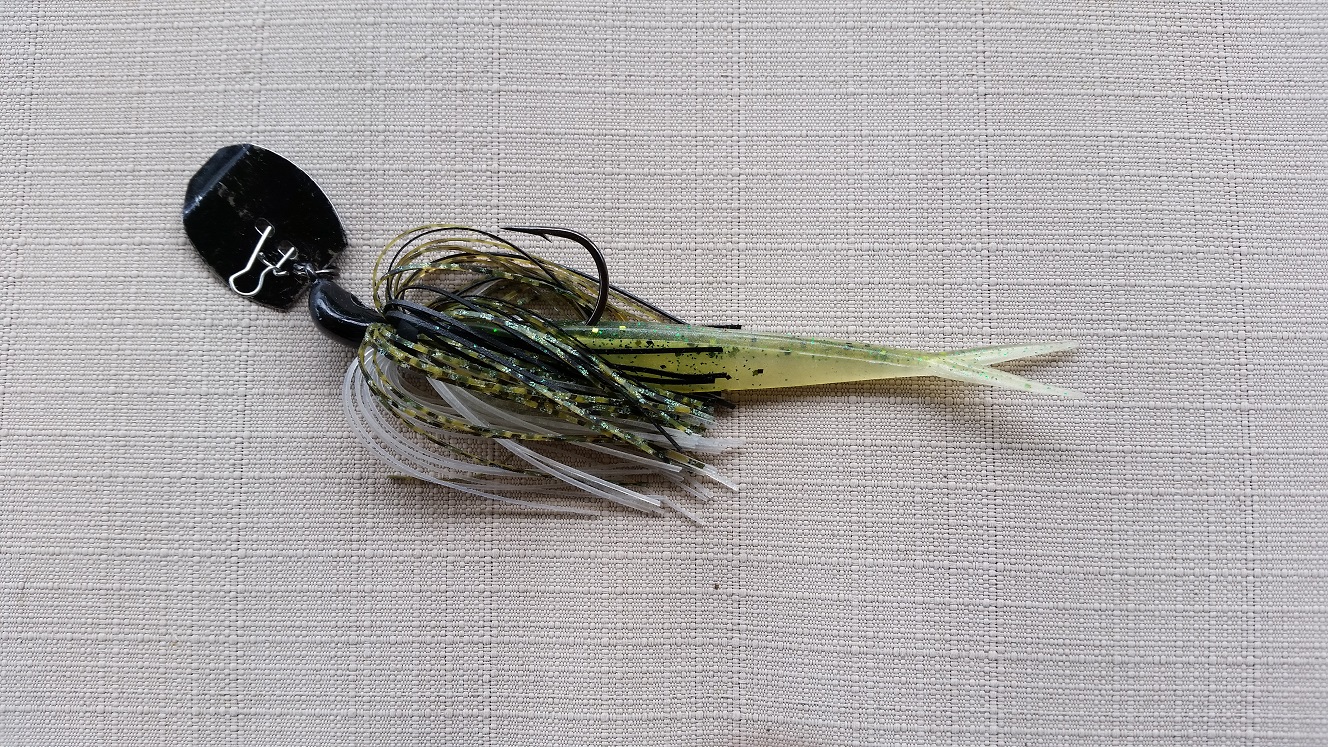
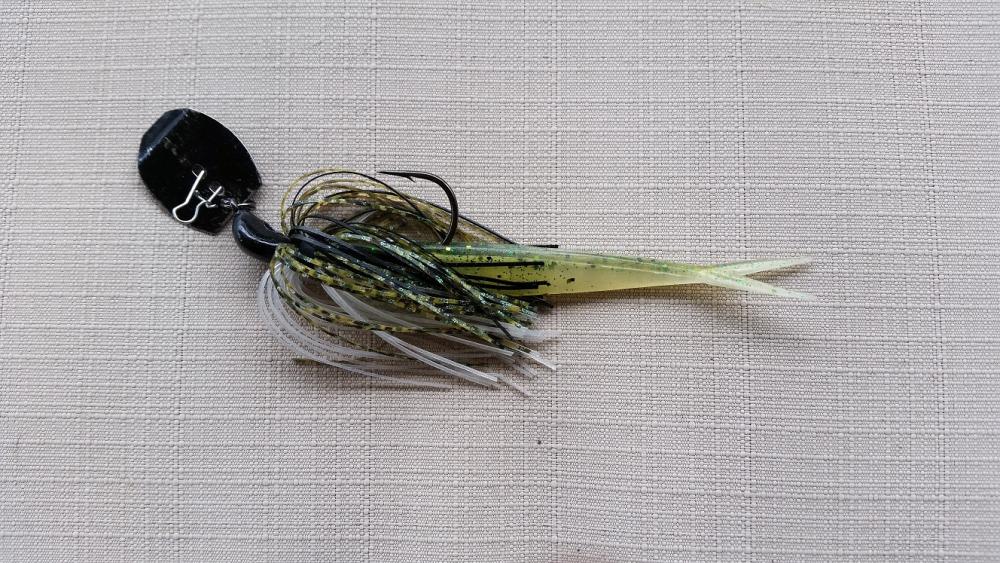
I make a baby bass pattern with the following: 1 tab whiskey barbwire, green flake 1 tab white 1/2 tab black The trick is to get the white strands on bottom, whiskey/green on top, and black strands in the middle for the black stripe pattern on the lateral line. Here it is on a bladed jig with a "baby bass" Zoom fluke trailer:
-
Weirdly, your water temps on those big cold lakes up there right now are the same as my small, shallow, fertile, dark-substrate waters...usually we're warmer by about 10 degrees or more at this point. I was back on one of my little swampy holes today, and it was 42 degrees.
-
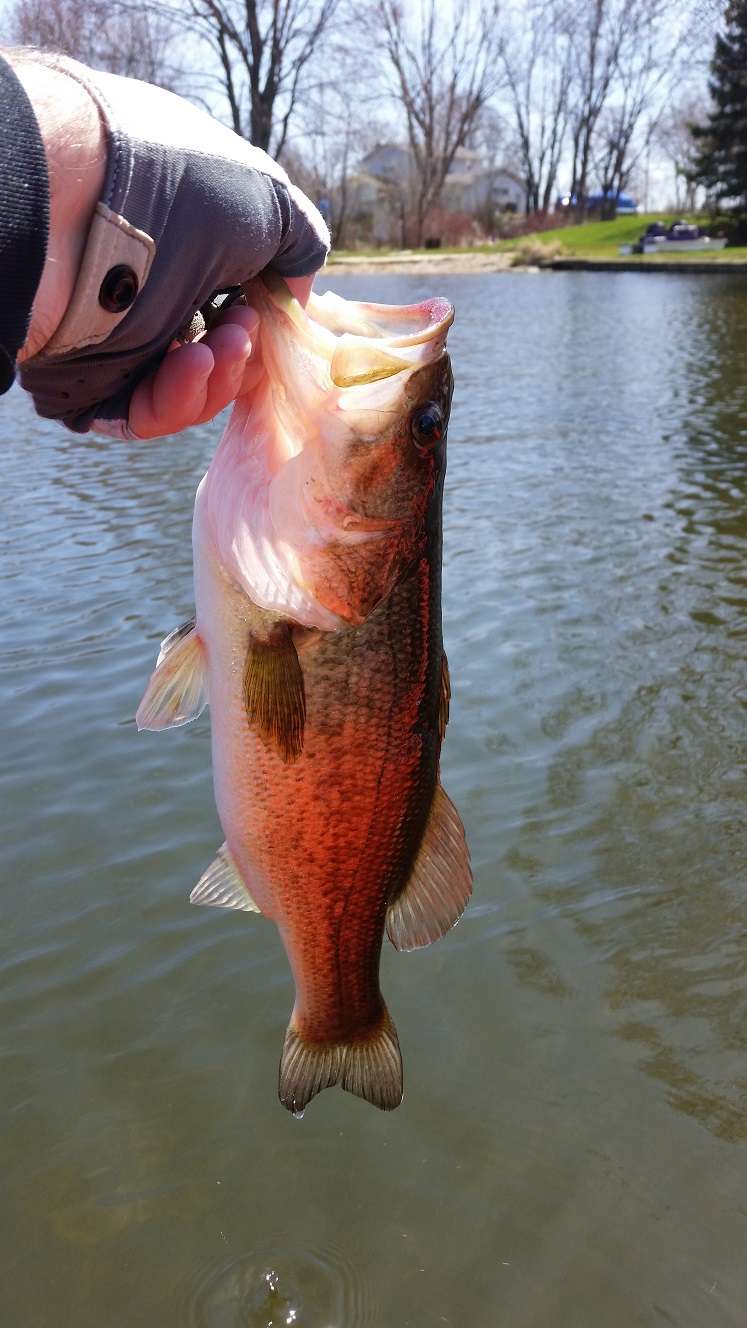
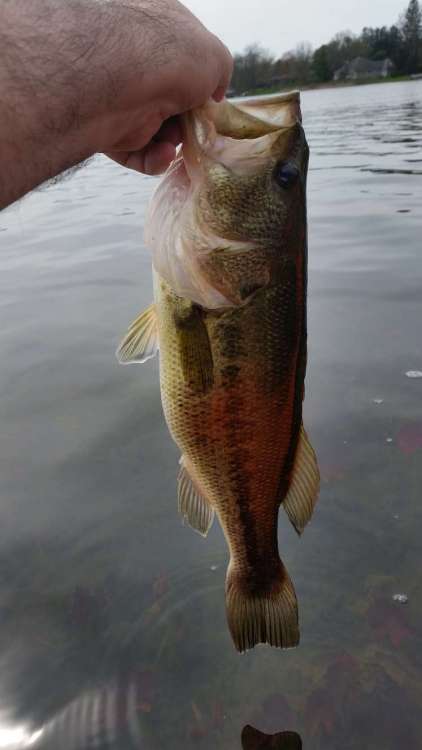
First of the year last week -- 3 hours in the afternoon, WT was low 40s, but got one (14") to take a rage swimmer shallow: Little bit better one (17") this afternoon, best of 7, on a red shad senko:
-
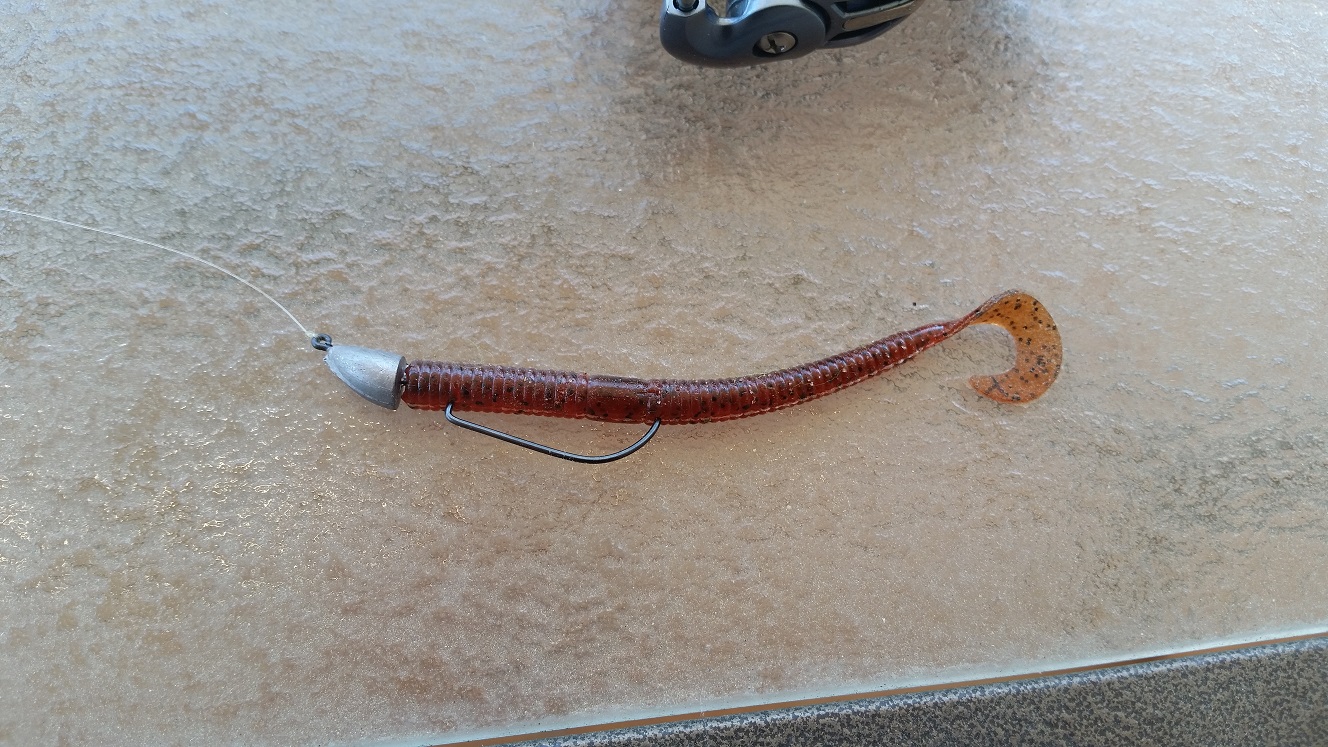
I use these on 3.5-4" plastics all the time, usually a 4" power worm; they fish very much like a slider. However, I do prefer a bigger hook for the speed worm, although it's probably doable.

-
When I first heard about 'shaky heads', i thought, "isn't that just a jigworm?" I've come to realize it's best to think of jig worm, shakey head, and ned rig as techniques rather than lures. i.e., probing weedlines and dropoffs vertically, vs. shaking on bottom, vs. no-feel swim/shake/glide.
-
Many universities offer degrees in Natural Resources Management, Fish or Wildlife Management, Water resource management, Forestry, or various sub-specializations. The curriculum in these areas would variously include courses in plant and animal biology, ecology, physical geography, geology, hydrology, and environmental science, as well as more narrow areas. Here's an overview of Fish & Wildlife Management degrees, for instance: https://www.environmentalscience.org/degree/fish-wildlife-management You're in VA... I googled around and saw these programs at VA Tech: https://cnre.vt.edu/academics/degrees-majors.html
-
Moving within MI or out of state? MI DNR keeps an online archive of survey results and management plans for lakes and other waterways that usually have a lot of detail about baitfish present, as well as other aspects of the aquatic food chain: https://www.michigan.gov/dnr/0,4570,7-350-79136_79236_85892_85897---,00.html Homeowners associations also sometimes post lake surveys and maps they have commissioned.
-
Actually discovered and started using them for the first time last year in 1/8 and 1/4oz for hula grubs, and they were really great. I don't think I took one off the rod I was using for it except to re-tie all summer. Also had me wondering why I had never really heard much about them...
-
Maybe the swimbait was realistic, but in a way that mattered more -- profile, size, & movement, not to mention location -- 1 foot of water, when everybody else was drop-shotting deep water? Sometimes "conventional wisdom" is the enemy...clearly, not all bass in our waters are doing the same things at the same time!
-
Even if realism matters, the features we think make something "realistic" may not be what bass find realistic. Why should a realistic pattern of colors matter more than a realistic size, profile, motion, or location? For instance, bass have good color vision, especially in the red and green range. But good perception of color detail depends on a bright environment, and bass tend more often to feed at less-well-lit times and places -- dawn, dusk, and under the shade of cover elements, possibly because lower levels of light give them a visual advantage over prey. However they have exceptional ability to detect movement. Their Critical Flicker Frequency -- how fast a flickering change can be before you see it as steady -- is about three times ours. So why should they care more about the detailed color patterns of a lure than how it moves?
-
My favorite lure is whichever one caught my last fish.
-
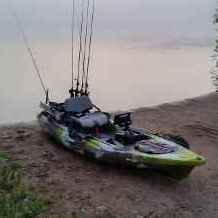
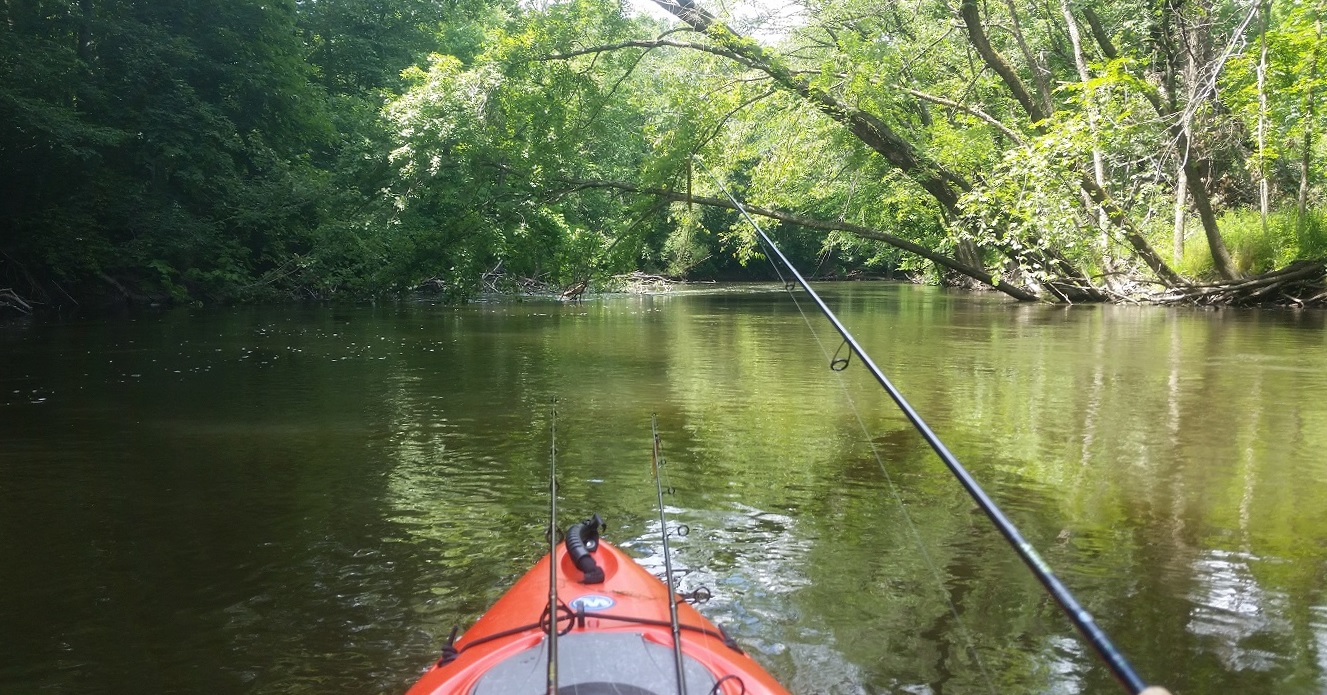
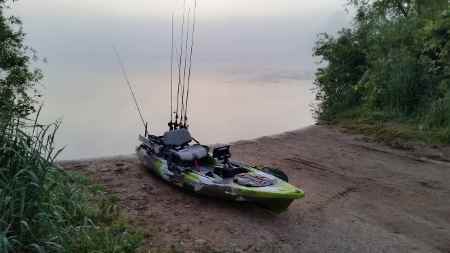
I'm chomping at the bit to get out, but it will be another week before I'm able to escape my to-do list for work (transition to remote work has lengthened, not shortened, that list unfortunately). With weather warming nicely, I expect a spinnerbait will be the first thing that goes in the water after my kayak, so I've got a nice assortment of silver, gold, and copper double willows sitting the bag, waiting impatiently...
-
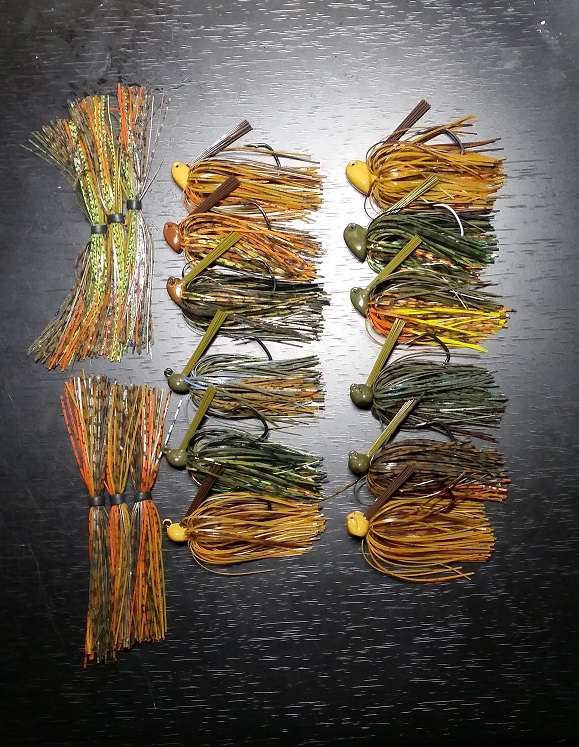
The two on the top and two on the bottom are all "Creek Craw".
-
I can vouch for the Booyah Pond Magic Spinnerbait -- excellent in creeks and ponds where forage may be on the small side, affordable, and can be fished effectively on spinning gear.
-
There's a reason every month or so another thread pops up praising praising Siebert Jigs....honestly, every accolade is well-earned -- High-quality materials, outstanding craftsmanship, and prices that You. Will. Not. Beat. for the level of quality. I use the Brush and Dock Rocker heads the most -- they are closet to an all-purpose head you can find. My favorite swimjig style head is the Shot-Caller, which comes through weeds really well. The variety of skirt patterns is also excellent. For craw colors, the "amber craw" and "creek craw" are spitting images of the Northern Clearwater Crayfish, which are all over the place in my waters. Bluegill, Sunfish, Pumpkinseed, & Perch cover the bases for my typical northern baitfish patterns, while Native Craw, Northern Craw, PBJ, & Green Pumpkin/Purple achieve a little of both.
-
I would estimate about 1/4 of my hooks that I have fished at some point have the barb pinched down. I do it when I have trouble getting a fish unhooked -- I just pinch the barb to get it out, and get them back into the water. Doesn't need to happen with every fish, but over time, barbs get pinched. I don't bother to replace, because I have never noticed any increase in lost fish due to a barbless hook. When I lose fish, sometimes it is with a barbed hook, sometimes with a barblesss hook. Never noticed a difference. I have also never noticed any difference between largemouth vs. smallmouth in how often they come off without a barb. What I have noticed is that unhooking is much faster. It is possible I lose fish because the barb is pinched down. But I am convinced that for every fish I lose, I gain at least one more that: (1) would have been lost with a barbed hook, but was NOT because the barbless hook penetrated more easily, OR: (2) I caught on a cast I would not have made if I were fishing barbed hooks because of time spent unhooking other fish.
-
Other way around -- increasing the difficulty level makes it more real.? The original purpose of barbs was not to hold fish anyway, but to keep live bait from squirming away.
-
I'm sure Mike would be happy to help you with custom lead-free fogys or swimjigs. Or, you could build your own by getting the skirt pattern in a 3 pack, and some tungsten heads. You can order blades, split rings, and snaps from Barlows.com or Fishingskirts.com as well.
-
It took me awhile to get the hang of the frog bite. I'm better at it now, but still have some trouble on occasion. The simple fact is, you will get more strikes than catches. Only when they get it in their mouths will you get a chance at a hook up, and that is not every time. This bothered me until I just decided to accept it. Then you must set the hook properly to land them. Keeping concentration is key. In this way, frog fishing is not unlike the texas rig or jig. You must pay attention and be ready for the right moment. I don't believe in looking away and going on the basis of feel. For one, I'm fishing braid, which has no "feel" unless pulled taught. I go by vision, but look for one specific thing: The frog must disappear from view. I accept that not every strike will make the frog disappear. But if it does, I must be ready to hit it. When it does, set the hook, and accept that you will miss some. But others you won't miss. once you get a handful of those, you'll start to get used to it.
-
When is this happening and how deep is the water? In the shallows in spring, it's probably carp spawning. However, bass may be in the area waiting to gobble up any goodies the carp unearth or uproot. Try throwing a worm, craw or creature toward the deeper end of the activity and see if you get any takers. If it's over deeper water (say, 8+ feet, although can certainly be shallower) in warmer weather, more likely bluegill. They do this in midsummer all the time over submerged weedbeds, feeding on surface insect activity. If that's what's happening, bass are probably hanging out underneath or nearby, looking up. Cast a senko or lightly-weighted worm near the area of activity (not directly in it), and let it sink several feet. They may even come up to hit a surface bait like a popper or walker on occasion. If you get a lot of splashing activity over deeper water, that's predator fish chasing shad, shiners, or some other open water forage. Often the predators are bass, and if so, throw a translucent or bone-colored walking bait.