MickD
Super User
-
Joined
-
Last visited
Everything posted by MickD
-
I have told you how to prove it yourself. It's easy and obvious. You obviously either don't understand what TNF is or have not really done it. The natural frequency of the rod changes with added weight, especially weight added out on the blank. On some blanks the frequency changes between a SS and a titanium tiptop. Changes due to titanium vs SS running guides are obvious.
-
Yes, you are correct that it can be measured in other ways. My TNF has the advantage of being fast and cheap, requiring no equipment that most peope don't already have. A fellow builder measures it with video, and I accept that it is a little more precise than using a small screen like a Kindle. BUT, we did a three builder experiment with him using the video the other two using TNF with Android devices and the correlation was excellent. To dismiss its accuracy is itself inaccurate. I have experimented with "ringing the bell", striking the butt onto a concrete floor , and it yields a prominent frequency which I agree does indicate the "modulus" of the blank. However, once you add guides, there is no longer one distinguishable. At least I haven't found a way to identify it. TNF will change with added weight out on the blank and one can see the objective change in frequency with changing guide weights. Have you read the articles on TNF? True Natural Frequency: Enhancing Rod Performance and Sensitivity for Custom Builds - Anglers Resource Seems like we are no longer talking about a rod repair tip. But I hope some are learning some things about blanks and rods. One thing obvious is that many aspects of rodbuilding are very controversial and misunderstood.
-
It is unfortunate that action is described by the terms fast and slow, normally speed describers. I think it started with cane rods, faster and slower tapers. Action by definition is where the rod begins to bend and is objectively measured by CCS. The farther down the rod this point goes, the slower the action becomes, but the speed of recovery does not slow down. That characteristic, proportional to TNF, true natural frequency, will increase as the rod is shortened. No it does not bend the same as it did before. You have removed the weakest part of the blank. CCS can be measured without destroying the blank by simply applying the force at different points in the rod, and in fact, the bend does change. Do it yourself by hanging a weight from the tip of a horizontally supported rod, then hang it from the first guide. Then the second guide, and on . Would you argue that the rod bend is unchanged when you hang it from the butt guide? An inch or two doesn't change it much, but it changes with every inch taken off.
-
By the definition of action being where it begins to bend, and by the numbers of CCS, taking length off the tip will move the "bending point" down a little which by definition is "slower." CCS Action Angle will decrease slightly reflecting this. It really does make logical sense since one is taking the weakest part of the blank off.
-
I have an older manual inflatable PFD also. I manually inflated that one and it went soft too. !!!! I'm going Mustang with my next one.
-
Yup! Good to get into this habit as it handles line better and will most likely make the reel last longer.
-
I'm not sure exactly what you're asking about, but I often get loops off the spool, then line is wrapped on top of them. I think it's just part of this type fishing. Keep an eye on the reel, and cast beyond them when noticed. Put a little tension on the line as you reel it on after doing this. Sort of "starts over."
-
Only matters for the looks. Any guide the same size will perform the same.
-
I personally think straight mono casts better than braid. One might want one over the other based on the rod action, but since most of us set too soon on surface, a stretchy line is probably the best choice. Mono in the pound tests most have favored, 12-14. But with the right mono, one can go higher.
-
Yes, it should give a faster response if the mass is taken off the right area of the rod. Whether the added mass of a single tip over butt ferrule is enough and in the right place to make a significant difference is debatable. But yes, usually the higher the power to weight ratio, the higher the TNF and the faster the recovery from deflection. But whether that is the same as sensitivity is another question that has been hotly debated the last few years. I think they move together; what helps recovery time helps sensitivity. It would be more difficult to argue it the other way, that they move opposite, than it is to argue they move together. But so many things might affect how one feels about a rod. Ergonomics for one. Balance, reel weight , guide mass, action, construction methods, materials, etc. I don't argue with your "liking" one piece better than two. If it's in your head that way, you will be pleased only with one piece. And nothing is likely to change your preference. My only point is that without having the preference already solid in your mind, could you tell the difference? Before micro guides I thoroughly disliked spiral casting rods. In my mind they looked funny. I thought of that often when fishing one. Now that I build with micros, I have a few spirals and it no longer enters my mind that they look funny. I don't even notice the guides. The mind is a powerful influence. Look for scrap rods at sporting goods outlets where they take returns and might be collecting broken rods. Pawn shops are another source, but while the rods there are usually junk to fish with, they can provide sleeves. But I find them usually grossly overpriced. If the rod is broken at a large enough diameter, Amazon offers repair kits that come with internal spigots. I have ZERO experience with them. Note that for the O'Quinn method, lower modulus (maybe "junk") is better than high, but I've never noticed an issue with using high modulus. It's thinner walled and less obvious visually. One thing to consider on rods is the faster the action, the less the last couple inches of the rod bends, so theoretically modulus of the sleeve would have less importance. What you are restoring is mostly the length.
-
When a rod is shortened from the tip its power goes up and the action gets slower. You've proven that 4 inches on that rod is significant.
-
I would like to see objective data on the 1 vs 2 piece sensitivity and vibration transmission argument. I'll bet you cannot find any. Trika advertises that they have it but they don't tell you what the competitive rods are and whether they are of similar prices and characteristics. I believe it's all subjective opinion. We expect one piece to be better, and thus believe it is. And there are those who argue that sensitivity is all about feeling a pull on the line and that rod length is a big factor. They argue that fish bites are not at all about vibration. It's a very complicated subject with lots of opinions and little if any objective data. Even if there is a difference that's somehow measurable, is it detectable to the fisherman under fishing conditions? A lot has to do with expectations. If I pay a lot for a rod I expect it to be very sensitive, and therefore think it is. Extensive experiments in customer perceptions on golf clubs show that this is sometimes the biggest factor in customer satisfaction and which product is "best." Finally, if one is not using braid, most everything argued about rod sensitivity means nothing. That's my subjective opinion.
-
I recently repaired one broken about 6 inches down from the tiptop, and the angler was very pleased with how it fished after the repair. That was done with the O'Quinn method.
-
This is not about 2 piece vs 1 piece; it's about salvaging a broken rod. I think a lot of builders, with the blanks available to them, will challenge that 2 piece rods are whippier and lacking in backbone. I know I do. There are many different lengths, powers, and actions available in two and three piece blanks, and they perform right there with the one piece. They didn't a long time ago, but they do now.
-
How many times have we seen posts of rods broken just a few inches from the tip and the suggestions pour in to forget it, not salvageable. In many cases the rod can be made very fishable, even if not exactly equivalent to a new rod. If the two pieces are available, the sleeve method of Ralp O'Quinn works very well in most cases. I've done it to well over a dozen rods that are still in service and in most cases, I don't think a person could pass a blindfold test in separating them from new rods. https://www.rodbuilding.org/library/repair-oquinn.html But what about if a couple inches of the tip is broken off and the end piece is missing? There still is a chance to salvage it so it will fish well for most uses. It won’t be as robust as a new rod, but it most likely will work well. Find a sleeve (old scrap rods are a good source) that fits well over the existing rod end and cut it with a diamond cut-off tool in a Dremel to approximately match the original length of the rod when about 1 ½ inches of engagement of the sleeve to the blank is acheived. Glue it with epoxy adhesive. For the tiptop use a single foot guide of appropriate ring size, foot width about the same as the ID of the sleeve, fit it into the hollow end of the sleeve, and glue it into the sleeve, aligning it with the rest of the guides on the rod. Now wrap reinforcing wraps of about ½ inch in length at each end of the sleeve. Coat with epoxy wrap finish. That’s it, give it a try before giving up on that rod. Not great photos, and not my best wraps, but you get the idea.
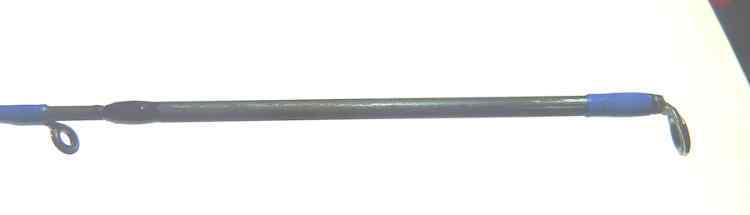
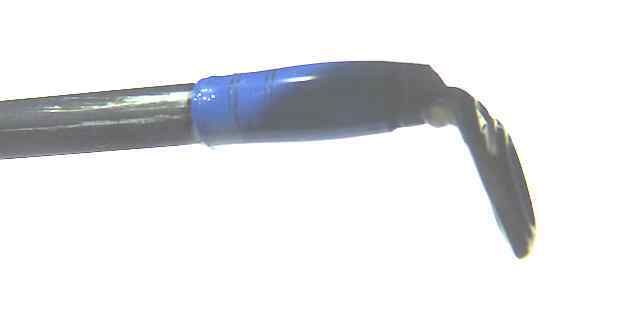
-
Lots of good info here, glad I mentioned it. Might make a difference .
-
I went out to the boat stored in a dry pole barn today and found my PFD inflated. I figured an anomaly inflation-it's getting on in years, and that I simply had to buy a re-arming kit. BUT, when I manually inflated it I found that it would slowly leak down. Had I been in an emergency it would have in time let me down. I suggest those with inflatable PFD's occasionally manually blow them up to ensure they don't have a slow leak. On mine I blew into the tube until I could move no more air into it, and capped it off. Within about 10 minutes is was pretty soft and would have required a new charge of air if I were on the water in it.
-
Exactly! But generally quality is not an issue with the stuff we deal with. Like here , there are highly competent sources there and highly incompetent ones. My point was that it's not all black. There is white and gray, too. Nice to see someone else does uplocking! Especially a knowledgeable person.
-
He may have been talking about a specific manufacturer, but not about ALL. It is incorrect to believe that ALL China manufacturers have poor quality control.
-
If you learn how to test rods for TNF, True Natural Frequency, you will find a difference in natural frequency between similar looking, similar power and action ratings, but different materials. In blanks purchased for rod building I have found that generally the higher priced, higher modulus blanks have higher TNF's and feel tighter, crisper, and with faster recovery from deflection speeds. You can't realistcally compare an 8 foot blank/rod with a 7 foot blank/rod, though. They have to be similar with respect to length, power, and action. Mastering Rod Building - Anglers Resource
-
sound opinion, IMO.
-
Factory built rod reel combinations, if well balanced, is just plain luck. They don't design the rod to balance with a certain reel, they just build to a set of one size fits all prints.
-
I started my granddaughter on spin when she was about 10 with a 6 1/2 foot Avid, med/fast. A couple years ago I built her a BC rod, 7 foot med/fast. She handles both with no trouble. I would go longer than 6 feet for longer casts, better hook sets, and more forgivable for fighting fish. I gaver he one of my med/mod fast spinning rods recently and I notice that is the one she chooses for most of her fishing. Med/fast is very versatile, so that's the way I would go. Unless one is fishing a confined area, like stream banks, I see no value in going short on rods, and the kids can handle 7 or 7 1/2 with no problems. The best rods for adults are also the best rods for kids.
-
Yes, pleasantly surprised. Mine don't get run as hard as many since my fishing time is limited, but still, 8th season is a good run.
-
My boat is stored in a pole barn in mid MI and I don't remove the batteries. I leave trickle charger on them, one that is said to not charged if they don't need it. My three batteries (AGM starting batterry, conventional trolling motor batteries) are in their 8th season and I still don't detect deterioration. While warmer storage may be ideal, based on my experience it is not necessary.