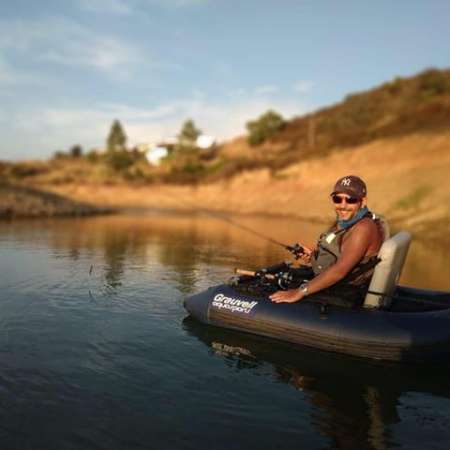
tugabasser
Members
-
Joined
-
Last visited
-
tugabasser changed their profile photo
-
I'm portuguese and learned to fish for bass with fiberglass spinning rods and inline spinners. I think that the reality here is that baitcasters only entered the scene in the late 80's early 90's brought by the great US outdoor supply stores like Cabelas or. Bass Pro Shops, primarily available on the internet. In the present, most of the informed portuguese bass anglers use both spinning and baitcasting gear, depending on the type of bait they're using. For myself, due to the overall fishing pressure bass suffer here, I tend to use primarily spinning gear and a finesse approach like drop shot, split shot or shaky head. But, when they're readmitir and willing, I get my baitcasters going, my spinnerbaits and jigs out of the box and I'll hit'em hard Except in the summer: then I'll fly fish them untill my casting arm is ready for replacement...
-
The rumours are just that: rumours. The only knowledge I have about florida strain in Portugal is that in the 1990's there was a controled introduction in two small impoundments near Lisbon by the Agronomy Institute, after a very tough negotiation with the Nature Conservation Institute...to my knowledge, there were no more floridanus introductions in other places in Portugal
-
Extremadura and it's portuguese counterpart are arguably the best zones in Europe regarding bass fishing: good weather with lots of sun means a good and long growing season. The only problem is that the fish - at least in Portugal - are extremely pressured, with little or no respect what so ever by the fishing regulations, including mandatory no fishing period and fish sizes. However, there are some incredible reservoirs in Portugal like Alqueva or Alvito. In Extremadura I like Alange very much
-
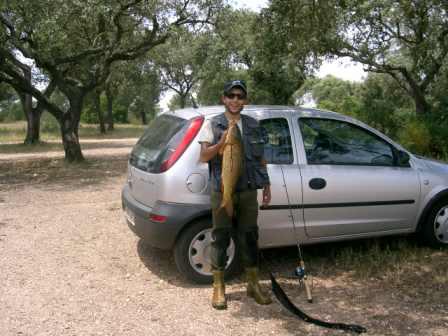
It's like Cybasser said: not as bad as people think! In Portugal there are two main ways of cooking it: in fish soup and vinegar grilled. To do the fish soup, you'll need to cut'em into pieces and boil them in water with tomato slices, garlic, onion, bread slices, salt, parsley and some river minth/oregano and, if you enjoy something a little stronger, some black pepper or hot chilli. To vinegar grill them, you'll need to make a few deep cuts along the sides and leave the in vinegar for about two/three hours, so that the vinegar might soften and dissolve some of the smaller bones. After that, just put'em in the grill. While the fish soup can be made with smaller fish, (up to two pounds), vinegar grill is better with larger fish like this one
-
That's what I'm talking about!!!! I mean HUGE!!!!
-
Hello again,, Cybassman. What I mean is that our native species are "rheophyllic" (current adapted) by oposition to "limnophyllic" (standing water adapted). This implies that their habitat is no longer available in the impounded systems (at least in the "lake" portion and in the immediate proximities upstream), thus their food sources are unavailable and, in drought situations, since they cannot migrate to the high oxygen current waters to reproduce, there is no imput of new fish. Further more, our native species have evolved without any kind of water predator (with the exception of otter and some water birds). I know of a case in a reservoir in the south were colleages of mine working with the university of Évora netted iberian barbels weigthing 12 to 18 kg that were more than 12 years old and did not reproduce for about 10. The fisheries studies in our southern reservoirs (and some up north also) reveal that the vast mojority of the fish community is dominated (in biomass therms) by carp, bass and pumpkinseed, with the native portuguese species accounting for as less as 2%. It's almost like when you put a polar bear in the Serengeti: it's not supposed to be there. Don't get me wrong: I'm 100% for the conservation of our native species, not only because they're ecologically important for the riverine system equilibrium, but because 80% of them are on the virge of extintion. What I mean is that they're not fit for reservoirs and most deffinitively cannot be considered good bass forage, since there's very little guarantee that they can endure. I can reveal to you and everybody else that there are plans to create at least one endemic species hatchery in order to compensate habitat loss due to large impoundment construction. And I agree, as long as the fish produced are destined only to de adequate systems and no just dumped into reservois: it's just throwing money away and playing with the tax payers money. Regarding (again) introductions, in my opinion the main difference between bluegill nd pumpkinseed is that the bluegill grows larger and apparently does not feed on fish eggs as the pumpkinseed does. However, the bluegill preys on small fish and, if not controlled, can cause recruitment trouble in bass offspring ("almost" a tie ). Recently (4, 5 years top) there was an illegal introdution of bleak in our "frontier" reservoirs, probably by our spaniard neighbors and, I must say, they're adapting just fine, increasing theirs numbers and suppling bass with a permanent forage in addition to the other freshwater species. And they form schools, so one of these days I can finally use them jiggin spoons my father bought 20 years ago! In a more serious note: I 've seen pictures of your reservoirs and steep is the word for them. Is there any kind of live vegetation (I don't mean dead brush) at all? Great and profitable discussion Keep your spirits high and lure on the water
-
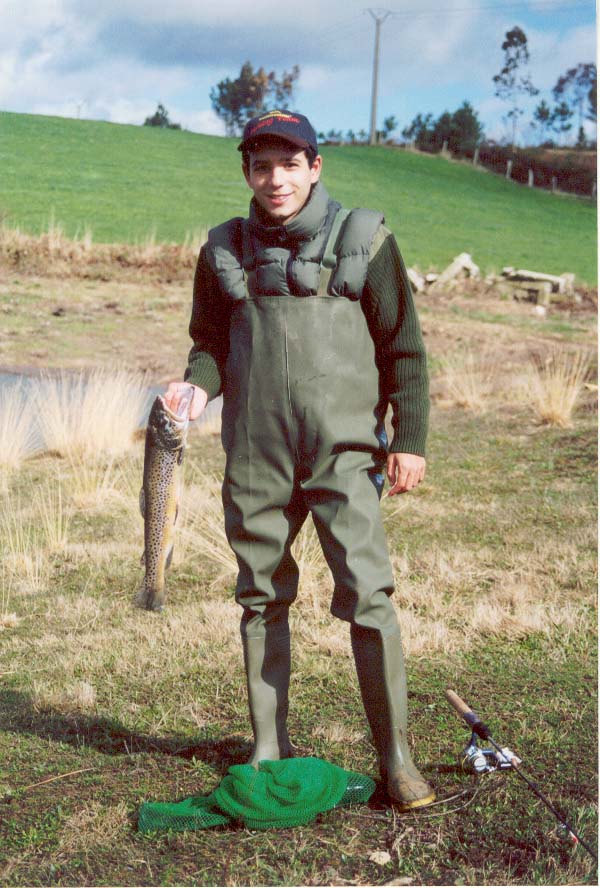
Here's a brownie
-
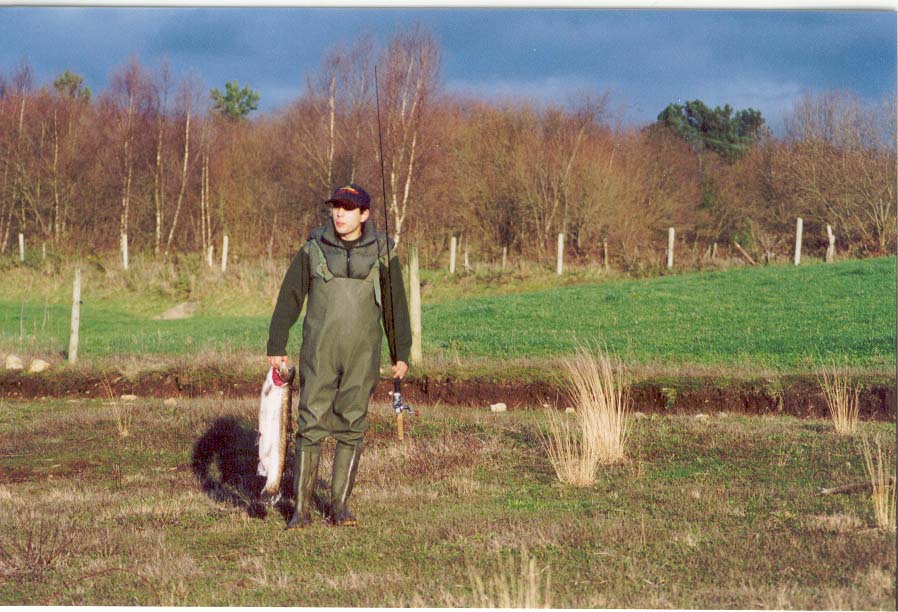
I'll tell ou a little story: there is a spanish reservoir up north (Galicia) called Villagudín. It's a small impoundment (about 50/60 ha - metric system) that holds only three predator species: salmon, brown trout and rainbow trout. It 's a pay-per-fish reservoir meaning that not only you need to buy a daily fishing permit but also you pay for EVERYTHING you fish, wich is about 6/kg (mandatory harvest). I've been there a couple of times and cought both brown and rainbow with the same lure: bluefoxe's minnowspin in mullet collour (7 cm) on a spinning outfit. Being a stocking reservoir, you pretty much fish for whatever they've put in but I recall brown trout having a noticeable preference for minnow (streamer) type flies.
-
For bass, California, Texas and Florida, for the chace of catching a fish over 7lbs! The european record is some 10.3lbs, so... I also liked to fish the Amazon for peackok, Argentina for dorado and steelhead (huge, so I've heard) and (this is weird) I'd like to catch me some Nile perch (they grow to 6ft and 400 lbs!!! For real!!!)
-
That's a very tricky question, Cybassman. Were goes: "Do you have any problems with overpopulation of the pumpkinseed, or does the bass manage to control their numbers?" That depends: I'm a biologist and my graduation paper was on freshwater ecology, so I know for a fact that bass need to reach a certain size (over 20/25cm) in order to control the population of any kind of forage fish it encounters, so we here in Portugal face at least two situations: in reservoirs were bass numbers are relatively good, there are very few problems with pumpkinseed density, inspite of rather heavy harvest of small bass, wich means that the amount of larger bass is sufficient to keep them under control in a relative balance. This normaly happens in reservoirs that have poor access from the banks, thus very tough to fish to the majority of portuguese anglers even those that don't respect the law. On the other end, in reservoirs that sustain an intense bass fishing pressure with heavy harvest, the pumpkinseed population is huge and very difficult to control. "Do you think bass grow bigger and in better quantities in lakes with pumpkinseeds than other lakes?" I honestly can't give you a straight answer, because it's not the only forage available: we also have other species of prey such as the Luisiana crawdad (Procambarus clarkii) that appears to be favoured in some places. Furthermore, there are those endemic cyprinids that reproduce in the upper portions of the riverine systems and, after spawning, move to upper reaches of the reservoirs and can also be a part of the great equation. I believe that the correct formula for big and healthy bass, at least in Portugal, is an improved control on anglers and the inforcement of the law, habitat improvement and the notion that our native species cannot survive in reservoirs: they're just not fit. "The reason I'm asking is that we need a good forage fish like the bluegill (or maybe pumpkinseed - I don't know) for the largemouth bass and the fisheries department finds it difficult to import from the USA due to European laws (at least that is their excuse). If a good forage fish that could be used for bass and also for fishing was available in Europe then things would be easier (or the fisheries dept would not have an excuse any more)" That may not be that simple because of Europe's nature conservation laws. In case you didn't know, as we speak, the whole European Union is working on an improved water directive that includes not only physical and chemical paramethers, but also ecological ones, in wich natural occuring fish communities are included. As I believe Cyprus has no natural occuring freshwater fish species, it might not make a great deal of difference but, neverhteless, bass should be considered an "exotic" species, even potencially a pest. So it's tricky...very tricky to try to intoduce another foreign species...One thing that you could do is to find out what is the difficulty in the precess: is it the origin? is it the actual introduction of another species? In the fist case, bass LOVE rainbow trout ...If it's the second case, you could start a hatchery with the already available species, since Cyprus has no natural occuring freshwater species...It 's a very interesting subject and you should find out more with your fisheries department. Keep'em cominn', Cybassman and, if you or anybody else need more info, PM me, I'll get back asap
-
Ho there Cybassman! Here in Portugal, we have a fairly number of "forage fish" species, like the nases (for instance the Iberian nase Chondrostoma polylepis), and other endemic nase species that have no english name, also chubs (gen Leuciscus) and roach (gen Rutilus). Recently, there was an illegal introduction of bleak (Alburnus alburnus), wich seems to be spreading throughout the Southern reservoirs. The main forage fish, at least in the south is the pumpkinseed (Lepomis gibbosus), an North American fish, that was officially introduced for tournament fishing puposes (speed fishing actually - huge rods, no reels, size 18 hooks, you get the picture) and is a member of the sunfish familly like the bluegill. Also introduced (now illegally) was the chamaeleon cichlid (Cichlasoma facetum), but this one is quite rare. Hope this answers to your question
-
Welcome aboard! I think bass is almost everywere around the world with a few execptions like Australia and part of the Indo-Pacific countries.Here in Portugal the Northern strain was introduced around 1950 in the mainland and almost a century before inthe vulcano lakes of the Azores islands. I believe we also hold the european record of 4.7 kilos (a bit over 10.3lbs), cought with a silver/blue zara spook in January 1992. I'll bet there's a bigger one wating for me somewhere ;D ;D
-
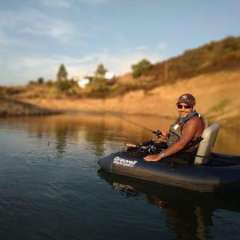
You've got it, Chris! I would also add a very important factor that can influence the way you fish a drop-shot rig: if you usually fish from a boat with a trolling motor, it's easier to control your positioning, allowing a vertical style of fishing and you would fish standig up. If you (like me) don not own a boat (I'm a float tube guy), it's difficult to control your craft positionig and do a vertical presentation, plus you fish in a sitted position. I normally adopt a more horizontal presentation and I get very good results (got it from an article here at bassresource.com).
-
Deep diving crankbaits. You just cast and reel it in...no challenge. And vertical drop-shot (it's difficult to control your tube and keep the rig where it«s supposed to be )
-
My firt setup was a 5' spinning all metal 2 piece rod (weird, right?) with a Abu reel 20 years older than me and a couple of inline spinners that snagged ALL the time. But I manageg to catch a few suicidal basses with it. I would say a spinning medium action outfit matched with a fairly good reel should be a good starting point and, assuming that one usually starts fishing from the bank, I would swap your selection of hard baits for plastic worms and grubs.