




Brad in Texas
Members
-
Joined
-
Last visited
Everything posted by Brad in Texas
-
Beetle Spins work great, probably the other end of the spectrum from the giant swim bait craze over the last several years. There, one occasionally catches a small bass on a giant bait . . . just like on the other "small" end of the size continuum where a large bass will jump on a tiny bait. Although I'm in the camp that thinks bass and most fish have tiny brains with tiny thought capabilities, they do seem to know something about sort of matching what is available to them size-wise. So small bass don't generally take as many swings at slow moving large swim baits and large lazier bass don't waste energy chasing small moving baits. I have to tell you I struggle with this a bit since animals live in the moment, don't have access to mirrors to even know how big they are relative to their food sources, how do they know? My guess is a 6" bass that takes a swipe at some large dinner passing by, like another 6" bass, figures out via trial and error that it is a waste of time and energy. There is some situational conditioning going on. *Bluegills have very small mouths, need really small hooks and plastics. Green sunfish, and several other pan fish, have much larger mouths, likely can grab on to Beetle Spins, small Mepps, etc. much easier. I love carrying along a few "skunk proof" lures! Brad
-
To a degree, yes, these do allow any plastic attached to them to swing more freely. But, do know that not all line twist is created by your bait rolling on retrieves or during casts . . . but occurs back up on the reel, a condition related to the line being picked up. I use the Gamakatsu version of this sort of hook, though, with its wonderful pinch grip on the bottom where a separate sinker leader can be attached, then down on this separate piece of line to a sinker itself with the pinch grip. It allows one to tie on the hook, no worries about leaving a sufficiently long tag end for sinker attachments. This means you can make very fast sinker leader adjustments, say, you want to go from 4" to 16". For me? Other than line twist experienced trying 100% fluoro once, it just isn't much of an issue with light braid. As already mentioned, it isn't that braid doesn't twist, it does, it is that it doesn't create handling issues related to twisting nearly as fast. My order of Rebarb hooks came in yesterday in sizes from #2s and now for other presentations, some purchased larger sizes up to 4/0s. These hooks for drop shots T-Rigged knocked me off of using the swivel hooks. I'll take the increased hook up ratio over any concerns for line twist. Brad Amen! Some of the monofilament lines are so very well made these days, I often wonder why people torture themselves over fluorocarbon usage. Almost every declared advantage of fluorocarbon is "situational" at best: invisibility, sink rates, and so on. I do like and use it for leaders, tried it once straight, didn't like it. I now choose between straight braid, braid with a short fluoro leader, or straight mono. Some advantages to one over the others, for sure, but not as overwhelming as product guys would have us think. Brad
-
So much good advice shared above! The gist of what the weighting, with or without, is all about is simply assisting the wacky worm to get to the place where the fish are. If the fish are biting at the bottom, the last thing you want is to lose time letting your unweighted worm fall through the water . . . slowly. But, if bass are biting just seconds after "splash down," it means they are feeding higher up in the water column and the last thing you want to do is add weight and pull it by them too fast falling through the bite zone. The real conundrum often occurs when the fish are up but so is the wind and current; so, you have to figure out the right weighting to defeat the weather obstacles but not so much as to fish the wrong depth. Experience, here, makes all the difference. Well, that and tackle options. Anyway, nothing worse than tossing out a wacky rig in strong wind and see it blow away, carried off by wind and currents, from your target area. I think my favorite wacky bite is the one where I toss my rig out and it gets hit within several feet of the surface just seconds later. When I find that circumstance, I usually find a lot of hungry, aggressive fish. This would be the occasion for the magic of a Senko, weightless, weather permitting. Brad
-
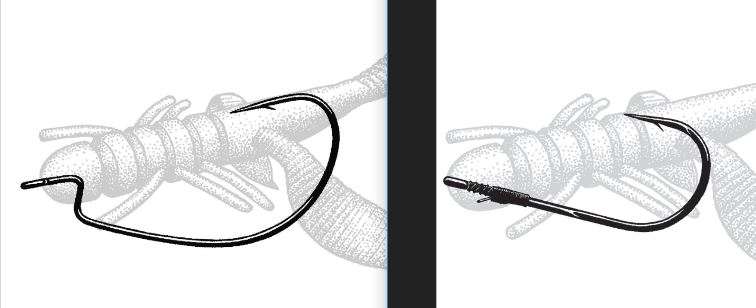
I own some EWGs like this , too, various manufacturers and I see more and more innovation in hooks. But, for me and just my own personal experience, the "angle of attack" I suppose I might call it takes precedence over the several issues EWGs solve. It can be seen below in my attached little mock up of a straight shanked worm vs. an EWG side-by-side. If you thread the hook on a straight shanked worm hook, leave it just below the plastic's surface, when a fish takes it in its mouth, when you feel it and set the hook, it comes thrusting out an an angle that will catch . . . something. i'm not alone in thinking this isn't always the case with an EWG where, just personal experience, I just don't have the same percentage of successful hook sets. Brad
-
I don't use long casts, fishing most often from my Meyers Sportspal canoe or a kayak. I get close up and usually pitch to my spots. But, I have a friend who fishes in the kayak tournaments here in Texas, a YouTuber publishing videos, too, and Tony Sebren can make casts with very small splashes using a casting reel. If I were to describe it, I'd say he casts flatter trajectories than most. As one poster here mentioned, flatter angles of descent make smaller splashes; and, another poster here mentioned you can still make long "enough" casts by backing off just a hair. Diminishing returns to distance, anyway, from those Tarzan swings. We all know that: air resistance against light lures makes it so. Adding to the flatter trajectory, a shot putter or discus thrower's nightmare where energy that could have gone into a longer flight instead finds the implement smacking down for a short measured throw . . . but then skipping off farther rolling along the ground, wasted energy. Here if a lure is cast "flattish" and an experienced angler has a really good thumb (finger for spinning reel), if timed properly, at the point just after the first water contact where the lure would then want to skip forward like skipping a flat stone across water, the line is stopped, absorbs the horizontal "vector" energy still left . . . and the lure makes little commotion. Not only the thumb/finger, but one can pull up on the rod to negate the skipping forward. Some do this much better than others. When you see an angler with this skill set, it is something to behold. On long, long casts where you are trying to cover water, there, I'd likely just bomb it out, get the extra 7 or 8 yards, and know it might affect a fish if it hits him on the head, but odds are the extra 7 or 8 yards pays off. Brad
-
What brand Neko hook are you referring to? Brad
-
Rebarb hooks are Gamakatsu hooks . . . so we know they are high quality. I just love the keeper on these hooks, love the hook-up ratios using the lighter wire/smaller sizes; but, I have an order coming in now where I added the 3/0 and 4/0s for some larger presentation ideas. Most on-line sources don't seem to carry them, but Rebarb hooks are also available in an Aberdeen style in smaller sizes, so maybe for crappie, various other pan fish. For me in worm hook style rankings order, it is: straight shank > offset > EWG. I use the others for beefier plastics, other occasions. Brad
-
kens, tell us a bit more about how you have been using it! Water depth, retrieval speed, etc. Oh! And, do you use a plastic trailer of any sort? Brad
-
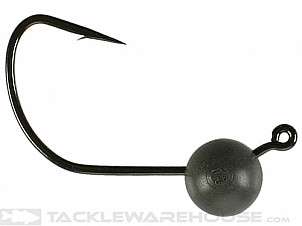
Yes, alluded to up above about not weighting a Senko on a Wacky rig, some background. The thought here for most of us is the selling point of the wacky rigging is: a slower fall rate, horizontal dying/injured bait orientation; then, the Senko: the one-of-a-kind little shimmer it creates as it fall through the water column. So, weighting it down is sort of antithetical. But, fish might like it somewhere between slow and fast, horizontal and vertical. So, for the latter, we nail-weight one end of the plastic we use . . . and we call the rig by another name. Same on the weighted wacky hook issue and I actually like a particular wacky head in its lightest available weighting, 1/16th. While there are many out there including fine names like Owner, for me the gold standard is a Zappu Inchi Wacky Head. I have used them with and without weed guards but on re-orders I now just buy them without. For whatever reason, I think the orientation of the hook point is most likely responsible, I rarely get snagged with these. Absolutely top quality, a bit pricey, but these will give you just a tiny bit of weight to drag plastics down at just a bit faster pace. Brad
-
So many. I'd add Roboworms for drop shots, Keitech "anything" for shad/fluke-like plastics. These two are high probability producers for me. Brad
-
All of the above, solid advice. There is a professional fishing guide, Capt. Chris Myers, who has published a series of videos on proper spinning gear usage. YouTube . . . and really worth the small amount of time it takes to watch them. The main take-away is knowing that a flexed spinning rod with a properly set reel drag fights the fish, the reel just reels down on the line at appropriate times. Well, unless you can master back-reeling where the reel is used more in a game of Chess with the fish. 10/8 or 10/6 most often puts one in the proper frame of mind that they simply can't pull too hard on finesse lines and hooks . . . you'll develop a subconscious fear of your line snapping. My PB this past April came on 10/8 and I reeled her in (10.4 lbs.) with another 2 lbs. of "salad." To say I was focused on managing line tension would be an understatement. I've tried all of the drop shot hooks, like many of them. None have been even close to as effective in terms of hook up ratios as the Rebarb hooks. I have an order coming right now where I replenished my stock of the smaller light wire hooks (1/0s and 1s) and I added a few packs of 3/0s and 4/0s with the heavier wire to give them a go for "Bubba shots." Brad
-
Correct. I have spoken with Gabriel there at Hitena and this is the primary target presentation. As you'd drop that over the gunwale and down to the desired depth, the individual leads would act like a Merry-go-Round, that, and if you jostled the rod tip, it'd flutter, blouse out and retract. I suppose this might work for white bass in a school in deeper water on a hump. I caught 3 pretty fast last late evening using two presentations. I started with what I have already described: a drop shot where the hook and worm are on a long leader to let it float a bit more. I liked this but don't think there is much, if any, upside over just a traditional rigging style. But, it worked. And, any tangles were easily jostled out. But, maybe not the area one would think, but the hula-hoop ring leader line and the knot at the top loop. I thought if it happened, it'd be the two leader lines twisting up. Not so much. So, these were just windings, not knots, came out in just seconds, not really an issue. Then, I saw schooling bass chasing shad so I spent a fe minutes tying on a version of a Donkey Rig where one leader was shorter than the other. I used 4" Keitech Shad Impacts . . . because that was all I had with me. Here again, it worked well, but with that many fish feeding on the surface, one bait would have been fine, too, so no net advantage for the extra rigging time it takes. But, where I DO think this version of a Donkey Rig would work is where you'd use tinier plastics and having 2 or 3 of them tied on separate leaders, that you'd have some "casting weight." What I have found here in Texas is the schooling bass this time of the year are chasing pretty small shad, so a bit of size matching might help. For freshwater anglers, I think the place this thing would really shine would be vertical fishing in deeper water, just dropping an end-weighted rig down to proper depth and start wiggling the rod tip. I'll experiment more! Brad
-
Agreed. I think the answer to avoid some of the undesirable outcomes will be to make certain the free floating (hula hoop) attaches to a lure on a shorter leader well above the sinker. Once it is "pitched" out, this is my intention and not so much long casts, a semi-taut line will create some angle, say 45 degrees, back to my rod tip. Ideally, I will be able to drag the sinker, a shad/fluke/worm plastic will sort of dance along in front of it. I'll take the rod out that I have rigged one up on and give it a go this afternoon! Brad
-
I am wondering the same thing. Worth a try at the right time. Here, are you thinking a main line to the top swivel ring, a float off of the hula hoop on a separate leader line, then the "lure" hanging down off the lower ring? I'll have to ponder this . . . might be good at certain depths. Matt and Tim recommend a sliding float, as I recall, with a sinker stopper on the line that allows the line to be reeled up so that it can be cast a bit farther, the line then running though the float until it encounters the stop. Another thing to explore! Brad
-
Just speaking regarding panfish rod lengths, I have two I use a lot: one is a 6'9" UL and the other is a 5' or 5'4" UL. It goes without saying that the long rod is the clear winner for casting distance. But, when I am panfishing out of my canoe or kayak where I get very close to my targets, I almost always use the shorter rod. This is especially so around boathouses and docks where the accuracy and ease of casting way back underneath in the shadows is easier with a short rod. We have really big bluegills, redbreasts and others here on Lake Athens. So much fun to target! Brad
-
Bassun, good points and a note that they showed up in the mailbox a few days ago. I'll likely get a chance to give these a try-out either tomorrow afternoon or over the weekend. I'll report my general observations. Let's see: all three attachment points are free-wheeling, with two just like any swivel . . . and the hula-hoop loose over and able to move 360 degrees, too. What I did to pre-rig one of my set-ups was to tie my braid main-line directly on the "top" ring, then I tied on an 8 lbs. fluoro leader on about 20" of length to a pinch grip cylinder sinker. Finally, I tied another piece of fluoro with about a 12" lenght, then I am using a Roboworm Rebarb hook for what will likely be a Roboworm. This will be my first try at rigging it up, what will essentially be a drop shot with a longer leader for the worm to wiggle around on maybe higher in the water column by several inches. Under different circumstances, I'd just use a much bigger sinker and use it more like a Bubba shot to pull the plastic down in vegetation, else sort of the same in a C-Rig drag technique. Will the hula hoop add any utility? I'm not certain but fun to experiment. And, I have a few ideas with small bobbers I want to try, too. Brad
-
ChrisD46, I use 2 lbs. Sufix Nanobraid on my ultralight spinning gear and, as with anyone fishing this way, occasionally a bass or catfish with some size decides to snack on my tiny plastic bait. I am up to landing a 4 lbs. bass and about the same size catfish with this tiny line, no breakage so far. The catfish almost spooled me, by the way. I'd think at 6 lbs., Nanobraid would land just about anything if you throw it straight without a leader. It is available up to 14 test and has the size of 10 lbs. Sufix 832. I can't even imagine using anything over 10 lbs. on light spinning gear for finesse applications. My typical set-up is 10 lbs. braid to an 8 lbs. leader but if I were fishing straight braid, I'd likely use 6 lbs. Nanobraid (not to be confused with Nanofil). Brad P.S. this assumes you use spinning tackle as intended, not like a bait-casting set up.
-
Here in north and east Texas, we are approaching 100 degree days about a month early. It'll sap the strength right out of you. So, what I do is get up early and get on the water at daybreak. If I am fishing my home lake where a canoe sits around 175 feet away and ready to drop in the water in just minutes, I like going out about 2 or 3 hours before dark, another great time. I ought to take up night fishing! *** Someone once wrote that while fish bite best early AMs and late PMs, that often many really large bass are caught right after lunch time. Hmm? Brad
-
I would highly, highly recommend everyone read this article about a competitive bass angler who uses large spinning gear, his reasons behind it, his successes, methods and so on. Brad https://www.flwfishing.com/tips/2014-04-22-going-big-with-a-spinning-rod
-
Right. Most of us sort of line up on the finesse or power fishing preferential side of things. Me? I almost always go out in my canoe or kayak and sort of mentally fall into a tournament mind-set where one wants to put fish in the boat, cull from there. Drop shot works for me and is my "go to" presentation. At certain times of the year, I lead off with a weightless Keitech shad-like bait. These are my best choices for both numbers and to "skunk proof" my day on the water. Brad
-
Some really good advice on selections from low budget ideas to the really top-end lures. I'd watch a handful of primers on spinnerbait fishing, almost certainly one can be found here on this forum, articles, too. And, I'd recommend watching Rick Clunn's video on this lure and its presentation. He learned from two of the best spinnerbait anglers of all time by most people's reckoning. Clunn mentions that one of these anglers used spinnerbaits year-round, all circumstances, not just in certain situations. I think KVD has some excellent thoughts on them, too, and few know how to manage moving presentations better. Finally, Scott Martin has at least one video where he focuses on spinnerbaits, uses them to pull monsters out of those Florida waters he fishes. Brad
-
Assuming you are going to keep the rod, I think what I might do is dedicate it to specific presentations. if the tip is more or less down, and I think that is what your photo shows, it'd make a nice rod for flipping and pitching. As regards overhand casting, no, I think it'd be compromised. As you pull the rod overhead and back, it will want to rotate one way or the other putting a slight torque on the rod. At least this is how I visualize it. I am not a rod builder but I recall a great article a year or so ago that mentioned that blanks are not perfectly straight and how this particular builder was able to find the "bias" and set the rod up to align for best performance with its imperfection. The essence of what was being communicated was that many rod manufacturers don't do this, just grab a blank and no consideration of its orientation in building it out occurs. But, I don't think it should be visible and next time I go into a big box store, I'm going to look at the rods and see if any show obvious bends. I don't recall ever seeing one but it has me wondering! Best of luck! Brad
-
Todd2, I'd have to go and read the technical details on the line but you can find it searching for Sufix's website. I think Nanobraid is only a 3 strand construct, something like that, and not the more typical 8 strand sort. The difference as best I can tell from reading Sufix's information is related to the braiding done at more acute angles, tighter winds. I think I know what you are asking about limpness/body and for the 2 lbs. stuff, it is sooooooo fine, 1/1000ths of an inch in diameter, I don't think there is any way to build much body into it. I have some of the 14 lbs. Nanobraid on a spinning reel, I bought this to compare to 10 lbs. Sufix 832 (since they have the same diameter) and I do think it has more body than 832 which is pretty limp especially since it has that element of Gore added to it for that very purpose. I think 14 lbs. Nanobraid would be the absolute peak in strength to diameter ratios for those of us who really want to stick with braids of 10 lbs. test or so. With the 14, you'd get the 10 lbs. size and i think around the equivalent of many other 20 lbs. test braids in breaking strength. That's a great combination. It was a magical "find" for me. I sure wish they made it in a bright color. Brad
-
I don't have any Nanofil on a reel now but I always liked it for finesse fishing, never any issues to speak of compared to other lines with "their" own issues. And, knot strength? I think what Nanofil really did was expose how bad some anglers tie knots. If you tie good, accurate knots, it is just fine. One thing: It is the only line on a spinning reel that did that giant "slip" where the whole spool of line rotated. In its defense, I hadn't tied on a backer line or used any tape in that instance. *** If you do change, could I make a suggestion? Try Sufix Nanobraid in a very light test strength. If you can find a bass that can break this stuff in 6 lbs. test, I want to see a photo of the fish. So far, on finesse reels where I have its 2 lbs. test spooled on, inadvertently catch the occasional bass or catfish, I am up to 4 lbs. fish with no line breakage. 6 would be beyond what is needed and just so thin, casts a mile. And, 14 lbs. Nanobraid, the largest available, has the same diameter as 10 lbs. Sufix 832, another line I really, really like. Nanobraid is the strongest braid, thinnest diameter braid I have ever used. This would keep me from going back to Nanofil. But, it works very well for a lot of us. It certainly acquired a rather quick group of "haters" and I think this might be because the company really over-hyped the line when it was introduced. Happens all the time. Brad Brad
-
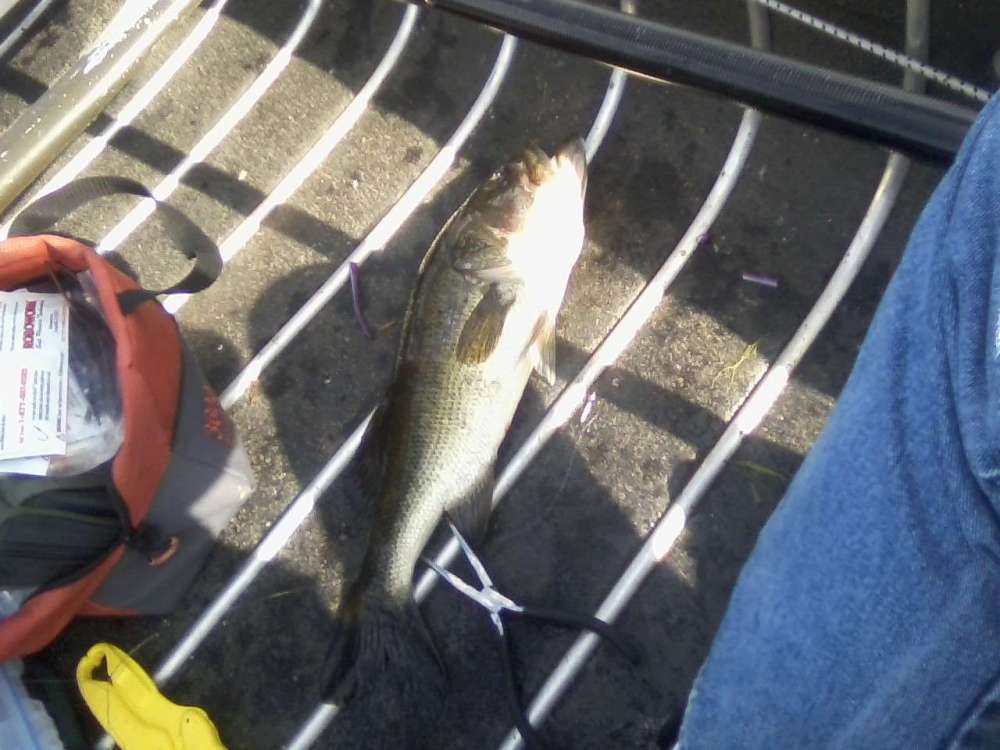
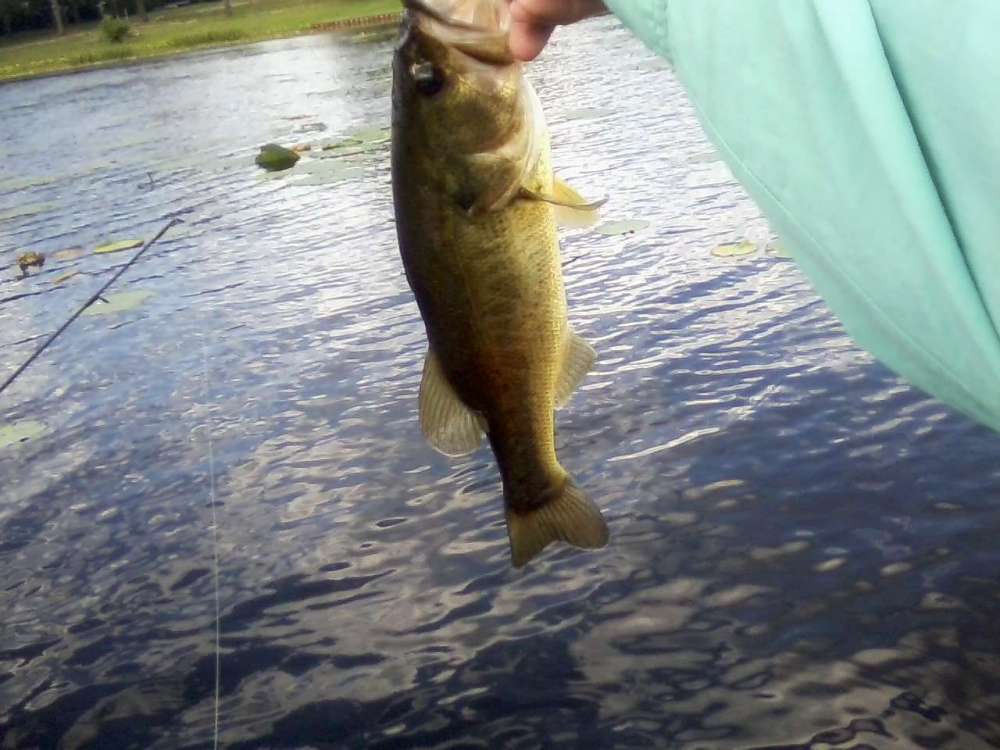
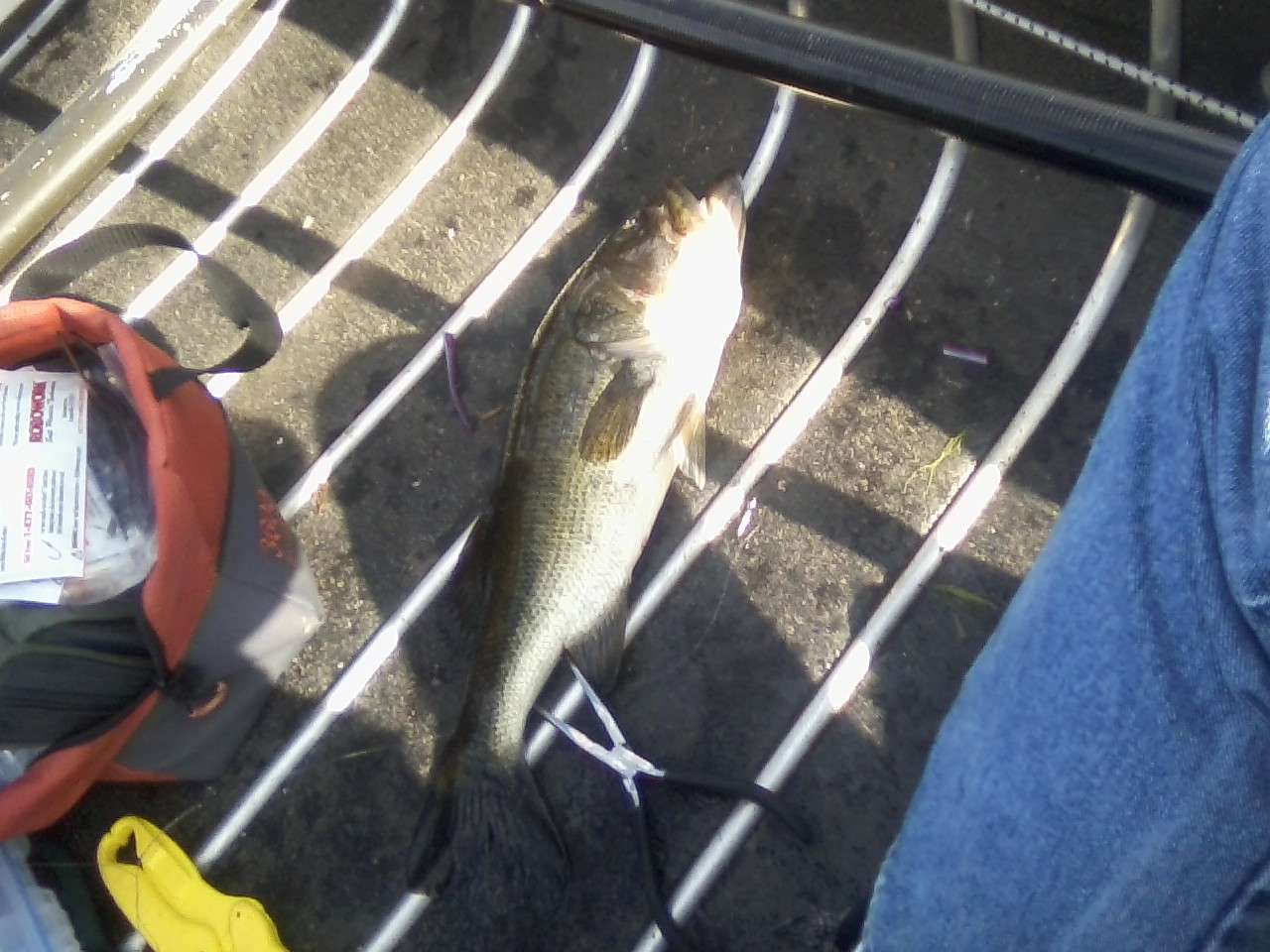
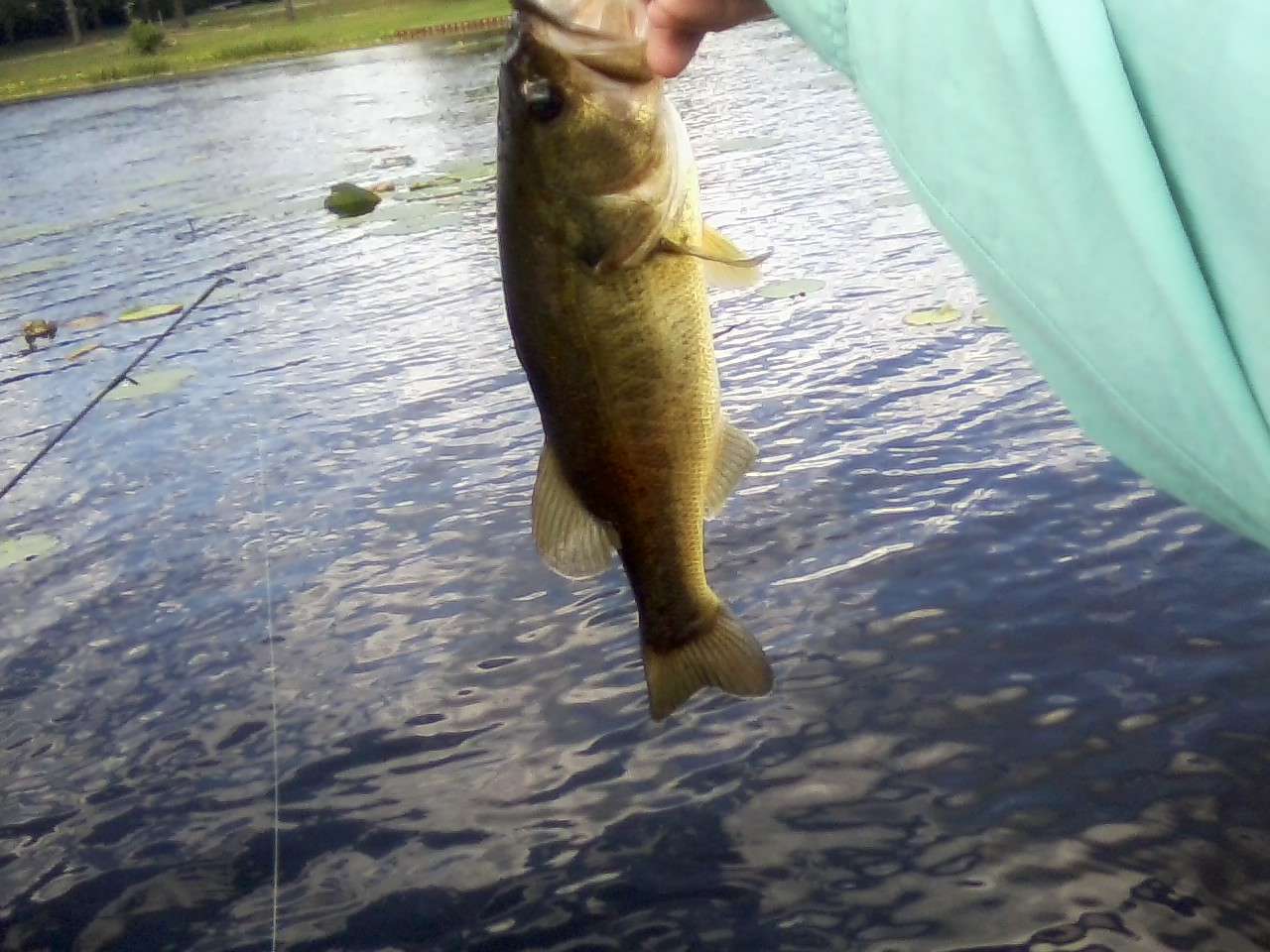
Here in Texas we are experiencing some early hot temps approaching records this weekend. So, I fell into my "summer" pattern a bit early today where I got up early to avoid the heat. I ended up fishing from around 7:30 AM to 10 AM, just dropped my Meyers canoe in the water on Lake Athens and started catching them pretty fast. Two rods on deck but I never even got the second one wet. What has worked for me with the drop shot on Lake Athens which has a ton of grass is to use a longer leader down to the "drop shot" so that the worm isn't lost in it and is sort of floating above it. It worked well today with 7 or 8 LMBs, most in the 2 to 3 lbs. range, one over 4 but under 5. I have become a real fan of Rebarb hooks over the very fine Gamakatsu swivel hooks I have used in the past. For the latter, I used a nose hooking method but for the Rebarb hooks, I T-Rig a Roboworm plastic and leave the hook embedded. My hook up ratio is much higher. Always a reliable presentation for me, the drop shot, and today it worked so well I never got off of it to try other things. Lessons learned: longer sinker leaders on fuzzy lakes, bass will get wound up on lily pad stems but seem to work loose if you give the time. Some pics. Brad
.thumb.jpg.93c4a6efb415d94fdc9d95ca28124605.jpg)
.thumb.jpg.c2ffa922d2509c144208454440d97cb6.jpg)


.jpg.98ceeacc206dc4e0739623f8dfa15664.jpg)
.jpg.7eede962d89b576c341d669bf5041765.jpg)