
bulldog1935
Super User
-
Joined
-
Last visited
Everything posted by bulldog1935
-
@Eric 26 Etouffee is the creole word for gravy. Honestly, I think the entire topic is obscure, and seriously needs frivolous humor. As long we know what others are talking about, who cares how it's said. Colloquial differences add richness to culture. @Eric 26 nope, didn't get it, need another clue.
-
I like maintaining my perfect Zero backlash score. The plug on the right does not fish well on spinning tackle - the hooks foul on the line 3 out of 4 casts. Another problem not looking for a solution. It never fouls on BFS, the difference being tight line. It also bombs to 130' on the right BFS combo, and at 3.8 g, the spool is conveniently played out when it gets to the end. @Koz and I could be in the same boat. ok, maybe not this one
-
My nephew worked offshore while his wife went to Tulane Law School - they kept a sailboat on Ponchetrain. Could all be long stories, but after they moved back to Colorado, he had annual crawfish boil. The neighbors always got a thrill from him running the live mudbugs up and down the driveway to purge them. so close......crawbabies.
-
I think @Koz is being over-analyzed. Be careful calling out a problem, which may not be his. The gentleman does live on the water, where most of us must travel to it. I read his OP as a light-hearted and facetious way to pronounce his gear preference. This is fun. and effective this is a freaking hoot
-
I use spinning gear in the dark, and pretty much retire it at sunrise. You can't thumb the end of a cast you can't see. However, if I'm casting light-enough lures, even that's not a problem, so I still use my braid-raced baitcasters a bit in the dark. Don't let the stigma of BFS on BR slow you down. A Daiwa Zillion, Steez, Alphas or Tatula that you raced for braid with a shallow spool and low-inertia bearings, or a ready to go package BFS reel from JDM, will plug right into everyone else's spinning tackle niches while they continue to complain.
-
What you left out is spool diameter. CT reels (compact), all the Alphas and Millionaire CT are 32-mm dia spool. Steez, Zillion, Ryoga and GekkaBijin are all 34-mm dia spools. Zillion Silver Wolf essentially replaces the latter. The Air and Silver Wolf reels are for small diameter braid (smaller than PE#1), and have increased LW pitch to prevent line dig with the lighter braid. Adding a ps here - probably the best description you will find on individual reel models will be at JapanTackle - Jun Sonada has about the best English you'll find in Japan. https://japantackle.com/casting-reels/daiwa.html Don't expect to find stock on all the reels, especially not the limited run reels.
-
Some wildass extrapolation to get to trash from high grade zinc die casting, but everything I posted is supported by sound engineering and professional license. Zinc die casting can produce a decent long-lasting reel under $100, but gear teeth wear will occur faster than in fine-teeth wrought gears. There seems to be a recurring theme that you don't gain anything by spending more money. Earlier on the thread, I posted the best use of $150 for line management, cast distance, making the switch to braid, pushing reel performance, and design life. OK, I agreed that @roadwarrior posted the link to that reel.
-
Mid-line-weight fly rods, 5/6 are just right to learn on (only taught about 120 people, including my daughters). Versatile enough to fish trout, panfish and bass, light enough to not be exhausting, and the line weight is heavy enough to give you feedback when you're learning how to load the rod. If you're sitting in a kayak, nothing loads quicker than a mid-length glass fly rod. (up to 8'). E.g., if you're wading, you have part of the line belly out and can quickly load a long graphite rod. But sitting in a kayak, you look like a one-armed paper hanger trying to first get that working line out of a graphite rod. With a glass rod sitting in a kayak, I can start with 2' of fly line past the tip, and shoot to 70' on the 3rd stroke. Big stealth advantage. (this is CGR 7/8 for salt) 7' to 8' glass 5-wt will cover you on Everything.
-
I have a friend who's a long-range shooter with antiques, keeps a deer lease, and is very active in maintaining it, shot quite a few rats when they were a plague on the deer corn stock, shoots a few hogs to give away (he actually gives them away on craigslist before he shoots them). He never shoots a deer, and goes out for the sunrise and watching the life. It's kind of the same thing in a kayak morning on the flats - the fish are all gravy. Being close to the life is why you're there.
-
We go to Arroyo City in far S. Texas every winter for nite-lite dock fishing for schoolie specs (limit every night). The snook stack up on our dock piles, loitering in the shadows, and are tough to entice. Easiest way to catch one is fish a tandem rig and let the spec catch the snook for you in a double. Since we're imitating glass minnows in the winter, the smaller the better, and I found finesse plugs made for FW trout with a hook swap take both specs and snook. this one is 18" and hopping off the table before going back into the barge channel. They're a hoot on BFS. Also catch the schoolie specs on fly rod, but haven't been able to turn a snook.
-
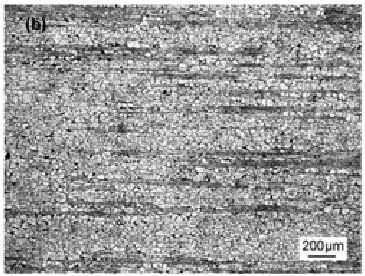
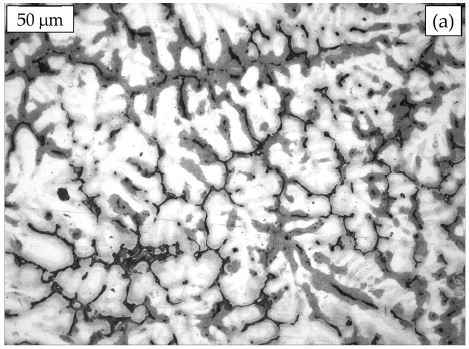
No you're not, and you heard wrong. What you're missing is zinc gears are die cast, while both aluminum gears and brass gears are wrought alloys, broached and finish-machined. They have fine texture strength and toughness from working the original billet that zinc gears lack. The aluminum alloy is heat treated, then modern hard-anodized to a working depth. It's cheaper to work fine gear teeth into aluminum than brass, and pretty much impossible in zinc die castings, plus zinc is not strong enough for fine gear teeth. Fine efficient gear teeth spread the load, reduce the stress and negate wear. So what you find is coarse teeth in die-cast zinc gears, often with poor contact efficiency, producing much earlier gear-teeth wear. Stainless steel is the most expensive to work, and the only alloy that improves (strengthens) under gear contact stress - this is why Stella uses stainless gears. microstructure of 7075 aluminum alloy next to a high-grade zinc die casting
-
When do they change from crayfish to crawfish? That happens in the etouffee.
-
@Crankin4Bass I have 2 rod blades that go with the Smith Super Strike handle. It's copied after the old Fenwick Champion handle, but made in lighter magnesium. The reel seat is offset low for round reels, bringing the spool very close to your thumb. The honey blade is S-glass blend, 5-15 g (up to 1/2 oz, and optimized toward the high end) Both the red graphite and honey S-glass are similar progressive tapers (stiff butt, more flex in the tip) with different weight range, and both skip-cast (reverse spiral) very well. I use them for close kayak fishing. I work the load curves over, and bypass the para taper rods, because I want wide lure weight range for this rod plus one more rod in a kayak. Smith sells the handle options, and rod blades separately. They also sell the complete rods with a cork pistol-grip handle. I found the short straight handle (they also make a long) for a very good price on Amazon.JP, (no stock there now) and I bought the two blades one at a time from Asian Portal (haven't checked their stock lately). Stock comes and goes on the Super Strike - Smith makes so many other rod types - the trick is watch for what you want and snag them when they show up. Ebay scalpers sell them at double mark-up. The reel was a custom braid-race project, beginning with a near-mint Royal Express II - I hunted a reel in this unused estate condition for a 4500 or 4600 project around the AMO spool, and bought it for a song. Finished reel casts crazy reliable, backlash-free from 3 g to an ounce. When I discovered the graphite-filled plastic foot would spit out of the reel seat, I found a great buy on a red NOS 4600C frame with metal foot from UK - probably a tough color to sell, and was very happy with the result.
-
I would guess they're OOS in Amazon warehouses. They have to make reels in batches, switch models, and will get back to the previous model later. JDM is always a question of finding stock. JapanTackle is a good place to check current sale prices on Abu.
-
I'll add this about optional anti-reverse. They're really useful for aligning your reel handle when you're putting it in a reel cover. In practice, can't remember ever using one for fishing. With full-time A/R on a good spinning reel, you gain a new skill, which is opening the bail just enough to feed one loop of line. Optional A/R was the norm on baitcasters 30 years ago, and A/R dogs were finally replaced with full-time A/R roller bearings. No one complains and most don't remember optional A/R on baitcasters, unless you replaced worn-out A/R dogs and ever had one go out on a big fish. It's something else to fail and shut you down.
-
and you clearly didn't read the thread, with two links to the Best sizes in Stradic for $150 and $160. Still the best $400 reel you can buy (Always because it never cost that, and could shame the reels that did). Since this thread doesn't interest you, why post.
-
Went to B/D lunch at El Mirasol with my folks and sister - ate a birthday flan - it was good, and I was buzzing from the sugar rush. Ambassadeurs are a bit like tinkertoys, and a lot of fun to work on. I've always liked the CNC-mill swirl pattern on Zzeta side plates, which needs reflection to photo. They also make the only surf/tournament frame for 4500 (they also make 3600, 5600, and 6600, which no others offer) Inside, the left plate doesn't have a post for a LW idler gear, and has the built-in bronze "bullet" that accepts the spool spindle. Mine has Avail mag brake added. The barstock frame foot is longer than a normal reel foot, needing a custom split reel seat (I have the rod), the spool is also 8 mm closer to the rod, and brings it that much closer to your thumb. About 6 years ago, UK maker Akios made a limited run of level-wind 5500 and 6500 barstock frames, which are hen's teeth, because no one is letting go, and would be a boon to find one. another tough photo to light - here's that completed custom 4500CT built from parts, NLW, 6.3 gears.
-
it's the line keeper - too fine for all but the finest UL mono - just right for any braid.
-
...what diminishes is buying any reel less than Stradic. When it was introduced, Tackle Advisors reviewed Stradic as "The Best $400 Reel You Can Buy" with a direct comparison of everything both Shimano and Daiwa were offering for $400 at the time. Shimano worm-drive has the edge on line management. Shimano has the edge on smoothness. The current line of Shimano worm-drive reels are all the same design as the '18 Stella, with cost savings in MOC selection. Stradic was the second reel introduced in the current worm-drive line. The Stella has magnesium body and rotor, stainless steel gears, titanium bail; the Stradic is forged aluminum body, CI4+ composite rotor, aluminum gears and bail. Otherwise, they're the same, and the parts interchange. Same spool pitch, same spindle stiffness, same over-sized fine-teeth gears (except for MOC), same over-designed A/R roller bearing, same line roller.
-
I'm going to follow @redmeansdistortion's lead. Here's my birthday present to me. Building this entirely from parts, which I already had most of the drive parts, 6.3 gears, but ordered a RocketReelCo ball-bearing main shaft. It's going to have a Conquest look with max champagne gold. This is a 4500CT (NLW) built on a Zzeta frame, and intending to long-cast light braid with finesse lures, and of course keep the option for throwing heavier. The one part I'm waiting on is a 4500 spool spindle, but I'll throw you a bone, and show you the real stuff later, e.g., when I get the drive plate assembled.
-
honestly can't imagine a shut-out, but can find something good in the worst of days, even if it's riding your drift sock down a squall gale (this is only 3' deep, but without the sock back there, it's an instant flip and turtle)
-
This subject came up Other Species Catch thread, and I referenced the pattern I published before, so decided to offer it here for BR. You'll have a tough time finding a more useful smallmouth fly, especially if you fish sinking lines. Hook: 2x-long or 3x-long streamer hook, size 8 or 10 (I use Tiemco 5263) Thread: to match body Accent: Krystal Flash Tail: marabou Body: medium chenille Wing: arctic fox (I like the arctic fox zonker strips best) or marabou Eyes: bead chain pair Start the thread at the eye, and tie in 3 to 4 strands of Krystal Flash to tail length using a few wraps. Make a long loop forward by bringing the other ends back and adding to the tail. Leave the loop hanging over the eye for now. Lightly pull the tail strands as you finish the base thread wrap to the back of the hook, wrapping over the Krystal Flash. For maximum flash, clip the tail strands to uneven lengths. Tie in the marabou tail over the strand ends. (I cut 3 equal stem segments from the center of the feather, and twist these together. I throw away the bottom and save the tip for smaller flies.) Make 5 to 6 thread wraps on the marabou before you twist and clip the tag. Then wrap some more. Tie in the body chenille. While your chenille wrap needs to be from the back forward, I start by bringing the thread forward, tie in the chenille, pull the tag back, and lightly cinch a length of chenille down the hook shank to add body thickness. Make 3 good thread wraps at the back and bring the thread forward again before you wrap the chenille forward. Tie off the chenille about 1/8-inch behind the eye, and trim. Here, I turn the fly around to the bottom of the vise jaw to simplify tying in the wing. Pull the Krystal Flash loop back past the hook point and make enough thread wraps to hold it back. Trim it just behind the hook point. Tie in a wing of arctic fox over the Krystal Flash. (I cut 1/4-inch or so from the strip and twist the fur.) Try to make the wing length close to the end of the tail. Don't pull too hard when you trim the tag or the wing will pop out from your thread wraps. (Here again, I turn the fly back to the top of the vise jaw to simplify tying in the bead chain.) Tie a bead-chain pair on the outside of the hook shank using figure-8 wraps. Build up many wraps of thread in the figure-8's and behind the chain bead. Whip finish behind the bead-chain. Apply head cement on all the thread. By Ron McAlpin David Train invented the pattern for Scot Lochs, and made the wing stand, so he claimed, using whiskers he plucked from his shy cat (where I use Krystal Flash). His original color was yellow chenille with white marabou wing and tail, and that works great in turbid water. I'm more often fishing clear TX hill country limestone, and need blend colors. I tie these all green, all grey, all black, grey body and tail with light olive wing, tan body and tail with rust-color wing. You can also use weighted barbells for the eyes and throw them on finesse tackle. It catches Everything.
-
If our OP needs a vote, this is the absolute best use of $150. And this is the absolute best use of $160, going up a frame size, spool dia., and major drag. https://www.digitaka.com/item/5/4/1/4969363040213
-
Again, largemouth and spotted bass do not interbreed. I would also be really surprised if competition for forage was the issue between spotted bass and largemouth populations. If white bass are present, they're the fish that deplete the forage base for other species, and also prey on black bass fingerlings. The last dumb move TPWD made was stocking white bass in the upper Guadalupe at Ingram - only 10 years ago. They've spread all over the upper river, resulting in a noted decrease in endemic bass, right up to boundary of the Johnson Creek A-strain. Eat them - impossible to over-fish.
-
if hybrids are sterile, there is no issue, e.g., leopmis sp. sunfish hybrids occur naturally. Note the body of a green sunfish female and the head and fin markings of a male long-ear. (blue in its dorsal fin, especially in the back) The problem is when the genes are diluted throughout the population and entire watershed - or even the entire range of an endemic species. If the genes are contained by barriers, it's not an issue. State wildlife departments turned our rivers and reservoirs into their aquariums in the 1970s, and we're all paying the price now. Their mistakes without study of long-term genetic effects on widespread fish populations has raised caution in the younger generation now managing our fisheries. In the Rockies, the push is to save native Cutthroat trout from rainbows, which are only native to Pacific-coast drainage. E.g., in McKittrick Canyon, Guadalupe Mountains NP, a wild rainbow population there overtook native Rio Grande Cutthroat when an excess load of rainbows was dumped there in 1920. The current trend is identify stretches of river that are isolated by waterfalls and natural barriers, kill everything with piscicides, and stock native trout that belong there. A species can be perfect for its habitat, e.g., endemic Guadalupe bass retreating into aquifer caves to survive drought. The problem is when they lose that ability, and become threatened as a species over their entire range, such as what happened to our designated State Fish during my lifetime. If I OP'ed a thread saying that smallmouth bass are bad, it would be incorrect, and generate the kind of polarization that exists on this thread. Smallmouth (and stocked trout) are ok in the coldwater tailrace below Canyon Dam - this is the southern extent of endemic bass range, and the cold water is too cold for several native species to spawn, including endemic bass and white bass. There's also no way for smallmouth genes to move upriver past the dam. ....(spawning trout on the right) If I made it clear that smallmouth stocked in Texas hill country during the 1970s, including above Canyon Dam, was destructive, that is totally correct. Imagine an entire watershed where the native fish is extinct (the Blanco). Now there are only two isolated A-strains of the species. Again, the state approach is to overwhelm the feral genes by stocking fingerlings from A-strain hatchery fish. But when that stops, the species becomes extinct, just like in the Blanco.