
bulldog1935
Super User
-
Joined
-
Last visited
-
Currently
Viewing Topic: Question about baitcasting reels
Everything posted by bulldog1935
-
sounds like drama that I haven't experienced. Here's a little of what I have experienced.
-
what you're thinking of is stream trout rods. https://www.smith.jp/html/03-trouttacle.html
-
Got some show and tell. Friend Daren gave me a 60-y-o Langley Target, which already counts as the original BFS reel. Casting the soft nylon it was made for, on 2-power 5' Concorde, 60 to 70' casts w/ 1/8oz were effortless. More aggressive casting could reach 80', but couldn't thumb out minor mid-cast backlash. Casting this of course needs end tension. Got me thinking how sweet this could be with a mag brake, and it set me off. There's room in the cupped spool flange for 3-mm tall N52 magnets. So I started drilling holes. Finished the four holes to half the depth of the 2-mm-thick side plate, using a 5-mm boring bit and 5-mm end mill to give it a shoulder and footing for epoxy putty to set M2 black steel washers. 4x3mm N52 magnets snap into place. The result made it full BFS, fishing PE#1, stacked on 20 yds 20-lb soft nylon. It should fish 1g on UL, and casts 3g to 90' on the close-fishing 2-power. Totally backlash-proof w/ zero end tension. If you're wondering why this works, required end tension on the stock racy spool is a constant force from beginning through end of cast. Mag brake force is proportional to spool speed, so the spool without end tension starts up with zero brake force, reaches max force quickly, and brake force decreases through remainder of the cast. You only need enough brake force to get the spool across the hump at mid-cast without backlash.
-
The closest I can agree, four salty years, my Zillion SV TW feels new, but when I swap to SLPW Z, the newer reel based on 22 HD feels smoother and more qualified. But it's close enough, the subtle difference is only recognized on immediate swap.
-
Out of the box, Zillion SV TW cast 1/8 oz past 90' on 12-lb fluoro. This was Tatsu, and I would call it springy. As mentioned above, the best thing about 34-mm floating-spool Daiwa is the range of available spools, from BFS to swimbait using the same frame. If you want to cast heavy lures on heavy fluoro, I recommend swapping in a MagZ spool. Adding a note about Tatsu, I mostly fish PE braid, #0.8 to #2, on BFS to 1000S spools, when I pull out 1016 spool, the 4 y-o Tatsu charge is still low memory.
-
Look at it this way. A 7'3" progressive baitfinesse rod will fish 1/16 oz at 80 to 90'. At the same time, it has the butt power to keep a redfish from going under your kayak. A 5-1/2' UL para taper will make the same cast, but flex in the mid and butt gives leverage over to the fish, making panfish shoulders feel like the redfish. Parabolic - hey, there are people who think because Charles Ritz put the reel in his pocket, that's how you're supposed to do it. The point isn't what it's called, but understanding what it means. Is it a misnomer? A loaded bow forms a parabola to launch an arrow. A para rod taper loads the full length of the rod the same way.
-
Unlikely to find a better description than I already provided. Most attempts to define the two rod taper extremes will get you in a fisticuffs w a fly fisherman. Para is characterized by fast tip with more flex moving into mid and butt. Progressive has short soft tip, long fast mid, and powerful butt. All real world rods are a blend of both, so it's more accurate to call a rod taper more progressive or more para.
-
Think it's too late to complain to Charles Ritz. Para taper is how rod designer gets maximum cast distance from the shortest rod, since they're loading more of the total rod length. Progressive taper loads in a band moving progressively down the rod as you cast more weight. Load curves above are both 2-power casting rods with the same weight ranges.

-
Didn't mention casting or spinning, or price range, but any 5' to 5-1/2' UL should work. Might check out Graywolf rods https://www.graywolfrods.com/ul-rods
-
@07Rapala Knew that. Face to face will double line twist, because you're winding in exact opposite directions.
-
Ambassadeur was introduced in 1953 and Isuzu began selling reels in 1972, when Ambassadeur patent rights expired. Unfortunately, Isuzu reel prices have way out paced Japan inflation. I was happy to score my four on yahoo when they were still realistic. Also know my way around JDM well enough to find Isuzu repair parts.
-
@GreenTrout, you might want to review this thread. I'm already shopping in Japan, so i use MTCW-B for freshwater grease (MTCW-SW in salt). All my reels have unshielded spool bearings, and my go-to bearing oil is ZPI F Zero.
-
@F14A-B Yes, worm drive series beginning w '18 Stella is the first ever over-engineered spinning reel. Stradic 5000FL on kingfish rod I killed a Penn 4400SS in this service
-
I'm not shy @F14A-B. '18 Stella a/r roller bearing (used in all following worm drive) is more than a pita to service - it's a beast that won't cry uncle and slip w high drag. @10,000 lakes Bassin, Zillion rules out centrifugal, so spool bearing is highest probability. One scary thought is tight Zero set. Make sure you have tiny end play in freespool. Too tight zero set could buckle spindle to rub spool on frame. Could also damage palm plate latch. I always loosen zero before removing palm plate, and reset zero last thing.
-
Any time I've done this, I put the rod in a rod holder, reduced spool drag, and loaded the line onto the bottom of a source spool.
-
At JY145/ US$, all of Japan is still 30% off when compared to buying the equivalent USM import. Call it a DIY import, and if you never buy more than $800 in a single shipment, you'll never pay an import duty.
-
@10,000 lakes Bassin, would be a tough call without knowing more about the reel, how you set it up, etc. could be a dry spool bearing, end shim, or centrifugal brake. Good news, any of those would be cured by a drop of oil.
-
Horse hockey. Personal use items are exempt up to $800, and 10% duty from there to up to $2400, which the courier pays and invoices you separately. Over $2400 is considered commercial, and prepays tariff. That's what USM imports pay for US retail sales.
-
Japan inflation is steep - there was a January price increase, and now June. It's all about Japan inflation.
-
Especially with the current reaction on A/E algorithm to US IP address, shopping JDM makes more sense than ever. That said, I recently bought a ferruled glass rod blade from an A/E store for reasonable price and shipping. Otherwise. They're adding duty fee to prices, blocking IP, or adding stupid high shipping to keep US buyers away. Matches with this
-
Is you're fishing good braid with UHMWPE center strand, anything other than fine braid scissors will only chew on it, and especially won't cut the center strand.
-
I've been rolling allbright knots that shoot through fly rod snake guides for 40 years. Improved allbright is a no brainer for me.
-
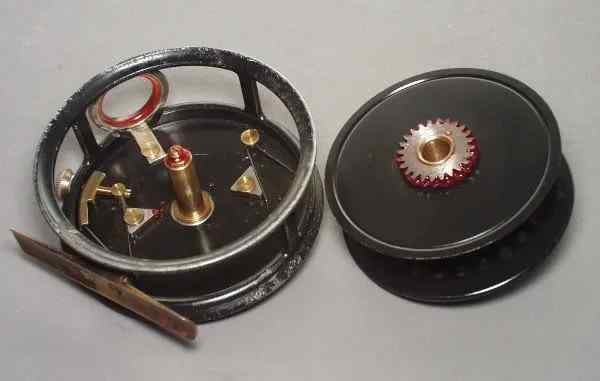
Wrote this 15 years ago for FFR forum, aimed for the audience at antique fly reels. The reason I added it here, it has details on vinegar bath and caveats. Also note, reference to Hot Sauce is specific to fly reels. Reels are loaded with gunk and corrosion - usually 70 to 80 years' worth by the time I get them. They're made out of aluminum, brass and steel, painted, anodized, or bare. Lubricants oxidize, releasing acids (or caustic in the case of lithium) form tars and waxes and eventually turn into polymers. Limestone residues from chalk streams are corrosive to aluminum. Reels have it tough. I've never taken before photos, and I've had some nasty ones, but most of you have seen some of my after photos. Here's what I do. (credit to Richard Thomann who gave me this procedure 10 year ago, though, I've added my caveats, touches and insight from my experience working with it) 1) Take the reel down as far as you feel comfortable. 2) Wipe everything down with paper towels or q-tips and whatever you can to remove the loose debris and old lubricant. 3) Vinegar-water bath. This is generally four parts warm water to one part vinegar. Temperature, time and vinegar content can all go up (up to 3 hours) if you reel is all brass. (NOT painted brass - use only soapy water rinses and brushes on painted brass, because the hydrogen generated in any immersion solution will blow the paint right off.) some basic guidelines - 30 to 45 minutes for painted reels, or rubber side plates and handles (bakelite is impervious) wouldn't go past 1 hour for lead finished alloy fly reels 2 hours for plated brass 3 hours for bare brass or German silver Generally, we're looking at finger-warm solution for about an hour or less. On a painted aluminum reel or lead finished reel, you might want to keep it down to a half-hour. Although, lead finish is usually more tolerant than paint, so you can push to the full hour if it needs it. And take it out when its visibly clean. Take a soft tooth brush to the debris every 10-15 minutes. This solution should do the bulk of your cleaning. If you have tenacious crud, rusted steel, dealloyed brass (looks pink) you may want to push it a little longer, but balance it against the visible effects on your finish. Rub out the insides of bushings with q-tips or twisted up paper towel. Rinse well in lukewarm water. 4) dilute soap bath - very dilute. Alkalis cause corrosion of aluminum. Ammonia causes cracking of brass. Not to alarm you, but you're simply using this bath to wet and remove the tar remnants that were broken up by the vinegar, and to neutralize residual vinegar. Again use the soft toothbrush to break up any residues. 5) Final rinse - very thorough cold-water rinse here. Be careful of the sink rinsing off your tiny parts. 6) Air dry - overnight is good. 7) Rub with a wax or silicone guncloth. This is also a good time to put on a coating of Butcher's Bowling Alley Wax if you want to do that kind of thing. 8 ) Lube and reassemble - use Zebco Quantum Hot Sauce - the good stuff. Hot Sauce Grease on drag gears, and on worn and wobbly spindles. Hot Sauce Lube (light oil) on spindles/bushings, handle spindles, pawl stanchions, bearings, drag blocks and threads. ___________________ special topics. Magnesium reels - Marryat, Battenkill MkIII - exposed magnesium appears to react vigorously with vinegar, so it's probably wisest to bypass soaking in solutions and use Boeshield for cleaning. Solvents - acetone is for removing paint and plastic handles - be very careful. Yes, it removes tars also. Be very careful. One application for denatured alcohol is removing old line varnish from inside a spool. It will usually come out with a good swipe, but try to avoid drips, keep it away from handles, follow quickly with a dry swab and even limit exposure to the paint. oxidizers/colorants/patinating agents with their steps and rinses would fit between steps 6 and 7 above, but this is real art that I'm going to dodge here. Abrasives/polishes. I'm going to mostly stay away from this, because I usually quit at wax. But OK, I keep Pol metal polish around, and always have "Miracle" lemon-oil polishing cloths. I lightly and quickly rub down my rods with Miracle polishing cloths to keep the calcium buildup down, and chase that with a chamois. They are also very useful for rubbing out rust on steel Hope this helps, Ron Mc p.s. here's the goal
-
Imagine losing OP's 140 y-o screw down your garbage disposal Mineral spirits is better at removing grease, and old grease and wax - sticky viscous stuff. When it's 70 y-o grease, start with vinegar bath, etc.
-
All my new spool bearings. SiN, hybrid ceramic, dual race, get ultrasonic in DA before they get installed, then lubed with my favorite bearing oil (ZPI F Zero) - except SiN, they run dry. Whatever dust or residue came with them, you want it out. You only need mineral spirits for old oil and grease. Knock it out on lint free cloth, and right into DA. Just took some tiny parts out of water wash in 100ml beaker. Important tool - wire mesh colander to put in the sink and catch anything you drop.