



Paul Roberts
Super User
-
Joined
-
Last visited
Everything posted by Paul Roberts
-
Here's one that I thought was nicely done. A Pflueger Summit goes toe to toe with a feisty pike: I notice a few things in watching this video: By the sound of the reel, it could probably use a bit more thorough cleaning and lubing. And the line piling up on one side of his reel and a fair amount of spool click going on as he reels, tells me he probably doesn't have the spool tension knobs set properly. He also says the AB (anti-backlash) mechanism isn't functioning. The spool tension knobs set right could actually help with this, AB mech or not. Nothing like a good educated thumb and synched casting arm though, and he's doing just fine. One thing I've noticed with my old reels is that, after a good cleaning and tuning, they cast very well! Much better than I would have expected. All of them will throw a 3/8 or 1/2oz weight 100ft or more. They sure are fun to cast too, going for accuracy and zipping casts under the shrubs and tree limbs around the house. Will be fun to give them a go on the water and see where I can make best use of them.
-
Yeah, we sure can be creatures of habit.
-
Hey, I've always treated Bassresource as a true resource, as an operational archive. Well worth going back to explore topics. I have also tried to bring older threads in to newer ones when I can. Back to the business at hand... Now, what was it? :)) Oh yes: Added to the climate factor along the NE coast, apparently anadromous herring play a big role there too; Fatty, nutritious prey of the right size and body shape, and in huge numbers available to those bass. Speaking of climate effects, warmwater fish populations have been expanding or burgeoning in the northern parts of their pre and historic ranges. And some "extraordinary" sized bass have been recorded in recent years. There was a 12lb LM that nearly doubled the previous record. Closer to home, here in CO, an angler told me he'd caught a 9-6 bass on a public pond. I flat didn't believe him. Then, a friend I have much more trust in, sent me photos of an 8-11 he caught from a public pond! His attention to detail and honesty, plus being a darn good bass fisher, has me believing him. Could this be climate related? I will say that our winter's here have been generally warm, and very short. There was a thread I posted this in not all that long ago. I'll let someone else find it.
-
No. Except... I carry a tiny net for my tiny stream jungle-warfare trout fishing. Lose too many of the bouncy slippery little buggers on a short line in tight quarters. I'm going to let them go moments later but I do want to have a chance to marvel at their beauty! Trout, treble hooks, and a float tube. Asking for trouble there.
-
Awesome! Congrats.
-
N CO front range. Hey, congrats on your coming graduation! CSU? I use a Ned and hair jig most, esp by mid-winter.
-
Hi, Ryan. I've found that the bass may use shorelines well down into the 40'sF. But at that point, icing is imminent. What I've seen is that when icing begins the bass drop away from the shorelines and begin to hug bottom more. When the surface freezes, the upper layers are coldest, and warmest water (~40F) is on the bottom due to ~40F water being water at its most dense, and bc the ground retains heat. However, this is may not be the whole story, as the water directly beneath the ice for much of our winters is 38F! The whole water column will be 38, except at the very bottom, where it's ~2deg more. So there may be avoidance of colder upper waters, or innate concerns over stranding? Also, some areas with ice cover will become stagnant and if there is much vegetation in there its decomposing and lack of fresh water recharge can make for an anoxic toxic soup. Some of these are prime habitat for bass in summer but become toxic wastelands (except for bacteria) under ice and snow cover. Cover/objects can remain important, so look for that. Even dead weed beds act as objects. That’s part of the draw of the bottom too. I know one spot on a fairly cover-free pond where a chain-link fence goes out into the water. It’s a bass magnet in winter. Winter waters tend to become very clear, with the lack of planktonic algae in the water column, and bc the denser water near the bottom has suspended sediments settle out, barring heavy winds. So, clear water and the die-back of vegetation beds, I go lighter and lighter in tackle. By mid and late winter I may be using an UL rig with 4lb line. Winter bass seem to prefer small, even tiny, baits, esp by mid-winter. Early and late winter often offers the most receptive fish, or… mid-winter the least. So I adjust expectations of a “good day”. This will vary though, of course, with that particular water body and the conditions & circumstances prevailing. So, don’t be surprised if you are pleasantly surprised here and there. Or if you take a skunking. Nearly all my videos touch on C&C and how the fish respond. The video fishing journals (VFJ's) often have a seasonal focus, yet the seasons are progressive, so... it's tough to understand winter without understanding what the other seasons are how they come about. Hope this helps, Paul
-
I've found this too. "Good water" supports a good food chain. I've seen this even in waters that went from heavily vegetated to no vegetation! That was something of a surprise, although pond layout and prey species present factored in greatly.
-
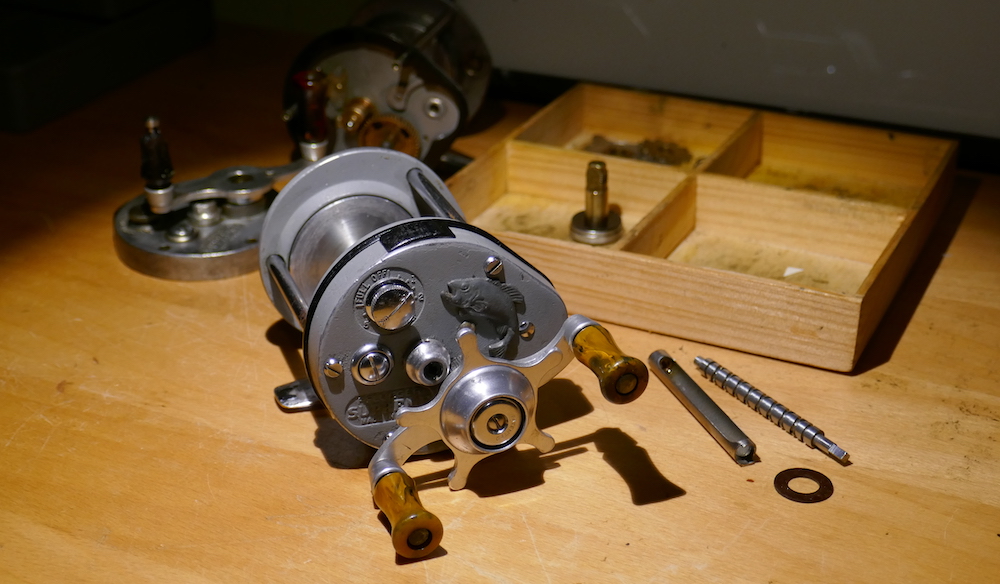
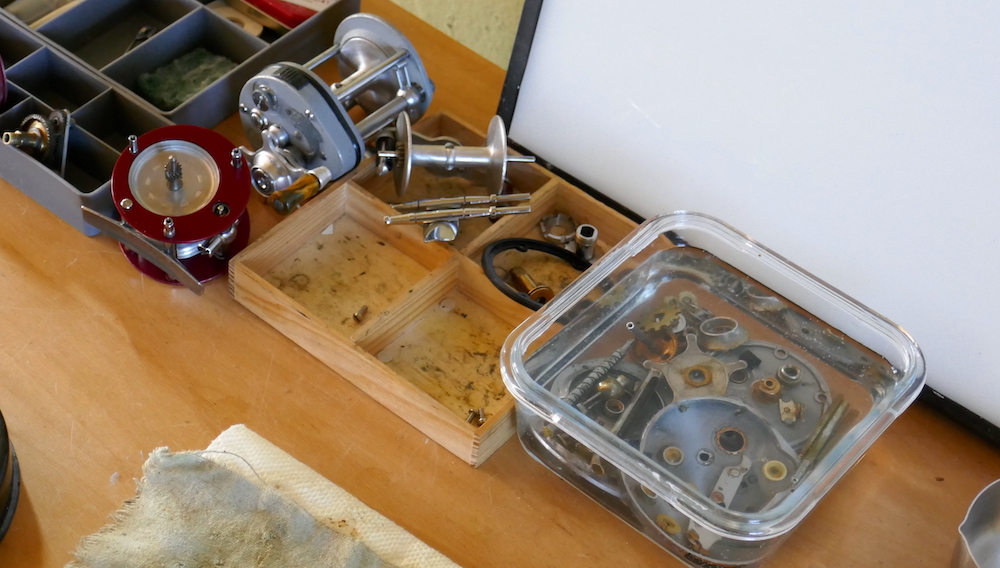
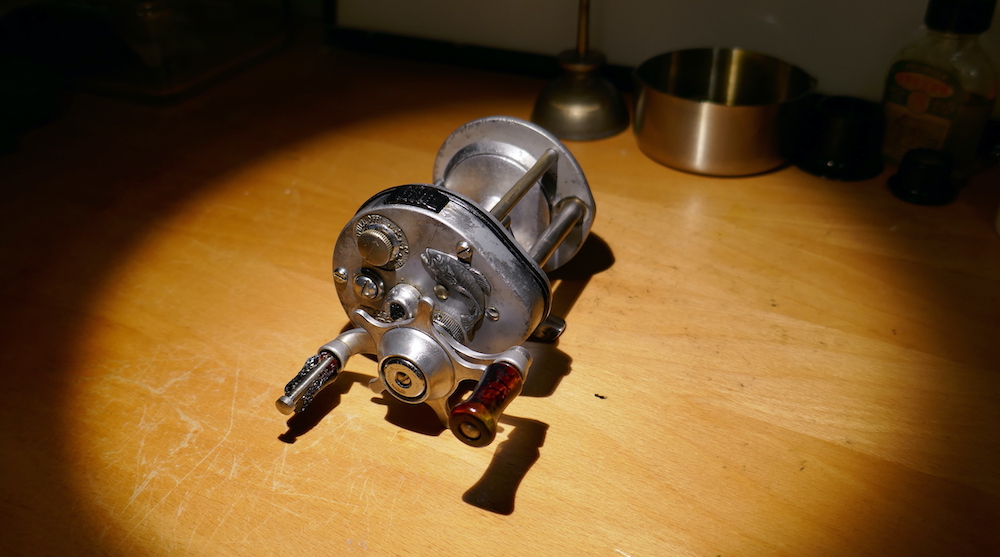
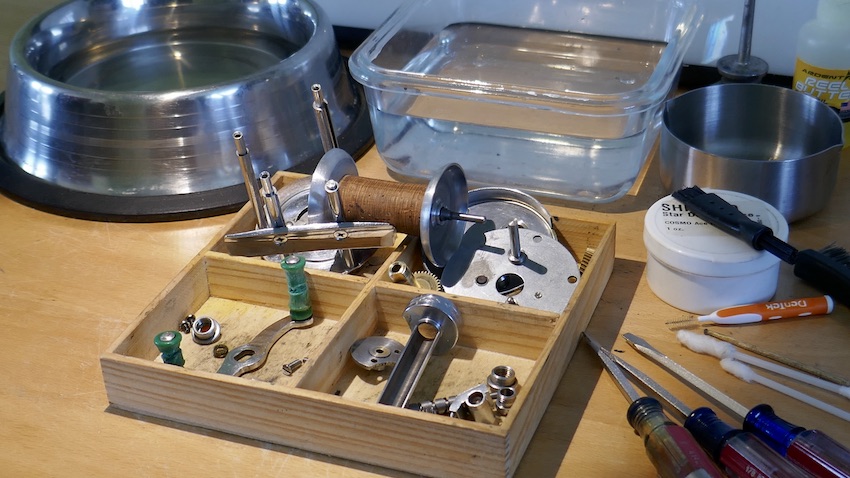
Voila!! I have a fully functioning Pflueger 1576 "Leaping Bass" for $10 and... a bunch of hours. The refurbished reel, the 'bone pile', and the offending parts: I swapped the levelwind worm gear from the functioning but sorely neglected parts reel (pictured in previous post), only to find that the LW carriage tube was also -very slightly- damaged. There was the slightest gouge on the surface of the tube, causing a sticky spot when the guide block passed that point on the tube. What a bear it was to put back together! Until I figured out the proper protocol. It's the main shaft "stack" (consisting of free-spool, drag, anti-reverse, and main gear, components) that was such a headache. I finally figured out that the free-spool gear should be disengaged from the main gear, and the face plate/main shaft stack/handle should be completely assembled first, before screwing down the completed face to the frame. But not until I discovered that a previous owner had replaced a drag washer with one that was slightly too thick, leaving too few threads sticking up out of the main shaft post to thread on the drag star, and still function. I eventually noticed that drag washer was a newer fiber washer, and that was the final offending piece. Phew! I then went on a date with my wife (grocery shopping) and brought the reel along as a fidget spinner, or so she teased. But there's a reason for my obsessive spinning, and that was to smooth out the reel's action, as it was a tad slow and a tad 'hissy' when first assembled. Interesting how a reel needs to be "broken in" after an overhaul. I assume it sets the gear alignment in place, and distributes the lubes. Whatever happens it sure makes an enormous difference as to how smooth and quiet the reel becomes. Very nice action on this reel. Well worth the time, and was fun to boot! Ron, thanks. That's good advice. However, I'm not "collecting" for any value beyond usable technology for fishing. I'm drawn to the beauty, and challenge, of these vintage reels, much as I'd done in my archery; Going from wheels to trad to selfbow... going into the woods with a hatchet and coming out with a functional hunting bow. So, I'll be fishing with these reels, adding them to my on-the-water "arsenal", if they merit. I'll know more after I get some fishing in with them. As it is, I'm enjoying learning about the technological progressions and, following, their functional and aesthetic beauty. I'm doing this for fun, and finding refurbishing some inexpensive old reels even meditative. That Douglas' FS/AR mechanism is very cool.
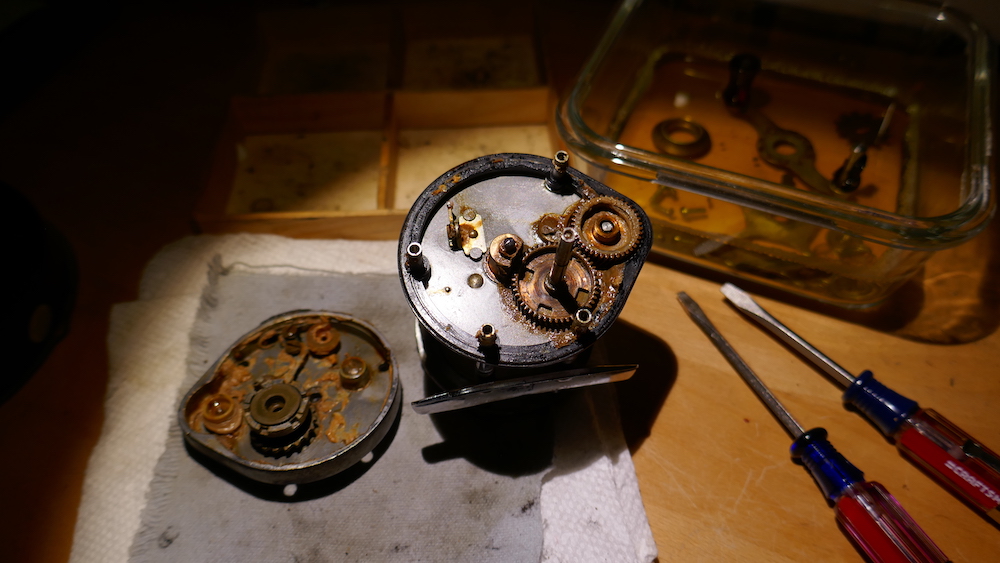
 I sure can be a pig for punishment. I bought a Pflueger Supreme 1576 "Leaping Bass" described as "excellent working order". It wasn't, and needed parts including a levelwind gear. I decided to return it and find another. But the seller apologized and simply gave it to me. Hmmmm... what am I getting myself into? So, I found a very bad looking 1576 that had obviously sat around -in a barn- for... who knows how long. But, from the photos, it looked as though the levelwind gear was intact. It was $10 including shipping. When it arrived, I couldn't resist finding out just what was left of this old neglected Pflueger. So, I took it down to it's skivvy's and put it back together. And it works! All of it! Ugly, finish gone, pitted, but it works, is quiet and spins very well! Only thing not working is the anti-reverse due a to a tiny broken spring -an issue with a reel with drag. Oh, and the handle is toast too. But I have both parts in the other reel. Now... Do I make one good looking reel out of the two? I actually think it's kind of cool that this old funky looking one has been brought back to life. Kind of a shame to have it sit in a parts box. I'm tempted to find yet another parts reel. But, I can see where this will likely be headed. Fresh from... the barn. Oh... yuck! Bath time! It... actually works!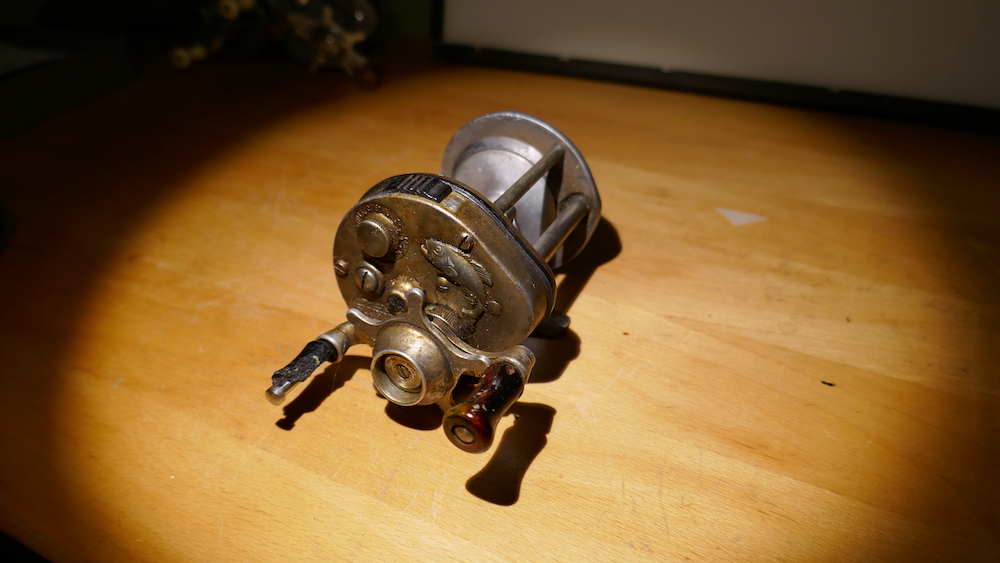
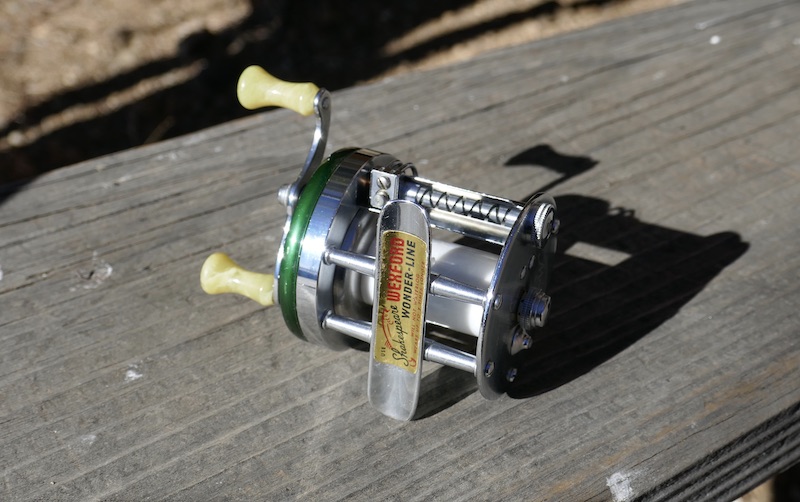
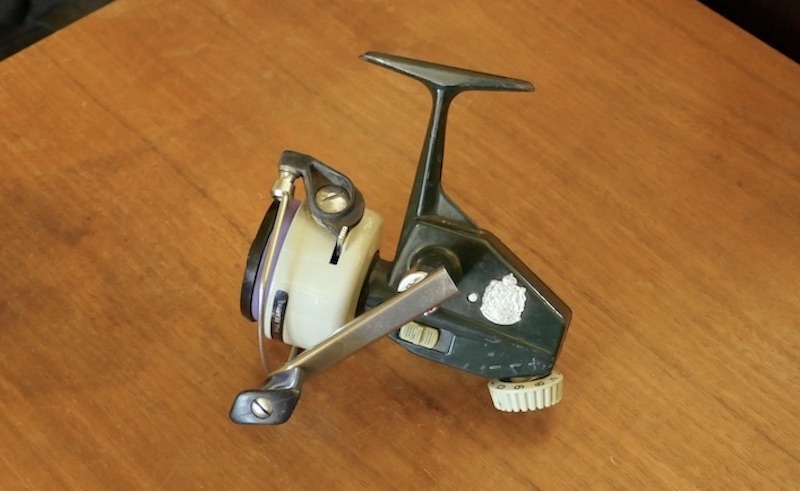
 Ah! That was a Roch NY accent. I'll go back to editing.Whaaat! Did pronunciations change in the last 20-some years since I left there?It's Raaanchest'rr. Where we Waaash our clothes.The top reel is a Pflueger Supreme, Pflueger's top of the line casting reel. They tend to fetch a higher price than many other vintage casting reels. They have the reputation of being bullet-proof, but, I have one that wasn't. Might find parts and repair it someday. Your looks as though it's in nice shape! The other casting reel you have is a South Bend, not sure of model (350 perhaps?), could be a Perfectoreno. It could use some work, and appears to be missing the AB (anti-backlash) bail South Bend held a patent for. That AB system actually works. But, it's not needed to cast, with an educated thumb. Also, the "forked" line guide I think is newer than this 1951 version shows below (E). Same basic reel though. Cool old St Croix glass rod too, although I'm a bit pickier about rods for fishing than I am about reels. Lotsa expertise out there. Search your reels and stuff will pop up. Fun!I see now. I wondered what that was on your thumb. Is that to help guide the line easily? I would think that soft rubber wouldn't work so well for burn protection? If it heats up it wouldn't feel too good for your thumb, or your line. Just academic at this point; No tuna where I fish, although there can be some pretty big Wiper.I've thought about ways of making a leather thumb pad, just for creativity's sake. Not that I'll actually need one for my bass fishing. Fishing: Where obsession is come by honestly!@WRB The narrow spools tend to hold value even more than the wider spool ones, for their ability to handle lighter lures best I'm guessing is the reason. I like my wider/standard spooled 310 StreamLite very much though, and it casts very well, even with light baits. I have yet to cast with the 330 LureCast I have as I'm waiting on replacement spool cap bearings. Apparently this reel was well loved, and then retired when it "wore out". It's not worn out, it just needs some TLC. And it's getting it. Lotsa wonderful old reels sitting in attics and basements, forgotten. Love having you chime in bc these reels are actually before my time. You actually used them back when they were the reels of the day. Those were serious fisherman's reels back then, yes?Yes! And it's no fault of yours. It's not intuitive. I had to learn, years ago, the hard way. I got a job at a tackle shop, and on my first night a guy gave me an old plastic spooled spinning reel to spool up on the power line-winder. I put the spool on the chuck, and started filling that baby with 6lb mono. As I watched, the spool started to wobble, then suddenly popped right into two pieces! I was horrified, and embarrassed. The owner was angry and the shop manager, Pat, stepped in and took care of it, taking no lip from the guy who was actually becoming abusive. Calmly, Pat told me mono must be wound slowly on old plastic, or multi-piece metal, spools. Lesson learned! Monos are tough materials that stretch, a lot. Wind it tight and it'll become crushing. Think about what happens when you wind a rubber band onto your finger. When nylon monos appeared, reel makers started to produce "mono-ready" spools, obviously because of the angry shouts from fishers from all over! Hey, enjoy that reel. No, it won't replace the new stuff. But they were made to fish, by people who knew what they were doing. The fact that it's been in the family is very cool. I have my grandfather's bird-cage fly reel, and I built a rod just for it. It's from the late 1800's and there are a lot more efficient reels out there now. But I love fishing it for brook trout on tiny streams. I can actually feel my grandfather's presence when I look at it, and somehow connect to the stories of his love for trout fishing. He was a railroad engineer in the Adirondack Mountains, and would actually stop the train on a lonesome stretch of track to fish a stream here and there. There's much more to this story, but suffice it to say, it's a surprisingly deep experience to catch brookies on his old reel. Learn to handle your reel and you'll find new appreciation for the new ones, and old ones, alike. The evolution of fishing reels has been a fantastic ride. And it's not over yet. Good luck with it.Fish it! No worries at all. It won't break. It's not a toy. They are quality reels. Totally understandable what Bankbeater is saying though. We all have to decide when and what tackle should be retired. Over time, parts may wear out. But these older reels tend to hang together. And there are still parts available, if needed, from the 'keepers of the faith'/old reels fraternity. However, do NOT put mono on it. Some of the older spools -esp Langley's light aluminum spools- could separate from the pressure of stretchy mono. Mono didn't exist when these reels were made. Recommendations are for braided nylon, which has less stretch than monos, and is about the same diameter. Search "Mason Legend braided nylon". It's inexpensive, ~$4 for 50yrds, which is enough. I use some backing to take up space, such as braided nylon or dacron (NOT mono) and fill with 50yrds of Legend. Langley spools are fairly shallow to begin with. Maybe get 50yrds of 20lb for backing and 50yrds of 10 or 12lb for fishing. Lighter lines cast better. Suggestions are to avoid modern PE braids bc they are so thin they are tougher to pick backlashes out. They also have no stretch at all and are so strong they could damage an old aluminum spooled reel. I will be experimenting with these on my old reels and expect I can make them work. These old reels do not have an anti-reverse so there's no reason that that spool will be taking the full pressure of a 30 or 50lb braid. Remains to be seen. You'll want to take the reel apart and clean out all the old lube, which has almost certainly stiffened by now. As bulldog mentioned, these are mechanically simple reels, but made with quality materials. So they are simple to take apart and put back together. I'd suggest taking some photos at certain places so you can refer to them if you forget the proper order parts go. Use Dawn dishwashing soap and a tooth brush, put on some tunes, and have at it. Since these reels do not freespool, having smooth running gears is important. Do NOT overlube. Touch of grease on gear teeth (just enough to make them glisten), light oil on spindles, like the ends of the spool shafts and ends of the levelwind worm gear. Get one cleaned up and you'll be surprised how well it casts. Now, what to expect for fishing. Again, it won't break. Set your tension controls, on either side of the spool shafts by tightening down until there is no side to side spool flop. Then back off a bit on each until you get the slightest 'click' of lateral spool movement. Spin the handle and see how well it spins. Some reels like it a little tighter, some a bit looser. Keep your thumb on the spool at all times during the cast and retrieve. Remember there is no anti-reverse, and no drag to speak of. Now, your reel has a "Cub Handle" -and early drag- that's been added (a Pflueger invention). It works as a drag by tightening the screws on the Cub disc. Once set they can't be adjusted on the fly, so set it light and still rely on your thumb. These reels tend to do best with lure weights of 3/8oz up. 1/2oz is a good starting practice weight. Some of my reels, esp my Langley's, can cast 1/4oz better than most, due to their lightweight spool. But, line diameter matters here. If you want to fish 1/4oz, I'd use 10lb and expect to fish fairly short, ~50ft or so. All my old reels will chuck a 1/2oz weight 100ft without much trouble. That's plenty for a lot of fishing. Definitely do some yard practice so you are familiar with casting and keeping your thumb on the spool both for casting and for hook-setting and fighting fish. Bass aren't major runners so there's no issues of burned thumbs. If there is a down-side to these beautiful old reels for fishing, it's retrieve speed. These reels are slow. They are not going to burn a lipless or spinnerbait. They will work well for jigs, soft plastics, crankbaits, jerks, esp at shorter ranges (owing, again, to retrieve speed). Hope this helps. Once used to handling these old reels I think you'll find they are more capable than you'd think. No, it should not sit on a shelf. Find a technique you like to use it for -it would make a great Senko reel- and put that beautiful old machine back to work! Tom, that's a Langley "LakeCast" 350. I don't own one, but I do have a 310 (StreamLite) and 330 (LureCast). I believe all Langley's have the lightweight perforated aluminum spool, making them good and well behaved casters. I remember that you had a 340 (Target) tournament reel. Maybe you can add, correct, or offer a different opinion to mine.The "thumbing button" is kind of a neat idea. It also beats the 2nd deg burns from getting your thumb stuck. Nifty little thing.Is that diminutive Coronet 20:1? :))Sure, I'll play. Here's a spanking new Shakespeare Marhoff GE (1946 post-war). It needed a going through but man does it spin! Speaking of "spanking new", I was the reel repair guy at a tackle shop in NY in the 80's. In the back of the store, in a box, was this Zebco Cardinal 4, in pieces, having been a handy parts reel. Store manager said I could have it (Good man he was, in many ways). I ordered a few parts and... I have/had a spanking new unfished C4. It's been fished since of course. In fact, there's some "street cred/crud" on it as I pulled it from my "working reel" case. You know, "If it ain't broke...".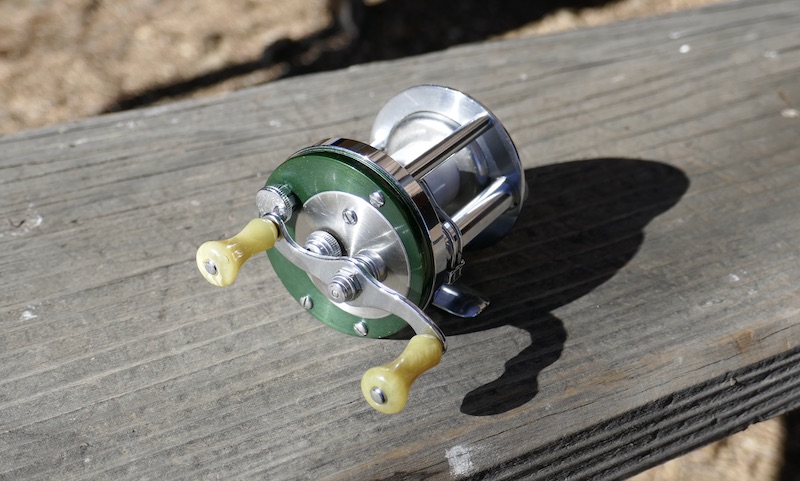




Important Information
We have placed cookies on your device to help make this website better. You can adjust your cookie settings, otherwise we'll assume you're okay to continue.