SENKOSAM
Members
-
Joined
-
Last visited
Everything posted by SENKOSAM
-
What kind of weight and how much weight?
-
No difference. Both species are caught on the basic use of line, rod, reel, lures.
-
Skirted jig and trailer near rocks.
-
The above advice is a good place to start, but without getting into specific lines, lures or presentations depending on water temperature, here are a few basics: Use the lightest line you can catch a species on and depending on cover Always carry sharp hooks and a file to sharpen them Always use artificial baits because they more often than not, provoke strikes Find out which lure types are the easiest to use at first and than build on that after you start catching fish regardless of species (many lures work on different species) YouTube is a good place to veiw various lure types catching fish in different situations, especially with underwater photography Move around either on shore or by boat and fan cast areas between movements - cover water within forty yards of shore of shallow cover Remember and keep a simple log in order to see what stays the same and what varies regarding anything to do with lures, fish locations, seasons and that every water is somewhat different. Major categories are archived on BassResource in articles contributed by those that have experience in various areas of expertise. No better place to read, keep notes and apply those suggestions, allowing many to serve you from that point on. Luck is only a small part of catching fish. The odds are in anyone's favor that does their homework and not assume anything when it comes to lures and fish. Most important are the challenges that present themselves and the personal discoveries and successes that keep on coming. There is no such thing as anything set in stone when it comes to fishing.
-
I suppose it matters to those that believe that bass associate colors to those that occur in nature such as prey fish and craw colors, blood or gills. Association is one thing, evoking a strike because of unproven associations is another. Bass strike for different reasons and I think that many would agree that lure action and presentation are at the top of the list. Even slow presentations at the right place and time seem to have an edge over what color hook or lure color pattern is chosen. Do some colors work better than others at times? On certain waters that may be true, but still it's hard to attribute catch rates with colors unless two or more anglers used the same lures and presentation daily, from the same boat for at least a month and compared notes. The point of the experiment would be to see which worked better by a considerable amount, though I tend to believe it would even out. JMO
-
MUST HAVE BEEN THIS ONE:
-
If your like me, you have many designs of soft plastics and with a candle flame to melt both ends together, you can come up with unique action/ profiles. Helps the winter go a little faster.
-
Thanks for the kudos. I used to paint patterns on crankbaits, caught a few bass on them and still wonder if the paint jobs made any difference. I don't paint them anymore because presentation and lure design/ action seem to take priority over fancy paint jobs any day! Now I just stay with a few colors I like and do okay. BTW - those lures are walleye baits are they not?
-
Actually I think that design conscious anglers appreciate hidden attributes that enhance a lure's effectiveness. When a particular design or modification works, whose to say it didn't? I've been fascinated by lure designs that have worked ever since I first caught bass on a Mr.Twister 6" purple, with fire tail, Phenom worm and a 3" bright yellow grub. Did I think the bass thought the lures represented anything? Just the unnatural colors demolished that thought for good! But the unnaturalness of color and action got me to thinking that the little things do count! I've been using tail hook feathers on Heddon Poppers for years and even put some on their Spooks. Does it help catch bass? I'll never know because my personal tradition dictates I always use them, at least on poppers, and that goes for many original baits right-out-of-the-package. In your case, I'm sure it's angler skill and confidence more than tail feathers that help you catch bass on it. LOL
-
It seems even the light tail feathers would change the action dramatically causing a tail drag.
-
Maybe there's a difference catching a large bag during a classic tournament, but even when I fished bass tournaments, the loudest noise I would make would be the sigh of relief not coming back to the weigh-in skunked! The only loud comment I have made concerning the loss of a nice one at the boat, .... I can't repeat here. What I meant using the Seahawks' Sherman as an example, was the low class rant made after the game about another player after his team won. I don't care for spectacles nor unsportsmanlike conduct. To each his own.
-
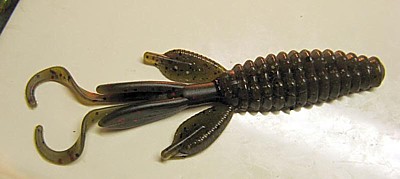
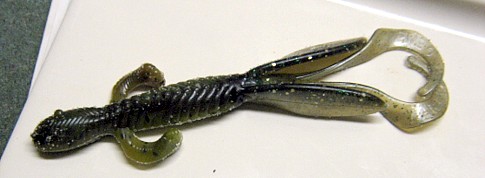
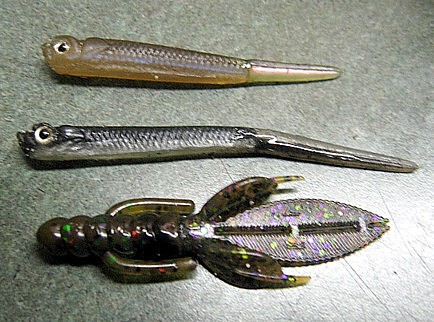
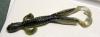
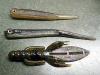
I've been modifying soft plastics with a razor and candle flame for years, even before pouring my own from molds bought or hand produced. I call them hybrids soft plastics. How about it - any pictures? If so, maybe include the reason the lure seems to work better.
-
Surprising how different companies making almost the same design of soft plastic can be as different as night and day. Take the Beaver and Ugly Otter. Both the same in body but different because of the Otter's paddle tail. The drop is totally different. The Otter also uses less salt. The Houdini Shad with it's paddle tail is much different that the Zoom Fluke, but similar when the tail is shaped with a knife to look like a rear fin. Most fluke designs act the same regardless of company as long as body and tail shape are the same. Old Bay Side flukes are no different in action than Zoom's. Grubs are different acting due to tail shape and especially tail thickness. Senkos and Yum Dingers are obvious in their differences - each exhibiting their own advantages via plastic and salt differences. Curl tails added to any plastic worm versus a thin paddle tail, does something to the fall rate, body motion and tail action, but all in all, all curl tail plastic worms are pretty much the same as long as the body shape is similar to the original Mr. Twister. I love soft plastics, including making my own designs or modifying existing ones. Unlike hard baits, you never know when something even slightly different will make a soft plasticdesign more provocative.
-
No! Anytime I catch a fish, large or small, it's a reverent moment of relief and the answer to the question during the fight of - how big?!! I've always seen catching a large bass as pure luck on my or anyone else's part and therefore nothing to shout about regardless of how experienced. I'm more into the immediate question of why here and why this bait? Most of the time the answers are illusive but nonetheless a mystery - as mysterious and awesome as me or my partner being in the right place and time. I leave the acting like a maniac to Ike and others. I see it as a Richard Sherman act of disrespect to the fish which I have the greatest respect for, adrenaline rush or not.
-
Wondering if a tail dressing might restrict action. I can see it for an XRap but not a Spook. I think I might have done the split ring-to-hook idea. Will check and will make the mod. - makes sense. Funny though how I've gotten away from the cigar shaped topwater and been more of a banana shape guy. The banana shape walks so much easier with less effort.
-
Great insights! As many of you know, I dissect lures into their individual parts that make them unique -sometimes general, sometimes specific qualities. Unlike soft massed produced plastics which are somewhat uniform in quality and action, certain crankbaits seem to have a quality fish are tuned into and become more aggressive at the lure passes by. As far as retrieves, a friend I fished with in a large NYC reservoir proved, steady retrieve most times do as well if not better than stop & go retrieves, but more important is to hit the same spot at least twice if not three times to provoke a bass into his bully routine. He proved it with a 7lb fish. As far as prism reflective surfaces, I've tried them with the Fat Free Shad series and can't say whether they do or don't work never having caught a fish on them. I tend to believe as mentioned by a few of you, that shad colors are a safe bet. The only chrome colored plug I've caught fish on was a Rat L Trap, but never on a chrome colored Big N. Again, it proves nothing if a specific lure isn't used at least 500 casts in areas known to hold bass at different times of year. When I discover from casting them that certain traits specific to certain crankbaits aren't as important as general characteristics such as depth and action, confidence will overcome doubt and superstition. Are Lucky Crafts that much better than Rapalas at half the price? Something I've wondered about and questioned its validity: A long time ago Roland Martin was quoted in an article that he would pay a reward for a certain lost crankbait that he did well on in a classic event and believed it was unique among others made by the same company. It was made of plastic. Superstition or just something to say for a paycheck?
-
Thanks for getting me enough information to begin the quest for the perfect crankbait! I know, there is no such thing and I'll have to take in consideration the following I started reading about in the Bass Resource archives: 1. depth 2. bill shape and length or lipless 3. suspending or not (I use my X Raps and Husky Jerks for that) 4. plug size (length and width) 5. vibration and action compared between lures(based on 2 and 4) (no rattles as good?) 6. seasonal considerations (I've read that lipless are better in spring) 7. type of bottom (I've also read that a crankbait should tick off rocks to make noise (Clunn tip) 8. retrieve speed range between similarly designed crankbaits 9. buoyancy differences (Bagley Balsa rises faster and pauses should be less to maintain depth) 10. which type and test line depending on the crankbait and where and how it is to be used (is heavier test preferred in certain situations?) Once shallow lakes (those that average 10' or less) have a good weed growth, is there much use for crankbaits? That's usually when I start using jigs, soft plastics and semi-weedless lures. Hopefully I'll follow through and fish deeper waters in my area in order to get more experience with crankbaits.
-
I've been a collector versus user of crankbaits for over 30 years and to this day still rarely use them, but jigs and soft plastics 95% of the time. I own many brand names that I'm sure have been endorsed by one pro or another and stocked up when they were much cheaper than in today's catalogs. Here are the brands and some models from which you may remember the body and bill shapes: Bagley Killer B Rapala Risto Rap Rapala Fat Rap Rapala Shad Rap Jim Rogers crankbaits Bill Norman N series in different sizes Cotten Cordell Rebel Poe Arbogast cedar plugs in many shapes and colors Bomber Model A series Bomber Fat Free Shad Bomber Long A Storm Wiggle Wart and other deep divers Smitwick Rattln Rogue Yozuri jerkbaits Bass Pro XTS (still only $2.99) The most expensive crankbaits today are over $12 each, whereas these cost $2-$5. Is there always a superior quality or design issue when lures cost more? Rebels look cheap, but are they less effective at the same depth as the more expensive plugs? Same for most of the other plastic crankbaits listed. Are these some of the brands and styles you still use? I have to admit that though I've caught fish on crankbaits, confidence in them needs to be built up because they are some of the finest search baits made and I'm probably missing out on fish suspended off structure. A little help please.
-
Consider this as a possible theory why and what bass strike: 1. Bass are predators with sensitive innate abilities. (lateral line, ear, smell, bi-directional eye sight. 2. Like all animals, bass respond to different stimuli in different ways: sudden object appearance, noise/vibration, visual cues regarding size, shadowing, object brightness and hue, all within a changing environment of light, temperature, cover changes and depth When a fish struck your Shad Rap, other things mattered, which always matter to sophisticated bass anglers such lure speed, size, depth, action,hook size and lastly, but not less important - color. An angler will consider those lure characteristics beyond what species he may think the lure may represent to a fish, but none of those, except maybe shape, size and color, have anything to do with species imitation. Granted, many times bass are cued in to a prey type such as other fish that are in a school or hunting crawfish near rocks, but what bass share with all animals is that they are stimulated by stimuli regardless the type. The stimulus might provoke a response or not (even easy prey are ignored more often than not). When someone suggests a blade size change on a spinnerbait, a prey species is not even considered when lure vibration, flash, lure speed are prime considerations along with how the change fits in with certain presentation such as slow-roll, bottom hopping, a fast retrieve, waking the surface, greater or less skirt/trailer pulsation, etc. What the lure does and can do is at the top of the list. Make a surface commotion with a surface lure and watch it change its attitude regardless of what a fish may think it is (and considering the fact that a fish doesn't have that ability.) Worm rigs? At least eight I can think of that have more to do with lure action and speed than anything a worm may represent (but doesn't when you consider action and appearance). Better built and designed crankbaits are chosen for their action most of all, what they may look like secondary if multiple colors can be used to catch fish in the same time period. Jig types vary as do trailers, both having to do with presentation and lure action rather than whether bass are eating crawfish for other prey type. (Some have suggested the skirted jig can represent another fish when worked the right way in the right color - yea right!) Even various line types affect lure action and presentations. Type of prey, not so much. The type of stimulus is as important as any reason bass strike lures. To believe that hunger based opportunism is the prime reason is fine, as is believing bass have emotional responses to lures or prey, but when an angler chooses lures, he or she is thinking about lure factors that make more of a difference, little of which has anything to do with prey species or type. Most important is to get the lure close enough, worked the right way and let everything else about it do the rest. Fishing can be difficult enough without adding other things that have never been proven when it comes to lure choice, but that are easily proven when it comes to the lure, the line and the presentation, with more than one at times as successful at the same moment.
-
Roger- my hat's off to you!!! You brought up a very important point supported by a great example of preference vs availability I hadn't even thought of! The reverse is also true, as the angler study suggested, that fish caught on what anglers thought was a preferred forage based on stomach contents, was not so when using live fish of the same species set as bait. The question still remains, not what are the base eating?, but more important - what are the bass striking? If live bait were used vs lures in the same areas, which would outperform? According to conventional theory of natural/ realistic/ best lures mimic forage, there shouldn't be any question which would do better under normal fishing conditions. Priceless!
-
Good point. Another angler on another site said this, How realistic? Many anglers that mimic local prey would say only a minimal number of lure characteristics are enough to convince a bass, such as only one or two colors or shapes. A white spinnerbait has features that are shad-like, so it's said, and that seems to fulfill the appearance and action requirements to imitate shad. In fact any lure that has a blade or that flashes would be adequate to match a silver sided prey fish, but also lure designs such as pearl flukes and suspending jerk baits. The list goes on... What I'm getting at is that since the variety of lures that generally imitate shad is so great, which action and appearance of which lure would be preferred over all others in order to realistically imitate a prey species the best? If bass have intelligence as Tom suggests and can tell the difference between lures that don't imitate, wouldn't bass prefer one design over another in the same colors and thus a minimal number of lure characteristics fulfill matching needs? Bagley produced realistic paint jobs on their balsa crankbaits over thirty years ago and anglers didn't find them any better than solid colors. The only way a fish could appreciate the plug's fine details is if and when the lure stopped dead, though most of the time the lure is a wobbling blur and always moving. So generally speaking, let me get this right, a lure that has only a few realistic qualities (based on individual preference) that an angler believes is enough to fool a fish into biting a certain prey, is all that's needed to match what it is feeding on at that moment or in general. Seems a bit vague and a bit too general a theory.
-
What bass prefer to eat prey-wise may have nothing to do with what they'll strike lure-wise. I'm not sure if that is what you meant. Sure, some believe that a fish thinks a spinnerbait represents a fish to a bass and a jig represents a crawfish, but is it really important what they think a lure represents as long as they strike it!? If all one uses are jigs, believing that crawfish are the preferred prey of the day and not use crankbaits, frogs and lures that look like nothing they eat (Chatterbait, creature baits), than what's the point of limiting one's choices? I have a feeling that most anglers cycle through many of their lures to see what is working, where and with which presentations after they've caught nothing after a few hours. I'm talking about a large variety of lures based on depth, bottom types, weed type, structure, time of day, etc. In fact, most outings I've caught bass on a least three designs - worm, jigs and crankbaits and more on other outings. Colors used are only from a limited palette of colors I have confidence depending on the design. If a partner is catching them on a different color, I may switch to see if it matters.
-
In one lake I frequent, bass are rarely kept accept for club weigh-ins. Crappie have been growing in population and size since the limit went into effect, along with white perch (no limit) and from what I've read, white perch and crappie are major threats to bass once adult females get to a certain size and number. My fish & game club used to have panfish tournaments every few years to put a dent in the crappie population but it's now a waste of time since most bass anglers in the club never fish for them and don't have the light tackle, besides which, 25- 10" crappie per angler is nothing when you consider the monster schools of perch and crappie I run into often. I like catching fish period, keep none, but would hate to see a decline in bass quality. In this case the regulation on this private lake will hurt in the long run, coupled with the fact that the DEC allowed the stocking of far more weed eating carp than the lake needed, resulting in the destruction of weed beds. Other small waters I fish are off road and have very little fishing pressure. Crappie are doing very well in those waters and I don't see the need for the regulation where none is needed.
-
In NYS, the DEC imposed different limits on different pan fish species about 10 years ago. 25 crappie. 9" minimum 50 sunfish 50 yellow perch no limit on white perch The reason for the regulation regarding limits supposedly is because in certain areas of the state there are shoreline anglers (immigrants) that keep everything they catch regardless of size. The local waters I fish (at least fifteen in rotation) never have anglers that fish regularly on those waters or that even keep what they catch. The pan fish populations are extensive and no DEC surveys have been done due to lack of funding to tailor limits to different waters. The DEC refuses to even consider taking the word of those that keep logs how large or how many fish are caught and have responded that the law is the law and will not be changed any time soon. Biologically speaking, sunfish and crappie are prolific breeders and unless there is fishing pressure to cull the population, competition with other species from predation of minnows and fingerlings of all species can be detrimental over the long run, especially bass!. 1.What is your opinion of general regulations that may harm a fishery? 2.Should lead sinkers be banned?
-
When an angler puts a lure into a prey categories, such as prey fish, worm or crawfish, it doesn't mean a bass does or is able to considering its limited brain's abilities. There may be something about a lure that feels right to a bass, but humans will never know for certain. On the other hand, novelty lure action, color and profile may have more to do with why bass strike than what it thinks a lure is. A bass that has never seen a spinnerbait or shad is capable of striking both but for different reasons - a spinnerbait is annoying; a shad is a real fish in every way a bass senses it is. A bass's senses take into account everything about an object that swims or crawl, real and fake and IMO will never confuse the two. Lure designs are an artful abstraction of life forms, the details of which are more appreciated by humans than the fish they are designed to catch. In any case, if an angler believes imitating prey helps get more strikes. even if the lure is doesn't come close to imitating anything, than who's to say it's not true. The only difference would be that if an angler feels he must limit himself to lure types, colors, actions, sizes and maybe presentations to imitate what fish may be feeding on, he may miss out on other lures that do better.