SENKOSAM
Members
-
Joined
-
Last visited
Everything posted by SENKOSAM
-
My first smallie was caught on a yellow Mr. Twister grub, and that was before a knew that smallmouth bite many different lure designs. I came in first on the first day of a two day tournament, on the Mohawk River in central NY, using a large willow leaf bladed spinnerbait, jig and pork trailer, plastic Sidewinder worm and crankbait. I came home the next day and killed them on a Rebel popper, fishing a shallow local River. My partner and I killed them on jigs and pork near barges in the Hudson River. There is no such thing as a smallmouth bait that isn't a largemouth bait.
-
The best answer! Plus, even if a bass doesn't think an object is food, the whole idea of using lures is to excite a bass into biting!!! First scenario: think about it, unless you've seen bass bust'n shad on the surface or near a bait ball on your sonar (the only visual cues possible), you can't be sure a bass isn't sitting minding its own business and not really in a feeding mood. Therefore imagine this: A bass is suspending somewhere off bottom and all of a sudden some hot dog shaped mass (Zara Spook) is swishing back and forth rhythmically overhead, interrupting its reverie. It would be similar to someone using a bullhorn at your front door at two in the morning! My first thought would be to come out swinging a very large bat, but in my case the response is one of anger; in a bass's case, primitive aggression is most likely the primary reason it struck after it became excited]. Scenario #2: Aggression is contagious. If a bass is hyped up, its fins erect and its eye balls are darting back and forth, something made it edgy! Could be it sensed other fish feeding nearby. I've seen it first hand in my semi-clear pond: I was trying out drop shot baits on pan fish and and getting them to bite only four feet from me near a weed line. After a sunfish and four yellow perch were caught, a one pound bass came out of nowhere and was caught on the same lure. Fish, regardless of species, affect the mood of other fish to be more or less aggressive. But even if other fish didn't make that fish nervous and excited, your lure could be the stimulus that accomplishes that. In other words, your lure lit the fuse of a bass's excitement resulting in an explosive response. So, other than the certainty that bass are feeding on a particular species (which no one can be sure of except manufacturers and pros that want to sell you stuff), those two scenarios are basically why bass strike artificial lures, with a fish's excitement the reason they have in common. The goal of initiating excitement (the fish's and the anglers), is what every angler strives to accomplish. A lure's design, action, shape and color speak louder than what it may look like. Just My Humble Opinion and one that has served me well for over forty years. Frank
-
A bass is a bass regardless of mouth size. Same lures in the same sizes.
-
Creative Concepts USA, the company that produced The Original Fish Formula, no longer exists and there are no sources to buy it from. I still have a bottle that's lasted 10 years and use it sparingly to lubricate plastics to prevent catching on weeds and rocks. As far as man-made scents/ attractants go, not my cup of tea.
-
The parasite clip is a takeoff using a swivel. Better video how to rig the parasite clip. The clips are easy to make using almost any thin wire but I will try to make one from a zip tie and get back to you.
-
Synopsis of the above I agree with: Best reasons for using braid. 1 far less line twist and tangles when using a smaller diameter, spinning reel spool or twisty lures 2. no stretch for long distance hook sets and playing fish 3 smaller diameter allows cranks to go deeper with less line lag or arc Best reasons to use a leader with braid 1 more abrasion resistance 2 allows certain baits unique action not seen with braid 3 includes the advantage of both types of line 4 the leader line is far cheaper than braid other: 1 Double uni-knot - no breakoffs 2 line shy fish are plainly not active fish anyway (if there is such a thing as a line shy fish) 3 dark colored, thin braid is difficult to see
-
I suppose it could depend on the water. If smaller bass are the average size caught in large numbers, then a few ruined nests may help over the long run. More important is the population of egg eating fish and any species that eats bass. Even if you legally kept a male guarding a nest, it may not make a difference if there is an overpopulation of sunfish and white perch or tiger musky. Future populations of bass are already threatened without any angler affect. I don't ever target bedding bass much less keep bass because of my deep respect for the species. Just me.
-
I don't think one can target larger bass, just as one can't determine what bigger bass are feeding on. So it comes down to this IMO: 1. hit high percentage locations - know they water 2. use presentations/lures depending on conditions such as water temperature, time of day, time of year, etc 3. assume nothing when nothing seems to work 4. expect more reflex strikes but strive for slower reaction strikes that irritate bass of all sizes into attacking. If I follow the above, I have a much greater chance of catching larger and more bass.
-
You have to have a lot of patience to ice fish and baits that catch pan fish also catch bass and pickerel in the same areas. I would rather not hook bass or pickerel under the ice, but I always catch a few and have no problem catching them on 4lb test line on small spoons and grubs. If you can get by without using live bait such as minnows, do so, otherwise bass could easily be gut hooked. To avoid gut hooking, I would start with a drop shot rig using live bait or soft plastic minnows on an Octopus hook. Vertical presentations you would normally use in deeper water, can be used in 5' near weeds. That's where I locate fish 95% of the time in winter. It's a good way to get a feel for and experience using vertical lures such as spoons. YouTube has many ice fishing videos, including subsurface videos that give you an idea the action of different lure actions, the reaction time for fish to strike and school fish bites (I've only experience a dozen in my life time). Even after ice out, the same presentation will work using the same lures, except with the addition of horizontal casts. There's nothing as relaxing as experiencing the quiet on the ice under a bright blue sky on a warm day, with gulls flying overhead waiting for live bait scraps. Just remember to check ice thickness and dress for air temperature changes. It's a nice way to be active outdoors in winter.
-
So true! An open mind leads to discovery and surprise, insuring the ebb and flow of learning. Sharing our experiences opens volumes of ideas to at least consider just as being on the water does. Thanks Giving A day for giving thanks and counting our blessings such as good friends and family (whoever and wherever they may be) and praying for those less fortunate. Enjoy and don't over eat! Frank
-
Maybe if skin divers followed bass around for weeks in the wild non-stop, could they begin to see locations, feeding behavior and responses to various lures (similar to Glen Lau and Doug Hannon videos). But that most likely will never happen and most important, not happen on the thousands of waters across the nation. Habitat defines bass behavior and anglers that fish different waters have to figure out what differences there are that habitat defines which dictates trying different lures and presentations that find susceptible bass. Sure, science can predict chemical reactions and (sometimes) the weather, but wild things that turn on and off at the drop of a hat - maybe not so much, otherwise certain anglers who owned predictive informations would always win whatever tournament they were in. Reading the standings in BASSMaster Magazine tells me no one does because few veteran pros are in the top forty all of the time. The scientific method and logs have helped me define bass behavior as chaotic, as all those who have been skunked might agree. Granted, bass may show a predictable pattern that can last for a few days or weeks, but the following year be totally different, even as far as the lures they strike in certain locations. Other than that, science has helped me organize my experiences into facts that are a bit more reliable over time, minus the fallacies and misinformation I mentioned earlier. No model is perfect nor could it be when it comes to wild life, but an angler needs a frame of reference to at least have somewhere to start from when trying different things to save time versus snoozing on a bank with a bobber and live bait attached to the big toe with a bit of string while snoozing under a large straw hat hoping for a tug on his big toe alerting him to a bite. When, where and how to use lures will always be the challenge that no model will ever predict 100 %.
-
If you don't mind me asking, why hand poured? There are quite a few American companies that have been around decades that mass produce excellent lures. Why specific baits for Lake Erie bass? - aren't most bass susceptible to most soft plastic lures no matter the water? If you must use hand poured soft plastics, consider pouring your own. Molds are cheap on one site and the selection is incredible.
-
Just north of West Point.
-
I noticed posts about finesse jigs and the Mojo rig, not to name all of the other countless finesse presentations. Downsizing involves not only lures, but weight, blades (spinnerbaits), line, skirt length, hook size and a few other things. Under what circumstances would you downsize? Do you ever mix it up with large baits followed by downsized baits or when conditions warrant it, stay with one-size-fits-all?
-
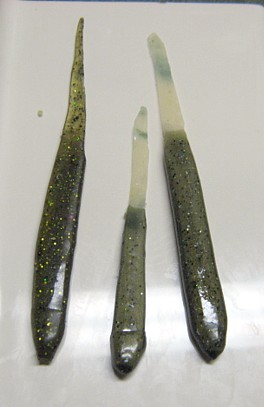
I'm partial to my own hand poured minnow grub which catches all species regardless of season and water temperature rigged many ways, but mostly on a jig head or drop shot. Can't beat a jig & trailer most times of year, swimming it, bottom dragging or hopping. Wacky sticks Sweet Beaver type soft plastics (Ugly Otter preferred)
-
Putting all BS aside (including my own), answer this question: what are YOUR favorite crankbait colors? Putting the question into perspective: a human's choice is most times not scientific! It's based on opinion, based on simplified knowledge and beliefs. Opinion is supported by experiences, successes and failures, but mostly bias. I have a bias for pearl sided crankbaits. Why? Because they flash more light the deeper crankbaits are used and contrast with all backgrounds viewed from the side. Does anyone actually use purple, pink, blue or aquamarine crankbaits? Years ago the Color C Lector had them on the meter which took into consideration water qualities and depth. But how long did that go over? How many of you use solid colored crankbaits with no details such as eyes, gills and scales? Do they promote strikes happening? (BTW, I've used solid white and pearl crankbaits and caught bass.) Again, bias, opinion, experience or inexperience decides our lure choices, colors, sizes, etc. and where they are used. Location is by far #1, but to suggest that one size fits all when it comes to chosing artificial baits under all or specific situations is in itself telling. Such is constantly demonstrated by bait company propaganda that exercise sophisticated methods to dismiss reason and logic to sell and to take their word for why we should buy this or that lure in different colors. Their schills have lost credibility, except to the clueless novice that are drawn in by imagery of big bass, big tournament wins and 50 bass days. We know better. I'm apt to believe that many of you that replied to this topic have experience and have limited your choices based on many outings on different waters under different conditons. Science is nice, but taking chances on a whim and being surprised when they catch fish are so much better!
-
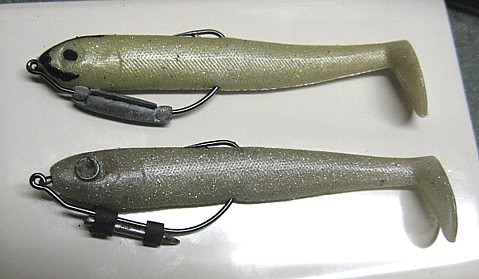
Tired of paying an arm and a leg for weighted swimbait hooks? I bring along clamp on sinkers in different sizes and press them on to hooks in different sizes depending on lure thickness and length. The bottom set up uses the bands used to attach skirts to jig and a nail; also note the eye made by super gluing the cut off head of a nail to the head for a bit of extra wt.
-
Cory, I think anglers can only speculate about color, but not about lure contrasts that include sound/vibration, lure brightness or shadowing and lure action, which account for all strikes lure related beyond angler manipulation. Constants rarely exist in nature which makes fishing so challenging.
-
PT may help if you don't have inflamation or some of the other diseases mentioned. A rheumatologist is one way to start finding out causes and maybe solutions for neck and back pain. Usually a simple xray tells the story : reduced disc space, vertebra compression, arthritis, alignment problems (scoliosis), etc). Consider your line of work as a contributor to symptoms that flare up when fishing while standing for hours. For example, sitting in front of a computer or at a desk without proper back support and then going home slouching on the couch for more hours before going to bed, stresses everything in the back that keep irritating nerve sheaths. Good posture while sitting and exercising a few minutes every hour may keep supportive ligaments from stretching and keep back muscles strong. Construction jobs and driving trucks that pound the body with repetitive stress, do a number on the spine and nerves. Not thinking before lifting or using any muscle beyond the straining point (IE elbow) usually results in spasm that last for weeks. Drug therapy sometimes works right off the bat. I take muscle relaxers, perscritption pain relievers and anti-inflammatory meds such as naproxin as needed for chronic and severe symptoms. A severe back spasm last year kept me bed bound for days until I took those medications from an ER! Recently I found out why my chronic neck and back symptoms weren't helped by drugs or stretching: a lack of sleep and air conditioning ! I have been prone to a viral infection that affects my nerves and muscles when I get chilled for long periods, which has plagued me since I was in my early twenties. I went to Canada in late April earlier this year, slept with the hotel AC on with the draft right on me, went to a church that had the room temp set at 60 (I only had a dress shirt on) and lost sleep on the round trip by car from and back to the states. Getting out of the car without a coat when the air temp was in the 50's didn't help. The factors that did me in: prolonged hypothermia, a virus/ pnuemomonia (that kept me in bed for weeks), driving for hours getting out to only stretch every three hours and most important - lack of sleep! When the viscious cycle begins, it's hard to put a stop to it because you toss and turn with pain thus compromising your immune system. More inactivity due to chronic fatigue lowers the body's endorphine production which helps the body deal with mild aches. Add the above job related factors and no surgery, PT, yoga, chiropratic or medication can help. My symptoms were gone after taking tramadol with acetaminophin for the severe aches, a natural sleep aid and making sure I was warm enough while sleeping! Overnight, I was cured! The rheumatologist concurred that years of sleep deprivation contributed in a major way, completely understood why a good night's sleep is so important and then insisted on a daily exercise regimen (seeing as I'm over 60.) Many doctors diagnose the wrong reasons we have pain which can go on for months of useless therapies (including surgery or lack of surgery) and many office visits. Sometimes discovering simple reasons are the place to start (diagnostic imaging), followed by life style modifications. Never assume a professional always knows what's best as many of my friends and I discovered after years of chronic pain! A detective is only as good as his methods.
-
I don't like the lure connectors made to hold a soft plastic lure just behind a line tie that are common with swimbait hooks. To remedy this I've taken some coated, floral arrangement wire sold in any department store and made my own. All you need is a the wire, pliers with cutter and a small nail of the right diameter. Wrap the wire around the nail about three turns, pull off, attach to the hook's eye and snip off the excess.
-
Need extra weight for punching? Shown is an egg sinker nestled in the concavity of the bullet weight. I use a uni knot (20# test Vanish line) tied to the main line like a bobber stopper to prevents the weights from sliding up the line on the cast. I prefer swimbait hooks (shown), but of using a J bend worm hook, I use the same stopper between it and the head of the plastic to prevent it sliding down the hook.
-
I hate it when grubs or jig trailers slide down the hook after a dozen or less casts. To prevent this I wrap wire once around the base of the line tie. After using pointed nose pliers to pull the wire tight, snip one end close and bend close with the plaers. Make an L shape of the remaining end, snip to the proper width and swing into the soft plastic. When I order jig heads, I prefer barbless because they do less damage to grubs or trailers and allow them to be reused over and over. Those that have a barb, I cut off the barb with wire cutters to expose the bare hook. Note: make sure you use stainless steel, safety wire or plastic coated, floral-arrangement wire to prevent rusting. The wire can be changed easily if needed. I use a wire zip tie to attach skirts to jigs and spinnerbaits rather than wrap with thread. Bass have't had a problem with it and it's easier to attach the L lock for my trailers.
-
I'm recovering from wrist surgery for carpal tunnel, long overdue for twenty years. One thing I found that helps to alleviate the symptom somewhat is to make sure my rods are balanced with or without lures hanging. If you can balance a rod on the tip of your finger (no lure), at least your wrist functions more as a fulcrum and not constantly having to keep the full weight of the rod blank upward. A wheel weight attached with Duck tape pictured at the end of the handle, helps a great deal and adds nothing to what your finger grip must maintain. Garages dump old wheel weights all the time and usually give them away. The best rods made have balance and are light, but the older cheaper rods do not and stress the muscle attached to the wrist and elbow by constantly flexing it and holding it flexed. Tennis elbow is also increased by an unbalanced rod. I've used the method for years and thought some of you might want to try it.
-
-
Excellent Paul! First, I like the idea of using the word theorist. Too many times we forget that much of our decisions are based on our own preconceived theories or that of someone else. Most times I would speculate that more than half all anglers ignore the variables that take into account bass physiology, the physics of light in water and the best lures for the job that do not ignore those variables. As Jones said in knowing Bass, and When the facts of bass vision, motion and vibration detection, water clarity, light and a few other variables are taken into account, what appears complex is really far more simple when understood from a the perspective that other things matter. Lure choices become simplified because previous assumptions fall short when we start including the changing variables we know that can exist on any different day that should not be ignored. It's nice and exciting buying lures based on their eye candy appeal or magic-like qualities and to brag about how fantastic they were after the first outing, but the truth is is that lures are just one key that fit the lock-of-the-day but often fail from then on because time and place apply always. Just the fact that most lures are unrealistic looking in the extreme should make one stop and think, in what world does a jig look like a crawfish or that a spinnerbait resembles a shad or blue gill? To suggest that they do to a bass, first of all ignores what most lures look like in typical algae filled water early or late in the day. Second, and more important, is that to insist that bass translate one lure's appearance into being a specific animal species. It's not even a reasonable assumption and makes me wonder the original source and whether there was self interest involved Bass aren't logical though anglers should be, and though visual hunters, bass by no means put much thought into an object moving a few miles per hour and hopefully a few feet away though a visual filter. What's more is that the fast moving lure the bass gets caught on, most times can't be remembered because it never got a good look at it when it attacked it in the first place, plus a bass can't see what's in its mouth. Nice discussion that hopefully many will give serious thought and consideration to. Illusions are nice, but they can be damned frustrating and any bass would tell you that if it could after it was caught!