



Captain Phil
Members
-
Joined
-
Last visited
Everything posted by Captain Phil
-
My favorite bass lake is Lake Okeechobee. I spent over half my life fishing there and have many great memories. My second favorite is the Kissimmee Chain. Without a doubt the best bass lakes in Florida, period. The Harris Chain is in my back yard. It can be challenging at times, but I don't know of a better "Big Bass" Florida lake. I caught my personal best flipping around my neighborhood boat dock.
-
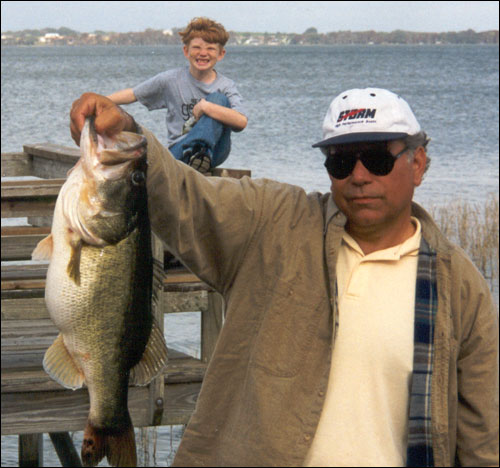
George Perry's bass, whether legit or not, was a natural bass in it's natural habitat. When you transplant a Florida strain bass to California, Japan, Texas or wherever, it's no longer in it's natural environment. It should be easy enough to grow a world record bass today if you wished to use DNA manipulation, or you could just stuff a Florida bass with baby trout and get a similar result. When George Perry supposedly caught that bass, no one knew what a world record bass was. Why did he land on 22 pounds 4 ounces? Why not 30 pounds or more? I believe his story is true, if for no other reason than to give us something to shoot for.
-
-
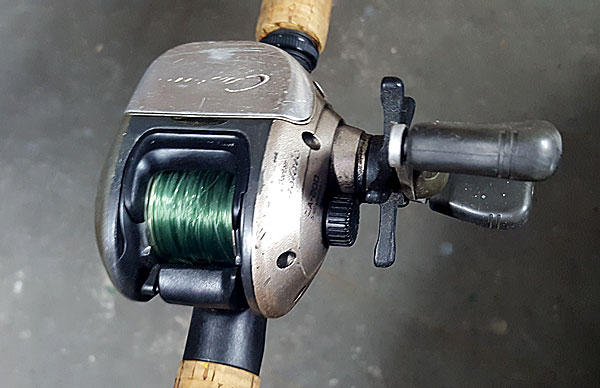
When using the flipping technique, the reel is the least significant part of the process. Like most anglers, I fish prefer bait casting reels for flipping. Years ago I discovered what I think is the perfect flipping reel, the Shimano Bantam Castaic A200. I love the flipping trigger feature as it allows me to engage the reel with one hand. These reels are inexpensive, smooth as silk and last forever. The one in the photo below has caught literally hundreds of bass, many over 8 eight pounds, a dozen or more over ten and one near 12. It's never let me down. You can spend more money, but you can't buy a better flipping reel.
-
A heavy action rod is required when flipping heavy cover. Most bass caught flipping are larger than average. The lightest line I have ever used when flipping is 20 pound test. Bass also have a nasty habit of weaving the line around the cover. By the time you realize it, the fish can be a yard away from the strike. No one lands 100% of the fish that strike, so don't beat yourself up. Using the right rod and line will help considerably. Here's a tip. Whenever your lure touches bottom, check your bait by lifting the rod slightly to check to see if a fish has it in it's mouth and you don't know it. Don't get into a guessing contest with a bass. If you feel any resistance at all, set the hook. The hook you use is also critical. I like a wide gap round bend hook. My favorite is the Owner Straight Worm Wide Gap hook in 3/0 & 4/0 model 5103. That hook is so sharp it hooks most bass just by lifting it.
-
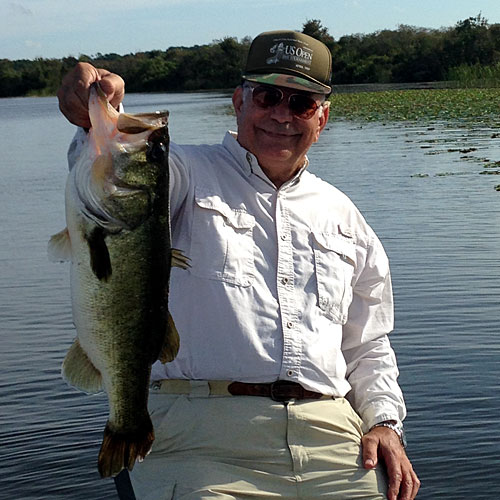
I am conflicted when it comes to braided line. I avoided it for years, but have been slowly switching to it. My best results has been switching to braid when fishing rattle traps. I lost too many fish with mono, braid has upped my "fish in the boat" score substantially. Flipping is a different animal. Here in Florida, our cover is very thick. When flipping, it's the fall that triggers the strike. The rough texture of braid catches the cover on the way down impeding the drop. Adding weight seems like it reduces strikes, at least it does for me. When flipping, I want my bait to fall as natural as possible. I use 25 pound Trilene big game mono for flipping and it has never let me down. I also coat my lures with fish attractant. This makes the lure to slide through the cover easier.
-
Back in the day, weedless spoons were a very common bass bait. I knew good fishermen who never used anything else. They could be cast farther, covering more water and fished in heavy topped out cover. The first such baits were sold by Al Foss. In the fifties, the Johnson Silver Minnow became popular. Spinners were added to these baits and buzz baits caught on. The Weed Wing is still a deadly lure on Everglades bass. It's lighter than a Johnson spoon and can be fished faster. As better reels were developed lures got lighter. It would have been impossible to cast a fluke with one of those old clunky reels. Any lure that can be fished in heavy cover will catch big fish.
-
"Tule Dippin" or " Doodle Socking" had been around a long time down south before Dee Thomas adapted it to tournament bass fishing. I first remember reading about this method in a Jason Lucas book as a kid in the late fifties. I still have that book with all my underlined notes. Jason Lucas was the bass fishing editor for Sports Afield magazine and the Bill Dance of his time. Jason thought it was unsportsmanlike, but that was before tournaments. After Dee won a Florida tournament, we all tried it. We couldn't believe you could catch bass right under the boat. We believed the boat scared bass away. We were wrong. I've caught dozens of eight pound plus bass with 4 feet of line off the end of my rod. It's always a thrill.
-
Short casting rods are better for accuracy in tight quarters. I think accuracy is something that younger anglers don't know enough about. Today's popular lures are generally "throw as far as possible and reel". I prefer to cast into deep cover where the big fish live. This may mean hitting small holes in the grass or pads. Casting accurately is a big part of the fun of bass fishing. I learned to cast into a bucket in my front yard where there were no fish. I still do this on occasion which gives my neighbors a chuckle. I don't know anyone who can consistently cast a crankbait under a dock with a 7 1/2 foot rod.
-
This rule was implemented in the mid seventies when Dee Thomas, the father of flipping, started winning tournaments using the flipping method. Some anglers were concerned his rod length gave him an unfair advantage, so he was asked how long a rod he needed. He told them 7' 6", so they set the limit at 8'. You can read more about Dee at https://advancedangler.com/features/tbt-dee-thomas-the-father-of-flippin-a-true-legend/
-
When I started bass fishing, bass plug casting rods were about 5 feet in length. Solid metal rods were made from surplus WWII tank aerials. I have one in my collection. When spinning reels like the Mitchell 300 became popular, rods grew to 6 1/2 feet. When flipping started to win bass tournaments, longer rods became popular. In the sixties, metal and bamboo rods became fiberglass. I bought my first Fenwick graphite rod in the seventies and it cost me $300, a fortune at the time. I bought a few boron rods after that. If they were actually made of boron, I can't say? Bass fishing involves a lot of short distance casting. Maximum distance is normally not an issue. The weight of the rod is actually more significant than the length. A tournament bass fisherman chunking a rattle trap or swim bait all day puts significant strain on his/her arms and wrists. When I was young, I could do it all day. When you get old and have been do it all your life, it comes back to haunt you. Each rod length and action has a purpose. I still prefer a short rod with a pistol grip for accurate casting. Longer rods are for distance. Bigger fish require longer rods for leverage. If you use a 6' rod for tarpon fishing, a big tarpon will make a fool out of you. Select the right rod for the job.
-
“If you get lucky, if you make a lot of money, if you get out and buy a lot of stuff, it’s gonna break. You got your biggest, fanciest mansion in the world. It has air conditioning. It’s got a pool. Just think of all the pumps that are going to go out. Or go to a yacht basin any place in the world. Nobody is smiling, and I’ll tell you why. Something broke that morning. The generator’s out, the microwave oven doesn’t work. Things just don’t mean happiness.” Ross Perot ?
-
Sounds familiar. I put my pontoon boat on Craig's list last week. I had a serious buyer in 20 minutes. I sold it for more than I paid for it. Now I have no boat. What happens in this economy is a crap shoot. It could be the roaring twenties or 2008 all over again. One thing is certain, the price of a new boat is not going down. Labor and material prices are rising. The bargains are going to be in used boats that people buy and never use. If you found the right boat and you have the money, buy it now. Life's too short to sweat the small stuff.
-
Over the years I have bought a truck load of outboard motors. Some were used. Unless the work is warranted by Mercury itself, I would be very hesitant to spend money on a remanufactured outboard. A warranty is only as good as the people behind it. A lousy mechanic can poorly assemble an outboard motor with a new powerhead and give you trouble. Why did the motor need remanufacturing? Was it run to death or not maintained correctly? If either of those two were the cause, what else is suspect? The few used boats I did buy, I assumed the motor would need replacing and I paid accordingly. You should do the same.
-
Lake Ocklawaha (Rodman Reservoir) 1972
-
Back in the seventies, there was an attempt to compete with B.A.S.S. from an organization called the American Bass Fisherman. It was based in Florida and they had their own slick magazine. I fished many of their tournaments. This outfit wanted to create bass heroes similar to what B.A.S.S. had with Bill Dance and Roland Martin. Two brothers were selected and promoted. They won many tournaments and were given a lot of space in the magazine. All went well until they were caught rigging a tournament in Clermont. The fish they brought to the scales did not come from the lakes we were fishing. Criminal charges were brought. The whole thing imploded which ended the organization. Cheating to make money is criminal. Cheating to stroke your ego is "posing". I enjoyed the competitive nature of tournament bass fishing. If I had to cheat to win, I would be a pretender and I would know it.
-
Some ten years ago our bass club, the Harris Chain Bassmasters, held an annual big bass tournament. The winning fish was worth $2,000. The winners were caught putting lead weighs in their fish. Charges were filed. It took two years for the whole thing to play out. The anglers were fined and permanently banned from fishing tournaments. The best way to prevent this is to expose the thieves for what they are. Thankfully, this type of activity is rare in our area.
-
"Big Bass" means something different in all parts of the country. I only fish in Florida, so I can only speak for myself. To me a big Florida bass is in excess of eight pounds. This wasn't always the case. Fishing pressure being what it is today has brought this down in recent years. One thing hasn't changed. Big bass don't waste energy. Most anglers don't catch many big fish because they fish too fast. They want action and are not willing to fish all day for a few bites. If you want to consistently catch big bass on artificial lures in Florida, buy a flipping stick, learn where to use it, use it right and you will.
-
Or if nature calls... ?
-
That makes a big difference in where you choose to fish. What is the reason for the mid day rest periods?Thanks for the explanation. The run from Leesburg to Lake Griffin takes about an hour assuming you don't have trouble at the lock. If you decide to make the run, you would lose one hour in the first period and another hour in the third?Thanks for the help. So far, so good. How do the hourly sessions work? How long are the hourly sessions and how many are there? Do all anglers start and stop fishing at the same time? How about travel time? Must an angler return to the ramp between sessions?Can someone please explain their format for me? I can't figure out how it works and their website doesn't explain much.The Harris Chain can be a very humbling place to fish. The bass in these lakes don't chase, they react. Their strike zone is very small. To be successful you have put something in their face that gets their attention. This is why vibrating baits work so well. Spinnerbaits, blade baits and swim baits are what they are using. The biggest fish are being caught flipping heavy cover. Hydrilla has been allowed to regrow in some areas. It topped out Little Lake Harris a few years back. Thankfully, local officials are managing the hydrilla instead of the previous policy of zero tolerance. Due to this, the numbers of bass per acre has been increasing. It's no where near the numbers in the Kissimmee Chain or Okeechobee. The average bass caught in the Harris Chain is bigger. These are residential lakes, not weedy swamps. Most anglers have a hard time adapting.




Important Information
We have placed cookies on your device to help make this website better. You can adjust your cookie settings, otherwise we'll assume you're okay to continue.