


Crow Horse
Members
-
Joined
-
Last visited
Everything posted by Crow Horse
-
You've got this and you'll see how easy it really is. The key is to match the colors and have the correct hardware for the connections. Easy peasy!
-
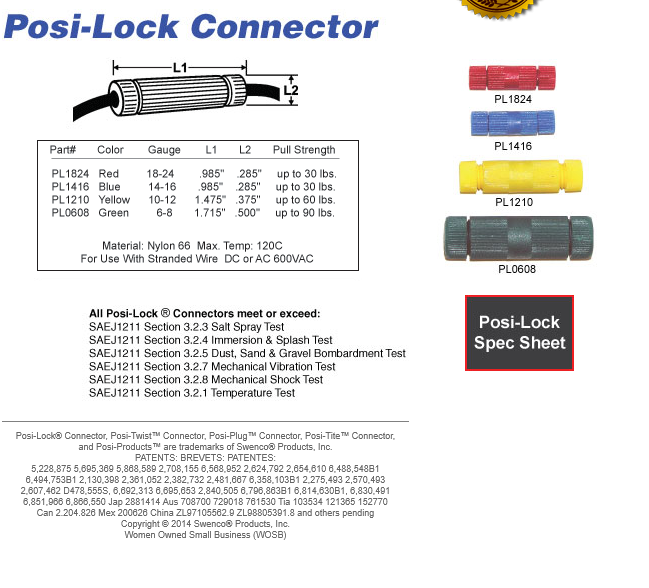
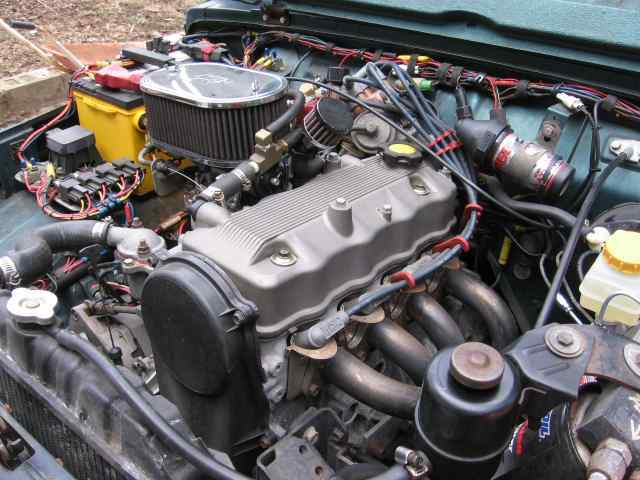
I respectfully disagree. If done correctly, splices or virtually any electrical connection can be made waterproof. Adhesive lined shrink tubing is best to use and if one wants to go one better, using a self fusing silicone (IIRC) tape around the connections. Case in point - 7 years ago I installed a new 7 blade towing adapter in my rear bumper and wrapped the rear of the adapter with the self fusing tape. Fast forward 7 years and the rear bumper rusted through and required replacement. I dreaded having to remove the towing adapter figuring if the bumper had rusted through, the connections on the adapter are going to be toast. As luck would have it, once I cut away the tape, the connections were pristine just like when I first installed it. If any water was to get in and even if it could drain away, those connections would be a mess. Another tip would be to use Ox-Guard (Lowes) on the wires before crimping to prevent corrosion and improve conductivity. I've also heard that soldering connections in a high vibration environment is less favorable that a crimped connection. I can't confirm that but I'll use crimped connections in those situations. If water is allowed to enter the connection and drain out, it still is possible that some water can "seep" into the strands and get trapped within the wire itself. I have had occasion to find a seemingly good wire actually be corroded internally without any indication of this on the outside. Another option would be to use Posi Lock connectors. Any future replacements would only take minutes and not require any tools. They are available at most automotive stores. I'm not an electrician or an electrical engineer, but I've done quite a bit of automotive wiring. Photo of my Samurai featuring a lot of wiring and other mods...
-
I believe a lot of the issues might be due to processor speed & the video card. I'm using a dinosaur of a desktop, a fairly robust Dell 5810 workstation and I'm limited to using 1080. 4K rendering took forever and for YouTube, the 1080 was acceptable. It can be very frustrating when things don't work out well.
-
Photo editing is not really as time consuming as video editing. The time spent on editing videos is largely dependent on the software used and one's familiarity with it. More complex programs like DaVinci Resolve have a learning curve, and in my case, a very long learning curve.
-
I do the same. I'll unhook them in the water only to lift them out for the money shot and back they go. There have been times when hook removal on a super quality fish took too long and was stressful so I'll forego the photo op and release them as soon as they were unhooked.
-
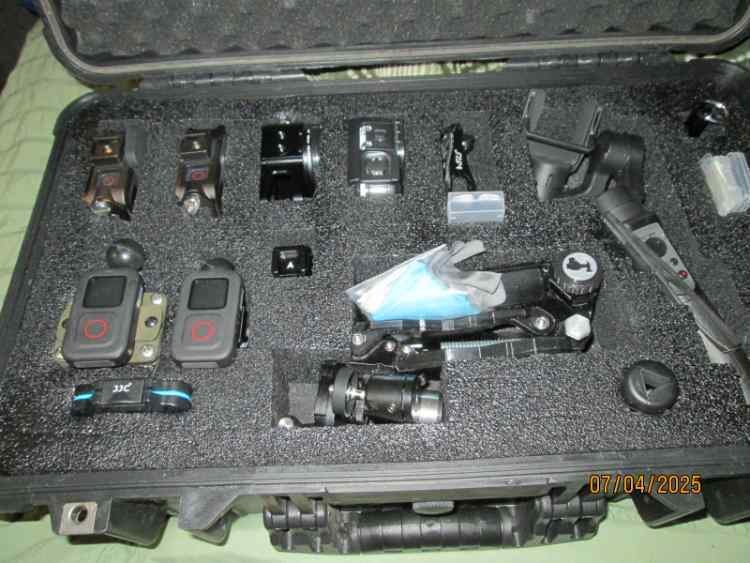
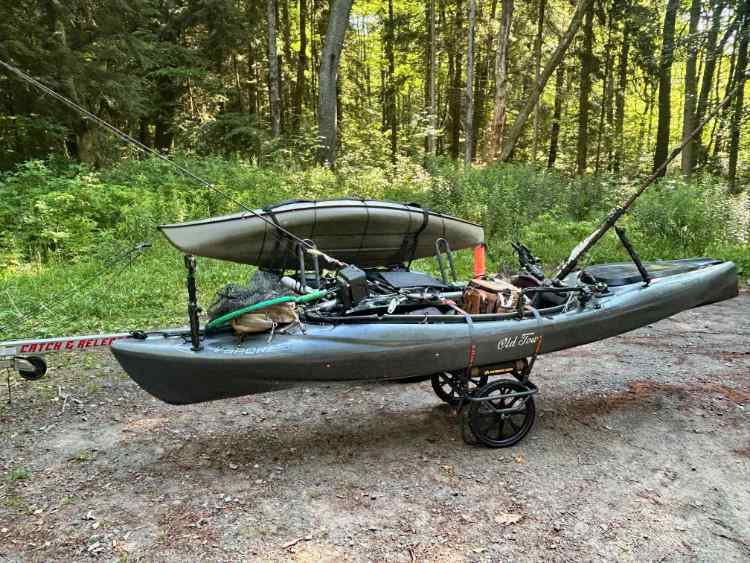
I really don't think there is an inexpensive way to take quality photos (or video). Prior to my current setup I tried quite a few different ways to get good photos and in the end, they all look the same. I missed documenting a number of quality and memorable fish leaving me with only memories. What I'm using now and has worked out quite well is having GoPros on the bow and stern with home brew booms. I was using a remote to start recording but always missed the strike so now I record the entire time on the water which requires external batteries. In post production I can grab stills if I want. I have a third GoPro that was going to be used for underwater video but I paused that and can keep it onhand for capturing anything outside the other GoPros field of view. The down side is twofold. One, it can be very expensive but I did it incrementally over time and bought used cameras. Secondly, it's time consuming to set up even though I made everything as plug n play as possible. At the end of the day, I'm glad I took the plunge and now have a video archive of all my lost fish and screw ups. Instead of relying on my memory I can now view my trips with only a couple of clicks.
-
I fish hard to maximize benefit of my time on the water. 99.9% of the time I'm out there alone. If one of my fishing buddies is with me, I might seem impolite by being so focused, but I'm there to try to catch fish. If I'm managing to be doing well and my buddies aren't, I'll paddle over to them and give them the lures that are working for me so they can catch some fish. Bass are an enigma that I'll probably never figure out. In addition, the pond I fish seems to have it's own personality and likes to screw with my head. When I think I might be seeing a trend develop, it throws me a curve ball and changes everything up. Maybe I'm too slow on the uptake but both the bass and the pond seem to always be a step ahead of me. I kind of like it that way because it's always challenging and something new.
-
It's unlikely that I'd experience this. Living in a rural area, most people either hunt, fish or both. However, When confronted with a challenge by someone with an opposing view, my response goes typically like this.... "Before I share my position or reasons, are you willing to listen, really listen, with an open mind and consider what I'm going to share with you , or will you choose to close your mind and remain ignorant by not honestly reassessing your position and consider other possibilities?" Most folks won't re-evaluate their position or belief. Typically, they dig their heels in deeper trying to justify themselves and create a rebuttal. I don't consider it my obligation or mission in life to convert or convince. I'll gladly share my thoughts with anyone willing to listen as long as their mind is open to other possibilities.
-
How did your buddy make out?
-
I'm almost positive that they are no longer in business. I've tried to contact them several times and no joy. The prices haven't changed in 10 years (when I bought mine) and the website looks somewhat suspicious. I did find some info a year or two ago that Art was looking to sell the company but that's where the trail ended. Edit**** Emails to the Contact Us address get kicked back as undeliverable.
-
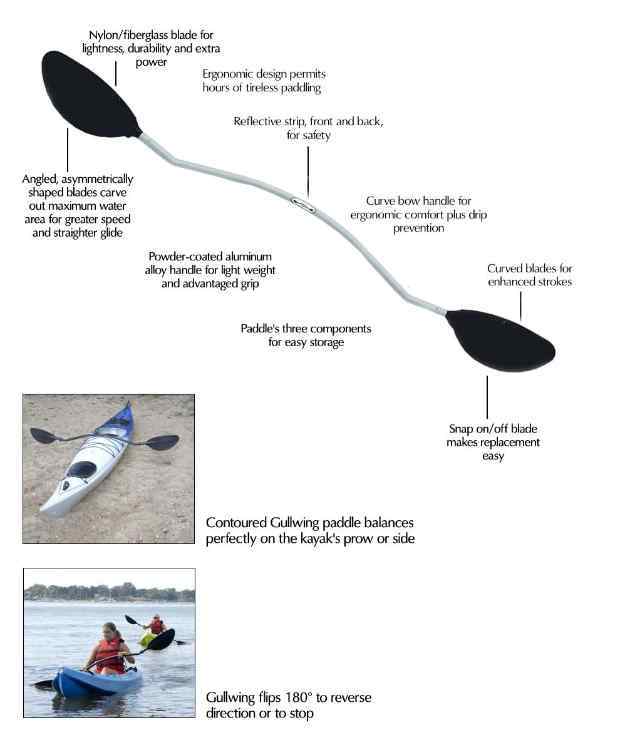
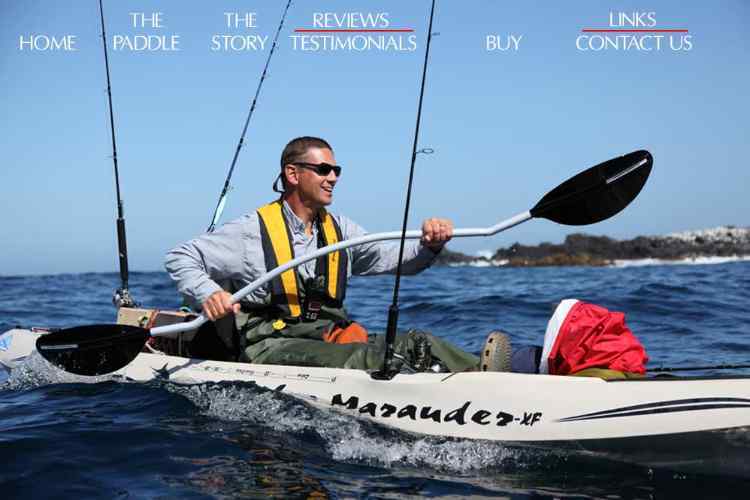
I've been using a Gullwing paddle for the past 10 years and absolutely love it. The ergonomic design minimizes shoulder stress and I really like that feature. I've been searching for a replacement with the same design but no joy. Gullwing has gone out of business and finding a used one is like trying to find hen's teeth. Some major paddle manufacturers have what they call a "bent shaft" which in reality appears to have been run over by a truck. Not even close to being the same. Does anyone know of a similar design? Gullwing Paddle-
-
Not necessarily. In extreme conditions, high temperatures and very high humidity won't allow for evaporation (which cools) and you end up being very wet & hot by not having an effective cooling mechanism. I vaguely remember seeing a show about a cave/cavern that was IIRC about 113° with 100% humidity and researchers had to limit their time in the cave to avoid being cooked. Actually one of them died by staying in the cave all night. I think the answer to that is it was the luck of the draw. You managed to pull the vulnerable to the sun card and your siblings got a pass on it. I thought I remember reading that the damaging effects of the sun are cumulative, but I haven't seen anything suggesting that in the current literature.
-
However...... (you knew this was coming.....) Cotton (untreated) has a surprisingly low UPF rating, somewhere between 5-7. Most synthetics (fishing shirts) tout a UPF rating of 50. It's synthetics for the win in this category. Here's some information (copy/pasted) that I found interesting..... "UPF stands for Ultraviolet Protection Factor. This means it blocks both UVA and UVB rays, whereas SPF or Sun Protection Factor only applies to UVB, which is responsible for most of the damage caused to our skin. SPF is a multiplier for how long you can be exposed to UVB rays before getting sunburned. So if you normally would get burned in 10 minutes, a sunscreen rated SPF 15 prolongs that time to 150 minutes. SPF ratings are measured using human subjects. UPF is a measurement that indicates how much of the sun's UV rays is absorbed by a fabric. This is verified using spectrophotometer equipment in a lab setting. If a fabric is rated UPF 15, it means it absorbs or blocks all but 1/15th of UV rays. If it is rated UPF 50, it absorbs or blocks all but 1/50th of UV rays. In simple percentages, UPF 15 protects your skin from about 93% of all UV rays. UPF 50 fabric protects you from 98% of all UV rays. The average white cotton t-shirt has a UPF rating around 5. A blue t-shirt has a UPF of 20 or higher. Denim blue jeans have a UPF rating of 1,700. Darker colors absorb more UV rays, shinier fabrics reflect more UV rays, and tighter weave fabrics block more UV rays. Loose weave cotton or linen clothing allows the most UV rays to pass through. Thicker and/or more reflective fabrics like wool, polyester, or denim allow the least UV rays to pass through. It is important to note that UV rays increase in intensity as you go up in altitude. For every 1,000 meters in increased elevation, UV levels increase by roughly 10%. The intensity of UVB rays in Vail, Colorado at 8,500 feet on a sunny day are 60% higher than at sea level in New York City, and equivalent to the intensity of UVB rays in Orlando, Florida, which is 775 miles closer to the equator. An individual that may develop a sunburn in 25 minutes in New York, would develop the same sun burn in only 14 minutes in Vail or Orlando, and thus individuals living at higher elevations are at a considerably higher risk for developing skin cancer. Skin cancer is by far the most common type of cancer in the US. 1 in 5 Americans will develop skin cancer during their lifetime. Men are 2 to 3 times more likely to develop skin cancer than women. While the risk of developing skin cancer is 20 times higher for fair skinned individuals, those with darker skin tones are much more likely to be diagnosed at a later stage, and subsequently have a much higher mortality rate. Skin cancer is most likely to occur on the nose, lips, face, ears, neck, hands, or forearms. Men are much more likely to have melanoma form on their backs than women. Women tend to form melanoma more often on their arms or legs."
-
I'd guess that in 100% humidity there is very little evaporative cooling and that the synthetics aren't as breathable as the natural fibers. In combination it gives cotton the win. Sound plausible?
-
After doing some quick searches, the general consensus is that cotton & linen are the "coolest" fabrics to wear in hot weather. They are breathable. However, if staying dry is a concern, the technical synthetic fabrics have the edge and will wick moisture away from the skin and dry faster. These fabrics are not as breathable as their cotton and linen counterparts. There are other issues with the synthetics, (odor & bacteria growth) and some of the higher end fabrics address them to some degree. Your mileage might vary.......
-
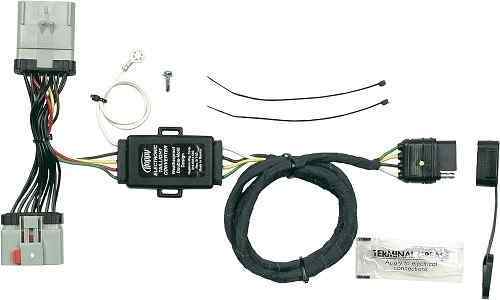
These plug in adapters are the more expensive option but they are the quickest to install. This one is made by Hopkins.
-
If you can find an adapter kit for your model van, that would be the easiest way to go as long as it doesn't go out the door. Get one that exits from the chassis and to be extra proactive, consider a sleeving (braided cover) to protect the wires if they don't already have it. Sleeving Some other items to consider: Use a self fusing silicone tape around the connectors to protect from the elements. Use a dielectric grease on all connections to further prevent corrosion.
-
I picked up 8 of them and really like them. Not quite the quality of the Edge series but much better than the older Stowaways. I also appreciate their price point relative to the Edge series.
-
To mitigate the heat I use an evaporative cooling towel on my neck, an EC cap, and EC wrist bands. Soak them in cold water and wring them out.Kuhl convertible pants, a fishing shirt, and a boonie complete the ensemble. It makes a huge difference.Here in rural upstate NY I wear them every day to do chores in the barn (feeding goats & goose). In cold weather while on the water I'll wear NSR's Boundry Boots (similar to Muck boots).Getting in or getting out of my yak has become less problematic and entertaining since I made a "stand assist" strap. It allows me to pull myself up to exit. Using one of the two trekking poles I carry onboard makes it even easier. Getting in, gravity is my "sit assist" only assisted with the trekking pole. Neither maneuver would be considered graceful or elegant, but they are effective and I do remain dry and vertical.I should have mentioned that to keep the straps in position, I used a small piece of 3/4 rubber hose sliced open and then used cable ties to secure it to the frame. When positioned correctly, They'll keep the straps from sliding down.Glad it worked out for you and that you're happy with the results. I went through a number of variations that I wasn't really happy with until I used the 3 bar slides. Now, life is good! Gotta love a clean install. The straps now look like they grew there!It's a time to refocus, recalibrate, and recharge. It's a time to commune with what is real and and step away from the artificial reality that is a construct of modern living. It's a time to honestly look within and review our actions and chart azimuth corrections. It's a time to listen to the wind.....



Important Information
We have placed cookies on your device to help make this website better. You can adjust your cookie settings, otherwise we'll assume you're okay to continue.