
bulldog1935
Super User
-
Joined
-
Last visited
Everything posted by bulldog1935
-
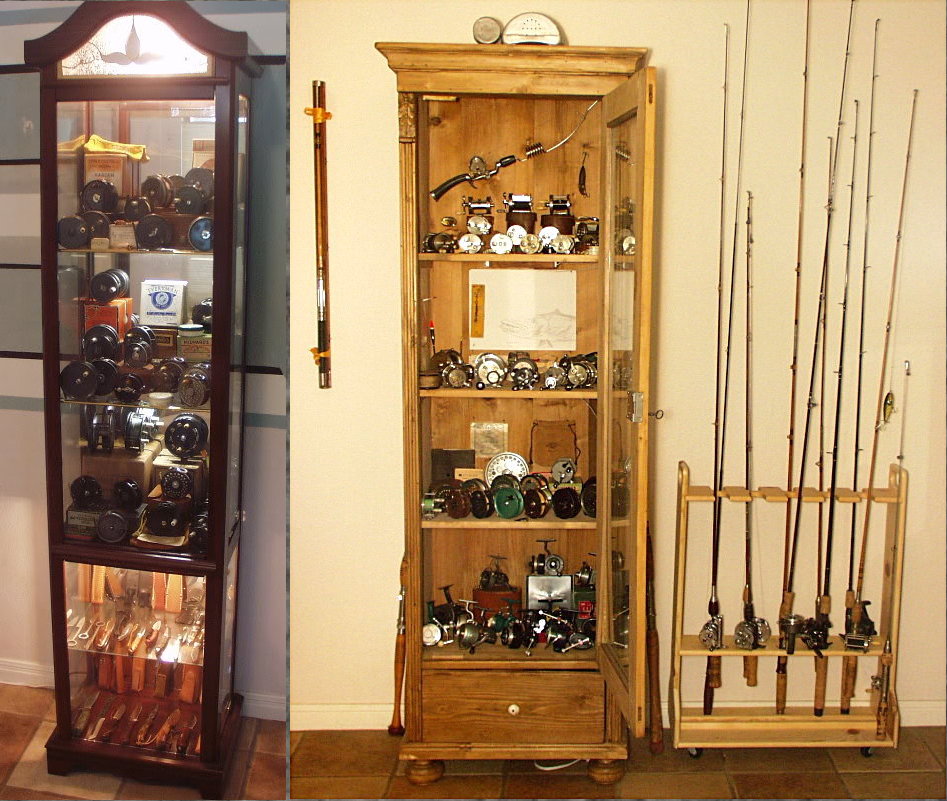
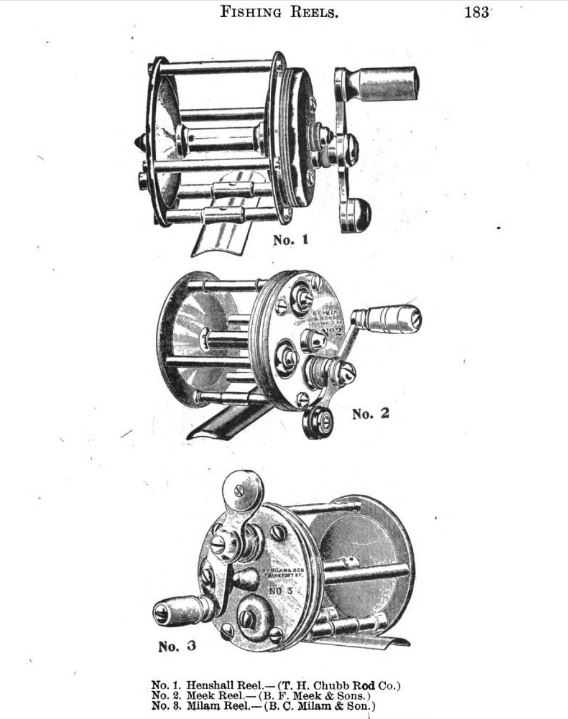
Hi friends, Been working on it for 20 years, and more has left it than you see here. That's the key, is buy well, sell well and be patient. Especially fly reels, I've had really nice ones I fished for 5 years or so, then sold them for up to twice what I paid. I can trace a new kayak purchase back to a $50 fly reel through several items bought, repaired, maybe fished, and sold. Of course you have to invest the time and make the contacts. Within organizations like NFLCC and ORCA, my collection is dinky - Ron Gast who I mentioned above, probably has the largest and certainly most valuable collection on the planet. I also mentioned Doc Henshall above - If you want to know about bass fishing after the Civil War, the fish, rods, reels, line, lures this is it - The Book of the Black Bass. BASS also reprinted this book, and easy to find on Abebooks for peanuts. On another forum, we had a discussion of "where dog walking" came from, and the term belongs to Paw Paw lure company, c. 1918. But even Doc Henshall references that dog-walking plugs, a technique he calls The Bob, originated in Florida 100 years before him - that puts it back in Revolution times.
-
Plat in Nagasaki is a great source for parts, great Japan braid, lures, rods, Yumeya and SLP upgrade parts. With the current postal crunch, since April they have only been shipping to US with DHL Express, which gets here in just a few days, so order enough stuff $20 shipping worthwhile.
-
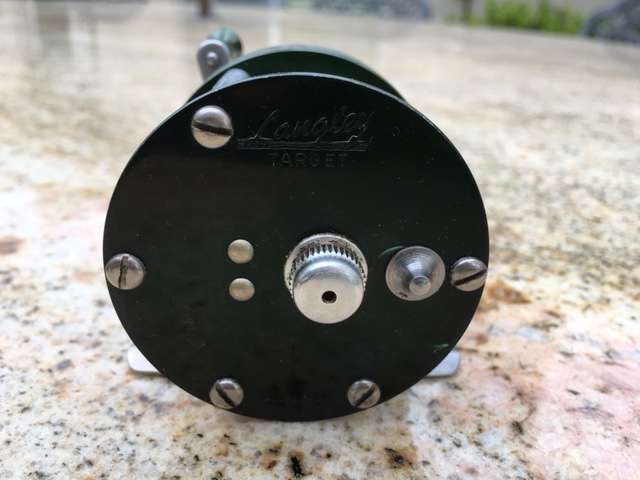
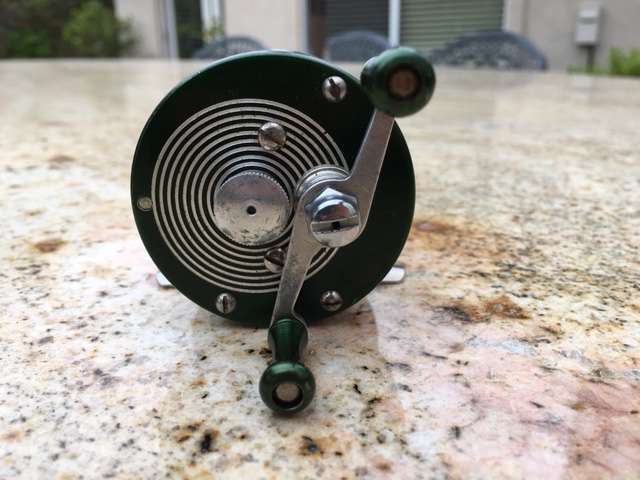
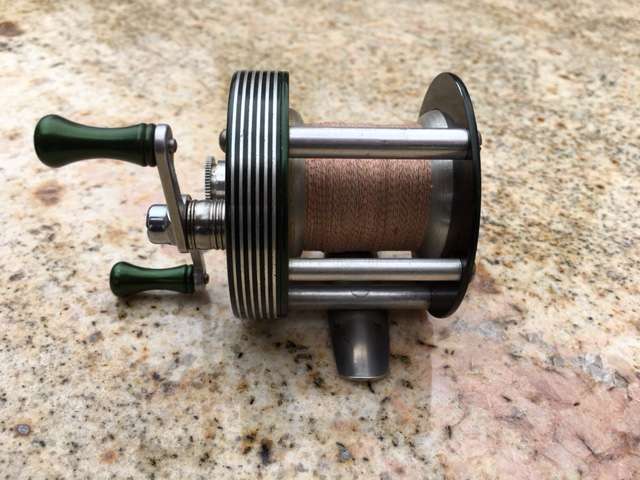
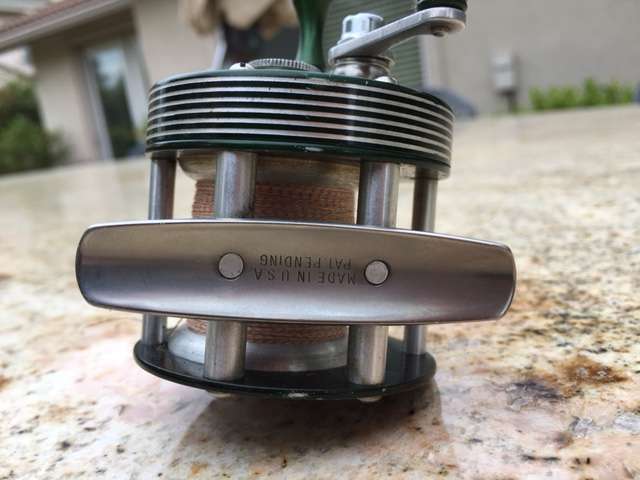
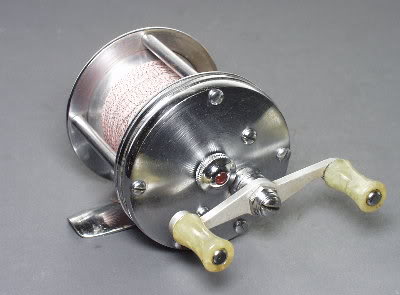
Tom and I swapped a few pm's over his Langleys - these all-aluminum reels have a huge fan club. And not just to put on a shelf - many people want these reels to fish on vintage cane and glass rods. With lightweight spools, large arbors and very low inertia, they also fit right in with the modern trend to "bait finesse" and light lures on casting reels. I asked him to post these - he said the photos were beyond his computer prowess and e-mailed them to me. Tom, if you don't mind, I'm posting your photos of your Langley 340 Target freespool... The freespool works with a simple swage on the handle that grabs the main gear. You pull out on the handle to freespool, and push back in to engage the retrieve. Below is a diminutive prewar Shakespeare 1740 Tournament freespool that works exactly the same way. It has alloy spool with balsa arbor. I have it loaded with 4-lb silk, and it fishes 1/8 oz really well. If any of you can contribute to this thread with photos, would love to see them.
-
the cart and the horse are both semantics. What we're improving is the result. You have a result, and a target you'd rather have for that result. The trick is knowing what to change to get there.
-
thank you, friend. There's a local auction house, Vogt. Gene is a boon-doggler, and travels the world to buy out estates. All the antique dealers in the state make his Tuesday night auctions. You're bidding wholesale, because those dealers you're bidding against all have to make a profit when they resell.
-
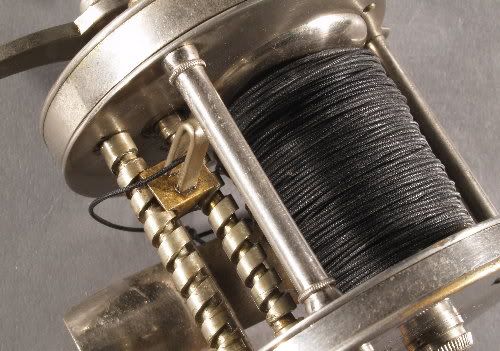
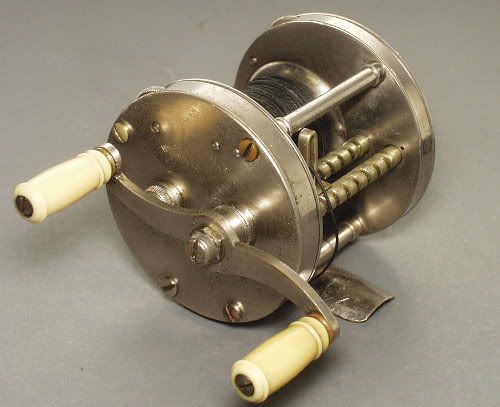
ok, before Marhoff, I have Shakespeare B, s/n 127, made in 1909. There's a sliding pin in the LW rider. It rides one way on one worm gear and a ramp at the end pushes it into the opposite track. It rides the other worm gear back the other way. If you want to see a fortune of amazing reels, and antique tackle, lures look up Ron Gast's website, luresnreels *. Pay close attention to the 19th century Milam and (JF and BF) Meek reels (these are 5-digit value). There were no hardware store screws. Each individual screw was single-turned on a lathe, and the screws and their slot positions are numbered to match each. Every now and then somebody finds a pre-Civil-War Milam in an old barn. Even in horribly corroded shape, they're worth almost 5 digits. There was a box for a pre-Civil-War plug - no plug, just the box - that sold in auction for $12,000.
-
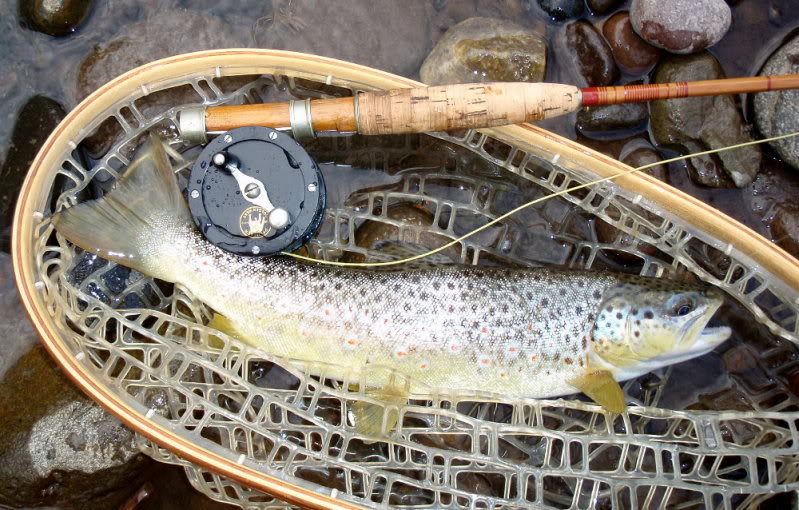
thanks friend. I'll show just this one because it has my Avatar on the reel. 1915 Leonard Fairy Catskill, 8' G-braid (modern 3-wt), and Pflueger Golden West with a Rio Chama brown. The reel came to me from Michael Sinclair, author of The Bamboo Rod Restoration Handbook, and the rod looked like toothpick stock in a leather box with other destroyed rods - Dennis Stone did a remarkable restoration job for me, and a chance to fish a legend. The problem collecting Winchester reels is the demand. I had a beauty with bone handle grasp, and it burned a hole in my pocket - yes, I sold it. I'll also avoid showing my '85 Low Wall .22 field artillery with Creedmore sights.
-
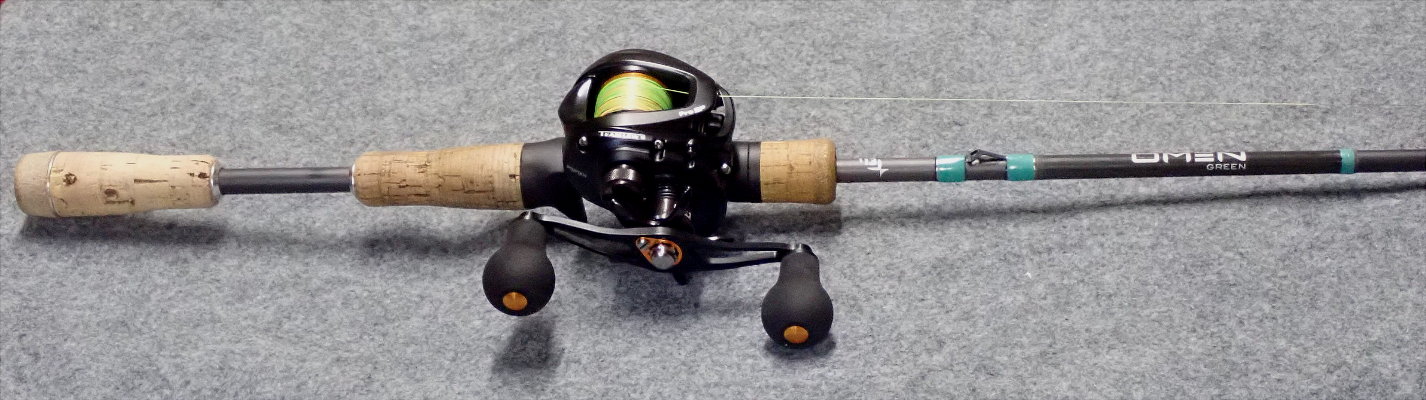
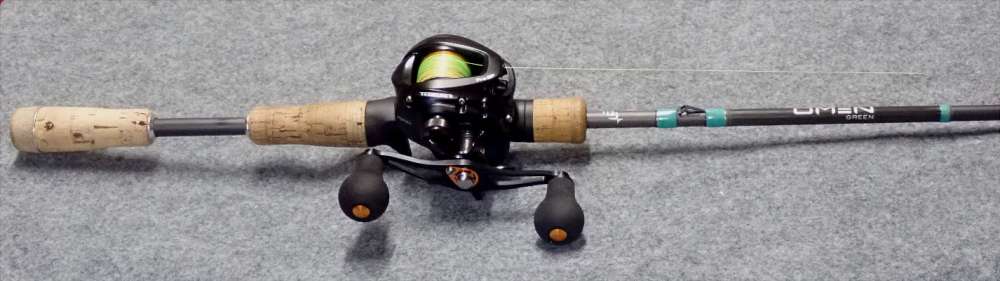
I can speak for a rod I just improved with a reel - 13Fishing Omen ML. For my 1/8 oz niche, swapped my Custom Inshore with 12-lb fluoro for a Team Pro SP (shallow spool) with the thinnest-possible 20-lb braid (0.17 mm - PE 1). The low spool inertia makes both the thin braid and light lure possible, and it casts 1/8 oz much farther than I'll ever need to fish, no backlash worries, so I can concentrate on thumb for modulating distance and target. I further improved the spool with Air BFS bearings, and it's wearing my favorite Avail handle.
-
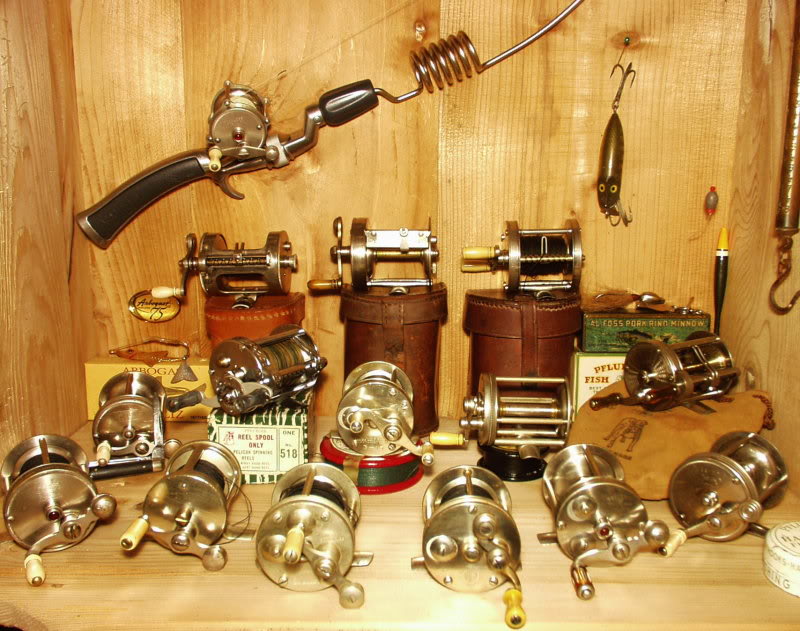
Yes, one thing I got into when I sold a valuable reel well was buying a custom knife, but I also have a small collection of finger-ring B&T beginning with Marble's. You are looking at a steel Stubcaster with a Pflueger-made 4Bros reel. The thing really works, especially with a slip bobber.
-
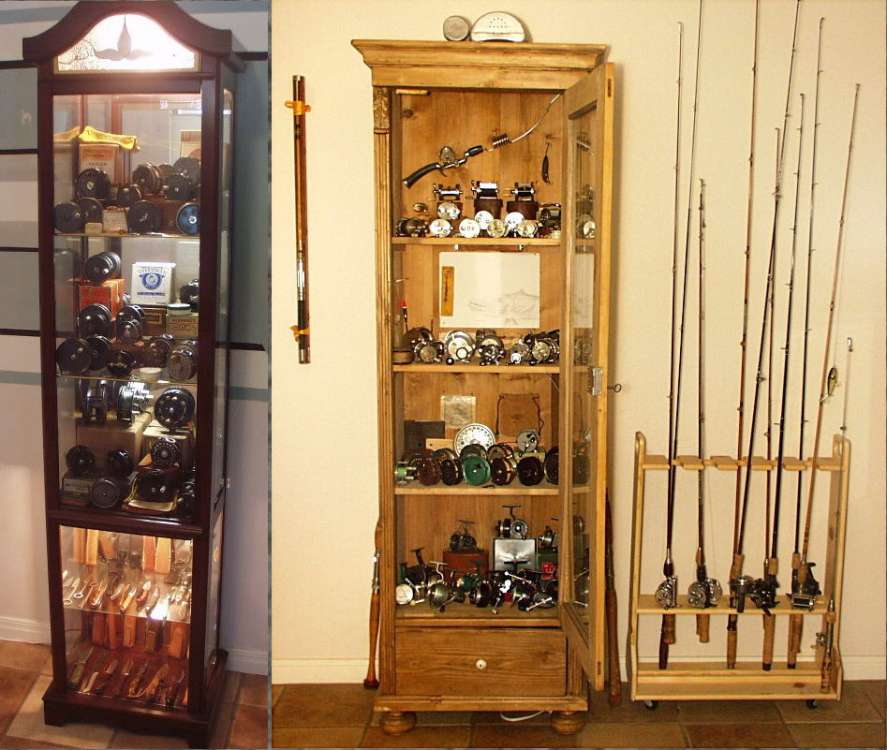
hi friend, no I have to try to focus a bit, because my real collection is between-the-wars fly reels and cane fly rods, and a couple back to 1915 (Leonard and Thomas). I'm a bit noted historian of the reels, speculating and repairing other people's has bought a lot of tackle for me (also firearms, kayaks, bicycle parts). Along the way you pick and choose what you really want to keep. I sold off a whole collection of half-bail spinning reels, and just kept a choice few. Except for the 4400SS and 4200SS I bought new, and fished through both of them, my Penns are green 716 and 712. Thanks for asking.
-
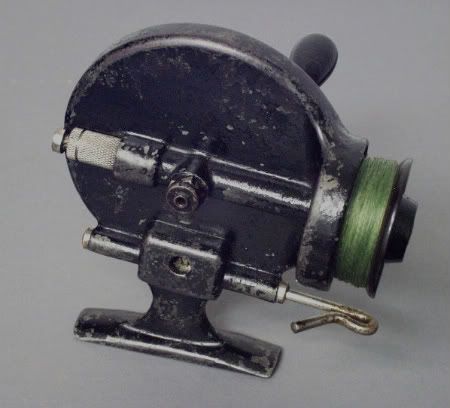
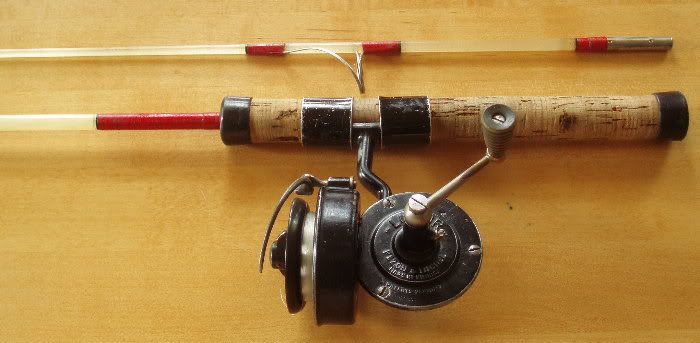
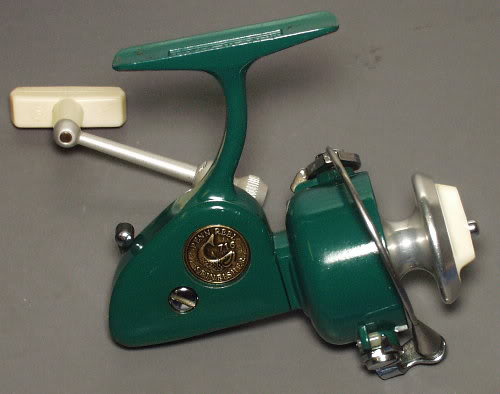
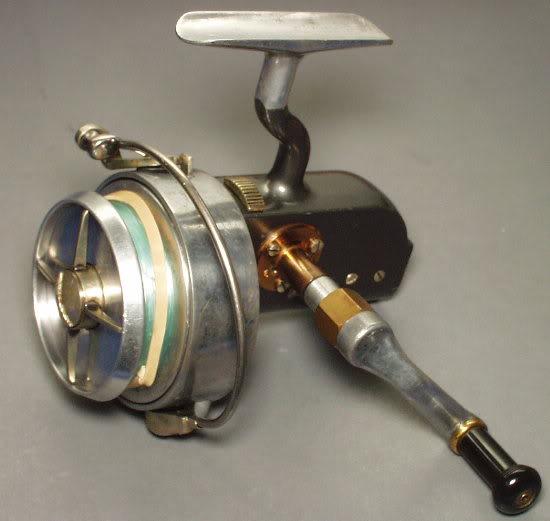
Might as well add a bit with spinning reels. The Brits of course call our baitcasters spinning reels, because the spool spins. What we call a spinning reel, they call a fixed-spool reel. Malloch's first patent for a fixed spool reel was from 1884, and by 1908, the Illingworth looked more like what we'd call a spinning reel, and left a lot to desire. Between the wars, spinning reels were largely clunky, the Helical which didn't interchange parts, and most prewar reels, are represented by Hardy's terrible bone thrown to the masses, the Hardex, 1937. The only cool thing about this reel is its embossed royal patent "by appointment to HRH the late King George V", since the year before Edward had abdicated and stuttering Berty took the throne - a political statement in a fishing reel. The Hardex introduction is all the more strange, since in 1932 Hardy's Altex patent gave us the space shuttle of fishing reels, still the smoothest reel I've ever fished up to the computer-balanced reels of the past decade. With wartime extension, their flip-bail patent lasted until 1954, though everyone including Mitchell and Shakespeare ignored the patent rights several years earlier. The strangest reel in this time period was the Allcocks Stanley, which spun the spool directly with eggbeater drive, and precessed the sheeps-crook line winder. This twisted the line, and sometime in a day of fishing, you'd have to let all the line out and flip the spool. Other than the incredible Altex, my choice for prewar smooth is the Luxor. My older daughter's go-to choice for creek fishing was this 1937 Luxor with 4' Airex solid glass rod. Luxor lasted into the 70s as the Crack, and many still like them for offshore. Mitchell came from the prewar Carpano & Pons (CAP), and this is the 4th model CAP, 1951, the half-bail that became the Mitchell 304. Since I'm here, the first skirted-spool spinning reel was the Spanish Sagarra, 1948, still made today and fished offshore in the Mediterranean. I'll add a note that in 1947, JW Young & Sons of Redditch produced the first worm-drive spinning reel, the Ambidex, also made until they closed shop in 2002. In the early 70s, high school, I fished through the gears in my Mitchell 300 over 4 years, catching fall Spanish macks from the jetties. Probably wouldn't have done that if I had instead chosen a new Penn Spinfisher.
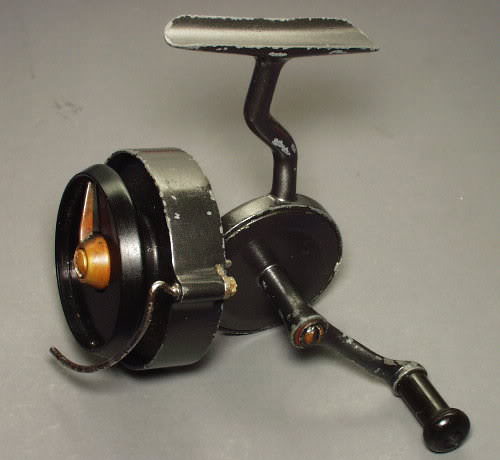
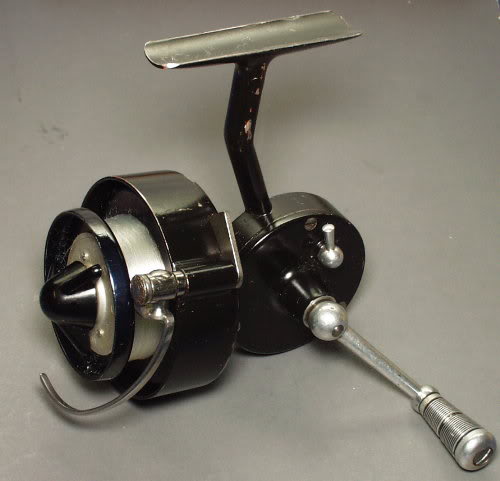
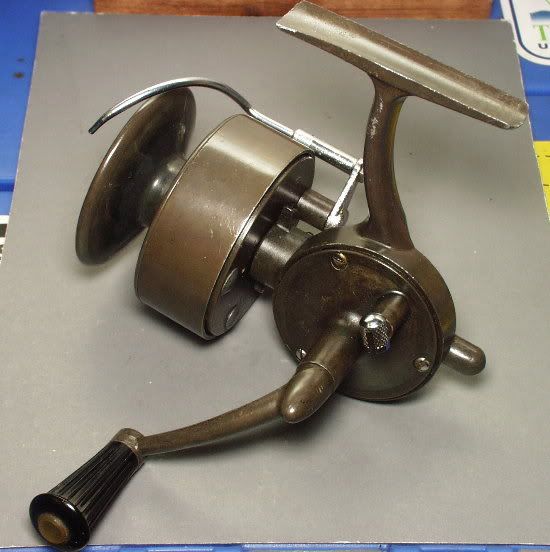
-
Stradic was my first experience with spinning reels w/o selective anti-reverse - I got used to them fast enough on baitcasters, especially not having to replace anti-reverse pawls every few years. If you need to feed line, it's easy-enough to halfway open the bail and if you're fishing braid, you should be manual bail, anyway. But to me, the advantage of IAR full-time anti-reverse is the simpler mechanism. It won't be too long, auto-bail-closure will disappear from all spinning reels, as well.
-
What should have shocked you is the size of the braid, 0.17 mm is 0.007 inch - according to Jun Sonada, it's the smallest line one should consider throwing on a baitcaster. The reason some consider it is because they want to throw 1/16th ounce on baitcaster. In my case, I have a 1/8-oz inshore niche I want to improve with a low-inertia spool and light braid. The 200 yards of 0.17 mm braid is very low mass (i.e., low inertia). With a normal deep spool, first, the spool is heavier, then you have to stack a mass of heavier line before you can finish with light braid. Instead of 200 yards, you may end up with 400 yards, but you will definitely end up with a heavy spool that will never cast light lures and probably shouldn't use light braid. Lew's has made us a near-perfect BFS reel here, and the main quality of the reel is the low inertia of the spool and its relative small capacity. A quality that improves the reel both for pitching/skipping, and throwing light lures on light braid. The quest for shallow spool baitcaster has sent much of the market to Shimano and Daiwa, as this thread demonstrates. I go back to BB-1N and Lew's clean sheet of paper that became the modern baitcaster, (ok, I go back farther to Abu and Daiwa Millionaire) - but to me, a baitcaster is Lew's. I apologize for not introducing myself better on the forum, but it's this page, especially reels, that interests me the most. Thanks for your patience with me.
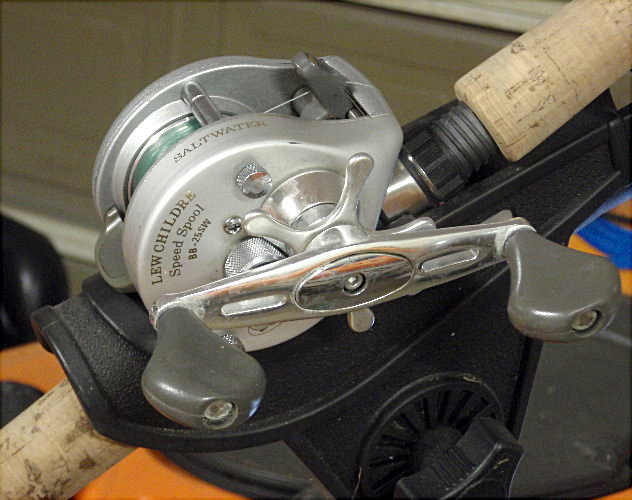
-
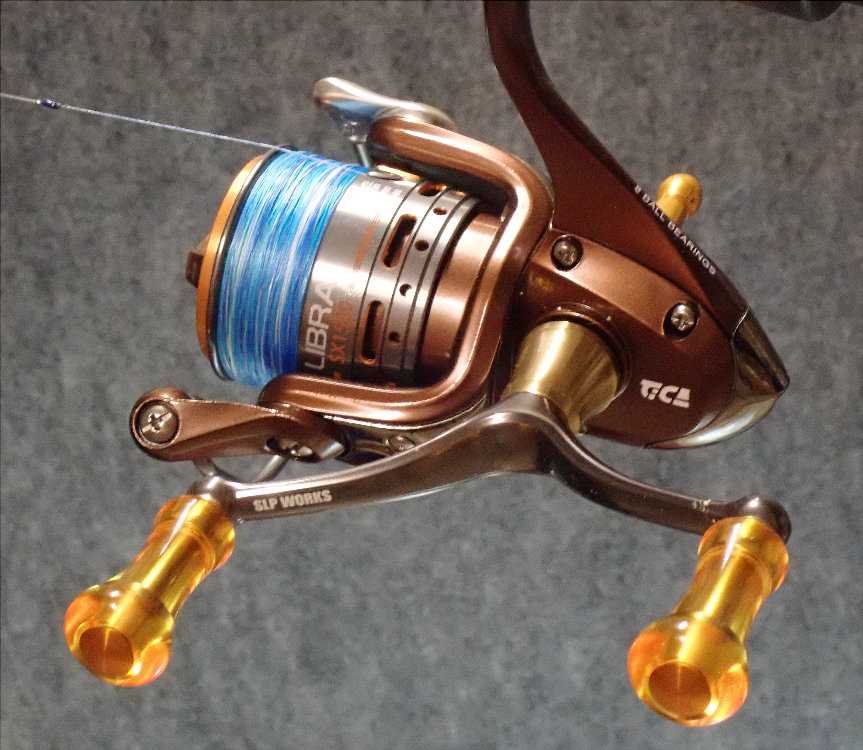
if you want a really good dinosaur with excellent locomotive drive, selective anti-reverse, same spool stroke and line management that compares to Stradic, I'm a big fan of $90 Tica Libra. They're heavy, doesn't matter in the small size, and built to last. Also keep in mind their 3000 is everybody else's 5000. Tica sells direct on Amazon, and TackleDirect also stocks them.
-
Hi friend. Until I discovered oil whirl in Meek and Talbot, I was afraid to cast them. Now I'm really confident fishing my Niangua. The Bluegrass 33 is plain fun to cast on the long Henshall rod. You feel the wobble in the Bluegrass spool and how it keeps the spool from taking off like the other NLW, Meek No. 3 or the Talbot. Both the Meek No. 3 and various Talbots were the tournament-casters reels of choice before ball-bearing Abu CT NLW, and some still use them today. I don't really have an example of a Summit or Marhoff with the nickel glued-in the spool flange, but it's been discussed before on ORCA. (the Old Reel Collectors Association forum) thanks for the question - hope my answer works for you. btw, if anybody wants to take up antique baitcasting, I strongly recommend the NLW reels of the 19-naughties and teens made by Shakespeare, Meek and Talbot, simply because of the cast distance advantage over all the Marhoff LW variants. The Shakespeare reels have really good bushings, and I have several friends across the country who have taken them up for their full-time bass fishing - of course on split-cane rods. And yes, these guys fly fish first and foremost. Again, you want a line winder to dry your braided line, and it also lets you restore a hand-level wind when you get your reel ready to go out again.
-
I paid $150/ for two '19 Stradics from Japan, and right now, that may be the only place you can find them.
-
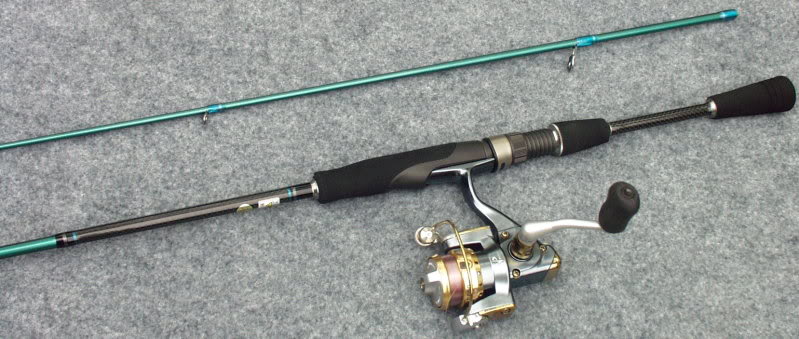
I'm going to go a different way with the dock fishing recommendation. While MH tackle has its place inshore, we catch 10-to-1 on long UL rods - Japanese rockfish rods, which are actually based on progressive fly rod tapers. It has a lot to do with the micro-sized bait attracted by dock lights at night. Raised my daughters with annual coast trips and catching nursery seatrout after dinner and before ice cream was a ritual with us. Live shrimp on a 4' leader and weightless cigar cork, which you can only throw on UL, would get us 40 nursery trout in an hour. A dozen years ago, discovered rockfish rods from Japan, would get our UL bait rig out twice as far and doubled our fish count. Also, sight-fishing canal lights, discovered I could land 22" and 23" specs on this tackle. Now with the girls grown, we make an annual Nov trip to far S. Texas just for the incredible nite-light dock fishing. The schoolies sweep through the lights at night to raid the tiny bait, and we each get our daily bag limit of 17"-22" specs. The schoolies, btw, are all males. We've refined our tackle to include longer Rockfish rods to 8+', good UL reels like Stradic, mix of live bait and small baitfish lures like 2" and 3" swim shad - 2" Wildeye shad and Tsunami SS3.

-
I'll throw in a vote for Stradic FL as the baseline workhorse reel, and also point out that Twin Power with metal rotor is the next step up. The latter is also bench-made in Japan, so parts are matched for even smoother function.
-
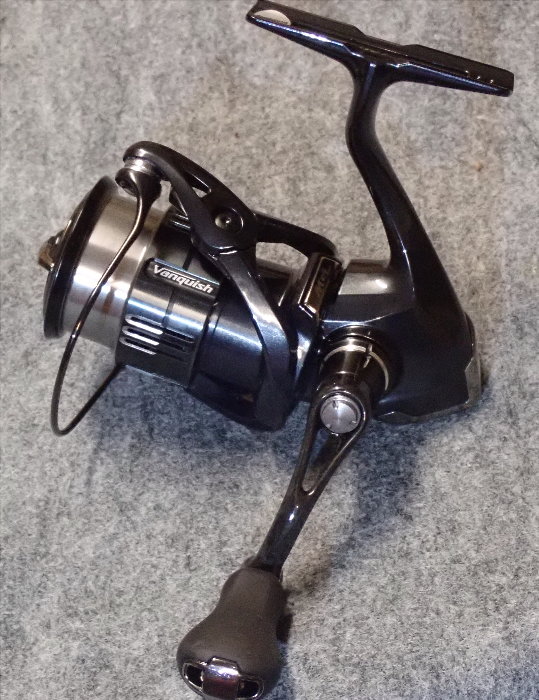
I could embarrass myself. I have two Stradic and one Vanquish in UL sizes, plus a Tica Libra - they're all pimped out with double or counter-balanced handles, which I've become really fond on spinning reels, especially when takes are subtle. One of those Stradic, (Japan market C2000SHG) equivalent to FL1000 (but cost $60 less from Japan) fits a mid spot for me inshore for matching winter glass minnows on UL Rockfish rod, and tussles with slot redfish. Three weeks ago throwing tandem rigs, it landed 4 seatrout doubles plus a redfish/ladyfish double - that workhorse thing. I have both 4000 and 5000 size for inshore and near-shore pelagic (mackerel) - the FL4000 has a counter-balanced handle and shallow braid spool. Since it doesn't come up often, here's the little Libra 1500 with Daiwa double handle. The Libra has spool stroke and line management arguably comparable to Shimano, but costs $90.
-
You might try shopping Japan online. Japantackle, Asian Portal, Plat. Fed-Ex and DHL delivery from Japan is quicker than USPS Priority Mail. I've bought 3 reels from Asian Portal, including Japan market models not imported to US (Vanquish and low-geared Stradic UL size) - their prices are really good if they have stock, and they ship free express.
-
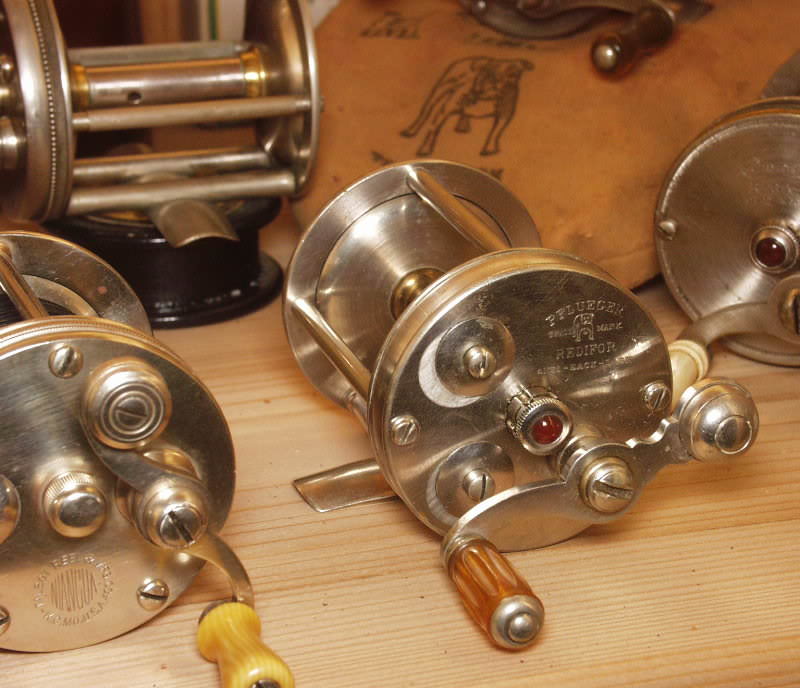
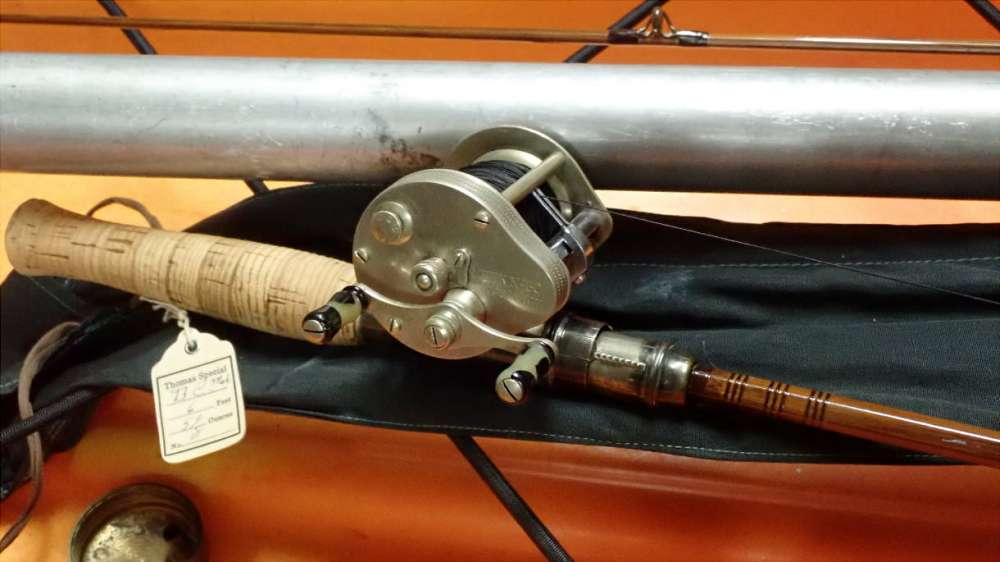
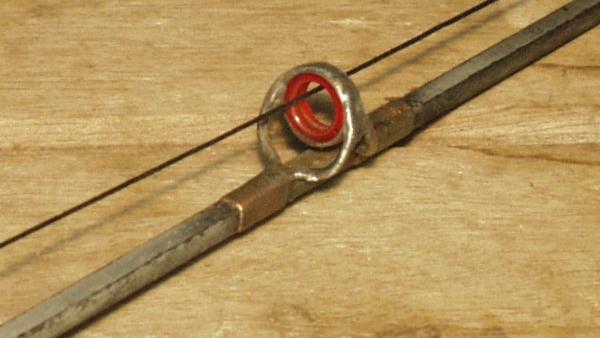
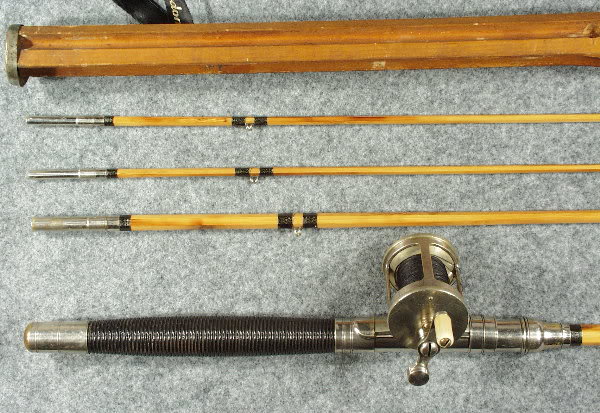
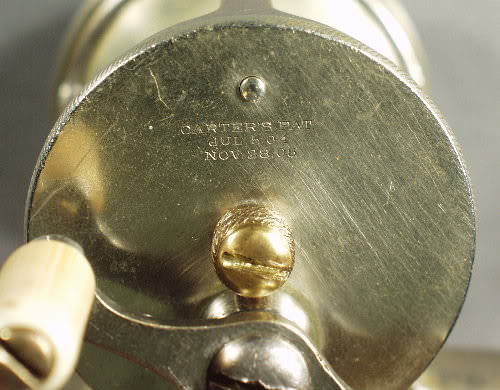
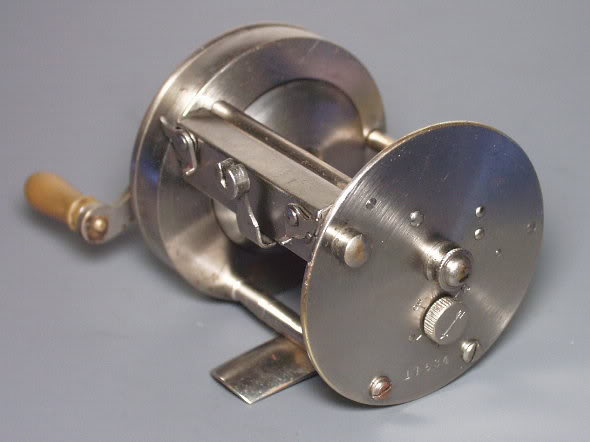
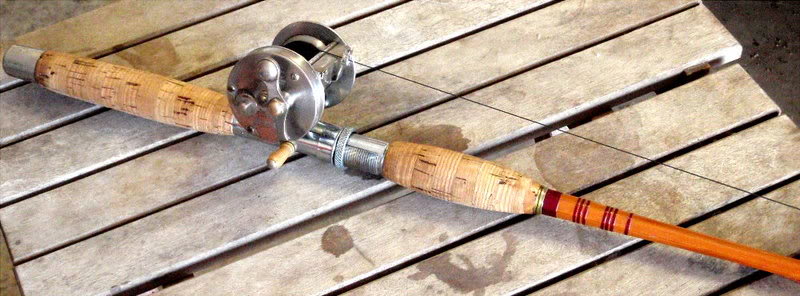
thanks guys - I'll add these. The first centrifugal brake patent was Redifor, 1915, which was immediately snapped up by Pflueger. It consisted of two teardrop-shaped pawls in the spool flange, which rubbed on the frame rim. Unfortunately, it worked too well, and cost cast distance. The best Marhoff copy I've ever cast, and the only one that will compete with NLW for distance is this Meek No. 30, made after 1928. Like all Meeks, it's not intended for grease, but to oil daily, and you can see an oil port for the main gear. The casting brake is a wool pad you dial into the spool flange. throwing in a third, a postwar 3rd model Pflueger Supreme (this is still a Marhoff copy). The square-section steel rod is American Fork & Hoe, later TrueTemper, and this combo fishes 3/8-oz really well.

-
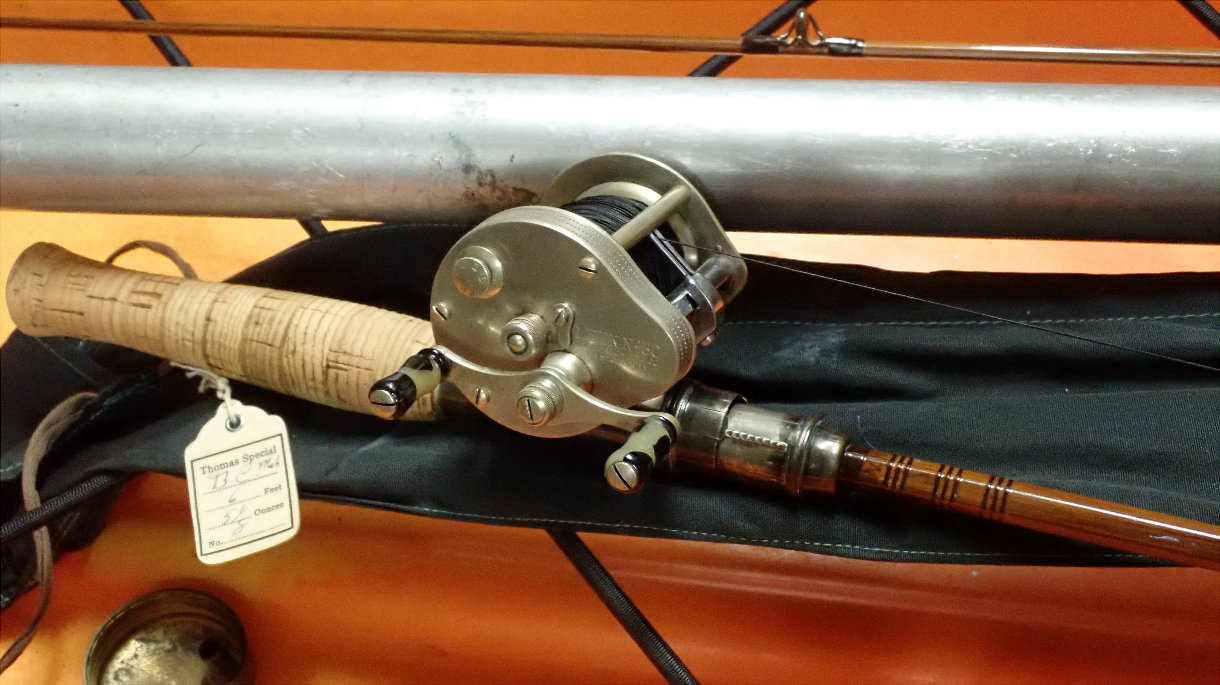
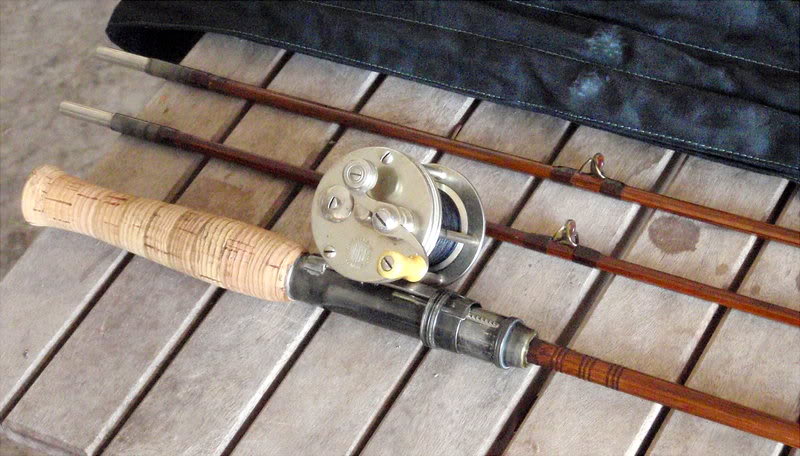
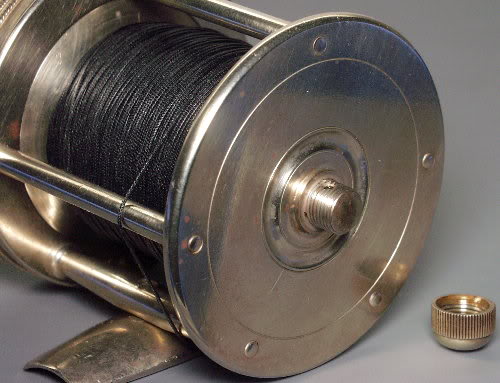
I mostly fish kayak inshore and fly rod in limestone creeks. For my little bit of reservoir bass fishing, I've been known to cast wooden plugs (and prefer buzz baits) on my 1914 Talbot Niangua NLW with marked 1914 FE Thomas bait rod and braided silk. What most people don't know about Meek and Talbot reels, the oil reservoirs on the end caps should be filled every day, because these reels used oil whirl for backlash control. In a cast, you can hear the oil whirl, and it works so hard, the oil evaporates. Even older, I've never fished, but it's a hoot to cast, 8'3" Chubb Henshall bass rod with Bluegrass 33 NLW. It will slow-lob 3/8 oz to 150' easy. Backlash control is imbalance wobble in the spool, and your grandfather may have glued a nickel inside his old Marhoff spool to get the same effect. Doc Henshall first published the formula for this rod in 1876. Marhoff's LW patent from 1908 forced everyone else to look into other LW mechanisms for the next 20 years. It wasn't until Ambassadeur that a really good free spool and centrifugal brake became the norm. Lew's (Shimano and Ryobi) and modern low profile baitcasters disengage the LW mechanim from the free spool. The strangest LW mechanism was Pflueger's 1918 Douglas patent, also free spool and anti-reverse. The flyer falls forward during cast, and is disengaged from the spool. On retrieve, the flyer pushes the line to either side, where the yokes pick up the line and drop it in the groove. The arrow knob is a a tiny spring wire on a cam for backlash control, and works pretty well. They discontinued the 1st model Supreme when they could copy Marhoff. But until Lew's, this strange reel would out-cast every other except NLW. antique braided silk lines, btw, will last indefinitely if you dry them on a line winder to prevent mildew
-
Vanford shines in and L and UL sizes. Stradic FL is the baseline workhorse reel if you need something bigger than 3000 size. Twin Power is worthwhile upgrade with metal rotor, but should be at almost twice the price.
-
btw, my family is from McNairy Co., and I spent my summers on my grandfather's farm. With a fly rod one day below Pickwick Dam, caught TN tarpon (skipjack herring) as fast I could land them. Sufix 832 is definitely choice for spinning tackle. Another really nice thin coated braid is Florida Fishing Products. I fish Sufix down to 6-lb on inshore UL, normally 15-lb inshore spinning, and even baitcasters with 20-lb 832. The new generation of Japanese braids are shocking. YGK Upgrade in 0.17-mm is 22-lb test.
-
you may be missing the point, the spool holds 35 yds of 65-lb braid, but I'm casting distance on light lures inshore, and using the thinnest braid that works with bait reels.