
Fishing_Rod
Members
-
Joined
-
Last visited
Everything posted by Fishing_Rod
-
Here in Arizona we are fortunate to catch bass all year long. Regional waters are stocked with trout during the cooler months. Sunfish and catfish still play too. Only seasonal adjustment is working things at a slower pace. More sitting still or dragging the baits a few inches at a time seems to work better when the water is cold. Cheers!
-
Happy New Year Mobasser, and all, A great question about the smoothness quality of a reel. I’ve been considering that recently too as I’m exploring a different brand of reel. I managed to find a number of these reels priced for clearance. I purchased one just to try and eventually purchased the remaining ones. I have to say in comparing the lot only two were consistently ‘smooth’ in operation. So taking a look at what I consider smooth. I prefer a reel that operates with minimal input effort, low drag. That is a friction factor. I also prefer when it is smooth in operation, doesn’t have detracting vibration along with the expected movement. It should operate at the same pace as my input so I should only feel a consistent amount of drag when I am cranking it consistently. I use lite weight equipment so any roughness is distracting as I’m counting on being able to detect slight changes attributed to interest by the fish. So a rough reel doesn’t make for a pleasant angling experience. The other aspect of describing smoothness is the drag. As I pull on the line exceeding the drag setting I’m looking for that consistency in feel and appearance as the reel slips. I can feel the how it pulls and I can watch the response at the tip of the rod to visually indicate transients in tension. Again a couple of ways of assessing smoothness. By the way the consideration of lubricants came into consideration when I was evaluating those new reels as perhaps the reason for the roughness. Now that I’ve had some time to use them they are getting better. They were never bad as in not acceptable, just not as good as I would like. So I’ll just keep using them to see if things continue to settle in. Be well, cheers!
-
Hi Mike L. and all, Yeah, interesting question on “Slack vs Tight line bites” posed to the forum. I use plastic baits often too. My fishing style typically uses four pound line with baits, 1/16 oz or less (many times weightless), worked low and slow. This pretty much makes it a minimum tension line angling technique, sort of slack. That small amount (or no weight) really doesn’t pin the bait at the distant end to create much tension at all. Most of the time unless I’m actively moving the bait there is only a bow in the line for me to work with. Bite detection is a challenge. Using lite line along with lite fishing rod helps with this, a bit. I have to focus on the line movement or the rod tip for that subtle feedback as many times when the fish take the bait there is only a gentle indication. When I do realize something needs to be done, my response is similar to that when fly fishing, just a measured rapid loading up and holding tension. Many have described that as what I understand to be a sweeping hook set. A couple of observations over time with experience to share. How you get the tension built up is personal preference, by quickly reeling or simply sweeping to bowing the rod. I find it doesn’t matter as the desired result is a smooth acceleration increasing and ‘holding’ reasonable tension from the point you respond till time you are ready to unhook. I have found this successful with my style of fishing using ten pound line or less. In the past when trying to shock load a hook set my results were not consistent or as successful. I admit there are those times where it is really gratifying to “rock the Casbah” hook set with an excited response. I realized I created a bounce response affiliated to an aggressive hook set. When I snapped at a hook set I didn’t always manage to keep the tension on as well as I would prefer. Then there is the overwhelming risk of easily over loading with that type rapid dramatic intense hook set. The smooth sweep allows me time to respond appropriately as I can feel if the fish is actively contributing to loading or simply passive throughout the process. I can provide a measured response by feeling and see my fishing rig load on my end. Fewer break offs and more success, how good is that, aye? Be well, cheers.
-
Good Day Jigfishn10, and all, Sharing a tip from salt water, and BFS anglers that also use the arbor knot (or other suitable knot) for attaching braid. Use multiple wraps about the arbor / spool before tying the jam type knot. The additional loops provide greater surface contact, additional friction, for holding line in place. I mention this as you originally posted the use of no backing line and this provides an alternative. Happy New Year! Cheers!
-
Good Day “zelmo” and all, Interesting question you posed. This one got me thinking. I am generally an ultra lite angler, two to six pound mono on spinning rigs, with occasional use of heavier rigs in eight to twelve pound mono in bait cast configurations. So with mono the smaller lines are more flexible which makes them easier to cast. The only advantage I experience with stiffer fishing lines (all types) is somewhat easier knot tying. Where managing (guiding) the tag end is a bit easier due to the resistance to flop about. When using supple line you have to have two points of line contact to guide it about. A pinch point as an anchor and another pinch point to lead the way. Less supple lines allow you to just manage things at the anchor point and kind of stab your way through fashioning the knot. As for lures, generally minimal influence from the line is preferred. The lure can do it’s thing either under tension or not. This can be achieved in several ways in addition to using supple line. Using a loop knot, or hard attachment (snap ring or swivel) are some options. My style of angling uses lighter lines bringing success along with risks. Gently working a swimming type bait close to you allows a comparison of the lure action based on your setup. There are differences with the different size lines when tied on directly. Thus with more rigid lines you may need that loop knot or other option to improve lure action. Totally fun when you capture attention, then reality really hits. Especially when it is a strong fish. You quickly realize the limited amount of influence based on your rig configuration. I’ve used small sized braid in the past and have some familiarity with it. Much more supple than mono. I do appreciate that supple quality. There are other qualities to braid that I don’t appreciate so much. Those numerous aspects compelled me to return to using smaller mono. Using supple lines provides me a simple elegant angling solution with a lot of advantages over the more rigid alternatives. I do appreciate the casting performance. Minimal effort while maximizing distance with accuracy. Using more supple lines I experience fewer wind knots or spool spill loops as the supple lines lay better, less springy. I hope sharing these observations helps you and others into a great New Year! Cheers!
-
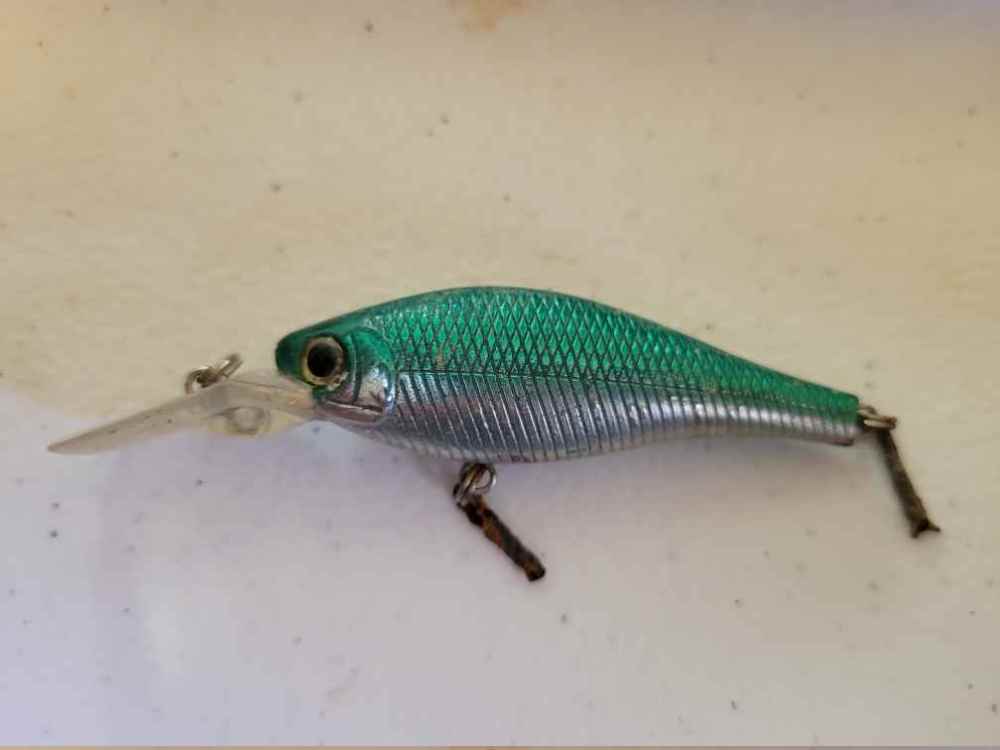
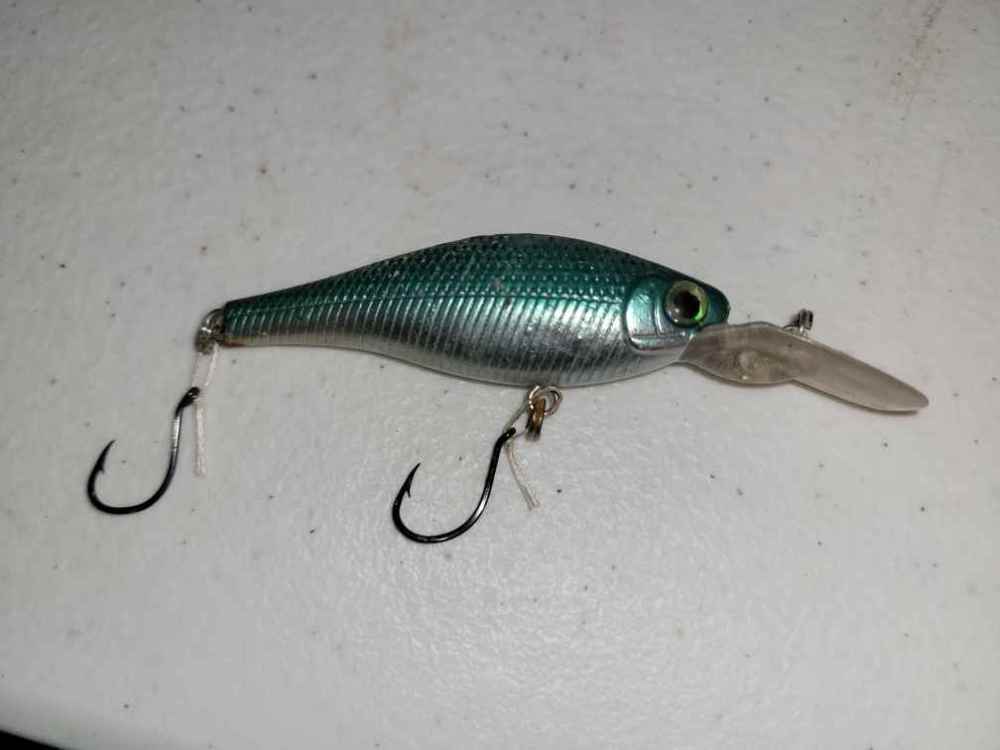
Good Day All, Here is a photo of salvaged lure I mentioned. You can see the hooks have corroded. Here it is with the octopus hooks attached via a segment of braid. I am looking forward to giving the old lure another opportunity to catch attention and maybe some fish too! Cheers!
-
Good Day All, I am just a recreational angler, so catching is more fun than casting. It is nice to get out and goof off as often as possible. I’m satisfied with anything on line and is willing to play. That being said, I’ve learned that being moderately slow works better for me. This applies to various baits / lures that I use. I just catch more that way. I should note that some of the largest fish I’ve caught have been when accidentally dead sticking. We’ve all had backlashes or casting knot events that required you to sort things out before retrieving. Only to find something was busy on the other end while you were distracted. Yeah, slower works. Besides it matches my casual recreational tempo. Cheers!
-
Good Day All, Yes, if the conditions are right, I will intentionally (that is my story and I’m sticking with it) hang a lure on overhanging grass, weed, small limb to suspend the lure either right above or at the water line. This has produced some awesome strikes. It is helpful to be patient as it may take some time to gather interest. When the water is clear you can see them gather around waiting for an ambitious one to have a go at it. Keep movement to a bare minimum to entice but not scare. Just remember to retie often as this technique abrades the line. What started out as just being a sour lemon event turned into a lemonade technique for catching fish! Cheers!
-
Yes, that was one of the videos I watched and found it helpful in compelling me to give it a try. It was great that I had the time, motivation, and supplies to try it out. Since I was only doing it on 1/8 oz or smaller baits I was using some old 8 or 10 pound braid. I may try that same braid on the recovered jerk bait using some single octopus style hooks ( size 6 center and rear). Similar to what I've seen used with BFS lures in the Japanese trout videos. It ought to be interesting if I get to try it out next week. Cheers!
-
Well Done! Looks great. Tie it on and let us know how you like it. Very much like what I typically use with ultra lite rigs. Cheers!
-
Good Day All, Hope you’re all able to enjoy family and friends during this Holiday Season. During my time away from professional responsibilities I’ve been able to explore a number of angling related topics with one on soft split rings to share. Here in Arizona we’ve had a mix of weather mostly great for getting out an taunting fish. Many of the lakes / ponds are stocked with trout during the cold months so my angling fun is expanded. I’m happy with simply catching fish primarily bass and sunfish but grateful for any fun on lite tackle. Recent events have restricted my time out on the water so I’ve changed focus to learning and testing out a few new knots. I generally use between two to six pound line. I’ve been looking for ease of tying, sufficient strength, and minimal waste. So in goofing off doing all this research and trying out the various knots using old residual stock of various fishing lines, I fell into the rabbit hole, distraction, of learning about soft split rings. I had remnant spools of ancient braid or braid I collected with intentions of reuse. Originally I used those remnants for fly tying or leader material. I figured it was more than I wanted to simply discard and it could be used otherwise. Reviewing a number of articles and videos on why use soft split rings, exchanging the connection between bait and hook with short segment of braid. This allows the hook to move with greater freedom independent of the lure body. The principle benefit is to minimize leverage or binding from the limited range of motion with a wire split ring. I wanted to see if it would improve hook up ratio where it would be harder the fish to throw the lure once connected. Using heavier fishing equipment it is possible to overwhelm a hooked fish by hauling it in aggressively to minimize thrashing and potential to throw the hook. There is only so much of that persuasion with lighter fishing rigs. So it was worth my attention to give it a try. I worked up several brands of small metal spoon type lures. I’ve used them successfully for bass, bluegills, and trout. I removed the split ring and replaced it with a segment of braid to re-connect the original treble hook. I did work some up some with single octopus hooks too. The result was a short pig tail segment of braid, roughly a 0.5 inch , 1 cm or less in length between hook and lure body. My initial findings were impressively encouraging. Using the newly configured metal spoon baits, I caught and released nine trout in a couple of hours of walking and casting at one of the regional parks. None of the trout threw the baits even with the aerial antics of jumping completely out of the water. All I did was simply keep reasonable tension with the ultra lite rig. All were nicely nose hooked in the tip of the upper lip. Sure fun to experience the smash and grab action on ultra lite rigs. I’m happy I took the time to investigate this new option. I hope to expand it to other larger hard baits, crank baits, and jerk baits when using these heavier rigs. It must be providence as while was taunting trout, I recovered a floating jerk bait body along the shoreline in some weeds. The hooks were corroded away, so it will be the next re-build effort. I found a variety of hemostats to be really helpful in fabricating these soft split ring segments. There are a number of on line videos out there. I watched a few and settled on one version that was more elegant, easier to tie, with minimal material. I did my best to keep the link no longer than a centimeter. Be well, cheers!
-
Happy Friday All, I keep them in the original packages and organize them within generic zip top freezer bags. Occasionally when in a hurry I simply drop them into the zip top freezer bag and have not had any issues. Same goes when using conventional zip top bags too, no issue with adverse reactions. Only time there was an issue was the time I had a lapse of judgement and put a piece of what I thought was a discarded Elaztec TRD into the bag with a real TRD sitting there. A week later I found the melted glob. See, no good deed goes un-punished. Just trying to do my part to keep things at the park tidy. Cheers!
-
Good Day All, I started with stainless curved jaw hemostats. Those worked really well for panfish and small jigs. Not so good for the larger heavy gauge hooks set in larger stronger fish jaws. Similar issues as previously pointed out the curved small jaws just didn't have sufficient clamping to lever out the heavier hooks. Straight jawed ones have slightly more grip. They are at the ready clamped out the exterior of my backpack. On heavier situations a pocket clip multi-tool is handy. One that can be manipulated with a single hand cause the other hand is holding the fish, right?