
Team9nine
Super User
-
Joined
-
Last visited
Everything posted by Team9nine
-
On natural lakes, outside of docks, especially this time of year, you’re either doing something in the weeds on the flats, or doing something on the edge of the deep weedline. The exception being cloudy/windy/rainy days when the shallow bite can really turn on. The alternative daytime shallow sunny option is the slop.
-
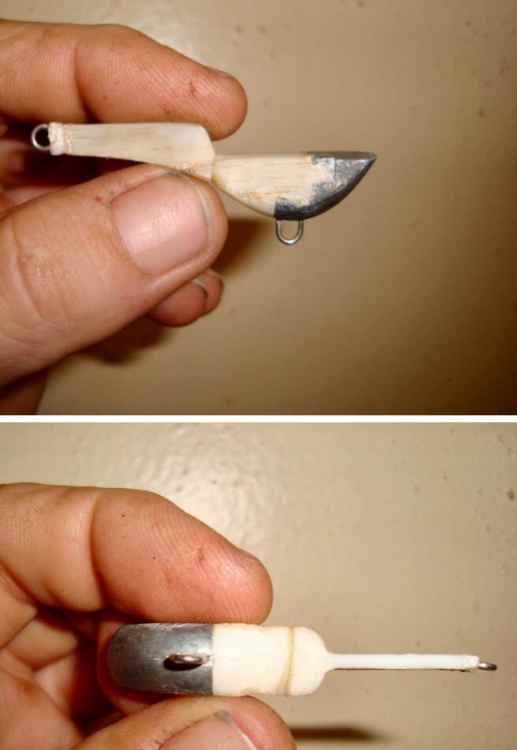
DT’s are interesting because they have a plastic base that is molded and epoxied to the balsa body above. The counterweight is actually shifted slightly forward between the hook hanger and the lip to make it sit nose-heavy down in the water to get that steep dive curve (pic from off Internet)
-
BX Brat is counter weighted to sit very low in the water, which would negate a lot of the balsa buoyancy factor I imagine. I could see how heavier hooks might just be enough to sink it. As such, I'm guessing it's not a real fast riser even with the stock hooks. Would be easy enough to test out. I've done it with a lot of my cranks just to see what it takes to make them neutrally buoyant. You'd be surprised at some of the differences even within a given line. For example, Bandit makes both fast risers and slow risers. I've marked my baits so I know which is which, and fish the slow risers more in cold water because I can fish them slower at a given depth, or even make them neutrally buoyant very easily, while using the fast risers more in the summer. Check out this piece on the BX Brat for more details. Pretty fascinating/impressive design on Rapala's part: BX Brat autopsy
-
Upsold - oversold, call it what you want. It's mostly marketing hype, IMO. The one time I tend to have fish pick it up off the bottom, probably because it's the only time of year I fish it slow enough for it to happen - lol - is winter...like "lake half-iced over" cold. I've had some really good days deadsticking in that cold of water through winter when nothing else will get bit. Most of the year though, it seems 'movement' is the trigger, and as @A-Jay mentioned, the "swim and glide" retrieve is number one for me over the course of an entire season.
-
Turns out this is a lot tougher question to answer than I thought it would be. In general, I would agree with Tom in that the lines are pretty much similar in strength (overall breaking and tensile) these days as they were back "in the day." They have undoubtedly changed formulations over the years, likely for the better, and there is some hint that lines now might be somewhat thinner than those same lines back in the 80s/90s, but if you look at the chart below taken from a 1980 advertisement, you'll see that overall breaking strength and PSI tensile ratings are very similar to what you find today (e.g., see 2019 Sport Fishing Mag line study tables for comparison). Nylons have historically ran in that 90k-125k tensile strength range, just as most still do today. Again, if anything, they've gotten slightly thinner and slightly less overall tensile strength (e.g., compare listed diameters below with current TW listings online). Mislabeling of lines is nothing new, and hasn't changed over the years, either. A Bassmaster report from Berkley's 1979 Sportfishing Workshop read as follows: "Even the stated breaking strength of the line, described on the spool, is often highly innacurate and something many companies misrepresent. There are two reasons why some companies do this: (1) In the case of those lines intentionally "underrated," the gimmick usually has to do with some advertising campaign in which their particular brand is being touted as the least visible 10-pound line on the market - of course it is, because it's really only seven or eight-pound test line! (2) With lines that have been greatly "overrated," the ploy generally involves something akin to a company's claim that their line is much stronger than any other 10-pound line on the market - of course it is stronger, because it's really 15 pound test!" It later goes on to say that they tested 12 different companies 10-pound test lines and determined their actual break strengths ranged from a low of seven pounds to a high of 15.5 pounds. That range is reflected with the limited lines shown in the advertising table below. Some things never seem to change
-
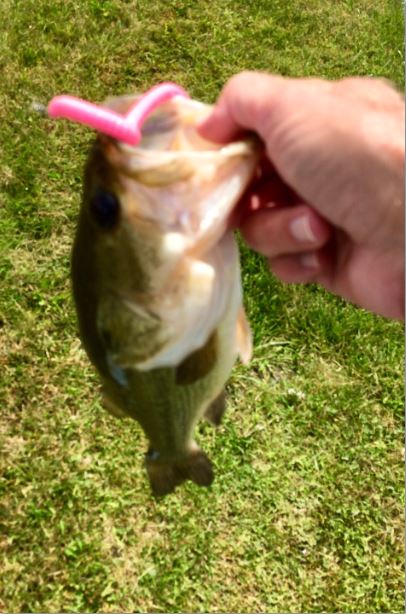
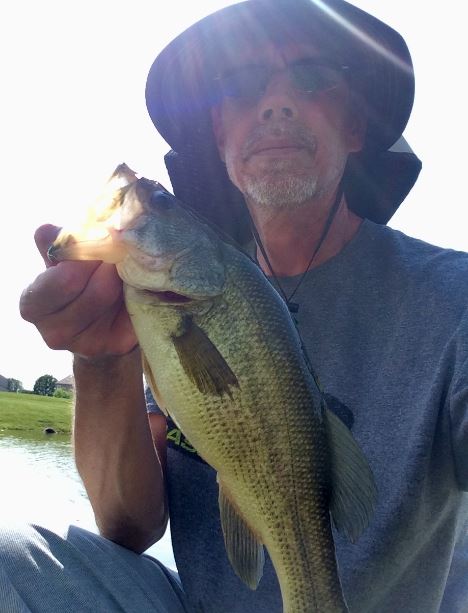
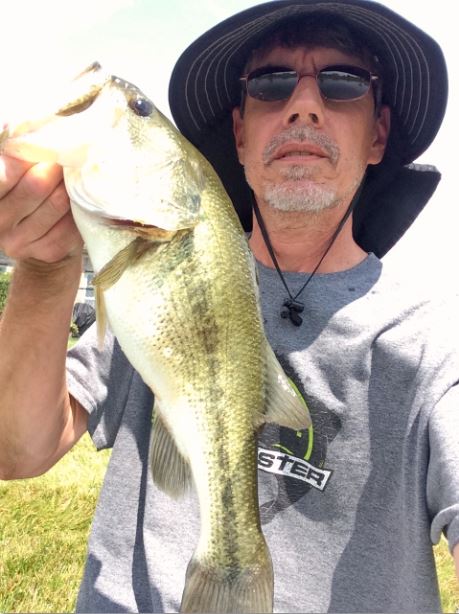
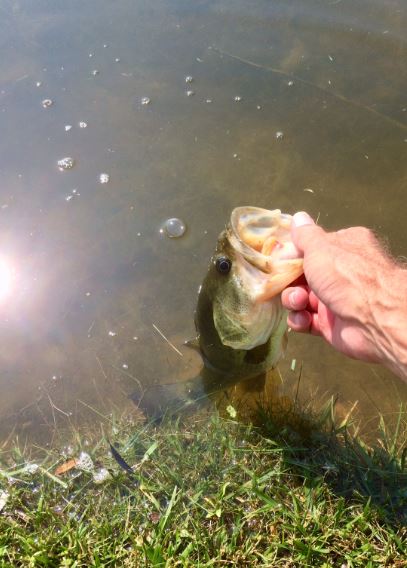
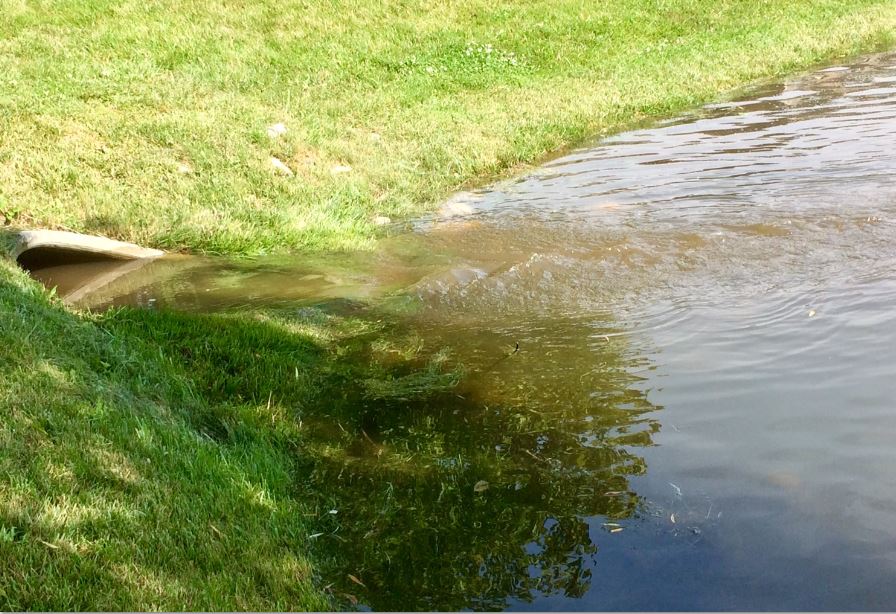
Not sure there is anything more "guaranteed" in bass fishing than a pond drain dumping fresh water immediately after a "frog-strangling" rain. Picked off a dozen from this pond, all "nose to the bank" in that fresh water, and all on a floating worm, so I got to see every bite
-
Both (skill, luck) are factors in all phases of fishing to varying degrees. FLW tour pro Eric Jackson wrote an article on this subject. These two lines sum it up well: “I now believe that the key to becoming the best fisherman on Tour is in part to have the best sense about what is in your control, and what isn’t... Learning what is luck and what is controllable during (practice) and tournament days may be the single most important lesson in professional fishing.”
-
I wanted to reply to the OP when he first posted, but I got tied up with some house projects and sidetracked...better late than never though ?
-
Agreed - I've read a lot about this subject on other forums and all the good arguments fall on the side of having to disqualify him, unfortunately. Wish we could go back to the days of the "two tour" pros myself.
-
If I had to choose to only use braid or flouro there is no way in hell I would choose braid. Fluoro is superior in so many ways that it highly counteracts it's negatives
-
This^^ Spot lock has taken the art of boat control out of the tournament picture these days (sadly, IMHO).
-
I would have just released the 1.1 lb fish and not brought it in. If you can’t win with 4 for 41, it just wasn’t meant to be ? The little guy adds nothing of value to that stringer. Is this the same lake Wheeler and Connell crushed a similar sized bag a few weeks back in a weeknight derby?
-
There were a few people leave the circuit, so they have been pulling in the top 4 anglers from each pro circuit event to fish the following BPT event. A chance to see some new faces, but they still have to qualify over an entire season of points to get pulled in permanently at the end of the year as I understand it.
-
Just spoke to Lonnie a couple months back for a good while. He had some interesting stories to share, like how they first built those colored brush guards on their jigs. He sent me a few signed Bass Pro cards. I was also fortunate to get to spend a day fishing with Mark sometime after he caught Ethel. We drew each other in a Top-150 down on Chickamauga. Really nice guy with some interesting stories, too.
-
-
-
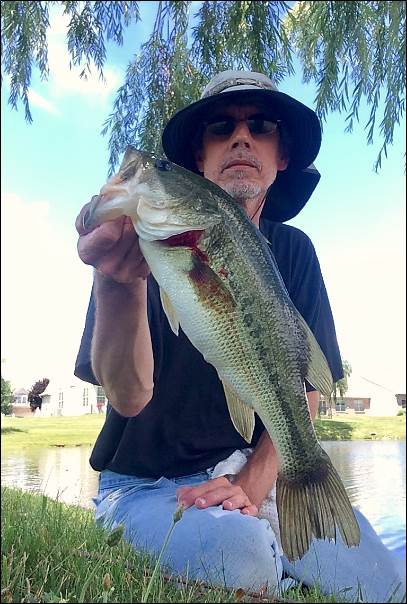
First trip out using the Zman TRD BugZ, and it turned out well. Only had an hour, but managed a bass on my first cast, as well as one decent fish topping the 20" mark (about 9 total). Calling it a success, and looking forward to playing with this little bait some more in the coming days. Forgot to add, used the same bait the entire trip for all the fish, and it's still in great shape.
-
According to Shin Fukae, one of the biggest differences between TR and the FR is that a TR will tend to pendulum a bit on the fall, where the FR will drop nearly straight vertical because the weight separates from the bait so quickly. When he needs to put a bait tight to the bases of dock posts or bridge columns, etc., is when he likes to use the FR, as well as when bed fishing. That greater/faster separation of bait and weight means you get the same separation and vertical fall with every single lift-drop of the combo, too. Here's another BR piece that touches on some of these points, but you need to see it underwater to perhaps get a greater sense of the differences. https://www.bassresource.com/fishing/free-rig-fishing.html
-
From the bank, one rod/one reel and whatever baits you can stuff in your pockets. That’s it. Learn to be adaptable and figure out how one style of bait can be presented so many different ways. If you guessed wrong on a particular lake/day, it’s no biggie. Bring something different the next trip. Ease of mobility is king from the bank. The more you know, the less you throw. Don’t be a tackle box digger.
-
Very common, regardless of lake size. Let’s not forget the Haynes-Lambert fiasco on 184 mile long Kentucky Lake a few years back. I’ve tourney fished on lakes as small as 300 acres, and known productive spots will get visited by most in an all day event. It can be mildly entertaining at times.
-
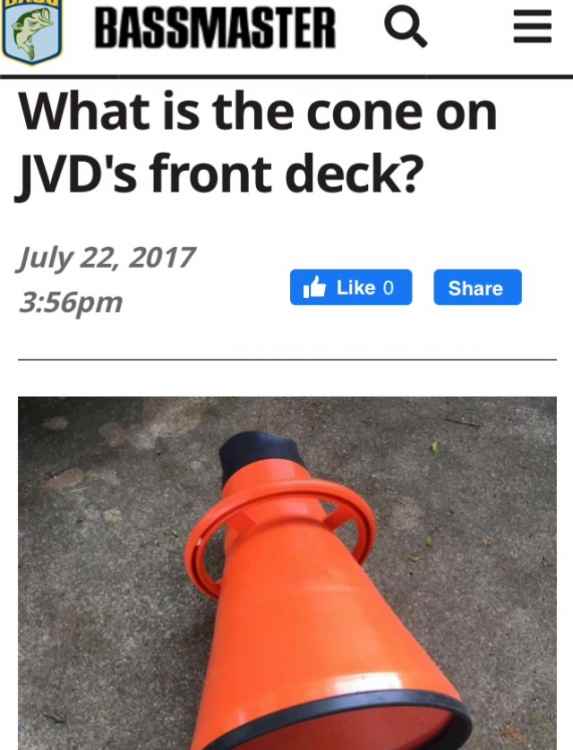
To be fair, its not just an MLF thing, as the Bassmaster guys used them also. It’s just a question of schedule timing as to whether you’ll see them in use or not. Very common across every circuit, big or small, that fishes northern lakes during the spawn. Not a fan of seeing them allowed on tour, but I don’t care for FFS being allowed either. If I had to pick between banning one or the other, I’d let the flogger in and disallow FFS in a heartbeat.
-
The thermocline is a band of water, not just one exact depth. In that 2nd DI pic, you are only in about 7 ft of water or less. The “fuzz” starts at 5 ft. Very possible any plankton, etc. would get suspended in a 2 ft band. What we would need to see is what that DI pic looks like when you move out over 10 or 15 ft to be in a better position to interpret. See if there is a bottom to that “fuzz” that might suggest a thermocline. Any chance it rained recently before that pic was taken (1-3 days before), or even crazy strong winds?
-
Agree to a large degree with Tennessee Boy. The units aren’t the problem in the big scheme of things; neither is the silt. In the first picture, it’s over-magnifying the image because of the small scale (0-6 ft). Everything will tend to look big and fuzzy, and usually the larger the screen, the worse the problem. Set the unit manually to 10 ft or greater to put things back into proper perspective. No issues with the second image either. 2d is nice and clean and reading well. Given your water temps, DI might be picking up a shallow thermocline, or possibly even a plankton migration. I’d consider taking the unit out of auto and manually adjust settings. Don’t run depth shallower than 10 ft scale, and turn power down a little until you find a good clean reading. Might also consider TB’s suggestion and turn off noise filters. On Humminbirds, you could also try running in Clear mode instead of Max mode.
-
You'll get a range of opinions, but I'm no longer a fan of adding extra/additional weight to get a rod to balance. The negatives just seem to outweigh the positives, to me. Much easier/better to just buy a better balanced rod right from the start, and not have to add anything. Live with what you have, or sell it and buy something else. That said, you could probably go light and just add a little bit of weight to the butt end without sacrificing too much; kind of a 'happy medium' if you will. What feels "balanced" and works will be different for most folks, so there probably isn't one 'right' answer - but 5 oz. to a 3.7 oz rod isn't the right answer, either
-
Good point. O2 meter won’t work everywhere, but it probably would a majority of the time as a defacto measurement. Similarly, pH meters like the one Bill Dance used to advertise could be used in that same capacity. The USACE sites are good for many of the major reservoirs. The district I’m in does a decent job of updating readings through the summer and fall. Best option is still a temp gauge, (I use a Clinefinder), though you will still run into odd situations where a depthfinder or oxygen meter are needed to verify what is going on.