


Fishing Rhino
Super User
-
Joined
-
Last visited
Everything posted by Fishing Rhino
-
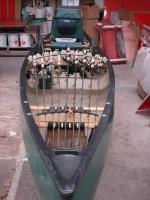
I've only heard of them recently. I must admit, from what I've read, I'm impressed. I ordered three to see what all the fuss is about, and they will be here today. They get to swim tomorrow. Here's where they will get their baptism. http://i135.photobucket.com/albums/q155/HomarusAmericanus/DSC00047-1.jpg http://i135.photobucket.com/albums/q155/HomarusAmericanus/DSC00055.jpg http://i135.photobucket.com/albums/q155/HomarusAmericanus/DSC00048-1.jpg http://i135.photobucket.com/albums/q155/HomarusAmericanus/DSC00054.jpg
-
I'm semi-retired, so 5 - 7 days is about right for me. Five good ponds, small enough to fish in a canoe within 20 minutes, three of them no more than 10. I have one hard and fast rule. I only fish on days ending in "Y".
-
Try the standard computer remedy for most of those type of problems. Disconnect the power source for a minute or so. Then reconnect it. Hopefully that will take care of it.
-
The vibration and jarring cause small particles of the plate material to fall from the plate. They accumulate in the space at the bottom of the cell. Once they reach the cell, they short that cell out. It may start as a trickle, and drain that cell over a few days. Most of us have had a battery that will restart a car a short time after you turn it off. Leave it overnight and it won't crank the car. That is because the cell loses its charge the same as if you had a small light draining its power. When I was a kid, there were several auto shops in the area that used to reclaim old batteries by rebuilding them. They cut the top open, remove the packages of plates, flush all the lead sediment from the bottom of the battery, then put 'em back together, sealing them with a tar like substance. The batteries were good for a few more months. They would never be like original because the plates had lost some of their lead. It was a thriving business back in the 40s and 50s. Those were the days when you kept patching things up to get more life out of them. My mother used to darn our socks. When a sock had a hole, she'd take something like fine yarn and fill in the gap. Folks saved jelly jars, baby food jars, etc. They had to be good for something. My dad never threw a nail, screw, nut or bolt away. He'd toss 'em in a can, and when he had time, he'd sort 'em out. He'd spend two hours looking for a nut that he could have purchased at the hardware store a half mile for home for a few cents. Those were different times.
-
Marine batteries are more resistant to damage from bouncing, vibration and jarring, but they are not impervious to it. It wouldn't manifest itself by sudden battery failure. It shortens the life of the battery. It is something that happens gradually over time. If cushioning extends the life of the battery and protects it from the shock of bouncing and jarring, why not do it?
-
A quick story about lead pouring, and a cautionary note. Be extremely cautious when melting lead plumbing. When I lobstered, we would pour lead once a year, while making "high flyers". We used 1 1/4 inch aluminum tubing for the poles. An inflatable buoy, designed to slide over a pole was clamped to the pole about a third of the way from the bottom end. A flag and radar reflector were attached to the other end. A variety of methods are used to add weight to the bottom end of the pole to keep them upright. Some lash sash weights to the pole, others set the pole in a piece of 4" pvc pipe and fill it with concreted. I liked neither, since they could hang on the rail of the boat when pulling them in, or setting them back over the side. I drilled a 1/4" hole below the buoy so the pole could not fill with rainwater or when it was laid over in rough weather. It also eliminated any air bouyancy below the waterline. I opted for driving a wood plug about 30 inches into the pole, then filled that end with lead. When the lead hardened, we'd crimp the end to lock the lead in place. I have a plumbers pot and ladle for melting and pouring. Someone gave us a bunch of lead piping they had pulled from a house being renovated. We melted it. The problem was, that some of the pipes contained droplets of water. When placed in the pot, the lead melted away with that drop of water beneath the surface of the lead. The water instantly turned to steam, throwing molten lead everywhere, like a volcano erupting. I have several small scars on the backs of both hands where the flying lead landed. Fortunately the lead was like fine strings, not blobs. Other than the small scars, it produced no significant damage. I was extremely lucky. After that, we cut the pipe into small pieces and allowed it to dry. The pipe had been folded when I got it which prevented any moisture content from drying.
-
The small pond that I fish most has, in addition to great bass fishing, other notable things which contribute greatly to the experience. There is a pair of nesting Ospreys. While the Westport River, East and West Branches. have many pair, and I've spent much time on the river, I've never paid attention to the communications between them. In fact I could not have told you what they sound like. But in a canoe, or any other boat for that matter, it's a great experience to watch them soar ever higher, calling to each other with a high pitched tweee, tweee. A couple of weeks ago, I cast a green senko around a bend into a cove from under some trees. An Osprey came swooping down at it. Then it looked over directly at me, apparently startled to see me there, and soared away. Gotta be something 'bout those Senkos. There is also, what I assume are two pair of Great Blue Herons. Most of the time, they are standing in the shallows or perched on one of the rocks along the shore. Occasionally they will perch high in some of the large cedar trees along the shore. When they light in one, the branch supporting them will sag several inches, over a foot in some cases. When forced from one of their haunts by an approaching boat, they let their displeasure be known with a cry that can best be described as the sound of a badly rusted gate pivoting on its rusty hinges. There are also several Kingfishers that get their sustenance from the pond, and I have seen them "fighting" over invisible territorial lines, screeching at each other. On calm mornings, when the mist is rising from the water on a cool day, it is possible to track snapping turtles from their bubbles rising to the surface. I've seen bubble trails that have to be over thirty feet long. The pond has many large snappers. It is common to see them anywhere in the pond with their nose, part of their head and back above the waterline. Sun turtles, box turtles, sometimes several on a rock abound in and around the pond. I've never seen sun turtles as large anywhere else. I'm sure they exist, but I've never seen them. Some are the size of small snapping turtles, being more than twice as large as the commonly seen variety. I'm talking maybe 18 inches or more from the tip of their extended head to the back of their shell. This past year, I've seen another first, for me. Common terns working schools of baitfish like they do in the ocean. Not a lot, but about a dozen. Casting beneath them produced nothing for me. Never got a mosquito bite all year. Hundreds, maybe thousands of insect eating birds swarming the pond every day, from skimming the water to swooping fifty feet or more overhead kept any potential insect problem under control. Never saw a fly until I put some slimy fish attractant on my bait. I can however inform you that the iridescent blue dragon flies love certain types of plastic baits. I had one worm rigged, dangling from the spinning rod while fishing with the baitcaster. It didn't take long before the worm was covered with several pair of the dragon flies that were coupled up in what I assumed was the mating act. The colorful show of nature at sunrises and sunsets are something I never tire of seeing. While not as dramatic as some I've seen on the ocean, they are marvelous in their own right. It's not just about the fishing. It's also about everything else that brings peace and joy to the soul.
-
If I were you, I'd opt for sealing the area where the tank is, to isolate it from the rest of the area below the deck. I googled "marine battery trays" and this is one of the places that came up. I cannot believe battery boxes are so cheap. It's not worth your time and effort to build them. Depending on size, the box and the tie down strap will cost from 18 - 22 bucks each. http://www.jamestowndistributors.com/userportal/show_product.do?pid=674&familyName=Attwood+-+Marine+Battery+Boxes Google what I did, and you'll find many more responses. You might find a better deal, or product that you prefer. I've done business with Jamestown Distributors. They have a good reputation and their prices are generally quite competitive. They handle a wide variety of marine products. They are also very knowlegable when it comes to boating. They do business with many if not all of the marinas and boatyards in this area. That's considerable since it includes Newport, RI to Cape Cod and beyond. I'm sure they do business with establishments in Connecticut, Long Island, and into New Hampshire and Maine. They have six pages on their site with ventilation hardware. Scope it out. http://www.jamestowndistributors.com/userportal/search_subCategory.do?categoryName=Ventilation&categoryId=674&page=GRID&position=1&refine=1
-
http://www.streetrodstuff.com/Articles/Engine/Detonation/
-
Going to Temple the week of Thanksgiving to visit our younger daughter. About 40 miles west of Atlanta. We take exit 24 off I-20 Hope to get in some fishing. Any suggestions would be greatly appreciated. Don't know if I'll take my canoe, so places with boat rentals would be in order. Our daughter trains hunting dogs and operates a Kennel. I've got her doing some homework for me as well. A couple of her clients do some competitive fishing.
-
I'm not familiar with some of the other products mentioned for sealing leaks. I am familiar with this. It has been around for decades and works really well. The others may be as good or better. In any case, it's another option for you to consider. I think the current price is about 85 per gallon, but don't hold me to it. http://www.jamestowndistributors.com/userportal/show_product.do?pid=2091&engine=adwords!6456&keyword=gluvit This is the website of the company that makes it. http://www.marinetex.com/
-
Here's something from Cabela's. Probably cheaper than the silicone mat I suggested, and more in line with your tennis ball idea. Of course, you could always take your tennis ball halves and fill them with silicone. It would be better than the mat since it allows for better battery cooling. http://www.cabelas.com/link-12/product/0031072017559a.shtml
-
I'm not so sure about that. I'd like to see a source for that info. The following is what I have believed to be the case for some time. Independent industry studies prove that the most common cause for battery failure is vibration and mechanical shock. Each year millions of dollars are needlessly spent on replacement batteries because consumers unwittingly mount their batteries on hard surfaces that do not absorb the jarring effects of daily use, often leading to sudden and premature failure of the battery. Vibration causes active plate material to loosen and fall to the bottom of the battery case and can break inter-cell welds and grids. Loss of material decreases the life of the battery and could also cause shorts. Simply put, battery life is cut far short simply by vibration and mechanical shock. Durability: Some battery designs are simply more durable than others are. They are more forgiving in abusive conditions, i.e.; they are less susceptible to vibration and shock damage Gel Batteries A gel battery (also known as a "gel cell") is a sealed, valve regulated lead-acid battery and has a gel electrolyte. Unlike flooded lead-acid (wet cell) batteries, these batteries do not need to be kept upright. Gel cells virtually eliminate evaporation of the electrolyte, spillage (and subsequent corrosion issues) common to the flooded lead acid battery, and boast greater resistance to extreme temperatures, shock, and vibration. As a result, they are often used in automobiles, boats, aircraft, and other motorized vehicles. I came up with these on a quick internet search. It seems some may be more durable than others and may be "LESS SUSCEPTIBLE" to vibration and shock damage. It occurs to me that anything that can be done to reduce the pounding from a boat driving through rough water is advisable and desirable.
-
Right after they are hooked, largemouths put up a good fight. I believe the difference is the largemouth gives up, or tires, much quicker. My favorite pond that once held only smallmouth of the bass species now has only largemouth. Apparently someone introduced them into the pond during my forty year hiatus from freshwater fishing. In the spring, when they were on the beds, we'd catch smallmouth up to five pounds. One Saturday in May, we caught four or five of them. We were "sportsmen" back then using four pound test line. It would take nearly thirty minutes to bring a five pound smallie to boat.
-
I have a BPS Extreme combo and a Nitro combo (apparently discontinued). I was satisfied with the Extreme but wanted something with more snot so I picked up the Nitro. If the Qualifier is anything like the Nitro, go for it. I can "heave" the Nitro with everything I've got and not get a backlash, without thumbing the spool. The difference is dramatic. I use 20 pound braid on the Extreme, and 30 pound on the Nitro.
-
I did the gallon size freezer zip lock bag, and put a mix of plastic into it. The finesse worms "melted" or disintegrated and some of the different colors bled into each other. The chartreuse worms absorbed some of the pumpkin color from those in contact. I should have tried the worms with the color blends. They may have been the next "best thing".
-
Great job!!!!!!!!!!!!!!!!!!!!!!!!
-
While venting won't hurt, I'm not sure it's necessary for your application. Power bilge vents are a necessity for inboard motors for several reasons. Fuel does evaporate from carburetors. Hardly used anymore. All the wiring for the engine is in the same compartment as any gasoline fumes that may have accumulated, so if any thing sparks when cranking an engine, boom. Ditto for battery fumes. I'm assuming your six gallon tank is the one that came with the motor. That means you must have a hatch to access it. All you need do is open that hatch for a minute or so to allow the fumes, if any, to dissipate. If the tank is a built in, use a piece of copper or plastic tubing to vent the tank. The vent can be inside the boat or outside with a through hull fitting. Three things. You'll need a cover over the vent to inhibit water from entering the vent. You also should put a loop in the vent tube. It will trap any water that might get past the cover. The tube should also slope down to the vent, which allows any water that might splash up into the vent to drain out rather than down toward the tank. Keep in mind, battery fumes are also explosive. The cautionary statement that comes with batteries tell you to keep open flames away from batteries. Sparks as well. When jumping a battery you should always make the ground connection last, away from the battery. This tells me that battery connections, once secured, do not spark. Generally, a bilge has two vents facing in opposite directions which allows for air circulation. Depending on the wind or movement of the boat, one will be intake and the other exhaust. It provides circulation whenever air is passing around them. A marine supply house or boat dealer should be able to supply the appropriate parts.
-
I don't know where the batteries are, but the best place is at the stern. It "bounces" less than the bow, which rises and falls more than any other part of the boat. The further back in a boat, the less shock from slamming the waves. If you've ridden near the bow and the stern in rough water, you know there is a considerable difference. If they make gel cell batteries for your application, consider them. They are generally more expensive, but in most applications they are superior to the standard batteries. For cushioning, I suggest you look into industrial floor mats used to cushion concrete floors. You need something that will stand up to the acidic fumes discharged from battery vents. You could also consider using silicone under the battery. Get some tubes of silicone from a hardware store or builders supply store. Take a couple of pieces of plywood larger than the pad you need. Put a piece of wax paper on one and spread the silicone (thicker than you need) on the wax paper. Put a spacer the thickness you need at each corner of the plywood. Place another sheet of wax paper on the silicone, then the second piece of plywood, then put a weight on the plywood to press the silicone to the thickness you need. You could probably press it down and leave it at that. In its gel state it won't spring back. Allow it to sit for a couple of days or more to set up. Using a metal straight edge (a builders' square is ideal), trim the pad to size with a sharp utility knife. The thicker the pad, the longer it will take to cure. I've used this technique to make a silicone gasket between my truck cap and pickup body. Works better than any of the foam or rubber tapes that are used by the places that sell and install truck caps. After several years, the silicone remained in place. The tape gasket always works out after a few years, or less. It will separate easily, though some of the wax paper might end up on the silicone. Unless I'm mistaken, cured silicone is about impervious to anything. Be sure to use a plywood of sufficient thickness that will not distort when you place the weight on it. Silicone withstands abusive environments including heat very well. It is used to provide a seal on many parts of racing engines, withstanding serious heat and vibrations while maintaing a working seal between engine parts. Been awhile, over ten years ago, since I bought batteries for my lobsterboat. But, I used sealed, gel cell batteries. They had no vents. Those batteries are monsters. It takes two men to handle one safely. I believe the size was 8D. A twelve volt battery weighed in at nearly 200 pounds. My boat took three of them, two for cranking the big diesel and another to power the electronics and lighting.
-
Spinnerbait. Very versatile, nearly weedless, can work it over rocky bottom, through lily pads. Works in the shallows or deeper water. The best for me are the Strike King spinnerbaits. Three types seem to be equal. The first is a "bleeding bait" that I believe you can only get at WalMart. I've seen bleeding bait Strike Kings elsewhere but the one's at WalMart have a red wire. It's supposedly a special. Don't remember the fisherman, but he's wearing a WalMart fishing shirt. The next is the Red Eye Special with a small Colorado Blade (Silver) and a small willow leaf with a holographic image of an eye and scales. I use the all green willow leaf version, but also have a half green, half white willow leaf version. The third has a medium size silver Colorado spinner and a copper colored Colorado spinner. All are green/chartreuse with some white and red in some of the skirts. The bleeding bait is on a baitcaster. The other two lighter spinnerbaits are used on a spinning rod with 20lb braid with 20lb flourocarbon leader. I've got some Terminator spinnerbaits, but they haven't produced like the Strike Kings.
-
Here's another option. Rolls very easily, and folds up for storage. http://www.llbean.com/webapp/wcs/stores/servlet/CategoryDisplay?page=heavy-duty-boat-cart&categoryId=34179&storeId=1&catalogId=1&langId=-1&parentCategory=8331&cat4=5490&shop_method=pp&feat=8331-tn&np=Y You need to consider the type of ground. This would not work well in soft sand or mud. I've rolled it through the woods, over lumpy, bumpy, and semi-soft mossy ground without a hitch. This rig includes an attached pump, just in case. Not bad for $99.00 plus any applicable tax and shipping. I like the wider stance. It's very stable and has never exhibited any tendency to tip its load to the side.
-
Leaking like a sieve? Is it leaking because it has been worn away in places, or because of electrolysis or galvanic action which have eroded the metal. If it's either of the last two, Bass Tracker might be right. The hull would be structurally compromised, and leaking would be the least of the problems. Aluminum can become porous from electrolysis and/or galvanic action. While some products may stop the leaking, they will not restore its structural integrity.There are two types of fiberglass resin, polyester and vinylester. Do not use polyester resin as paint. Contrary to popular belief it is not waterproof. It can and will absorb water. In a relatively short time, checks and cracks will develop as the plywood shrinks and swells. Epoxy is a much better choice. It is waterproof and more durable than polyester resin. I make fiberglass race car bodies and body panels. I use polyester because it is the cheapest, and perfectly suitable for something that does not have a long life expectancy. If it rains on a panel, or water gets on the side without a gel coat, it will turn a milky white. Will water leak through the panel? No, but bear in mind the panels vary in thickness from 1/16th to 1/8th" thick. Rolled, brushed or sprayed, you'll have nowhere near that thickness, and water will penetrate to the wood, destroying the bond. Below is an excerpt from an article about the advatages of epoxy over polyester and vinylester resins. What contributes to this better value..? Epoxy resins have performance advantages over polyester and vinyl esters in five major areas: n Better adhesive properties (the ability to bond to the reinforcement or core) n Superior mechanical properties (particularly strength and stiffness) n Improved resistance to fatigue and micro cracking n Reduced degradation from water ingress (diminution of properties due to water penetration) n Increased resistance to osmosis (surface degradation due to water permeability)Here's what I'm experiencing in southeastern MA. I'm catching smaller bass along the withering emergent vegetation. All summer you could hear the smaller bass feeding back in the hyacinth. They were feeding on insects attracted to the blooms which are now gone. They were also likely feeding on small fish who were in there feeding on insects and seeking shelter. It seems to me that the small bass have abandoned their former haunt because the insect hatches and those that were attracted to the blooms are gone. I hooked up my fish finder and found the larger fish to be in the five foot depth range where the bank begins to level out. As the surface water cools, bass seek warmer water in the deeper areas. I doubt at 64 degrees they are feeling any discomfort. If the pads you fish are in the shallows 2 - 3 feet, try a spinnerbait, casting out from the pads, or in slightly deeper water parallel to the beds of lily pads. You can cover more area with a spinner bait. If you find them at that depth, switch back. They may prefer the Senko. Then again, sometimes they "go off their feed" for a few days, or at least so it seems.
Important Information
We have placed cookies on your device to help make this website better. You can adjust your cookie settings, otherwise we'll assume you're okay to continue.