


fissure_man
Members
-
Joined
-
Last visited
Everything posted by fissure_man
-
-
The scolding comes from @Catt , in my experience. I looked up ultraviolet sensitivity, and learned why some people get sunburnt easier than others lol. Also lots of research on birds, fish, and spiders with UV-sensitive eyes. Nothing about why a scientist would need to know anything about bass biology, eyes, or brains, in order to measure light underwater. UV vision for bass might be plausible, I’m not trying to disprove it. Like you said – there doesn’t appear to be much research for LMB. But there is evidence that bass can see portions of the same visible spectrum that we can, so observing how those wavelengths are transmitted/absorbed isn't irrelevant. Perhaps they can see UV as well. If bass are sensing UV light with their eyes, then ‘color’ from a bass perspective becomes pretty abstract to the human mind. (I think this is what all the fuss is about ) It’s abstract, but it can still be studied without breaking any 'rules' of science. If bass can see UV, it would raise some interesting questions/thoughts: Should we put any stock in the UV-reflective lures and lure coatings that are available? The claims made by those companies are backed by ‘research’ that seems very tough to find, and some of the promotional material is nonsense. But as a concept it makes sense to me. A UV-reflective surface would stand out to UV-sensitive eyes, for the same reason that a red-painted surface would stand out to red-sensitive eyes (as long as there’s UV [or red] light around to be reflected). You could also take the other approach to maximize visibility, by choosing something that does not reflect UV light at all, to create a strong silhouette against a backdrop of 'bright' UV illumination. This is the same effect that makes solid black lures stand out in most any water condition, at least to human eyes. Maybe this is what all our regular lures do all the time (how UV-reflective is a normal soft plastic or hardbait)? Of course, maximising visibility is not necessarily a good thing – but you could flip these approaches to minimize visibility, or anywhere in between. “Matching the hatch” becomes more abstract as well. Instead of visually (read: “humanly”) matching the look of the prey you’re imitating, why not match the reflectivity of all light wavelengths? What does a craw 'look' like underwater, to a critter whose vision is fully or partially based in UV? UV comes from the sun, and at night the predominant light source is reflected light from the moon. How reflective is the moon when it comes to UV light vs. other wavelengths? IE: is UV proportionally less present at night (or the opposite, maybe)? And lastly, as an extension of Scaleface's chart, how is light (of all wavelengths) transmitted and absorbed through water of varying clarity, turbity, etc? In what scenarios is underwater lighting dominated by blues, reds, UV, etc?
-
That may be true, who knows? Be careful, making claims about bass color perception is a sure way to get scolded around here We know one thing: bass can't see light that is not present. Figuring out what types of light are and are not present underwater is a step toward decoding your 60 years of anecdotal evidence. What's unscientific about that? Nobody is claiming they have all the answers.
-
Fair point. We don’t know exactly how bass eyes work, and we REALLY don’t know how their eyes and brain might work together to come up with ‘preferred’ colors. But it’s pretty clear that bass have some sort of light-based vision, and there are plenty of anecdotal claims that color preferences exist, at least in some circumstances. Assuming that bass vision is facilitated by light (including UV, potentially), why not study the lighting conditions in their environment? The light present underwater is what allows them to see whatever they see, even if we don’t fully understand it right now. Why the controversy? Lol Random claims of “I caught a bass in the middle of the night on an XX colored worm, therefore all science involving light measurement is bogus!” …. are ridiculous. Ultraviolet light. If bass can see ultraviolet light, then measure UV underwater too! How is that any different?
-
If an eyeless, brainless bear s**ts in the woods, is there any moonlight? You can absolutely measure and discuss light without any assumption about brains, whether belonging to humans or fish. If I want to measure the temperature of a pot of water, I don’t have to stick my hand in it, I can use a thermometer. The temperature is the temperature. Underwater light is underwater light (including UV, X Rays, whatever – all measureable). I don’t see what the confusion is with this.
-
Totally disagree with the logic in this case ... but I don't think there’s much point in trumpeting my opinions any further lol With a casting reel, there truly is zero delay in this scenario – that’s the misconception. It’s the same motion as making a two-handed cast without swapping hands. Without a swap, one hand has to move from the butt of the rod to engage the reel handle, and by the time the lure hits the water, that hand is ready to go. Same thing for swapping hands: one hand moves from the butt onto the palm plate. The other hand is already right next to the handle; all it has to do is start cranking (even before the lure hits the water, if you want). Same thing for a one-handed cast, your free hand is either moving from wherever it is to grab the handle, or moving to palm the reel – no difference.
-
IPT = spool circumference X gear ratio Two reels with the same gear ratio will have different IPT if the spools are different sizes. Larger (or fuller) spool = higher IPT. Check out the listed IPT for the same gear ratios in 50 size reels vs 200 size - IPT will be significantly less with the smaller reels, because their spools are smaller. Handle length doesn't affect IPT.
-
So you’re saying that switching hands is a handicap, but it doesn’t handicap pro anglers because their other skills make up for it? What about the other pros with similar skills who don’t swap hands? Wouldn’t they have an advantage? I’d say that someone competing at the highest level is much MORE likely than the normal fisherman to do everything they can to remove such handicaps, if they created an actual issue. The fact that so many pros are still swapping hands on their casting reels shows that it’s not creating a disadvantage, or they would have fixed it in the hundreds of days per year that they practice. Pro vs. non-pro fishermen is not at all the same comparison as commuters vs. race car drivers. When I go fishing, my basic goal is the same as a pro: I want to catch a fish! The same things that help a pro catch fish will help me as well. When I drive to work, there is nothing similar about what I’m doing and what a race car driver does. The things that help a race car driver achieve success will end in a wreck on public roads. The biggest “advantage” of switching hands is that for the people it comes naturally to, it allows for the most coordinated and comfortable casting, retrieving, bite detection, and hook setting. The same can be said for not switching hands, if one’s personal preference dictates that that is more comfortable. Forcing yourself one way or the other to handle your rod/reel in a way that is uncomfortable or uncoordinated the only way to put yourself at a disadvantage. Do what feels right! Any other advantages are debatable, subjective, and should be trumped by personal preference. Going back to my first point, if there was any universal advantage to be had, the best in the sport would be all over it. But since you insist, here are two points from my own experience with LH and RH reels (which I think I already posted?). Your mileage may vary: Swapping hands lets me hold the rod with a different grip for casting vs retrieving, which is an advantage to me. I can grip behind the reel and run the thumb bar for casting, and still fully palm the reel during the retrieve. Palming the reel during the retrieve improves balance (vs gripping further back), and I can put a finger on the line during the retrieve for ‘feel’ baits. Maybe some guys with big hands can do all this without changing grip; I can’t. Swapping hands reduces fatigue by keeping both hands and arms better engaged. This is especially true for flipping/pitching, where keeping the rod in one hand all day definitely increases strain on that arm. However, the hand-swap is not as seamless with the pitching motion, even worse if you need to strip line in deeper water. So for pitching, the jury is out for me. I do it both ways. I don't fly fish, but I imagine I would instinctively handle it like a spinning reel, casting right with the reel handle on the left. Even though I cast and crank right-handed with casting reels, I don't with spinning. There's no "palming" of a spinning reel, and removing your casting hand to put your other hand in the exact same place is more awkward than hand-swapping with a baitcast reel (and as mentioned before, your off hand is busy closing the bail). Interestingly, you won't find nearly as many pros that switch hands with spinning reels, even among those that do with casting reels.
-
The pros get to such high levels of performance with practice, honing their skills, weeding out bad habits, etc. The fact that so many pros choose to swap hands after casting shows that they don’t see it as an issue that needs to be fixed. Why would their demonstrated stances be less valid than random anonymous internet posters? Regarding NASCAR, the people you saw on your way to work weren’t racing. For someone learning to become a better race car driver, would it be a bad idea to look to the professionals for driving techniques? Sure, but if reeling with the opposite hand made a difference, it would be a pretty low hanging fruit for improvement. These guys go out of their way for any advantage they can get. You claimed that swapping hands costs time and “a ton of fish.” The video shows the best power fisherman in the world being tasked to catch as many fish as possible in a short amount of time, still choosing to swap hands with each cast. He does this for a living, and if his casting technique was costing him “a ton of fish,” he would fix it. Doing whatever gives you the most coordination and comfort for casting, retrieving, bite detection, hook setting, fighting fish, etc is what makes sense, and the answer is going to be different for different people. Compromising any of the above in order to avoid swapping hands would be a mistake. If it made a difference, the top ranks of the sport would be skewed toward folks who don't swap hands, and that is not the case.
-
Someone should tell KVD how many fish he's missing:
-
To the non-swappers: how do you grip the rod in your non-reeling hand? I put an honest effort into becoming a non-swapper, but having to compromise on grip is what keeps me switching hands most of the time. I like to palm the reel pretty far forward for balance and to touch the line with "feel" baits, but from that position I can't run the thumb bar and feather the spool. I have LH casting reels and when I use them (casting right handed), I always feel like my right hand is either too far back to palm the reel properly, or too far forward to run the thumb bar. Same thing when I cast or pitch with my left hand using a right handed reel. When I was a kid learning a baitcaster, small hands would've made that issue even worse (not that I even thought of it). I was using a large round Abu, casting and reeling RH, holding the foregrip in my left on the retrieve. Maybe all the non-swappers just have gorilla hands and never encountered this issue? The difference with spinning gear is that preferred hand position for casting and retrieving is the same, so there's never a need to swap hands or adjust grip between casting and retrieving. In fact, it's super awkward to switch hands on a spinning rod because you're putting your off hand into the space your casting hand is already occupying.
-
When you fight a fish or reel in a pile of slop with a baitcaster do you hold the rod steady and just 'winch' it in? I reel in a fish the same way whether using spinning or baitcasting tackle, yet my spinners are LH and most of my casters are RH. To me it makes sense to switch because I like to palm a casting reel, but I can't easily operate the thumb bar and feather the spool from that position. So even if I was casting right and reeling left, I'd have to move my hand from casting position to retrieving position, which is actually more awkward for me (trying to move my right hand when the left hand is only holding the reel handle). With a spinning rod I cast with my right hand, and that hand never moves because I use the same grip for casting and retrieving. With a casting reel the switch is seamless for a two-handed cast: - right hand on trigger, left hand at end of rod handle, start the cast - mid-cast, bring left up to palm the reel - end of cast, start reeling with right hand Easy to forget that you have to switch your hands back at the end of the cast, which is actually the most awkward and potentially time consuming IMO. For cast and retrieve lures it's no problem and happens during the back-swing, but it can be tedious for rapid-fire pitching/flipping. For those rods I've been trying LH reels, but still have the issue of hand position being a compromise between palming and casting grip. If anyone's trying to do the same - I found that using a small reel like a Daiwa Alphas/Sol and fitting it with a large handle makes it easier. The small frame reel is easier to operate from a compromised grip, and the longer handle seems to be easier to use with my uncoordinated left hand (which has no problem with spinning reels, somehow).
-
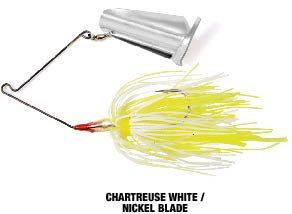
10 years later.... I hope the OP's not still in collegePretty sure you'll get a macho response about how "real men can punch with jigs"... But for us mere mortals, a punch rig will come through thick matted weeds more easily than a jig. Any benefit you get from fish "preferring" the jig profile over the punch rig will be offset by the lost efficiency from more frequent hang-ups, IMO. If you do go the jig route, your choice of head design and weed guard will make a big difference; look for one designed for punching/grass fishing.You can also buy the skirt hubs on their own, to use with any size bullet weight. I sometimes like to peg the skirt and let the bullet weight slide in front of it.Terminator hybrid blades did exactly that and were briefly popular, discontinued now. You still had to crank them pretty fast but they were more stable than a regular spinnerbait once you break the surface.
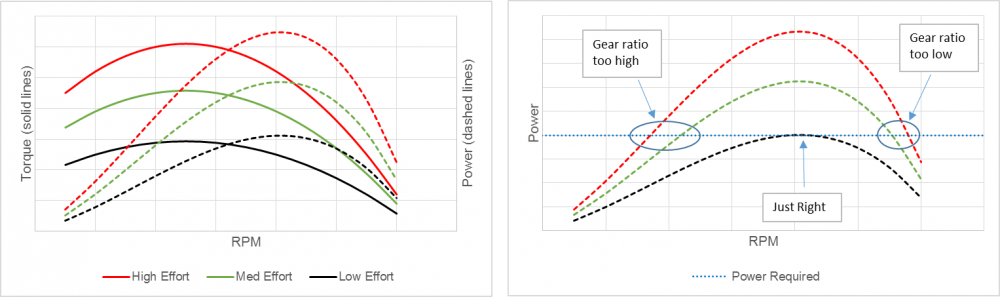
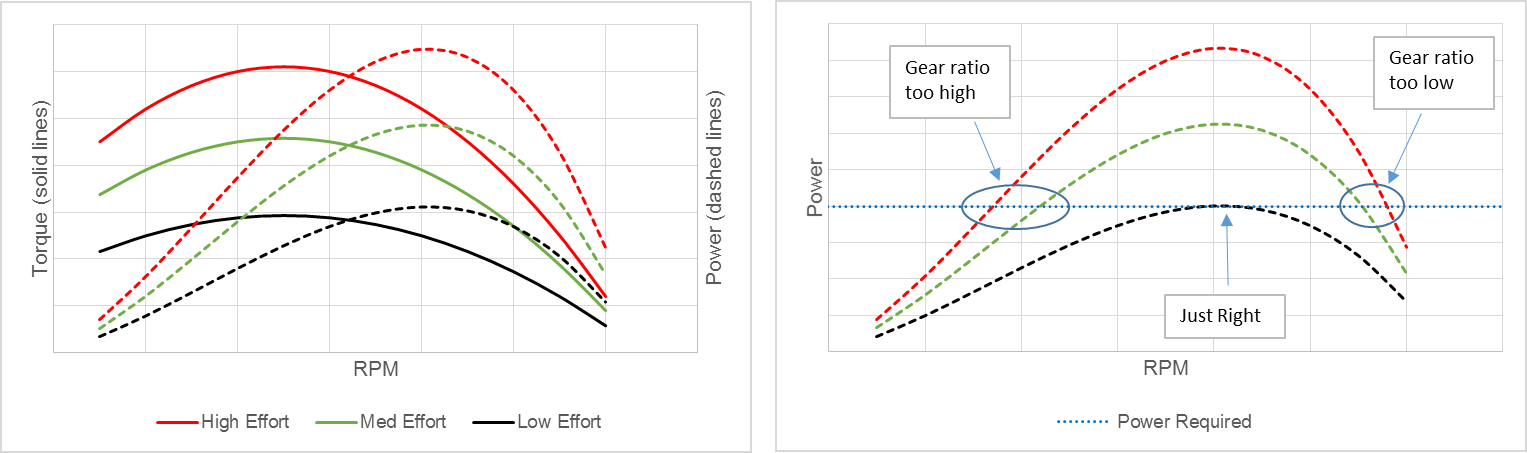
 10%( long post coming up, but hey, it's winter and bass season just closed up here. If I'm the only one who reads through all this, I understand ) I agree that most people intuitively understand how the different gears on a bicycle help them on varying terrain, but the explanation above is technically incorrect. The power required to bike uphill at a certain speed is the same (neglecting friction loss), regardless of which gear ratio the cyclist is using. The difference is in the torque and RPM required to deliver that power. Higher torque with lower RPM for higher gear ratios, lower torque and higher RPM for lower gear ratios. Friction doesn’t complicate things very much. Since my last post was talking about a chosen bait at a chosen speed, the drag from the lure is not a differentiating factor. For constant retrieve speed, lure drag and especially line drag will change depending on how much line you have out, but again, this is independent of your reel choice. Friction within the reel will sap a bit of power, but I think the difference between the same reel in high/low gear would be negligible. With faster moving parts in the low gear ratio reel (to achieve the same spool speed), the power loss would actually be higher. The difference in IPT at the start/end of a cast is absolutely valid (demonstrated with actual measurements by @Team9nine). It’s a good point for the discussion, and it doesn’t conflict with any of the posted formulas/explanation (the effect is the same for reels of any gear ratio). Carrying on with the idea of “optimizing” gear ratio – if one was going down that unnecessary road, they would do well to use an average operating spool radius (and IPT) in their calculations, rather than the nominal radius/IPT at full spool capacity. Reel size would come into play as you said – an optimized, larger-spooled reel wouldn’t stray as far from to the “sweet spot” of comfortable RPM/torque at the start/end of the cast, but one would need to consider the disadvantages of large reels as well. ====================================================== What’s missing from my last post (…to be continued…) is an explanation of how to incorporate “required effort” into the calculations, and ultimately into the choice of gear ratio. This is related to the “required power,” but it’s not the same. The formulas in the last post show that for a chosen lure and chosen constant retrieve speed, the required power is independent of gear ratio, IPT, spool size, etc. On the other hand, required effort to achieve the same presentation DOES depend on these reel parameters. To explain this, think of the angler as the engine in a car (the reel is the drivetrain). People who race cars (or play video games) might be familiar with visualizing engine performance by plotting the torque generated at full throttle against the engine RPM. Multiplying Torque x RPM on the same plot would give you a power delivery curve (power vs RPM). You could make the same plots for an angler operating a reel, except instead of the torque/power generated at full throttle, you’d be interested in the torque/power generated at a given “effort” or “comfort” level. Like engines, no two anglers are the same, and these curves would be unique to each person (they’d also depend on reel ergonomics, crucially the handle length). Even for different anglers though, the curves would share similar traits. I’ve drawn a conceptual version of what these curves might look like (below, left), showing torque/power output for “low effort/high comfort” (black), “medium effort/medium comfort” (green), and “high effort/low comfort” (red). You can imagine similar curves for any effort level between or above/below these ones. For fishing a crank-n-wind type of lure all day, the idea is that you want to expend the least possible effort by operating on curve that is as low as possible on the chart. The second image (below, right) shows the same power curves, with a horizontal line added which represents the power required to reel your chosen lure at chosen speed (Pcrankbait = [lure drag force] x (retrieve distance) ÷ [elapsed time]). All of the power curves intersect the Pcrankbait line, which in practical terms means that you could achieve the same presentation at any effort level by changing the handle RPM (ie: changing the gear ratio of your reel). I’ve indicated hypothetical cases on the chart, where too high or too low a gear ratio would leave you operating on the med or high effort curves, rather than the low curve. Conveniently, the Pcrankbait line intersects the “low effort” curve near its peak. If it didn’t intersect at a peak, remember that these are just three curves drawn for example, you could infill the chart with curves for any effort level. The RPM at the intersection with the peak of the lowest effort curve (call it ωopt, in angular velocity units) is the optimal cranking rate that would let the angler fish this crankbait at the desired speed with least effort. From here it’s simple to calculate the OPTIMAL GEAR RATIO (Gopt) the angler should select: Gopt = (ωspool) / (ωopt) Where ωspool is the angular velocity of the spool at the chosen lure speed, calculated as: ωspool = 2*π*(lure speed) / (spool circumference)
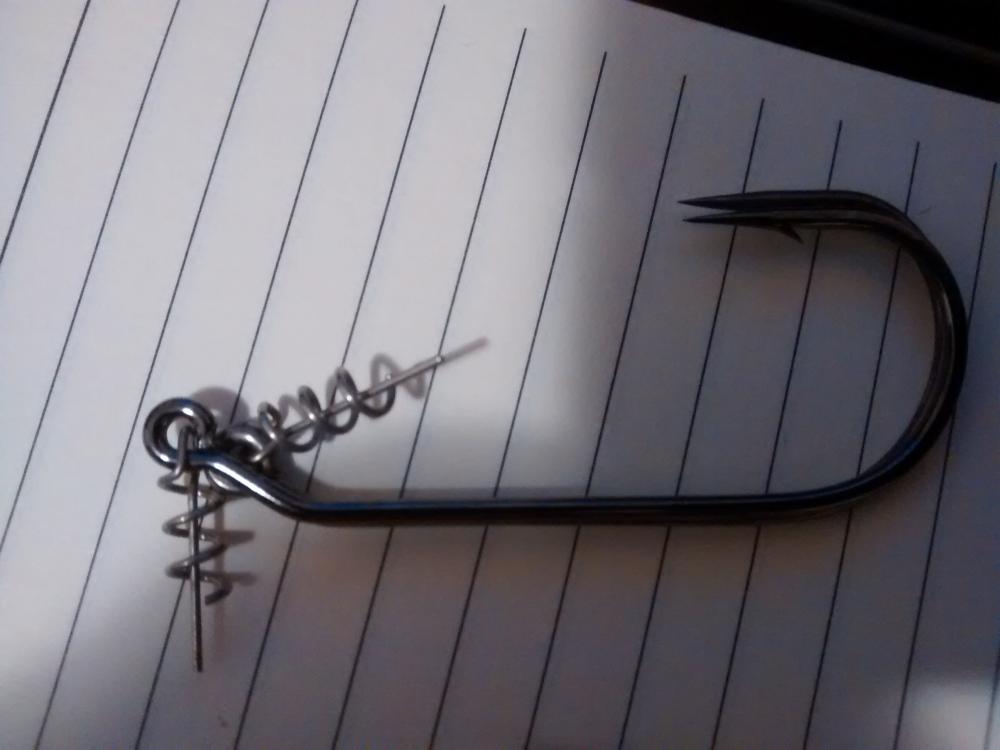
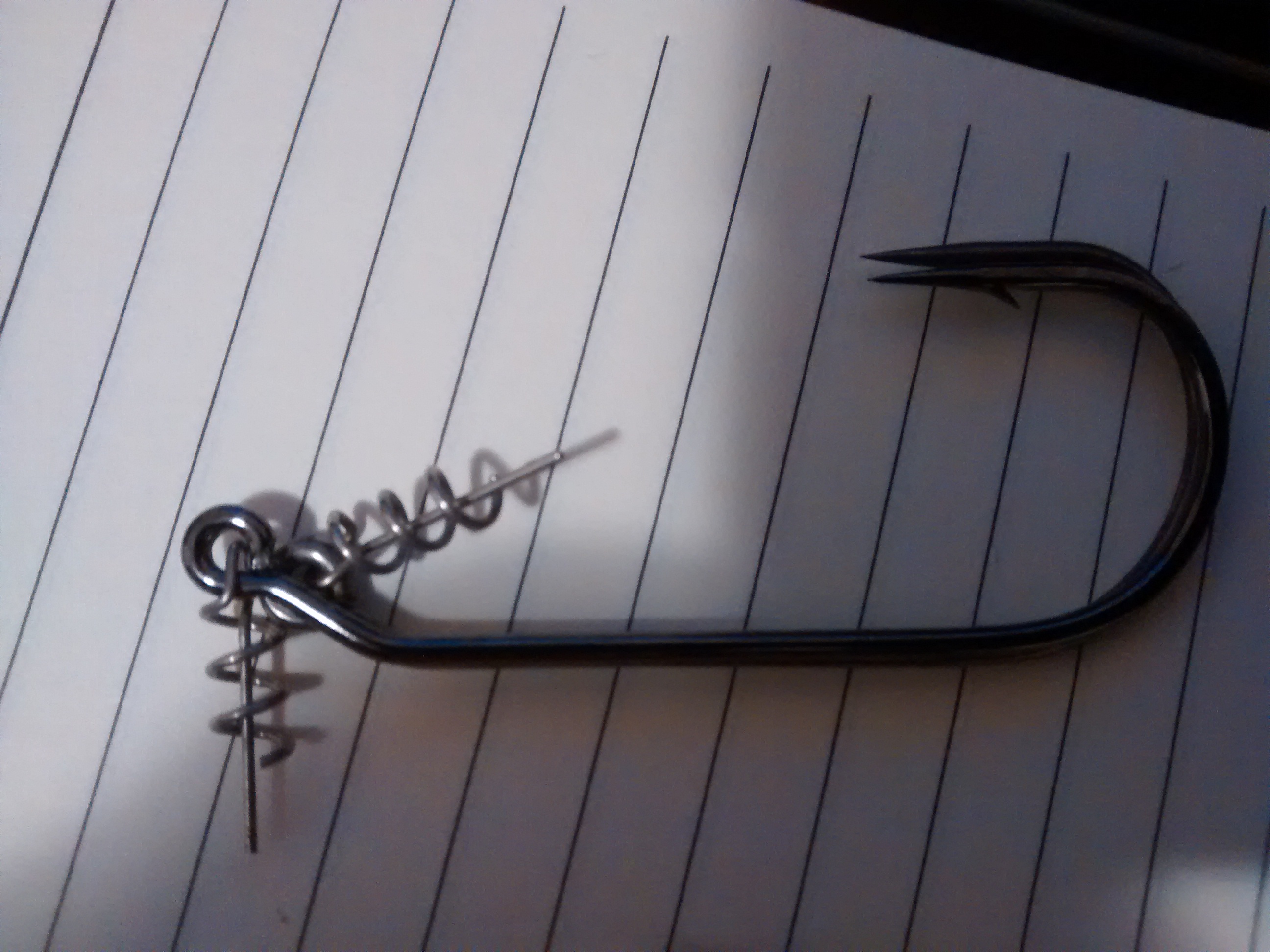
 The difference is that your car’s gear ratios are expressed as input/output, and a fishing reel is the reverse. A 7:1 reel is turning the spool 7 times for each turn of the handle. If your Suburban is in first gear and the tach says 2500 RPM, you better hope the wheels aren’t turning at 12.2*2500 = 30500 RPM! ================================================================ “Power” is term thrown around in discussions of reel gear ratios. What does it actually mean for one reel to be more “powerful” than another? Would a more powerful reel require less power input from the angler to achieve the same retrieve speed with a bait such as a crankbait? From Wikipedia: In physics, power (P) is the rate of doing work (W). It is the amount of energy consumed per unit time (t). P = W/t ; W = force * displacement Reeling a crankbait a certain distance in a certain amount of time, requires a certain amount of power. Combining the equations above, this power would be calculated as: Pcrankbait = (force on the line) x (retrieve distance) ÷ (elapsed time) This power requirement is entirely independent of the reel. It’s the power that the reel needs to supply to drag the crankbait along at the chosen speed. Working backward toward the angler, we can calculate the “spool power” based on the torque about the spool (gearheads will be familiar with this formula): Pspool = [torque] x [angular velocity] = [(force on the line) x (spool radius)] x [(total rotations)*2*π ÷ (elapsed time)] = (force on the line) x [(total rotations)*2*π*(spool radius)] ÷ (elapsed time) = (force on the line) x [retrieve distance] ÷ (elapsed time) Pspool = Pcrankbait Note that because these two methods of calculation give the same result, we confirm that spool size does not affect the “spool power” required to reel your crankbait at the chosen speed. Next we dive into the reel itself, and determine the required torque about the crankshaft (handle shaft) to achieve this power delivery at the spool. This is where the gear ratio comes into play. The spool torque (Tspool) is related to the crankshaft torque (Tcrankshaft) by the reel’s gear ratio (G): Tcrankshaft = Tspool * G This means that for higher gear ratios, you need higher crankshaft torque to achieve the same power delivery. That’s half of the story – the power requirement at the crankshaft also depends on the angular velocity (RPM). Angular velocity of the spool (ωspool) and crankshaft (ωcrankshaft) are also related by the reel’s gear ratio. ωcrankshaft = ωspool ÷ G This means that for higher gear ratios, you don’t have to turn the crankshaft as fast to achieve the same spool speed – this makes sense. Combining all these equations, we have: Pcrankshaft = Tcrankshaft * ωcrankshaft Pcrankshaft = (Tspool*G)*( ωspool÷G) Pcrankshaft = (Tspool)*( ωspool) Pcrankshaft = Pspool = Pcrankbait The power requirement is the same! And it does not depend at all on the reels gear ratio. That is to say, for a chosen crankbait retrieve speed, the required power input from the angler does not depend on the gear ratio of his/her reel. So how does this jive with the general consensus that fishing high resistance baits is “easier” with a lower gear ratio reel? The key element to consider is that, while the power requirement may be the same for different reels, the delivery of that power is very different. Delivering the required power to a low gear ratio will need high crankshaft RPM with low torque. The opposite is true for a high gear ratio – high torque, low RPM. Handle length also comes into play - a longer handle will take less force to turn, but your hand will be moving faster and with a larger range of motion for the same RPM. If we consider the extreme cases it is clear that there must be limits to “comfortable” gear ratios. An extremely low gear ratio would have you flailing wildly while your lure hardly moves, and an overly high ratio might take all your strength to budge the handle. Finding the sweet spot in between is definitely a matter of personal preference, but if one was to attempt to ‘optimize’ their gear ratios for different baits, how would they do it? ...to be continued...The drag is how the blades provide lift, is it not? Consider a spinnerbait retrieved at a steady speed - the line pulls the bait ahead and upward. The horizontal component of the line tension is offset by bait's drag through the water. What's left is the upward component of the line tension, which, together with any 'planing' forces on the head/body (and buoyancy), is the "lift". When a bait has more resistance through the water, you have to apply more force on the line to retrieve the lure at the same speed. This increases both the horizontal and vertical components of force through the line (increased horizontal force offsets increased drag, increased vertical force results in greater lift). The running depth is the balancing point where the downward pull of gravity is matched by upward lifting forces on the bait. When you burn a spinnerbait you increase the tension on the line, which increases lift (any planing forces are also speed-dependent). The bait responds by rising in the water column, which decreases the upward angle your line, which decreases lift – everything is kept in balance. The takeaway is that to increase running depth there are several approaches, mostly already covered in previous posts, and mostly pretty intuitive: slow down your retrieve (reduce drag, which reduces line tension, which reduces lift) make the bait heavier (increase the gravitational force) without adding bulk use fewer, smaller, or lower resistance blades (reduce drag) use a less bulky skirt or pull out some strands (reduce drag) don’t use a plastic trailer (reduce drag, planing, buoyancy) use a more compact bait without cutting weight (reduce drag, planing, buoyancy) choose a more streamlined or keel-shaped head (reduce planing) lower your rod tip or kneel-n-reel, as suggested (decrease angle of pull, which reduces lift) I rarely slow-roll a spinnerbait but use the rubber-core sinker trick to take compact, small bladed spinnerbaits and make them more "burnable." There are weights intended to be used for "DIY" belly-weighted hooks, these are a bit softer lead than some of the rubber cores, with a wider slot to accommodate a thick hook. The OP's suggestion of using a DS weight should work just as well and be easier to swap on and off, just not as pretty . I used to have some "dog-ear" weights, similar to the rubber core but had lead "flaps" to fold and grip the hook (line), much easier to take on and off.It's hard to think of a more biased source for product quality info than the manufacturers own promotional material lol. I agree with @smalljaw67 about the stock TX3 hooks; they are solid. It seems like the only time I bend them is when I get impatient with the pliers (maybe they hold too well )Do you think people won't realize you're just quoting promotional descriptions from tacklewarehouse, bomberlures .com, etc? Are these companies paying you? lolThe 32886 BLN swim jig hook is a good substitute for the twistlock flipping hook. The Mustad has a longer distance between the hook eye and the first bend, to accommodate the lead head when used in a jig mold. This offsets the line tie a bit further from the hook shank, reducing the ‘bite’ of the hook. The actual gap of the hook between the point and shank is also slightly smaller on the Mustad. The Owner and Mustad are both needle points - none of the twistlock varieties I've seen from Owner use their cutting point. The difference in wire diameter isn’t drastic, at least to my eye. Both are sharp, both are strong. The Owner seems a bit sharper, but the point on the Mustad is a bit more durable. I’ve used both extensively with no problems. It’s worth “springing” (;)) for the CPS springs IMO, they are the easiest to rig and most compact. I don’t like how the corkscrew on others sits so far from the hook eye, to accommodate the “clip.” First picture: Owner Twistlock on top, Mustad on bottom (these are 4/0 hooks) Second picture: Mustad on top to show difference in gap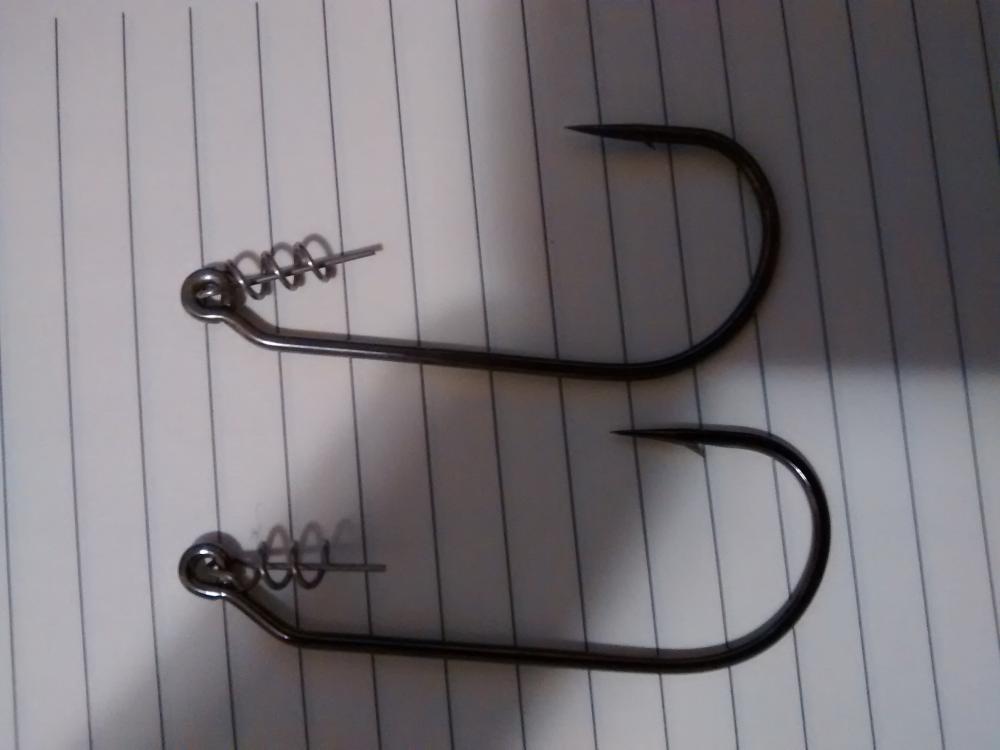
 Great, can you clarify then what you're even disagreeing with? I'll do the same: Yes, but the relevant fundamentals are the same. Frictional heat generation is not a factor in determining the tension to induce initial drag slip. Your own posts imply that that rising drag temperature is not a huge factor in most bass fishing situations, because they don't make long runs, and I agree. Fair enough, but we're comparing the same reel with different amounts of line. See above comments on heat. This is the most critical time that your drag will be tested, but my experience with smallmouths/low stretch braid/light leaders/light hooks shows that a decent fish can pull through the drag away from the boat as well. Hence the validity of at least discussing how spool fullness might or might not impact drag performance (ie: at the start or end of a cast, EDIT: and for spools filled to varying levels at or below their max capacity). Agreed. But most of this discussion could apply to spinning reels as well. And I'd argue that light line baitcasting is not unheard of, and is a rising trend in NA. It's not "hypothetical" or irrelevant to bass fishing, unless you've never had a bass pull through your drag. Drag performance, especially the consistency in tension to induce slippage is very relevant to bass fishing. An improperly set or poorly performing drag can cause you to lose bass, even if they're not towing you around the lake. On the other hand, your comments about heat generation and dissipation are not especially relevant, for the reasons you are stating. This is essentially the same scenario I gave a detailed explanation of and expanded on in prior posts. The answer is obvious; how it could affect drag performance in actual use, is not. Which brings me back to the original question: which of these claims are you saying is false? (PS: nit-picking, but the torque around the spool shaft generated by line tension is independent of the drag washer diameter)


Important Information
We have placed cookies on your device to help make this website better. You can adjust your cookie settings, otherwise we'll assume you're okay to continue.