papajoe222
BassResource.com Writer
-
Joined
-
Last visited
Everything posted by papajoe222
-
Yea, right. This old fart rarely indulges in the endeavor you use for your screen name, let alone getting his sorry butt up on skis, but thanks for you imput.
-
Game over????? I don't think so. Just wait until I get my tackle box, AKA as a Tracker 175, out of storage be fore you declare a winner. I have that much EXTRA stuff that won't fit in it
-
I've found they don't fair well if left in th box. They do, however, become excellent catfish bait.
-
So I decided to do something to both keep my cabin fever and the bait monkey at bay, for now at least. I'm making up my own version of a 'panic box' from my existing tackle, skunk repellent Papa style. Mostly downsized versions of my confidence baits along with some items from my walleye and crappie tackle that continually produce bass Here is what I've put together so far: Zara Puppies, 2in. Lazy Ike's, Mepps squirrel tails, RoadRunners, #5 Rapalas, crappie cranks, 1/8oz Chatterbaits-spinnerbaits-hair jigs, split shot, slip bobbers, assorted hooks and of course French Fry worms. I may need to purchase a few items, but what would you add from your existing tackle?
-
It's a possibility, but there are only a few sure ways to find out. One of which is actually seeing them which you ovbiously haven't and the other is to look for an earthen shore where the burrow into for the winter. You'll see the holes in the spring when the watter is clear and sometimes on the shoreline if the water level receeded over the winter. Reguardless of whether the pond contains crawfish or not, craw imitations such as a jig and pig will still produce. I don't know why, I just know that, like a plastic worm, it seems to produce anywhere bass live.
-
There are advantages and disadvantages to the different styles. In general, I would say to replace the original hooks with a similar style and size hook (your brand of choice). Wide gap or 'tripple grip' style hooks are good replacement on lures that fish have a tendancy to throw easily like lipless cranks/ Short shanks are an option for not only eliminating tangling, but for upsizing the size of hook without making the lure more prone to snagging, or adjusting the way a particular bait suspends. Changing styles and size from the originals can improve the lure's action and your hook ups, but sometimes can give you the opposite results. The only way to know for sure is to try them out.
-
Welcome to the board and this topic will spark some good discussion. I echo the statement about your waters not being able to support shad. Aside from that, there are likely two other types of forage the bass use that you didn't mention; minnows and crawfish. Reguardless of the type of forage, remember that a bass is a hunter and will ambush it's prey a majority of the time. It is also, primarily, a sight feeder. Keeping those two facts in mind, information about a specific forage's habits and movements is beneficial, but not essential in forming your game plan. Here is what I have come to observe about sunfish and perch and how bass relate to them. Schooling bass will target perch if there isn't a sufficient minnow population to sustain their numbers and perch are a schooling species similar to crappie. Bluegill and most other sunfish are a part of a bass' diet only if there isn't a population of other forage that is easier for them to swallow, or they are an opportune (easy) target. If your observations are accurate, I would look for smaller bass to be roaming in schools that are following smaller perch and the larger bass to be feeding in the shallows where cover is present. Notice I said feeding as their 'home teritory' could be deep or shallow. The forage they target most will be in the shallower cover.
-
Maybe we should start a support group. The only problem I can see in that is finding someone that would host it. It's my understanding that the host is someone that can actually offer constructive insight to the group's problem. I don't believe there is such a person.
-
All I have to say is: ARRRRG!!!
-
Frustration with winter has set in already and I'm still looking a two full months or more of ice covered lakes and rivers here. I've already exhausted most, if not all of my release valves that normally keep me sane over the course of a normal winter. I've built two rods, cleaned 14 reels, organized and changed hooks on my hard baits, inventoried the majority of my tacke and made a list of items to be purchased prior to getting the boat ready sometime in early March. The early arrival of below freezing temps along with the deep freeze we're encountering has really deflated my optimism and my tequila budget has me looking at Sauza and that's really rock bottom for me. I recently reconciled myself to the fact that I won't be able to attend this years unofficial road trip and have been contemplating something very drastic...................does anyone know of a hot line for people contemplating ICE FISHING? I know Raul is secretly grinning that dastardly grin he gets when any of us Guys faced with this winter dilemma vent, but just thank the man upstairs for your good fortune and try not to add salt to our wounds please.
-
The lack of shallow water in itself, if the lake has an abundance of stained or dirty water, may pose problems for spawning. However, clear water offers much better light penetration which is essential to a succesfull spawn. I fish many strip pits that contain only 10-15% of water that is under 8ft., yet bass, bluegill, crappie and catfish abound. Bodies of water such as these are difficult to be successfull on a regular basis because the fish (bass especially) suspend and move frequently. That is why trolling is a good approach. The fact that you need to concentrate on is that those fish relate to the structure. That, in a nutshell, is the mindset of all 'structure fishermen.'
-
I remember both the man and the magazine. I also remember highlighting the different articles. This is one of the few magazines I kept. I even had binders for them as I refered to the different articles often. Thanks for the great information and the trip down memory lane.
-
I use them mainly in the spring, pre-spawn. A trailer will add both additional lift and action which allows me to keep the bait high, but slow. It's an alternative to using a willow blade rather than aColorado blade. Along with more flash, you also get the benefit of the added action. Years ago, Uncle Josh made a curly pork strip that fit the bill and also added some scent. Now it's a Kalin's Lunker Grub or a RageTail.
-
It's not a color pattern that produces much for me. That leads me to think it would work better in waters that have some color to them. I fish a lot of clear lakes and unless there's an alge bloom, I rarely tie anything on in that color pattern.
-
If you're looking for a brand that won't suck your wallet dry if you loose a couple, Bandit and Norman (Splatter Bass) both offer a reasonably priced bait.
-
I've used and continue to use a variety of methods, but a tooth pick (no cactus 'round here) through the worm and eye of a standard off-set worm hook gets the job done on worms and lizzards. As for a hook style that seems to work very well on beefier plastics like beavers and tubes, the SkipGap has won me over.
-
Holy Moley! (I'm an old fart, we still say that). I was attempting to help out those that fish natural lakes and as stated, there are some MAJOR DIFFERENCES between them and highland and lowland impoundments. I for one, fish mainly natural lakes and am intimidated by those differences as well as by the sheer size of some lakes like Kentucky. It's much easier for me to adapt to those differences if I can see the similarities rather than be intimidated by the differences and then apply my knowledge and strengths to those similarities. I look at a ledge as being similar to a drop off. They aren't the same, but the fish relate to them in a similar matter. Current is a major factor in fish positioning in a impoundment the same way shade is in a natural lake. I believe the exchange of information about the differences and similarities between the two types of lakes will help those that were asking for more information on fishing natural lakes and to those looking to tackle a impoundment for the first time.
-
After reading some replies to a different thread, it is obvious that some of the members that fish northern or natural lakes would like to see more information that is relevant to those waters. So I, for one, would like to share some and I encourage others to add some of their knowledge that is specific to those types of water. For starters, and I believe this is most important reguardless of what type, or where your lake is; "A bass is a bass, is a bass" I don't know who said this, but I adopted this outlook a long time ago and try to apply the information from every article, video, or thread on a forum to the lakes I fish. Yes, I'm aware that there are northern/Florida strain/ smallmouth, etc. but the generality still applies. I also believe that structure is the key element to locating fish and that some knowledge of the fish and it's enviornment is essential. Let's get a little specific now. Natural lakes contain structure, cover and forage just as the southern impoundments do. They may not be creek arms/ledges, submerged timber, or threadfin shad but they are still present. So whatever information you get from whatever source can be applied to your waters if you 'see' how it translates to them. Creek arms/ coves, ledges/drop offs, submerged timber/weed beds, threadfin shad/minnows or other small forage fish. Lets talk points and all the information you know about them. There are 'points in your lake. How do you 'translate' that to a natural lake that's bowl shaped and void of points? Break down what a point is (slow bottom taper that leads from deep to shallow), and apply it to areas that are similar in your lake. What about the points and pockets that form in weed beds? That drop off will taper off somewhere (deep to shallow). Okay, maybe you're getting the idea, but where on that slow taper, or whatever do I look and how do I attack it? You apply the information you know about points to that area. You look for isolated cover, a change in bottom composition, current that is the result of the wind, and FORAGE. I truely belive that if you can see the similarities between the different types of lakes, you can apply not only the knowledge you have acquired, but the techniques and baits that produce in the video's and articles where we obtain some if not a majority of that knowledge.
-
They were unknown to me until a couple of years ago, but the Baston blanks rank right up there with many of the more expensive blanks. More bang for the buck, especially at that price point.
-
Once you decide on a blank, give that supplier a call and most will assist you on the components. On my first build that wasn't a kit, I ordered guides that were made for a largeer diameter blank. I ended up calling them and they not only pointed me in the rights direction, they told me the exact size winding checks to use.
-
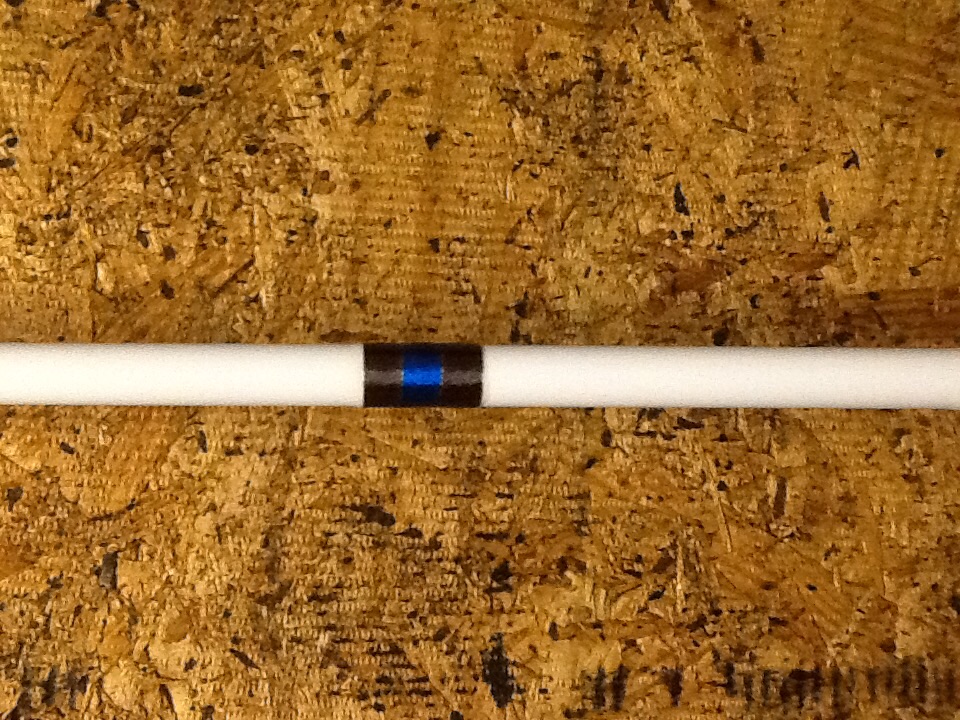
I do like the look when using trim bands and inlays, so much so that I used them also.
-
No swivel, or bead, on slip sinker, just a weight and hook. It's definately not a downsized C-rig. Can you present it like one? Yes sir.
-
I can't say one way or another concerning the white blank. My decision on the 843 was based on all the good reviews. If you do an under wrap (I don't recommend it either), definitely epoxy it prior to wrapping the guides. I used FlexCoat Lite. Obviously I wasn't concerned with the added weight, I did it strictly to dress it up a little. Under wraps were originally done, I believe, to protect the blank. The use of different colors is strictly for visual reasons.
-
Thanks for the input guys. It only took a half dozen jigs to get some consistancy to the color. The wife freaked out when I told her I was going to bake two dozen jigs in the oven!
-
I have three favorites. Chrome/blue back, Sexy Shad and Red Craw. I will throw a Cotton Cordell gold/black back in stained water, but that isn't very often.