



Brad Reid
Members
-
Joined
-
Last visited
Everything posted by Brad Reid
-
I like it for each of these reasons, too. Angry John. A very good summary. And, I simply don't even feel pedaling, at all. It's as if just the weight of my foot pushes the crank arm down. If anywhere, I feel it a tad in my abdomen from "lifting" my legs for the next down cycle with my foot. In my big Meyers Sportspal S-15, if it isn't windy, I can stand and paddle it all the way to the boat ramp and back. About 2 miles. My former Big Rig? It was just over 100 lbs. and it'd give me a bit of a workout but really very manageable using a 2 bladed paddle. Brad
-
Looks like you have made a visit over at Kevin Dismuke's garage! He built a TM for me, too, for a Big Rig I know longer own, so I need to modify my Dismuke TM for another kayak! Brad
-
Just wait until one of these days they work out battery technology so that we can get a 120 Ah TM battery, that weighs 15 lbs. or less, that costs under $250. It'll attract yet another sizable wave of interest in kayak angling. Or, if some of the knuckleheads in the outboard motor industry would build a compact 1 HP motor for kayaks/canoes/jon boats, etc. that will run on those green 16 oz. propane cannisters. Lehr and Tohatsu both have propane motors out, Lehr for awhile now. Alas, the smallest offering from either is too big. Lehr seems to have reliability issues that Tohatsu seems to have worked around. But, with our hull speed limitations, a motor around 15 to 20 lbs. and much less power would do the trick. They'd sell like hotcakes if they are reliable. Three 16 oz. cannisters and you could go on a kayak trip for days. Brad
-
I learn something every time I get on here, I really do. Those various plastics are all super. I had a heck of a year using the Keitech Shad Impacts. These are the ones with a straight pointy tail, not the paddle tail. Those are good too. I think what it is a lot of us all agree to is how very flexible some of these are all seasons. So, if they aren't feeding on bottom, you might have a bad day with a T-Rigged worm. But, with the various fall rates and characteristics of shads and flukes, gosh, you can pull them across the top of the water, pull them over grass, let the settle to the bottom and fish them like a worm. These Shad Impacts? I love jerking them, letting them sink, twitching them. They really do look like injured and dying fish. Hard for a bass to pass up on an easy snack! I catch a decent percentage off the bottom. But, on the fall seems to be the most likely time they get bit. Brad
-
For those who like straight fluoro, if you are fishing mostly using short casts and finesse presentations, I think you could put on a bit backer, then fill the reel with braid, then what would essentially be a very long leader. That is, if your longest cast puts out 100 feet of line, 33 yards, maybe fill the spool with 50 yds of fluoro so that you are never casting it all off. I suppose it depends. Aaron Martens does or used to do this. Brad
-
No, that wasn't me . . . must have been another. I do know there are several others out there in the vicinity. I have yet to see another, though. I'll have mine on Naconiche, likely this Saturday, but possibly tomorrow. That'll be a good test of how the E-Drive supposedly can glide over unseen obstacles just out of view. Naconiche is full of those! Brad
-
Regarding your junction knot, I would recommend retying it if you hang up really hard and have to pull on your line to get it loose . . . or catch a good sized fish. Too, any time you might use a mono leader, it'll swell a bit, lose strength exposed to water, so there is a time element, too, really with most knots. Same with your terminal knots to hooks/lures. Plan on retying them, too. Brad
-
Good point about the two spools being the same diameter. I think J Francho mentioned this above. So, as regards line playing off reels, it'd be even between a 2500 and 3000 spooled up to the same circumference . . . but larger "plumes" or "swirls" pulling off, unraveling, compared to a 1000. I was thinking about the "why" behind a deeper spool core for the 3000, not diameter. Both hold so much line as to make thoughts of getting "spooled" unlikely. It'd be the fact that the 3000 will hold the same length of line in a slightly larger test I suppose. This "stat" shows up on line size/qty compares on TW. I never use large enough test strengths that it makes much matter, one way or the other. 2500/3000 series Ci4+ reels cover a lot of ground, a wide array of fishing presentations. Brad
-
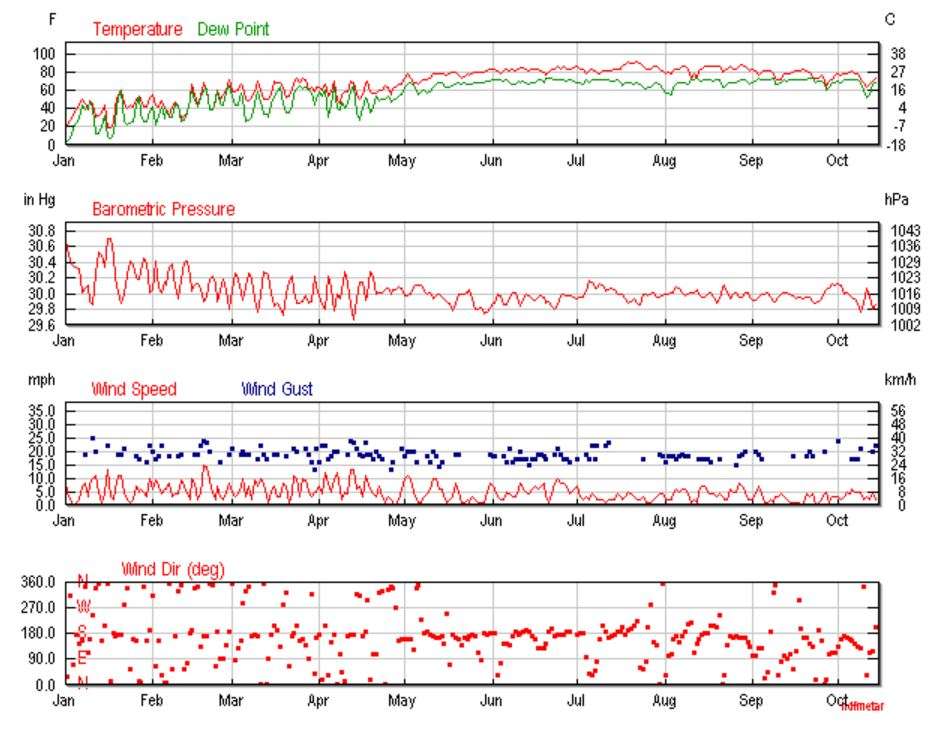
Well, one point I'd make; others may disagree. A Stradic Ci4+ 2500 and 3000 both weigh 6.7 ounces. I know there are some other "Stradic" models that may vary between these two sizes. And, a point? There is absolutely no disadvantage using a 3000 series over a 2500 series as regards its performance with braid and finesse angling tactics. Additionally, you'll likely be able to cast at least marginally farther with a 3000 since the braid flies off the larger reel spool in larger spirals. In effect, a 3000 "feeds" line out faster. Remember, spinning reels release line totally differently from casting reels. It isn't pulled off a rotating spool with all the effects from that. I own Ci4+ Stradics in 1000, 2500 and 3000. You would be at a considerable disadvantage landing large fish on a 1000 series; you be at absolutely no disadvantage using a 2500 or 3000 on an ultralight rod with 2 lbs. line. If I could do it over again, I'd pass on the 1000s and use the others. Weight? All are so light as to be inconsequential if you mean the Ci4+ reels. BradMe, too, like J Francho . . . I'd go with the Abu from those stated choices. I'd add this, not knowing your price target, that you should also consider a Shimano NASCI if around $100 is in the correct range. *Not a good choice if you plan to back reel, but other than that, a nice bang for the buck. BradFor sure, and actually quite a lot better than monofilaments of the past. If you want to feel really, really stretchy mono, give the red line that comes standard on many Zebco spincast reels a tug. Some rubber bands don't stretch that much! These great Sufix lines are nothing at all like that. For sure on knots: mono holds great! BradSure, "power" and kayaks is really more about market saturation, filling the gap between paddle - pedal - and full fledged trailered power boats of various sizes. So, as regards fishing kayaks, I think for the standard 12' +/- a foot or so, 36" beam +/- 6" or so, we likely have likely seen about all there is. Space is rather limiting as is the general required shape. So, we do see more power options but, at least so far, it is a fairly small percentage of the kayaks out there. I still hold to the idea that what would really "fill in" some of the gap between kayaks and boats, attract more power users will have to do with getting away from carrying 50 lbs. batteries and/or $1000 lithium battery solutions. If someone would come out with a small outboard, 1 HP in size, that will run on the 16 oz. propane bottles (like Lehr and Tohatsu have now), it'd mean light weight, hugely extended ranges for kayaks, things like the Bluesky 360, others. If these things could be sold for $250/$350, and if they are reliable, we'd see a lot of people tacking on power options. BradI have only used Elite and I can't comment about which is better. But, from Sufix: Each Sufix monofilament fishing line has a set of features that make it ideal for specific situations or angler types. For strength, smooth casting and easy handling, opt for Elite or ProMix mono. For superior casting distance with pinpoint accuracy, go with Sufix Siege.I'd only add that multiple leagues rarely last. Only one is likely to succeed; or, the others will be absorbed. I am just going by history. NFL and AFL in football, National and American leagues in baseball, NBA and ABA in basketball. What generally happens is one organization is deemed to have better talent and once it "tips" even a bit in one direction, that one gets 90% of the viewership/sponsorships/better athletes. And, multiple leagues can lead to disastrous results. Look at boxing. Everyone, EVERYONE, sports fan or not, knew who the heavyweight boxing champ was through at least the Ali era. Today? Few could even name him. The beginning of the end happened in boxing when there were multiple people claiming championships. Confusing and a turn off. Don King effect. Other sports have been totally ruined by letting athletes have too much control over the rules. It happens. It often isn't pretty. I like the MLF format for viewing personally. Good point, for sure, about catching 50 one pounders . . . but such a simple "cure" exists. MLF can always designate a higher minimum weight. I know some things BASS could and should do to stay relevant. It certainly isn't a good time to vapor lock or get defensive or mad. Time to get competitive! BradI had excellent results, never issues, using Sufix Elite mono. If I were to wind up some mono again, I'd likely use it again. BradWell, one sure-fire way to increase the odds of a fish staying hooked is to revert to a straight-shanked hook, T-Rig it so that the point remains embedded in the plastic . . . but the hook point is then resting at an angle where once you set the hook, it comes bounding out of the plastic to snag cartilage or tissue. I just never get this sort of hook up ratio with flatter lying hook points (offsets and EWGs). I do acknowledge that some of the newer offsets and EWGs are addressing this issue with some design improvements to make the point more likely to snag the fish. Another rigging? Use a 3/0 or 4/0 60 degree bend jig hook and attach a medium sized Owner CPS centering pin to it. Screw on the fluke or shad bait, then finish it like a T-Rig. What happens is a fluke or shad screwed on to a CPS has a softer "bite down" and a bit more range for the fish to chomp down and encounter the hook tip more easily. Finally, when it is slow, cast it, let it sink, jerk it a few times . . . but be certain to let it, from time to time, float all the way to the bottom and just sit there. Bass will often pick them up just like a worm if they are feeding on the bottom. If no bite, jerk it up off the bottom hoping for a reaction bite. BradIf you will buy a 5'6" St. Croix, Medium power, spinning rod, your accuracy will improve dramatically. That, and less worry about overhead obstacles (trees, bridges, etc.). You'll be able to float up on low tree canopies, boardwalks, boathouses, get much farther underneath them to find fish. And, since a shorter lever gives you more power over the fish, that's a bit of an extra. I rarely make long casts from my kayak. Its greatest advantage, as you know, is how very close we can get up on our targets. BradGood observations that I'd still assign to weather. Curious in this regard, when you were out on the water fishing, then your barometer experienced a sharp change (it can happen at times), what was happening around you weather-wise? Increase in wind, cloud cover, temps, other? I guess I should add that high and low pressure readings can be "relative." You might have a 30.50 reading on your lake and still be the lowest in the region, that sort of thing. High pressure most often means "holding things out" and prevented from coming in. So, every hot summer with dead air and clear skies, the weatherman says "We have a high pressure system sitting on top of us and no chance of any clouds or rain coming in." In other words, high pressure is analogous to the air inside a balloon: if you puncture it, the air move out, doesn't let air in. So, fish are very susceptible to weather conditions, no doubt. Not so much to pressure changes in the water column that can be offset by the tiniest of adjustments. BradAgain, fish behavior has nothing to do "directly" with air pressure; it's all about what the pressure is measuring: weather. I thought it might be interesting to post a chart showing where I live, Lake Athens, TX, for the whole year of 2018 so far. Heck, since January 1, we have only seen barometric pressure readings ranging from a high of 30.80 to a low of 29.57. What one will see on the chart is how much larger the swings are in the pressure readings from January to around May. Temps way up and down, wind directions moving from north to south and wind velocities altering greatly. More rainy weather, too. Then, over summer, temps are more predictably and statically hot, winds out of the south dominate in the summer, less rain and "rainy-like" conditions. Brad
 Several years ago, I fished in Oklahoma on a large ranch that had 3 or 4 lakes that were part of a private fishing club/network. These lakes were being actively managed for bass size and we were told to cull anything less than 14". The lakes were super healthy, the bass were a strain with a high dose of Florida genetics. 2 pound bass fought like they were half again larger, say like a 3 pounder out of many public waters I fish in Texas. Brad12 looks about spot on to me as a guess. I'd say the youngster's smile weighs about twice that! Great fish and pics! BradSure, MassYak85 has it right. It isn't even remotely possible that a bass can "differentiate" from the pressure variances it feels . . . all day long, day in and day out . . . just living its normal life, from pressure changes from air pressing down on water. In both cases, by the depth it finds itself in, or from air pressure forces, it has to make the slightest of depth changes to get comfortable. It is all about the weather changes that accompany changes in air pressure. BradI should be less "strident" about it; it just hurts to see it over and over. But, the original post was in good faith. It is a common topic. I have even read articles by scientists whom should know better and yet they give it credence, but they just haven't done the math or don't understand the logic. Stats: Barometric Pressures and equivalent related water depths in "feet of water": 29.50 = 33.422' 29.92 = 33.898' (one atmosphere) 30.00 = 33.989' 30.50 = 34.555' As you stand on the edge of a pool, you are standing in 1 atmosphere of pressure, all from air. It is about 14 lbs. per sq. inch. or so pressing in on you. If you dive into the pool and swim down a little over 33 feet, the water has added another "atmosphere" of pressure, this from water. You are now experiencing 2 atmospheres of pressure: one from the air, another one from the water. Almost all people feel a huge amount of pressure in their ears, even at lesser depths. Water is not very "compressible," so the added pressure is very linear. A one point move up in air pressure can be offset by moving up in the water column by 1.13 feet. Bass cover more vertical distance than this . . . all day long. Barometric Pressure readings don't move all that fast except in rare circumstances. Even then, it wouldn't make any difference. Here's the issue: how does a bass "differentiate" the pressure it experiences from a high pressure system moving in and, say, raising pressure from 29.50 to 30.50 pushing down on water . . . from the pressures a fish experiences all day long just swimming around? It has always been about the weather. Brad



Important Information
We have placed cookies on your device to help make this website better. You can adjust your cookie settings, otherwise we'll assume you're okay to continue.