
bulldog1935
Super User
-
Joined
-
Last visited
-
Currently
Viewing Forum: Fishing Rods, Reels, Line, and Knots
Everything posted by bulldog1935
-
Hedgehog sells KDW titanium handle nuts, which are here to stay. the Daiwa/Abu/Lew's thread is 8 mm, and the driver size is 10 mm Note thread pitch is reversed for RH/LH. The stock Zillion handle nut is anodized aluminum, and Lew's are plastic. Send me a pm if you want one I removed (RH). Have more than a half-dozen M8 RH handle nuts in reel boxes around here.
-
When you get below PE#0.8 (0.15 mm diameter), standard LW pitch is too low to limit line dig. Reels like Zillion Silver Wolf have faster pitch in the LW, that lays the line wider on the spool, and can fish down to PE#0.4 (0.10 mm). This is spooling-up a shallow Roro-X spool with PE#0.8 on my Steez. In comparison, 6-lb fluoro is about 0.19 mm diameter.
-
@Linewinder Something like Phil Tenacious will stay on the gears a long time. Lower viscosity reel oil will need more frequent application. If you chase my old reference, Meek, Talbot and Jack Welch Heddon benchmade reels all had ports to oil both spool bushings and main gear for daily use. You can also see the main gear oil port on the Meek #30 LW in my earlier post. It's also the only Marhoff-copy LW that will cast distance with the earlier NLW reels.
-
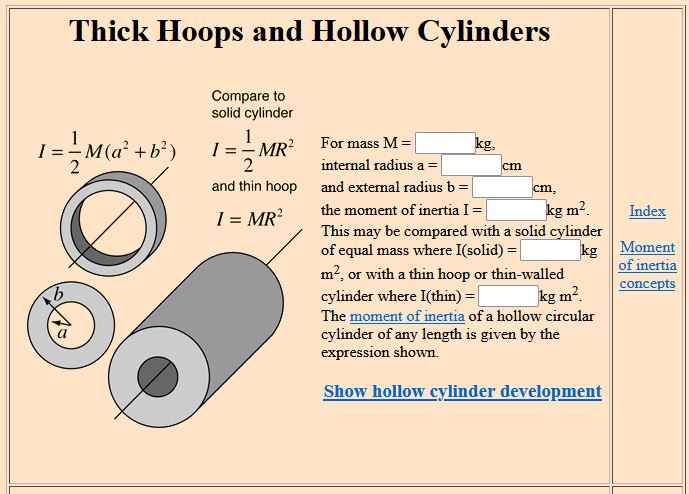
No, yield and stiffness are two different properties. Yield is a strength measurement and denotes Permanent change in shape. @MickD, the surfaces have a stiffness effect. As the wall approaches minimum, see Thin Wall Hoop in the formulas I posted. Thin Wall Hoop has twice the geometric stiffness factor of the solid - intermediate wall thickness fits progressively in between - the closer to solid, the less stiff, the closer to thin wall hoop, the greater the stiffness. . They do not represent strength, but the geometric effect on stiffness. If you can't see the math of zero mass in the equation, further discussion is without purpose. When the rod designer gives up geometric stiffness by increasing wall thickness, it has to be made up in other ways, such as increasing specific modulus. Nor are we discussing rotating steel shafts here. The math of bulk rod modulus (=resistance to bending, or stiffness), the change of which defines the taper along the rod length, isn't guessing, it's known. Anyone who can't see the thickness is the difference in radius a and b is really lost. Speaking of permanent, this is where I bow out, because everything that needs to be discussed here has been discussed. The next thing that will happen is more pointless memes. Since we're talking about fishing rods here, I'll add this. In practice, most rods with greater thickness get there using more resin, not more high-grade graphite. Anyone who has messed with a solid-tip rod should immediately recognize the bulk modulus difference from a tubular rod. Anyone who has ever handled Airex, Shakespeare and Fisher fiberglass rods will also understand this completely. They all use the same modulus fiberglass. Airex is solid with a lot of resin, and totally flimsy. Thick-wall Shakespeare is heavy as the dickens and feels totally without backbone. Thin-wall Fisher is light in hand, fast and crisp. The trick is building the rod strong enough to get away with the thin wall. A lot of words have been used on this thread, most of which don't apply to the subject matter.
-
The math doesn't work that way. Thicker wall reduces stiffness (a is smaller below). Thinner wall Always increases geometric stiffness, but the wall has to be thick enough not to collapse or break under load. Smaller diameter blanks get equivalent stiffness and strength from Specific Modulus increase, which allows them to work with lower geometric MOI (and lighter weight).
-
Since the drive turns during cast, most grease is too stiff. Best idea is to oil both gears and bushings.
-
You definitely want shielded bearings in the drives of salt reels - Daiwa magseal, even better. Double shield - assumed metal and rubber, sounds like a step-up for salt drives. Salt exposure tends not to get deep in the drives unless you dunk the reel, and then you should probably take it down, clean, and re-lube. I've seen some posts of rusted bearings on FFR and trying to clean them - never do that. Anytime you see rust, Replace.
-
The one reason to use leader on mono main line is to gain abrasion resistance by stepping up the leader diameter and hardness. This is for targeting seatrout on 5-lb test, with 9-lb hard leader - bycatch includes snook and redfish.
-
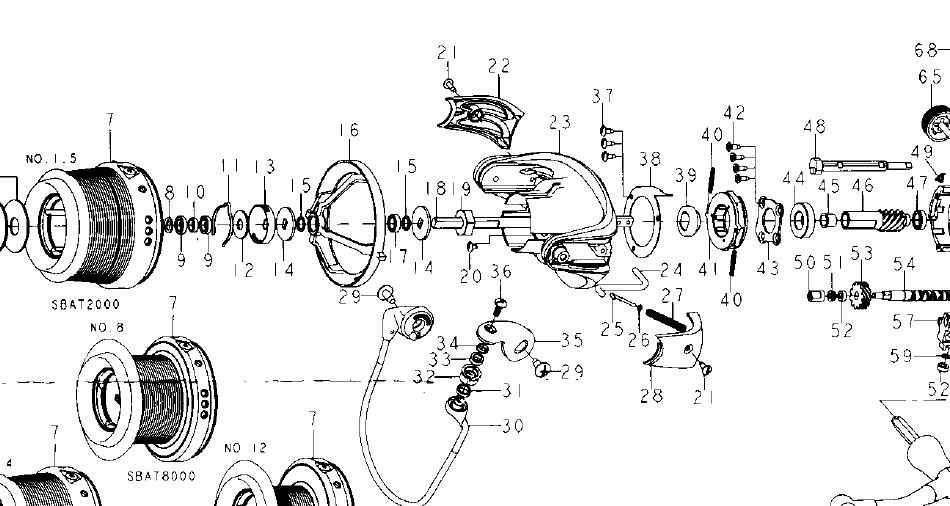
The button on top is just a clicker that engages a pawl into a caliper spring - it's the closest thing the reel has to a drag brake (use your thumb on the spool). The front cap is access to the LW worm gear. The bearing (bushing) cap adjusts spool tension, along with the bearing cap on drive side should be nothing else to it - use your thumb and adjust spool tension. If you chase the thread I linked, there's some discussion of soft braided lines. Green Spot dacron, ice-fishing nylon braids, Gutebrod Meatmaster - all are better choices than mono with these reels.
-
Beginning with aluminum, the bare metal is not salt resistant, but the anodized metal is both hard and salt resistant. Anodized magnesium is also salt resistant, but not as hard, and bare magnesium corrodes much more rapidly in salt than bare aluminum. While brass drives have good life in salt, the best salt reels use stainless steel drives. What you'll find with all good spinning reels (even Tica) are sealed A/R bearings (p/n 41). Shimano calls their strategic use of seals X-Shield. Daiwa uses mag-seal bearings in the drives of their higher-grade reels. The balance of materials are salt resistant. Consider all my reels to be salt reels. None get shielded spool bearings, but those aimed at salt get salt-resistant unshielded spool bearings. The way I look at shielded bearings, salt water in, steam out, salt concentrates behind the bearing shield. With my salt-resistant unshielded bearings, I flush them every time I oil them. These are KTF spool bearings. The one thing you can't do anything about is cathodic coatings on magnets, and these need to be inspected and replaced when they show the beginning filiform corrosion. This was after 4 years exclusive salt use. Note that the corrosion products of metals in salt are more corrosive than the salt itself. E.g., Ferric chloride and cupric chloride are strong acid oxidizers - if you see a rusty bearing, get it out of there, no cleaning will help. I tried full zirconia spool bearings in my surf reel, but couldn't stand the noise, and went back to MTCW spool bearings (the ZrO are in my back-up mono spools now). Fully sealed reels, Van Staal, IRT, are really for the surf, and then, primarily for the NE surf. Sand slurry from the surf is a greater concern than salt. Labyrinth seals, such as Shimano X-Protect are everything you need if you're not going to dunk your reel and leave it.
-
It goes back as long as there have been rods, both wood and bamboo, to mixed linear and helical graphite. Wood and bamboo are both natural linear-fiber composites. Stiffness goes up with diameter, so to have a rod taper, the diameter changes from smaller at the top to larger at the bottom (I'll keep the math out of it - for now). In 1881, Doc Henshall called it "giving him the butt" when you fight a fish with the rod low. Vintage cane fly rods typically have a flared butt, that kills the taper for casting any deeper into the rod (no farther, no more fly line), and the purpose of the butt flare is fish-turning power. You definitely won't lose sensitivity in the rod - if anything, you'll gain it compared to a deep-flexing rod, because that part of the rod won't bend working the lure, but will transmit vibration into your hand. Because of the amount of material used in the rod, it will be slightly heavier than a more expensive rod that uses helical cloth layers to get the same stiffness in a smaller diameter.
-
Langley has a big fan club because of the light alloy spool. A photo to share would be fun. I like the non-level-wind reels made in the ninteen-teens and 20s, especially Meek, Shakespeare, and Talbot. If you want to find the historians and collectors of this stuff, visit this website: https://reeltalk.orcaonline.org/index.php
-
close, there should be a phone book between the source spool and the reel. of course, you have to dodge kayaks everywhere in my garage.
-
Here's how mine ended up for throwing PE#1.2 X-braid. Unfortunately, the ZPI star drag is no longer out there.
-
No, don't use WD40 use Boeshield. It has many more uses cleaning and protecting your metal items that get wet. Use the nozzle and spray it into the top end. Wipe, put your mouth on it and blow. Sop what comes out the bottom. Repeat until the problem is solved. This procedure works on OP's valuable 100 y-o Hardy reels.
-
You may discover a big difference casting with a quality rod over a $15 combo. Generally casting any tackle, the harder you try, the less accurate you can be. There are many different ways to load the rod that will fit in different spots - underhand pitch, side-arm (back-hand and fore-hand), overhead (usually the greatest distance). Get the feel of loading the rod to time your line release - you'll get a lot more feel from a better rod - it will talk to you, and your cast accuracy will become intuitive. Until you get this worked out with spinning tackle, you probably shouldn't mess with baitcaster. The timing is different casting a baitcaster, and you also have to understand how to set up the reel and load the cast, plus use your thumb to slow and stop the spool - all to avoid backlashing the reel. If your spinning cast is going too far, you put your fingertips into the line coming off the spool to slow it down. This is a good habit, anyway, it's called manual bail technique. Stop the line with your fingertips, close the bail by hand rather than by cranking the reel, and turn with the rod to take up slack before you crank the reel. This will eliminate line problems.
-
@JS8588 has really good recommendations there. I'll second them. Light baitcasting tackle is really fun, but the good stuff is beyond your budget - you're in the learning fishing stage, and spinning tackle will take your focus off the casting effort and point it toward the fish. Save the BFS tackle for later, and then up the ante.
-
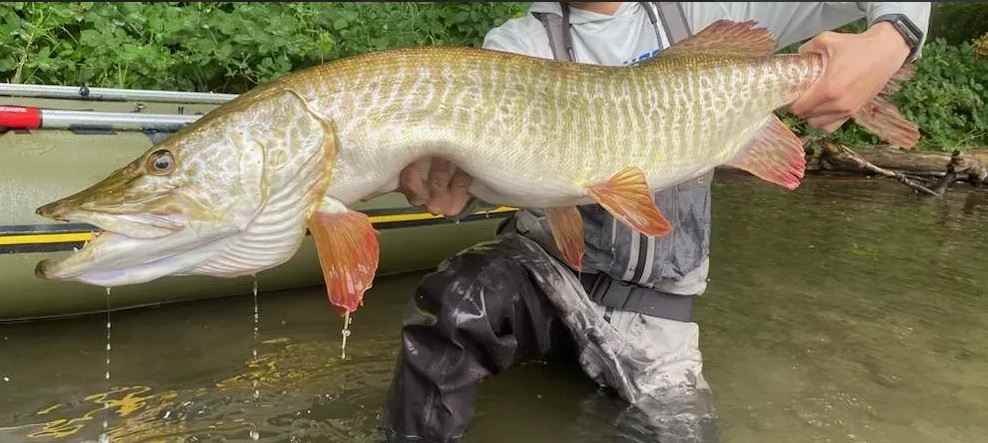
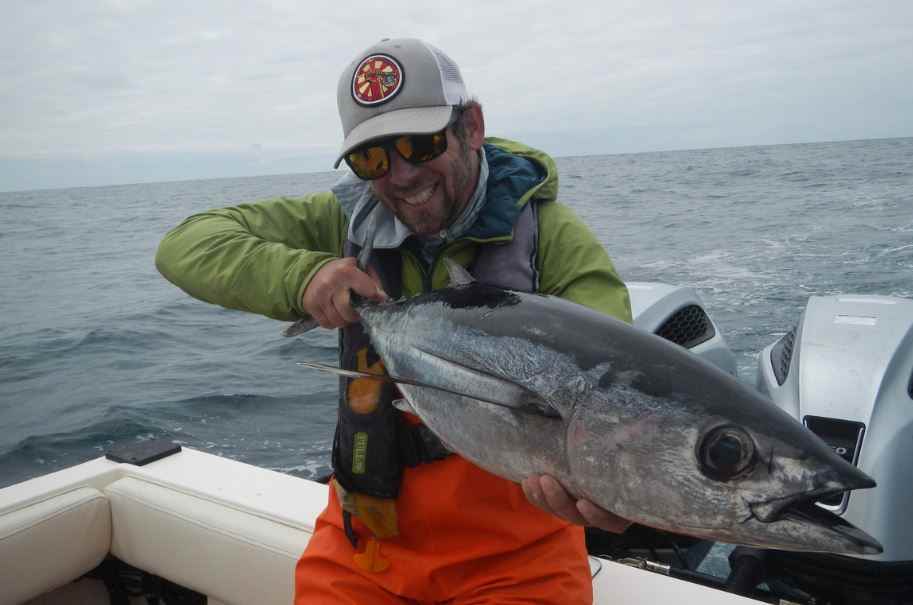
My friend in PNW primarily targets tiger musky on fly rod. unless false albacore are running
-
@Columbia Craw is pretty close to the truth there. Spinning tackle will teach you all kinds of bad habits, because cast-jerk is rewarded with distance in a spinning cast. Baitcast is a whole lot more like swinging a bat or throwing a ball. Baitcast is also much closer to fly rod. Jerk with a fly rod is tailing loop. Jerk with a baitcast is start-up backlash.
-
Start here, and analyze your backlash - where it's occurring in your cast. If it's mid-cast, you need higher mag adjustment. If it's start-up, you need a smoother start, or a centrifugal-brake reel. When you have it solved, then it may be time for new line, but it's unlikely line is causing backlash.
-
actually, bikes and rods aren't the same at all (except maybe the N+1 marketing). A good distance bike for grownups is comfortable, reliable, and practical. MOST cyclists don't need racer's edge, only Racers do. Not too many people are going to rebuild their 1975 rod four times, but with a bicycle, you may get a better result than buying new. Fishermen, on the other hand, can better take advantage of subtle improvements in rod technology.
-
All the recurring references to The Professionals on BR never take into account the professionals don't buy their tackle, but it's provided by their sponsors (in crates). They use what they're paid to sell. All the people who mimic their tackle bought it hook, line and sinker. The exhaustion factor is more horse hockey. What you gain with a fast light-feeling rod is more feel through the rod. By definition, mass = damping - the lower the mass, the more you feel. You also don't have to pay a fortune to get a Toray graphite rod. This $130 rod happens to be the least expensive rod I fish (I don't fish dozens of rods - at least not at the same time). But I will always have one of these, because I literally feel every blade of grass through this ML rod. @gunslinger Thanks for your intelligent question in a reservoir of extrapolating and polarizing answers. I also recognized you never asked about $900 rods.
-
They're even OOS in Switzerland... 6'10" shows up on ebay. If you want my highest recommendation, look for Yamaga Blanks Blue Current III 74 to show up at Plat - or contact Plat to reserve one from the next run. Or for more cost effective, NS Black Hole makes a 7'6" tubular tip - they are aimed at Japan market, and Korean rods in that market have to try harder by giving more for the price. This seller drop-ships from Seoul. This is the 8' NS Black Hole Rockfish, which has landed doubles with seatrout, redfish, and snook. @Tail Slap may chime in - he's bought some higher-grade NS Black Hole rods.
-
but, if that 15% is all in the upper half of the rod - e.g., a smaller diameter - and it still gives the same fast rod taper, it makes for a tremendous difference in the feel of the rod weight.
-
I have NLW CT tournament reels built into 5500 surf-lure and 6500 surf-bait braid reels. And LW 4600C and 1500C built into braid-raced close-fishing reels. 100% backlash proof with extreme weight range.