
bulldog1935
Super User
-
Joined
-
Last visited
Everything posted by bulldog1935
-
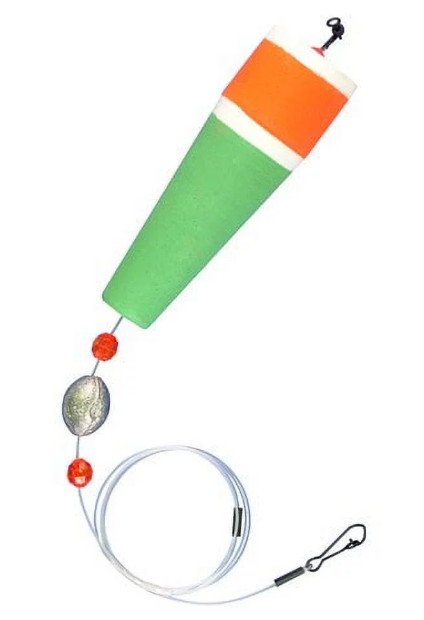
Adding another time to go to MH for inshore - if you fish live bait - Carolina rig on channel slopes, or weighted popping cork on the flats. Normal weights on either rig are 3/8 to 1/2 oz.
-
@NorthernBasser has a good answer. My case could just be me, decades of IM6/GL2. From finesse jerkbaits to Mirrolure, I stick more fish on a moderate mid. It's not in the tip or the length, because I've had big success on 8'6" GL2, 8'2" Lami Classic Glass, and 8'2" Yamaga Blanks (even a 9' Lami G1000 ML). I added a Valleyhill solid tip MH, 7'5", which casts a quarter-oz into next week, but the XF mid is just too fast for the way I like to work the bait. When I put that rod down and fish my 7' Crowder IM6, I stick more fish. The one place I prefer XF mid is metal slow jigs (which I fish down to 3 g and 25 mm in winter).
-
the OP discussion, though, is about comparative line sizes - braid diameter 0.15 to 0.20 mm, tied to fluoro size 0.26 to 0.30 mm. For my 40-yr knot history, the diameter difference begs Allbright knot. This is what I'm most always fishing, fine braid for cast distance, and larger fluoro for abrasion and shock resistance.
-
CA - Zap pink label.
-
easy, go to improved Allbright knot - only leader knot I ever use. This knot is PE#1 (25-lb) braid to 14-lb leader. The trick to tightening this knot, remember the direction you wrapped your loops. After snugging all four knot leads together, partially tighten the braid tag end first, rolling the braid loops in the same direction you wrapped the loops - lightly take up slack in the braid standing line. Before it's tight, take up the leader tag to move the leader bend close into the knot loops. Finish tightening the braid tag while rolling the loops, and final tighten the standing lines.
-
All my reels get drag set using spring balance coming off the bench, and never get adjusted again until they leave the bench next time. Proper drag set is 1/4 weakest link, line or leader breaking strength, or 1/4 rod max line rating - whichever is the smallest number. I set drag at the first guide using spring balance. 2-1/2 to 3 lbs is a heckuva lot more drag than you'd guess until you actually measure it - most people "set" their drag at about 1 lb by feel. The reason for this fraction is shock loading, which can multiply the load by 4 times. You're fishing with a known rather than nebulous feel. This is how you avoid break-offs and rod breaks, and get fish to hand quickly and safely - your reel is paying drag only when needed. You can probably push this to 1/3 with USM lines, since you don't know the actual breaking strength and they under-rate on purpose, but Never higher than 1/4 rod max line rating. This system has never failed. Never seen a good argument for something different, and have seen them play out poorly on the water. Offshore with big fish with soft mouths is where you need lever drag to vary drag between set (max = 1/4 weakest link) and a lighter run value - the reason here is first plant the hook, and back off for long energetic runs of big fish with soft mouths.
-
My beater magnesium Steez is 5-y-o The Daiwa Neo reel cover that came with Steez is plenty fine - only photo I had is the same cover on my SLPW Zillion (bought aftermarket). I only cover my reels for travel and storage, but they're in a rod holder when not in hand. Do some of you guys throw reels against the wall? This is a 1918 rod, and a 1940 reel with Japanned enamel finish.
-
The single-best fluoro also happens to be the most expensive, with maybe no stock in US - Toray Solaroam ExThread - just has all the right properties, limp, low memory, tough - and they get there with a different formulation in each size. 2nd best is Tatsu. Probably can't go wrong with Invizx, especially if you see yourself buying a bulk spool. In the salt, I fished nothing but Abrazx for a decade. If the question ever comes up what makes fluoro "invisible" in the water - fluoro transmits 100% UV, while mono absorbs enough to create a UV shadow.
-
Not exactly a recommendation, but moderate taper wins here for me, and my hands-down best is St. Croix Legend Glass. But the heavy rod balances best with a large-frame reel, and gets complicated matching a braid spool...
-
Almost all fishing is inside 90' The rare exceptions are reaching distant structure; e.g., crossing a tide pass to fish both the far slope and the near slope doubles your fish chances.
-
Actually, it is - my back yard is an acre, I have a casting range laid out, and convenient stands of wild shrubs at 80', 110' and 130' - if it crosses the fence, it's over 150'
-
Andy, I would definitely go with medium rod for TX coast. The most productive lures are soft-body paddletails and variants, where fishing heavier weights tends to drag up grass instead of catching fish. My go-to lures are 1/4-oz TSL Grasswalker neutral-density soft swimbait - really shallow grass Z-man MinnowZ on 1/8 oz Texas-Eye jighead - a little bit deeper in the column And cocahoe minnow on 1/4-oz jighead on deeper grass you can't see. I go to MH in the winter for big topwaters and Corkys imitating 5-6" mullet.
-
Consider that the max refers to your leader test or drag set - set drag to 1/4 of your weakest link, leader, line, or rod max line rating. Most all of my inshore combos are fishing X-braid w/ 25-lb breaking strength, and 15-lb leader, 3-lb drag set. Since we don't know where you are, would be tough to pick between the M and MH. On the TX coast with 15,000 sq-mi less than 2' deep, I'm most often fishing ML for those species.
-
Buy the Steez, give it to me, then you're out. I wouldn't trade my '19 Steez for anything, but you may find closeout prices coming on '21 Zillion when its replacement is introduced.
-
umm, reverse-spiral skip-cast...
-
my first 2-hand cast attempt with 8' Rich Hedenberg ML Surf rod sent 1/4 oz over the fence and halfway across the neighbor's back acre - 75 yds - Oops. better save this cast for the beach... Speaking of 2-hand cast, my best 4500C BFS result on 6-1/2' 2-hand rod, at Arroyo dock fishing in March, consistently sent 3-g metal micro-jig to surface slashes 150' out.
-
It's always fun to fish a light-in-hand rod. It's tiring to fish a tip-heavy outfit. It's always more fun to increase catch rate on a heavy rod because of its moderate taper, e..g., glass or IM6. In niches where Fast action is an advantage, you can't get too light. I have examples of both heavy and light rods in their niches, and they each earned their keep there.
-
=
-
I use leaders strictly for shock-tolerance with braid, tie them short (18" with microguides to 4' with full-sized K-guides, will go to 6+' on a surf rod), I put a perfection loop on the leader business end, and loop-on micro-swivel snap, or micro-swivel bite trace for toothy fish. This is stronger than any single-bend knot. But I never fish spinning w/o micro-swivel. (leader Allbright knot)
-
Even Mitchell figured this out in the '70s, and made 440 Ottomatic - the only Mitchell that will manual bail. It's actually kinda cool, touch the bail with your rod index finger and it opens, do it again, and it closes.
-
Never, Not One. Ever. Manual Bail Technique.
-
@king fisher there's a hierachy in fly rod MOC with rod length - and there's overlap. Below 7-1/2', graphite simply doesn't work - in order to be strong enough, it's a tomato stake. Especially 7' and below is where e-glass shines. From 7' to 8-1/2', S-glass and cane are the same equivalent modulus, and stand out for both para and progressive rod tapers. In 9' rods and especially longer, there's no reason to use anything but graphite, which is where the industry turned in the '80s. But there were glass jewels from the '70s that more than hold their value today, and everybody wants - e.g., 7-1/2' Vince Cummings Water Witch (St. Croix), 7'7" SA System 5 (Fisher), and any Phillipson under 8' In the salt, my Sage RPLX-7 hurts to shoot line, though it will shoot line to 140'. While my 8-1/2' Japanese S-glass (also para) will do anything the RPLX will do up to 15-kt wind, where using a fly rod is questionable, anyway - and it doesn't shock you to shoot line.
-
The only references I could find to Pflueger cane rods were posted here. You'll also find the audience for discussion on that link - work on your photos. MontyMan implies Pflueger fly rods were made by Union Hardware, which also implies they were prewar. You can be certain Shakespeare/ South Bend didn't make it - they literally remained in court over reel patents coninuously from 1915 until Shakespeare bought Pflueger in 1966. Condition is everything, and photos are always the place to begin. 8-1/2' is a very desirable tailwater rod, or big western river rod. While the length difference doesn't sound like much, 8-1/2' cane is notably lighter than 9' and more desirable to fish (9' is more common in blue collar cane, and all are over 5 oz) All this said, ballpark value on a fishable rod is $200 +/-
-
@DaubsNU1 - the biggest rod difference with MOC and lay-up is rod weight. Within strength limits, you can duplicate most any rod taper in most any MOC, but you may pay for it in weight - there are places the taper matters more than the weight, and vise-versa. They already figured out the mass of dark matter in the universe has to be greater than the matter we can detect. So it's either the gravity that pulls you this way, or it's the Lay's potato chip thing - you need more than one brain to leader on baitcaster.
-
Line has been the biggest change for me, and took the longest - I waited until braid caught up with my requirements - smooth, round, hard, diameters from 0.23mm down to 0.12-mm, with breaking strengths from 45 lbs down to 10 lbs. Leaving everything about monofilament and line memory behind. FWIW, my last Lew's Speed Spool (BB-25SW) caught its last fish on 12-lb Abrazx fluoro at the end of 2018, and my last 4-lb Kamikaze copolymer on finesse caught its last fish on the same trip. I began fishing braid (832) the year before on Super Duty and Tica spinner - also had a lifetime snook gill-cut my fluoro that trip. Things got a lot smaller when I found Japan X-braid the following year. Rod technology has been hit or miss for me, especially fishing soft baits - I'm always more productive on moderate taper rods, including Lami glass on the Lew's BB-25, and Crowder IM6 on the Super Duty - obviously, the rod weight is less important to me. I get faster, lighter-in-hand rods, especially for bottom contact, but I've gone 100% threadline braid from surf to rivers, and won't ever go back.