casts_by_fly
Super User
-
Joined
-
Last visited
Everything posted by casts_by_fly
-
I went the other way and replaced chunks. A craw is a chunk with a longer body. No sense carrying both around. When my supply of chunks is gone I won't replace them. The craw can be used for other things but a chunk is a one hit wonder.
-
How old is it? If more than 5 years or so it sounds like a brush kit is needed.
-
Not Neko specific, but with FFS you learn a ton about fish behavior. Some fish are active, chasing fish. They can be so active that they are hard to follow with FFS and even harder to get a cast in front of at times. Some are happy to eat, but are just milling/loafing around suspended. Some fish are attached to structure and are hard to see but if you put something on them they will hammer it. Then there are the fish that just aren't going to eat. They will follow a jerkbait 50' all the way back to the boat and just slowly turn away. They will follow a minnow bait up/down/across the water column. Fast, slow, steady, erratic. Doesn't matter. Sometimes you can get them fired up with an erratic big bait adn eventually they will eat it, but mostly not. These are time waster fish. They are the fish that you think, just one more cast and he'll eat it. Then 20 minutes later you still haven't caught it and you've wasted that time. The sooner you recognize that a fish isn't going to eat, the sooner you go find one that will. If it were me, I'd try a couple different profiles of baits- everything you're throwing is a straight worm. If you know that there are fish following it down like that and you're going to do it more than once, I'd have a couple different profiles- a bit straight worm like you've got, a craw worm with some floating claws, something even bigger like a 6" senko, maybe something like a bang stick that will stand up and sway. Try a couple different things until you find one that they will hit. And if they still won't, move on to the next one.
-
Yes
-
for sure it will. Probably it will, so long as you learn how to use it and what you're looking at. Probably not in the example there. If the fish are in the weeds it definitely won't. You'll see where the weed line is, but sonar can't see into the weeds- it's not x-ray. That is a very useful part of it. Scanning, finding structure, marking waypoints and always knowing where they are. I have a bunch of rock piles marked off on one lake. Most I saw when the lake was super low last winter. I mentally saved them and then in recent trips I've scanned over them to mark the waypoints. Of course I haven't caught a bass from any of them, but they are all good for a couple crappie. The good news is that any fish finder that you put on the kayak will transfer to the boat. It is just a case of how much you want to spend on one and what you want to do with it. When I moved kayak to boat this past winter I contemplated moving my helix 9 and mega live 1 setup to the boat. I didn't in this case because the helix is being discontinued so the lifespan was limited, plus the guy that bought the kayak wanted it set up as is to save his own setup time and effort.
-
I'd go smaller personally. You want as much the tail free to waggle as possible so the shorter hook will be better.
-
all you can do it look at the pictures on TW and then dig. That trigger is pretty unique visually so scanning pictures is probably the fastest.
-
you can't move it. You would have to replace the entire reel seat with a different styled one.
-
fair point on mapping. If you're building a map with quickdraw or autochart then speed is immaterial. It is taking a constant reading of the bottom depth and building the map in the unit. I was referring more to side and down imaging requiring a relatively constant speed of travel.
-
If the fish stays still and you have a good grip, and, and, and, then it might be fine. But I’ve never weighed a fish that held still long enough to not flop off a hook. In that case, the could lightly unhook themselves and rehook in the gills. They could catch their gills while flopping around anyway. They can tear the gill plate (even tear it off). Like Gim said, they can flop off the hook entirely and hit the ground. A gripper based clip is so far superior to a plain hook that I can’t believe manufacturers even sell a hook anymore. If you need to weigh a fish, in a bag is the best choice. If not, then in a wet rubber net will do also. Otherwise a lip gripper. if you only have a hook based scale, then get a bag or hook to hold the fish for you. Or, don’t bother weighing them all.
-
Right hand holds the rod, left hand strips line. Right thumb is on the spool at all times while in free spool. Hit the button and start pulling off line gently but quickly. When you get to a jam, figure out why it is a jam and sort that out before pulling more or harder. If it has wrapped loops under loops then I find cranking a half turn of the spool back on and massaging the line on the spool left and right will often release it. Sometimes if the line is under a loop you can pull on that loop and it will pull off the spool and let you keep pulling on the running line out of the reel. I haven’t had to cut one out for a couple years now and that was a treble hooked bait that caught the boat on a big wind up cast. Like Tom says, prevention is better than a cure. After casting enough you usually get a feel for when a reel is going to start to go squirrelly. The best bet at that point is to jump clamp down with your thumb and kill it right there. There are plenty more casts in a day but if you blow it up so bad that you’re picking it out for 10 minutes or have to cut it out, that’s valuable time lost.
-
Do you know what prop you have on it? I played with mine and ended up jumping from 6 to 10 mph. To be fair, I started with the pro kicker which is intended for low speed and high control and comes with a 4 blade 5 pitch prop and a lower unit gearing for a 15 hp, not the 9.9. But that’s still a pretty big jump if you haven’t played with yours.
-
I did the opposite to frydog- went from kayak (same as his) to a boat. I was in the kayak for 4 years and moved to the boat this spring, knowing what I liked and how I fish. I think the answer depends on how you fish. A recent trip out, there was a gent in a kayak with no electronics, nothing special, just a couple rods and a crate. It was creeping down the bank in 1-2’ of water and throwing a wacky senko no more than 4’ from the shore. When I talked to him around 8 am he had caught 11 and was having a good time. There would be no benefit of electronics for him in that scenario. If you fish by going down the bank or floating with the current and casting to cover then there isn’t a lot of point. Do you have a paddle, peddle, or motor? If a paddle, I’d say the benefit for you will be limited. A fish finder relies on the boat moving to build the image so unless you can paddle at 2 mph while watching your fish finder and marking things on the way you’re going to struggle. A peddle or motor alleviates that concern. Electronics are great for finding structure in water 10’ or more, especially side scan. If you are fishing rocky lakes and off shore then I would say it is going to help you out a good bit. Though, that’s tougher stuff in a kayak unless you have a spotlock motor or are good with an anchor. For me personally, i used it in the kayak for the things above (i had a motor and spotlock) and it was useful. Without it, I would have just pounded the bank and never tried anything offshore at all. Moving to the boat is only better in that regard- spotlock and big motor being the reasons. I also have FFS which is another conversation. I don’t think that’s what you’re asking so I won’t dive into that.
-
I'm going to disagree a bit with you here (maybe it's just semantics). Yes the surface water will be warmer like you note. But that's not a true thermocline, at least in the sense that most use it. The first couple feet of the water column is decently well mixed and you'll get surface warming like that which comes and goes (and cooling in the fall!), but a true thermocline is a more stable separation of the layers that isn't going to be mixing with wave and wind action . 10' would be the minimum depth I'd be considering a thermocline and more typically deeper. Of course it depends on the water body and the wind/wave action as well as any incoming streams. A place like toledo bend that will have 3-4' waves on it at times is going to be mixing that top 10' pretty easily and I'd take a wild guess that the thermocline there sets up close to 20-30' deep. In a pond that is only 8' deep I wouldn't expect a thermocline. I have a 300 acre local lake that goes to 12' in a bowl shape and there is no thermocline that sets up there either (there are no real streams that go into it either and plenty of weeds to quell mixing).
-
dang it, why didn't I type it out like that. This is exactly my situation as well. A high rod tip is a start. The lightest head weight and the biggest blade you can get is the other ticket for crawling one. And I find that crawling one across the shallows in the dark is probably my favorite way of catching bass.
-
I assume you've read this thread already. I have strong buzz bait opinions, but at the same time there are lots of ways to skin a cat. I have fished heavy mono for the longest time. I swapped that rod to fluoro for other reasons, but fished a buzzbait with it just fine. The last trip out I was trying something a little different yet and threw one on braid on a rod slightly lighter than the norm for me. The line shouldn't be touching the water so sink/float doesn't matter. Strength and abrasion resistance do if you're throwing it into stuff and you should be throwing it into stuff. The trial last trip was a new buzzbait on a familiar (but new to me) reel dialed in to a buzzbait and skipping it back up under things. The setup and skipping works great, just not the right time and place for throwing a buzzbait. I wouldn't bother with a leader. If you're throwing braid then you're throwing 50 or 65lb and tangles aren't a big deal. And your line isn't in the water so visual isn't a thing. If you've having trouble getting it on the surface you aren't reeling soon enough. I'm usually reeling before the lure hits the water. Sidearm/roll casting almost exclusively, never overhead bombing unless it's for distance on a big flat and then accuracy/on top immediately doesn't matter as much. I cast right handed and reel right, so I cast and as the lure is still in the air I am swapping hands. Right before touchdown (with a high rod tip) I am thumbing the spool with my right thumb and grabbing the reel with my left hand. Then my left hand/arm let's the tip of the rod down on a tight line so that I'm controlling when it hits the water and when I'm reeling. It takes a few casts to get the motion down and it would be better if you reel left and cast right (leftie casting and right reeling would work too but leftie casters are just weird people). I like a short, stubby trailer like I detailed in my post on the first page. Something that has mass and volume so when a bass uses its mouth like a vacuum there is something solid to suck in and not just the air inside the skirt. Yes, a buzzbait seems to draw a bigger class of fish at times.
-
I did this 2 weeks ago in my dad's boat. I called it poor man's spot lock. There was a breeze down and slightly across the lake that would blow us into the grass we were fishing. I set the constant 'on' and adjusted the speed and direction based on the wind. Once you got the hang of it and once the wind was fairly constant it was manageable. A pain, but manageable in the 3-4 mph winds. Not sure if you've seen 'drift mode' on the new Quests. Basically what you're describing but with more control. Instead of setting a speed forward vs a larger speed against you (current) you just set the speed you want the current to move you at and it does the rest to let you slide with the current but at a slower speed than the current. Pretty slick for some.
-
you want to leave the post in the deck but pull the seat off the top? I don't think you're going to find that. The seat is bolted to the square plate on the top of the post as standard. But the base of the post goes in and out of the deck so you can lay the whole thing down to put a cover on.
-
They are fine. At the MSRP prices I think they are over priced. You can do better for that amount of money. Doyo makes a lot of reels for a lot of people with a lot of common features and specs. If you look at the features across multiple reels you'll see common technologies, similar designs, etc. They will all perform similarly. Any reason why you're locked on BPS gear? And what price point?
-
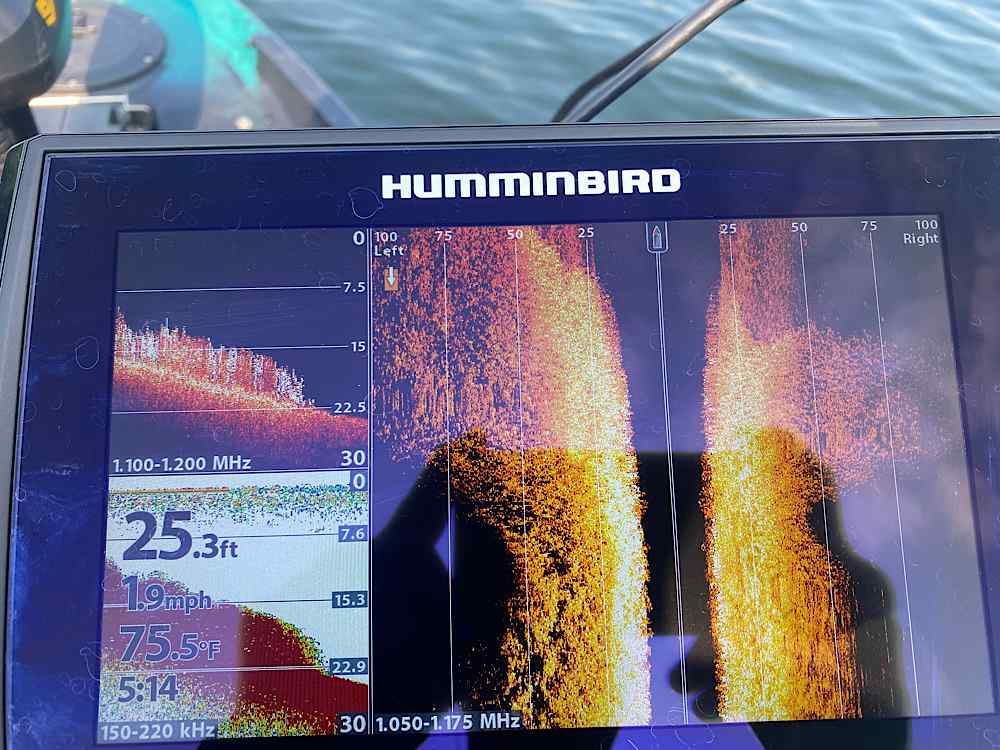
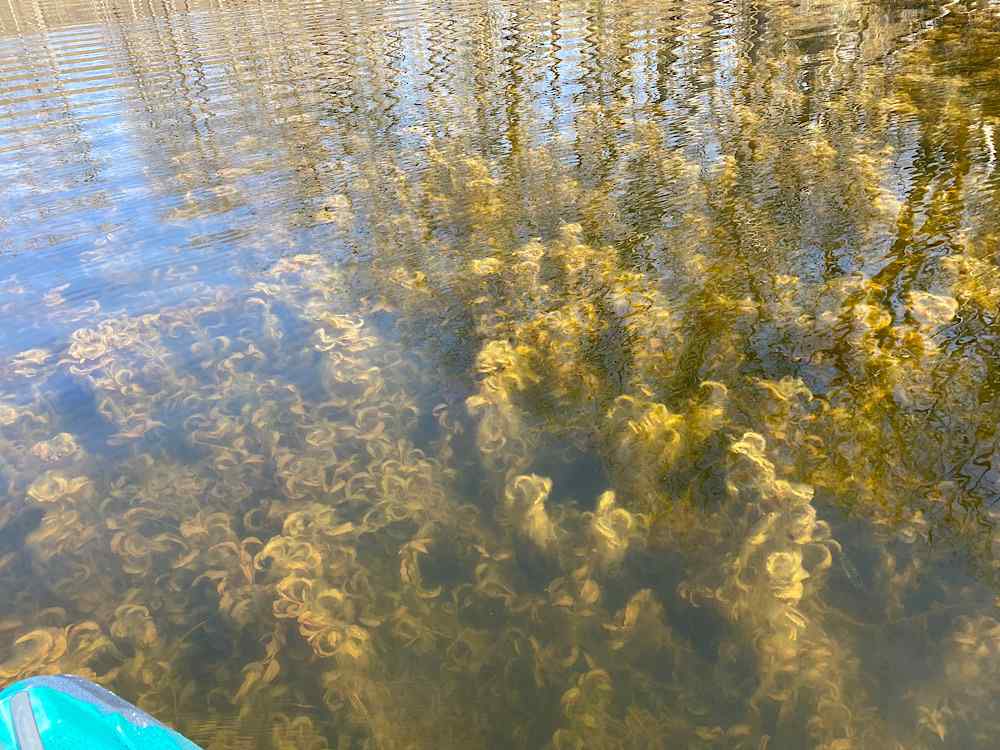
With a rake. On day one just drag a rake through it a bunch. Then on day 2 enjoy the new casting lanes! Guys actually do that in europe for carp and coarse fishing in places where the lakes aren't managed or where you can't control what peg (locked location) you are fishing from. You'd clear out a 10x10' patch down to the sand or gravel so that there is a clean bottom for the fish to graze on and you load up the hard bottom with 'chum' of one type or another. Just a fun aside that your post reminded me of. In all seriousness, I feel your problem. I grew up fishing western PA with similar conditions- usually stained water, more wood than vegetation, etc. Moving to NJ was a big swap- 5-10' visibility most of the year or more, deep vegetation, much higher angler pressure. Lots of videos and threads here on BR (a couple by me even). The short answer is that you either have to fish on top of it, on the edge of it, or down into it. If you have 6" or more of water on top of it, buzzbaits, walking baits, ploppers, toads, swim jigs, spinnerbaits, flukes, and even vibrating jigs will work. But only if they are looking up. With that type of clarity you're only going to get that in the lower light times of day or heavy cloud days I find. I love throwing a wake bait or a big single colorado spinnerbait (and waking it) in that shallow of water, but it doesn't always work. Look at the second picture below for pondweed that is nearly topped out (this was APRIL!) and hard to fish anything moving through it, but on top it was no issue. On the edges they will need to be in a chasing mood but you have more water depth to play with. In one of the screen shots below you can see the water depth at 22' still has grass growing up off the bottom. At that depth you can see that it is 6' off the bottom until you get up around 10 FOW when it is solid from the bottom to the top (that's not shown on this shot). That means in the 10-22 FOW range you have 0-15' of water to fish things in without being in the grass and then another 6' of grass to work with. Bass will root down into that bottom grass but they will also stay up on top of it. And they will be more likely to shoot out of 6' of grass from 22 to 16' deep than they will from 6' to 0' I find. So in that scenario, fishing moving baits that skim the top of the deep grass is a good choice. Or you can punch into it. This is slower for covering water so you should have some inkling that the fish area there in the first place. If you're on huge mats of weed like the pondweed below, you're going to spend a lot of time throwing at empty water. Try to find smaller areas where the fish should be (consider the bottom underneath the grass) and focus on those. I lean texas rig because it comes through easier and there is less time spend cleaning weeds off your weed guard.
-
if you're looking at smaller aluminum boats in PA, you're going to find that there are a ton of 20's because of the HP restrictions. If you're fishing a mix of lakes with and without them, most people chose to take the small motor to be able to fish everywhere. I did the same here with a 9.9 but I don't have any 'big' lakes with the biggest coming in at 2700 acres and about 6 miles top to bottom. And I don't even fish that one. The other 3 unlimited lakes here are less than a mile and a half across in the longest dimension so a 5 minutes jaunt in my little motor boat gets me anywhere. And I agree with upgrading the trolling motor first. Then pick either the electronics or the big motor depending which is more limiting for you.
-
Unhook it from the hook keeper to get some slack and swish it over the rod a couple times. Then just throw the bait out into the water with your hand. It should all straighten.
-
whatever your lakes and fish require. I know that’s not terribly helpful but it’s the truth. If you’re fishing thicker cover you might only need to pitch 20’ most of the time but you have to hit an egg sized hole in the pads. If you’re fishing laydowns you might only have to hit a serving platter and let the bait slide down the trunk. growing up we had a telephone pole in the yard that was about 50’ from the sidewalk. I’d pitch a jig for hours at times just to hit the base of the pole. That’s useful for getting the motion down and learning. But more important for fishing is being able to hit a variable distance the first time casting to it.
-
I’m surprised you found the ultrex whiny. The power drive in the autopilot for sure but I don’t hear hardly anything on the ultrex.
-
I'm from PA originally back when it was a 9.9 state. Everyone had a 15 or 18 (tohatsu) with 9.9 stickers. Then the state raised it to 20 and is one of the few in the country that I know of that has a 20 hp limit as the norm. I'm in NJ now and we are 9.9, hence my current boat. My 16' storm with a 9.9 does almost exactly 10 mph. It does feel slow if you're used to running by yourself and getting 20 mph, but if you're coming from a slower boat like I am then it's not so bad. And the longest run I'll make straight is about 4 miles which is about 20 minutes.