tntitans37216
Members
-
Joined
-
Last visited
Everything posted by tntitans37216
-
First thing is if you don't mind getting wet then it's easier and quicker but if your one that doesn't want to get wet and climbs around the trailer tongue and truck bumper then that is harder and takes longer. Launching Boat: If it is cold or don't want to get wet, a lot of people will tie a long rope to the boat and back into the water and let the boat float off the trailer. Some tie the rope to the back of the trailer, I usually put the end of the rope (or let out enough line to cover the distance needed) and close the bed cover down to keep all of the line from coming out. Drive down to the water and slowly let the boat float off the trailer. Then pull up slowly (you don't want to jerk the boat to shore from the rope), and pull up enjoy that you can walk behind the trailer. Then with the rope pull the boat slowly to you (don't pull to fast of the boat's bottom will rub against the boat ramp more then you would like. Once the boat is close enough grab it with your hand hand then hope on when it is close enough, and kind of push of the ramp as you jump to push the boat away. Then you can move the boat to the dock. If you don't mind getting wet like me, then I undo the back straps and all your normal things. Then I back down to the water until I see the boat starting to flat. Then I get out walk back to the boat, an dundo the front hook. Then I start pushing the boat back off the trailer (since it is floating it is easier then trying to push off the boards or rollers). Then I step up onto the trailer and walk down the wooden board that is screwed down onto the trailer under the boat (I suggest adding the board because it gives you something to walk on instead of the trailer rails, which you can slip off and hurt yourself). Then when I get near the end of the board I hope onto the boat and with the momentum you float off and past the trailer. Loading Boat: I back the trailer a little lower then normally people. I have long wood carpeted guide rails so I don't just need the back of trailer to help guide the boat on. I use the trolling motor to guide the boat over and then I guide it in over the trailer with the guide rails helping keeping it in the right spot. Then Then once I'm half way over the trailer I pull the trolling motor up and the momentum keep sht eboat going. Then when the boat stops from one of the front keel rollers, I step off the boat to a wooden board that is screw on to the trailer under the boat. Then I walk the boat up or if it is close enough, I pull the strap out and hook it to the boat. Then I wrench it up as far as I can. Then I get in my truck and slowly pull up as trailer and boat come out the boat's back lowers down onto the trailer perfectly. Then once out of the water then pull off away from others so you are out of the way. Then do your normal things. That's my way, and the more you load and unload the boat the faster and easier it is.
-
Nice looking catch
-
Nice pics, just make sure it doesn't leak water
-
As long as you keep up on the maintance it should last a long time. I've got a 1965 55HP Chrysler engine on my boat and still starts right up just about on the first try. Also one thing I forgot to mention is boat sales are higher in the spring and summer then in the fall and winter. Winter when boat sales are at the slowest you can find a real good deal. You can also find a deal at the end of the season because some people don't want to pay for te storage fee for the winter. Also go with your gut, if your 100% into the boat then their might be something about it that isn't right. Just keep looking and you will find that right boat that will catch your eye and be a good boat. I kept looking and got my first running boat last year in january and paid $700, doesn't get a drop of water in it, motor starts right up, and no weak spots. You can't beat that, but I looked around a lot.
-
When you look at it one key is sell (actually feeling/walking on parts) to see if their is any weak spots, especially in the transom. Another thing you can do is do a compression test. You can buy a compression tester for, I think they are about $20 at a auto store. Just take out the spark plugs and hook up the tester to where the spark plug was and start crack the engine (it would start because you took out all the spark plugs) but it will give you a compression reading. Do that to all cylinders and just make sure they are good. I think you usually get about 120-150, but what ever number you get all the cylinders should be about the same number. It might not be the same number like 125, 127, 124, 123, etc... That is fine, just not 125, 128, 124, 50.
-
Most likely it is the ground. You have the ground wire from the trailer to the truck, but most of the time that isn't a good enough ground. You pretty much get your ground from the trailer to the truck by the trailer ball itself. That's why something you will see a trailers lights flicker when it hits a bump. You can scrap off any rush that might be in the coupler on the trailer where the ball goes. I have that problem with a 16ft open trailer of mine. I usually make some real sharp turns and almost jack knife the trailer to get to knock off any dust or rush to get a good ground connection and I'm good after I do that.
-
I would go with the carpet. Mainly because it would feel better to stand on and if you got water in the boat, even thou the rubber material is better then just the hull material, I would still think it might be more slippery. The carpet would still give you traction wich is good when getting in and out of the boat.
-
I will do the rope trick when it is cold. That way I don't have to touch the cold water. Just be carefull when you start pulling up and pul the boat to the boat ramp. You don't want to pull up to fast and have the boat coming to shore to quickly. I don't mind getting my feet wet, so when I unload, I pull it down far enough for the boat to start to float. Then I'll walk do to the boat and I'll unhook the front hook. The I'll walk down the trailer with the boat pushing it off the trailer. I have a piece of wood for a walking board. Then when I get to the end of the trasiler I hope on to the front of the boat. I then put the trolling motor down and go right ot the dock. Then I come over and get back in my truck and pull off. When you pull out without the boat just make sure to give it a little gas because that is the time you will most likely spin the tires, because you don't have the boat weight pushing down on the back tires. Even with the boat it can still spin the tires if you are at a busy ramp and over time the road gets wet. When you are pulling the boat out just keep the momentum going and don't stop until you are on flat ground or a good dry spot. Loading the boat, I do the same in reverse. I tie the boat to the dock, giving enough room for other boats to dock or let people off. I try to get the spot closest to the boat ramp. Then I go and wait in line and then pull my trailer in enough that the side boards are still sticking out of the water. Fo my boat trailer set up, it's not a factor trailer, I go down to close to my tail pipes. Each vechile and trailer set up are different. Then I go over to the boat, and I put the trolling motor down and steer it over to the trailer. Once I get over the trailer I hope off and stand on the walking board. I pull it up as far as I can. Then I hook the front hook and wrench the boat up the rest of the foot or so left. Then I get in the truck and and slowly pull up and the back of the boat settles down on to the trailer as I pull out. The side guide rails help it settle perfectly onto the trailer. I think letting the boat come down onto the trailer is easier and quicker then having to use the main motor to slide along the rollers which sometimes you miss the front keel bumper. Then I pull up to a open parking spot so the next person can load or unload their boat. Again it only takes me a couple minutes. The first couple of times you might be nervous, but once you do it 1-2 times you will see how the best way to load your boat and you will know it is pretty easy. The only hard apart about loading the boat is if you and one that isn't every good at driving a boat. Just like cars, not everyone is a good driver. Those are usually the ones that take longer and they usually are trying numerous times for drive up the trailer trailer to get it perfect or seem to never get it right. Side guide rollers or boards are very very helpfully in loading a boat. That make it a breezy to load a boat.
-
Thanks everyone. Yeah Painter Dude, that was what I was thinking but just wanted to make sure.
-
I hate it when the net gets caught on something, especailly at night time when you can't see as good. Most of the time I just lip them just so I don't have to worry about the net being tangled or the bass getting the hook tangled in the net.
-
I haven't been adding any thinners or anything to it. It's a old boat trailer, and not like the new bass boat trailers that look like showroom shine. It had some rush and needed and freshen up.
-
I am in the process of painting my boat trailer. I have already sanded and put 2 coats of primer on it. It wasn't fun laying under the trailer painting the places under the boat. I have put one coat on the side of the trailer. My question is I was thinking about putting the boat in the water, then I can bait the trailer pretty quickly with the boat off and I can get to the corners better. I was then thinking about then taking the boat out as I let the paint dry. I am using a oil based paint, and I was wondering how long I should let it dry until I am safely ok to back it into the water to load the boat back on it. My dad was saying I should let a oil based paint sit over night before dunking it back in the water. I was thinking that if I paint it early in the morning 8-10am, then let it sit in the sun and dry that I should be ok to load it about 5-6pm. How much time should I let it dry before loading the boat back on it?
-
kayaks are more stable and easier to get maneuver then a heavy canoe. Canoe you can put more stuff in, but that also means more weight for you to paddle too. I have a Otter XT, and I mounted a rod holder in front of the cockpit, I drilled a hole and glued a screw in place and I use a wing nut to hold the rod holder in place so I can remove it if I want to.
-
I like the sit in kayak better.
-
I think your best bet is to get a dual purpose battery. It has more cracking power then a deep cycle, but it also can be drained down and charged more often.
-
I recently got in a little bit of legal trouble (dui) so my recreation driving is basically going to be gone for a year. I have 2 batteries, one dual and the other a deep cycle. What should I do with the batteries since I wont be using them for a year? I got them last year so they aren't old batteries. I was thinking about maybe letting my dad use the deep cycle battery on his cuddy cabin boat and can use it to run lights at night when he stays out over night. Then he can recharge that way it is being used. Or is it better for me to just let them sit in the garage and just put the charger on them every now and then? Which is better?
-
most fishing boats now come with tandem wheels, not because of the weight issue, it's the movability. Single axles turn quicker, which is good if you are trying to park it in a tight area, but they are also harder to back up because they want o turn quicker and are more likely to wobble going down the road. Single axles are usually easier to move around with your hands, you can pick the front of the trailer up and move the boat around or move the tongue over to the ball of the truck easier. Tandem axles are harder to just pick up and move the tongue over to the ball of the truck. Tandem axles stay straighter which are better on the highway because it helps keep it from wobbling and backup up it stays straighter easier. They added bonus is if a tire blows you have the other tire to hold the boat and you can drive to a safe area and replace it or fix it. While a single axle if it blows then you have to pull over right away.
-
It depends on the compression levels in your engine. My dodge V6 is rated for 87 and in the owners manual is says to use 87 and not to use 93 for a long period of time. But my dad's corvette you have to put 93 in it because it is a high performance engine and it wouldn't run right with 87. So I think if it is rated for 87, use 87, but if it is high performance engine (sports car, drag racing, etc...) then you need to use 93 in those engines.
-
I just have liability on my boat and my driving record isn't great, speeding tickets. But I was paying $21 a month ($252 a year) and now I'm paying $16 a month ($192 a year), and I have a 72 fishing boat. So with your newer boat and full coverage will be more, but if you have a better driving record that would lower it more then if I had full coverage. My dad has a 21 ft four winns cuddy cabin, maybe 80's model (I think) and I think he only has liability and his is about $12-15 a month and he has State Farm. I know some insurance companies make you pay all year at once, and Nationwide has let me pay month to month and I didn't have to pay a big down payment up front. I would try State Farm, Nationwide, Geico, and other boating insurance company.
-
I don't because, my truck doesn't but some trucks do, have a governor on their truck, and some truck wont let you to go over 60-65 in drive. It helps keep you from burning up the transmission so you aren't driving 80 in drive. I had it happen to a friend and when you start going downhill, just a normal downhill not a steep one, but the truck will stop you at 65 or so but the boat will still want to go faster and his boat started waving back and fourth. It actually kind of dangerous because he had a deck boat, not a small fishing boat. He had a 2500 Dodge Ram, so he could handle the boat with ease, but when the governor kicked in and tried to slow the truck down, the boat still had momentum which made a dangerous situation to someone that doesn't tow a lot. The more you brake or slow down in that situation the worse it becomes, but experience haulers know you just give a little gas to bring the trailer back to being straight and not waving. I've never had a truck that has had that type of governor but I don't like cruise control because it's like you don't have full control of the vehicle. My friend didn't know about that governor on his truck until that moment, that's not a moment you want to find out.
-
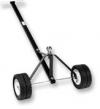
I have a couple of dumb questions first, who big is your boat? I'm guessing since you on a bass forum it isn't to big. And my next question is are you on a level ground with a smooth pavement, or going up hill or on gravel? I ask this because they sell a trailer dolly that hooks into the ball spot and help you move the boat around. They go for about $50-$100. Here is a pic to give you an idea
-
Congrats, thats looks sharp.
-
That does help. I have heard of breaking down the lake into thirds, and I copied some fishing maps, and I was about to start marking some areas that I would think would be good areas. Now I know to look at the North West area first. Thanks.
-
I am still learning as I am still new to Bass fishing. I read in a article that I think it said that east side of lakes usually hold Bass better because it gets sun light the most so the water is warmer. Is this true, do fish tend to be more on the east side of lakes? If that is true should I start on east side of banks in coves first?
-
You would like to have the trailer as close as possible to level, but if you can't make it perfect this is what I do. I have the under bumper hitch that mounts to the frame. So the normal hitch receiver drops a little and with the slight drop under the bumper you are already lower then the trailer. I usually get the normal receiver, but I turn it upside down so it actually goes up and not down. Then put the 2inch ball on top of it and it is about the same height of the bumper, maybe slightly below, but it's not 1-2 inches below. That usually puts the trailer right near level. Then with a 1 7/8 ball I usually keep it going down because a 1 7/8 is usually on smaller lower trailers like utility, lawn mover, and bike trailers. It also makes it really fast to grab which ever one you need because one will drop down and the other will come straight out.