Paul Roberts
Super User
-
Joined
-
Last visited
Everything posted by Paul Roberts
-
Thru the ice! That is pretty cool. Congrats!
-
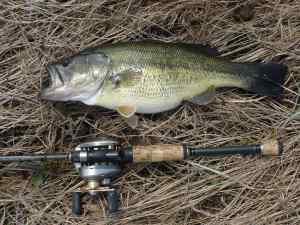
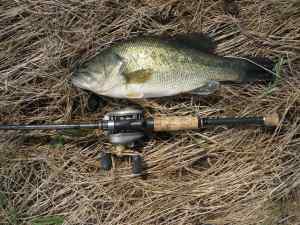
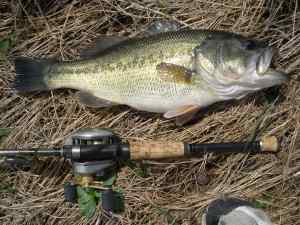
Thanks all. I won't be adding weight. This is a Ned/light jig rod so it's all about sensitivity. It's a NFC 6' 0-power XF (Mag-Light) so there's already plenty of mass at the butt end. Going with a cork Tennessee handle, split. I have been taping the reel on in different places to get a feel for it. I'll work my way there. Just wondering what opinions are out there. Thanks again.
-
How do you like your rods balanced, off your rod hand? Dead center, slightly tip heavy, slightly butt heavy? Do you think there's any detectable difference? About to glue down a handle, and I'm at the nit-picky stage. Opinions?
-
Telemetry has shown that bass, and bluegills, can start inshore movements at or even just prior to ice-out. Some of this, as well as activity changes at late ice, smacks of an endogenous rhythm possibly kicking in. Conditions-wise, the surface and shallows -esp along N shorelines- heat first and can activate, even draw fish. After ice-out there's nowhere to go but up temperature wise. And it can happen pretty quickly by early spring due to sun angle then. But each water body is laid out differently so results may vary. Also, different populations may have developed different patterns, so... results may vary. In my winter fishing ponds, bluegills tend to show along heated shorelines first. The bass come a bit later. Above 50F is a good number to expect bass. But, this doesn't mean that bass -in larger waters or those laid out with a decidedly warmer area with appropriate layout (depth, cover, food, ...) -can't be moving and staging even earlier (keeping the endogenous rhythm and population adaptations in mind). I shot a video last year -to be released this year- where I look for late winter/early spring bass in a shallow but sprawling pit that has a marked wintering area -a deep trench that stacks them in. An early thaw (Feb) brought 50F to the incident (N) bank, and bluegills. But I found the bass still stacked up in the trench. Not sure how much this helps in any precise way, but may give you some things to think about. At least this is the stuff I'm thinking about when after late-winter bass, at this point. I'm talking LMs here.
-
Great stuff above. Genetics, food, growing season, and age all play roles. FOOD may be the one least understood or, better, appreciated for the sheer amount and quality of it required. The amount of food of the right composition and size required to grow small fish into huge fish is almost mind-boggling. And it's something that is extremely rare in nature, and darn hard to accomplish in managed waters. Growing season plays an enormous role not only in the the duration of growth periods for bass but, more importantly, in the sheer amount of prey fishes a given water can produce. Southern waters commonly produce multiple broods of prey fishes, while northern waters rarely do. All are important but the best genetics, clean water, and age structure will go nowhere without one heck of a lot of food of the right composition and size for bass from fingerling through... monster. As to the genetics part, genes are potential, heavily influenced by the environment. There's a point in every fish's life where they must "choose" whether to chase pounds or gametes. All choose both, however, the environment makes that choice for them. A dead bass does not contribute to the future. If there is not enough appropriate food to go around, bass will mature -start developing costly gametes- at 10" in length, and still "win the game".
-
Could try Gliss. It's very smooth. Haven't tried it sub-zero yet though.
-
I've used the standard heads in 1/8 and 1/16. Now I prefer mushroom heads for 90deg heads bc they are a bit more snagless, the eye more recessed. I tend to use 1/16, 3/32, 1/8, the 1/8 for >8fow. Of the Brewer heads, I now use the Spider heads much of the year bc we have a lot of vegetation here. I use them for swimming a worm, which I still do often, just like I did back in the 70s. I use the standard wire Spider heads in 1/16 and 1/8 for finesse stuff with 4-6lb lines. And I also use the Pro version with the Gammy hook with 8-15lb lines. I think the crappie heads have too light a hook for most bass use.
-
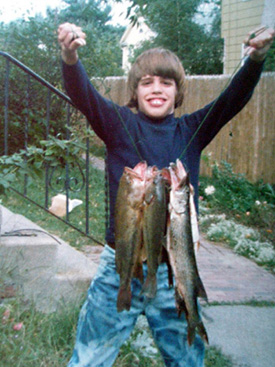
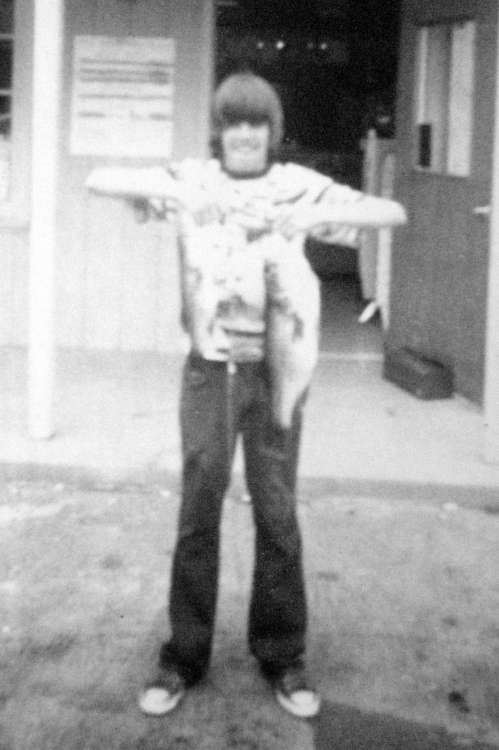
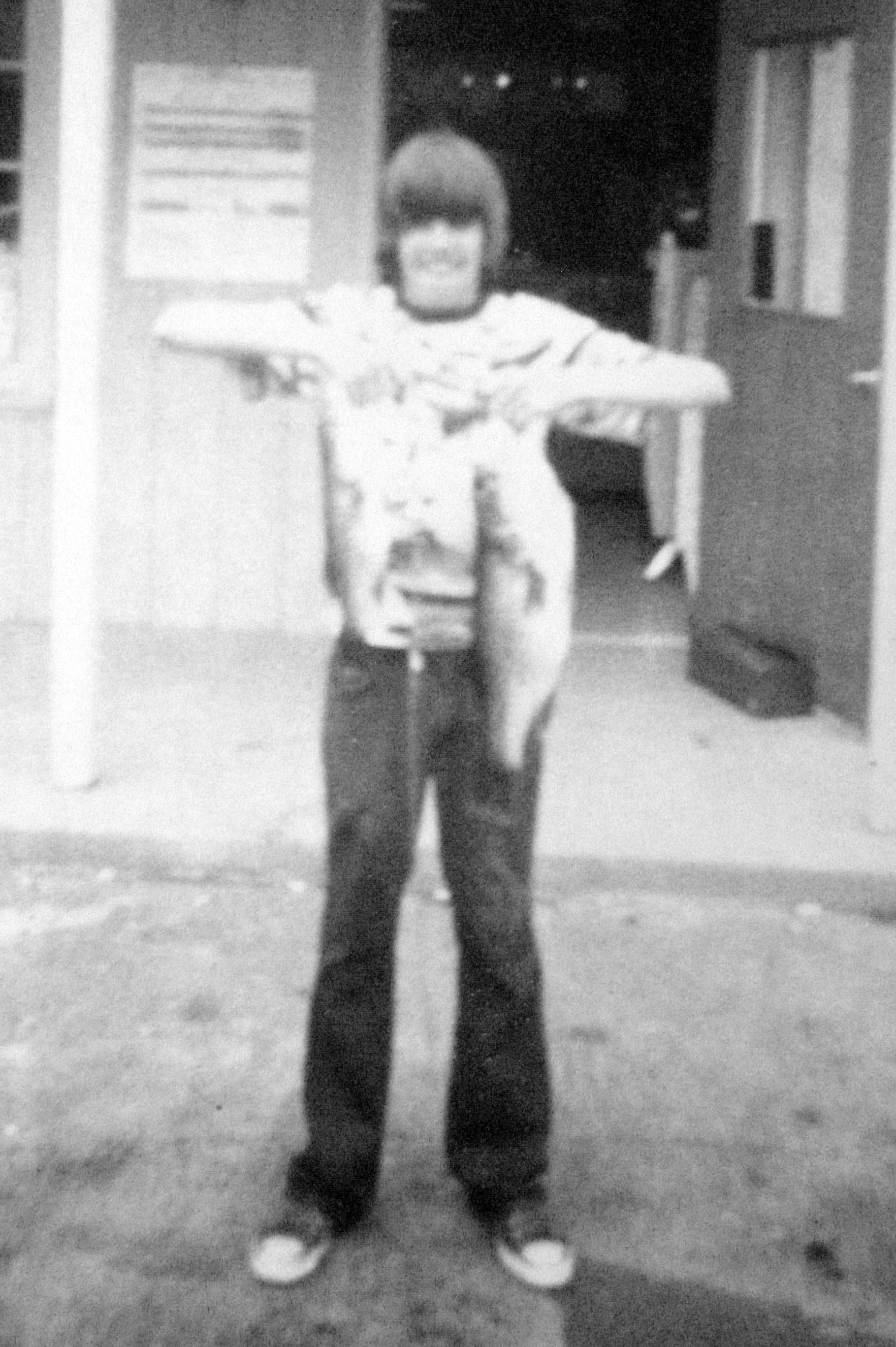
Ditto that. One of the best bass fishing books out there. A real gem. I cut my bass fishing teeth in the 70s with "light tackle jigging" following Charlie Brewer's lead pretty much. It was the first time I started catching bass consistently, while others around me throwing the big stuff were catching inconsistently, if at all. I gained something of a local reputation then. This type of fishing, I just called "jig fishing", is most fundamentally about depth and speed control. Charlie's "Do Nothing" approach meant that you only really had to concentrate on those two most important elements. You could develop a "feel for fishing" that I still argue is the best way to learn -how deep you are, what's down there, how fast, and what fish bites feel like. The Ned-Rig, Shaky, Hair Jigs are pretty much the same game. Some old pics from the early to mid-70s: A "jig-wormin'" catch with homemade jig heads -split shot crimped to a long-shanked hook. (I think they call 'em "Shaky Heads" now.) This one was from a newspaper article about the local kid who would have won the big bass contest, if he'd caught it the previous day, and had been registered. That same summer I took 2nd in another such contest on another lake, but I wasn't registered.
-
Gliss, or J-Braid (X8) are two I've used. Both are excellent. I must say I don't understand Fireline. It's thick for break strength and stiff out of the box. Maybe I haven't given it a fair shot, bc I take it off... bc... I just don't get it.
-
Absolutely. Even on a fishing day I often do some scouting before I wet a line. It's similar to doing a sonar run, but visual. It actually saves me time.
-
Never really thought about it but, yes. Mostly I two-handed "lever" cast. My tendonitis issues never came about due to casting, but to fighting fish -my Doc's first case of "bass elbow". I've had to go lefty, on and off, over the past decade or so to give my right elbow a break.
-
I don't have any particular methodology behind my depth control. I guess it's all gestalt now. I adjust depth and speed control by jig weight, body/trailer buoyancy, line diameter (critical!), and retrieve speed. I may pay some attention to the retrieve speed of my reel (ipt), when changing between reels, and when speed is critical -like in winter. I find it easy to retrieve too quickly, esp when I'm distractible -like when I'm tired or hungry. So checking in with my reel handle revolution rate gives me some measure.
-
Wind only has an effect if there is no ice. North shores thaw first, and are most apt to heat first, bc they receive incident sun. Incidence is what heats the planet, and causes the seasons. I photographed the incident bank (N) today bc it was thawing at the edge -a good example. Ice break isn't in our near future.
-
Very nice! Congrats, Ed. That's some good late fall fishing.
-
Curious... What are the prey in that lake?
-
 Nice album!
 -
-
There's a fair amount of research identifying "personality" in fishes, including bass.
-
Definitely. The secret? Experience. Every fish species is different in terms of body build, energy level, and swimming performance: Body build explains a lot of it. In general, the deeper the body the more that fish can pull, but this is often at the expense of speed or distance it will run. Bluegill is an extreme example. Narrow fish tend to be faster, swim more in a bee-line, and can be "turned over" with pressure quicker. (This also plays a role in what types of retrieves they are apt to respond to), and they are more apt to writhe or twist in an effort to pull free of the hook. Pike are an example. Energy level is another. While LM and SM are similar in body shape, SM are often faster, pull harder, and take longer to subdue. I've caught tons of trout, and in the Great Lakes there were varieties of rainbow trout planted, that can be broken down into two main categories: "Steelhead" (anadromous ancestry) and Domestics (hatchery mixs with predominately land-locked ancestry). Hook each and you know nearly instantly. The deep-bodied domestics can not run as far or as fast, they wallow more and give up quicker. Steelhead are scary fast, can run long, and can leap eye level with you. Then there are mid-body forms -not narrow, not deep, such as trout, walleye, and bass. Trout are faster than walleye and do a lot of writhing and shaking. Browns are notorious for "rolling", twisting. Walleye try to stay down toward the bottom and feel "head-heavy". Their bolts to bottom are bee-line and can be pretty sharp, but they give up pretty quick apparently due to energy level and body shape. Then there are catfish... They are both laterally compressed (deep-bodied/flat-sided) and have a wide shovel-like head. When I hook one (not uncommonly on bass lures) I know right away. A large one can bolt and run, often with more speed than a bass. And then they can use that shovel head to stay down, especially when they are directly below you. I call them "cinder blocks with fins" at this stage. Bullheads are pretty much cylindrical. They have a flat laterally compressed back third, are round for the front two-thirds, and don't have a lot of energy. They writhe, roll, and give up quick. "Yup, it's a bullhead." I've caught trout and bass with spinal deformities -as if they had a section removed from the mid-section making them short and rotund, and when I've hooked them I've wondered, "Bullhead?" Then there are eels, the most extreme example of a long thin fish. They have no body depth to pull with, so they writhe wildly in a backwards direction. It feels like a whole lot of pounding, but they don't really go anywhere. "Eel!" Here's a cool thing: Body length can be "measured" in the rod: When a long fish "shakes"/"writhes" (bc it can't counter your pressure as well as a deep bodied fish), your rod tip dips. The length of the dip is a good indication of the fish's length. Something else comes into the mix too and that is the water body you're fishing. I may not always be able to tell a drum from a large bass, say, but if there are drum in the water body, I may suspect this one may be a drum. Drum however seem to be able to remain upright better (are more laterally compressed), and are a bit faster than bass, in my -more limited- experience with them. Again, the secret is experience with lots of different kinds of fish. Yes! Sticks can do that too, when hooked off center.
-
I use spinning a lot, for swim jigs, light to mid topwater, light to mid jigs, grubs, tubes, drop-shot, skipping, ... . I'm just so used to it. But... casting gear handles certain lures better. I bought my first casting rig 30 years ago bc I was burning spinnerbaits a lot, and it was just too much work for my spinning reels. Casting reels just offer more torque for lures that "pull back". I prefer casting rigs for crankbaits too. And for real heavy cover work like flipping.
-
Sounds like you've done your homework. None are perfect for everything. I use all three. I use braid and leaders more than anything though, which allows me to use any leader I want. Ditto the FG-Knot. It's a true revolution for braid and leader. Trick to tying it well is to keep all strands tight while you tie it. I would not worry much at all about bass "seeing" your line. It's a non-issue for me, even in very clear water. What's important there is having the line diameter match lure size or weight. Fish detect the overall size of the object, and a tiny lure on rope is a big scary object.
-
-
Did the same thing a couple of weeks ago. Cast a tad too long, over a small log. Upon retrieve I thought maybe Id hooked the log, but it felt weird. Tip was dancing, thought I hooked some fishing line. Then the splashing started. Luckily it was a little bass, with only an UL and 4lb FC. "Splashdown" is a key strike zone. Tough when you're not ready, lol. Have you seen Bamabass's YT vids of such strikes -lure hanging on surface over limbs? Pretty awesome footage.
-
It can be difficult to know the "why's" behind the behaviors, but they are there. Lots to know out there, the systems are complex, with many interactions. It may be of some solace to know that that fish are dealing with that complexity too. It's not clockwork.
-
Haven't read through other's posts above; Im sure there's good advice there. Here's my suggestion: Winter bass often consolidate in groups at key locations -almost always away from the shallows. Keys tend to be large volumes of water -main body- and cover. So... your first order of business is to find them. This is more important now than at any other time of year. If from shore only, try deeper steeper shorelines. Find cover -even if shallow. Yes, fish slow. Sometimes painfully slow -which can really freak people out when trying to simply find the fish. Depending on water I'd fish something you have confidence in. A jig -like a Ned- is a good bet. Don't worry about changing lures a lot, or colors. Fish, and find them. When you do, you'll be like "Oh! Duh!"
-
Jigs are easy. Bass eat them. You'll become a jig lover, just like the rest of us.

.jpg.d97d357acdf03d54cc7c4fd3dcb2417f.jpg)
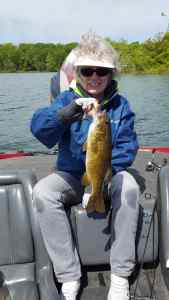
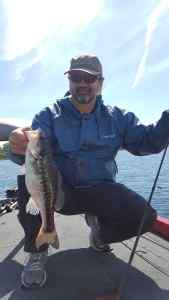
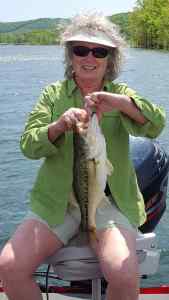
.jpg.0a1a4876da9f35bf2ff6ebaf96a3ec7c.jpg)