



Team9nine
Super User
-
Joined
-
Last visited
Everything posted by Team9nine
-
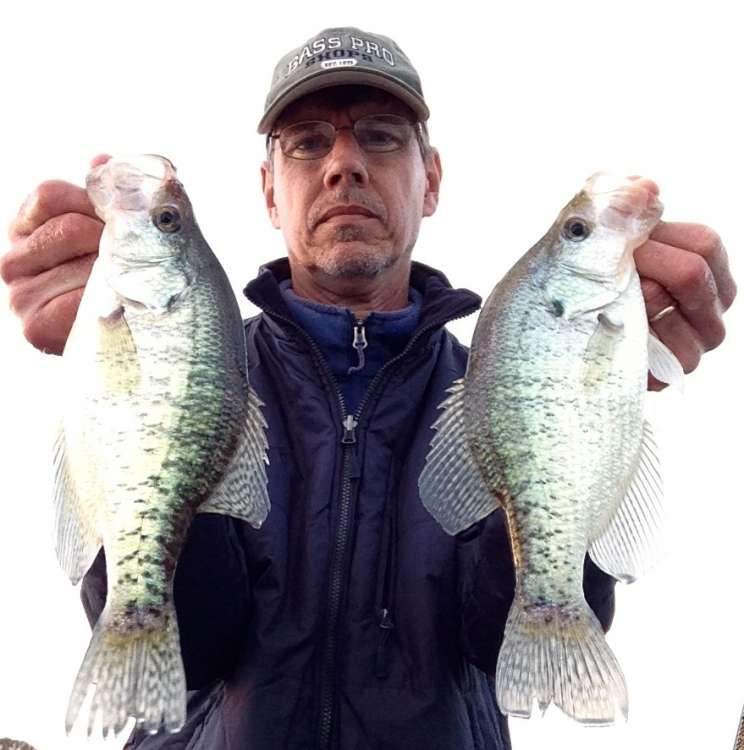
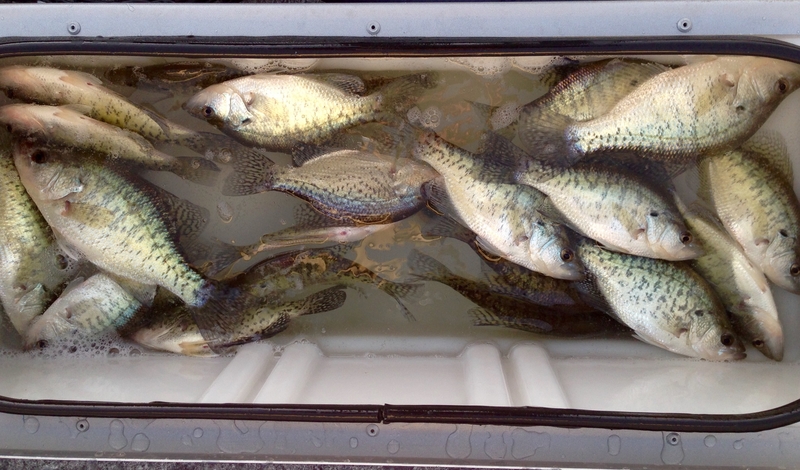
Water temps 44 degrees and change, but they're still biting. We'll be catching them with ice on the lake in about another week to 10 days.
-
Crappie bite still going strong here...
-
It sounds nuts until you look at most any states electrofishing results and see them shocking up anywhere between 50-200 bass an hour. You quickly realize catching that many fish isn't quite as impossible as it first might sound, especially when size plays no part in the equation. On time to C&R, only 15-20 seconds much of the time. Casting and retrieving usually takes up the most time. Hooking, landing and releasing is the easy part.
-
Correct, but that doesn't change the approach, which is fish less hours but try to catch as many bass as you can in that shortened time frame. It's not too dissimilar to tournament fishing in that regard. I've reached the 100+ bass target only 4 times, twice using predominantly Midwest Finesse tactics, but I've had dozens and dozens of 60-80 bass days (4 hrs or less) by trying to reach 100.
-
...And to think, these poor bass have been living and evolving for hundreds of thousands of years, and only now, thanks to Strike King, do they realize they like coffee aroma, and what they've been missing all this time.
-
Another 'No' vote here...saves time answering your follow up questions, too
-
Nope - there is no such thing as "too cold." I've caught them pulling blade baits off ice shelves before...then when it freezes up, if ice fishing is your thing, plenty to still be caught through the small holes. Not all ponds are created equal though, so you might need to rotate through them until you figure out which ones still produce down to liquid ice conditions. Avoid the muddy ones, too. Look for clear water and green weeds, and reachable holes or deep water from shore.
-
All my northern Spoonplugging friends who constantly deal with pike, muskies and zebra mussels use 50# to 80# leaders, either fluoro or mono.
-
Bomber Fat A LC 2.5 DD Norman Deep Little N Brauer Rat-L-Back jig Klein Weapon jig ...as best I can remember
-
I make it a point to remove and save all the Katsuge hooks and split rings off all the MB jerkbaits I break, and then just keep a small box of these parts with me for changeouts and repairs. So far my broken parts inventory has outpaced my replacement needs. Not sure if that's something to be happy about or not
-
The more I fish (and learn), the less I need. Have no interest in stocking up with the latest tackle trends or hot baits.
-
Seems like you have a few options here. First thing I'm doing is ditching the braid on any baitcasters outside of one or two specialized applications - but that's just me and beside the point. So that leaves... - Try a higher quality fluoro, as Vanish doesn't have the best reputation. - Use a knot other than the FG that is less likely to have issues (Alberto or 'J' in particular). - Use a nylon based clear leader instead of a fluorocarbon one so you'll get a better bite with the braid (nylon is softer). - Change braids as suggested above to something with a bit more bite or more friction/drag. Good luck!
-
Makes sense - much more prevalent out west, both the water type and the terminology. However, I was surprised to see there are three state Canyon parks in Alabama which I never would have guessed. Either way, definitely worth checking out these areas.
-
If I'm understanding your terminology, we refer to them as "side feeder stream cuts," and they are always very high on the list of places to check out on a reservoir.
-
I don't think anyone is stating absolute needs or truths in regards to how, when or where bass move or feed. I know I'm not foolish enough to believe such things exist. However, we all have our methods, experiences and learnings that we use successfully. You have stated yours at length and in great detail, and I certainly read and respect that, even if I don't completely agree with some of it. However, the OP's question was in regards to what we thought to be the quickest way to assess and locate deep water bass and be successful. To that end, IMHO, finding and fishing obvious structural elements and related breaks/cover and breaklines/edges (whatever terms you prefer to use) is a pretty simple and straightforward approach that doesn't take years of experience or knowledge to begin putting to work. A little map study and some basic understanding will get you started rather quickly.
-
Good for you Thanks for sharing...
-
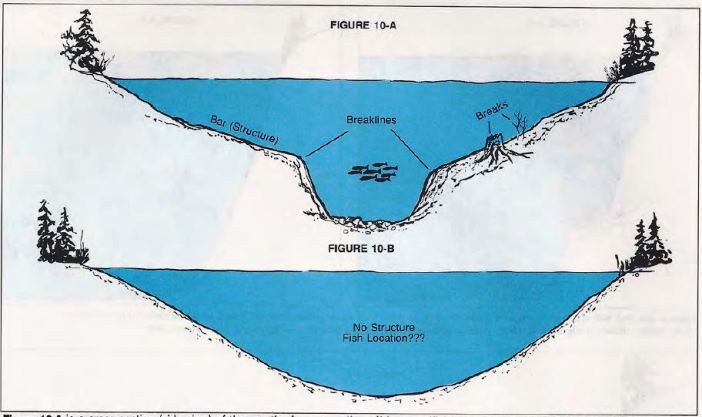
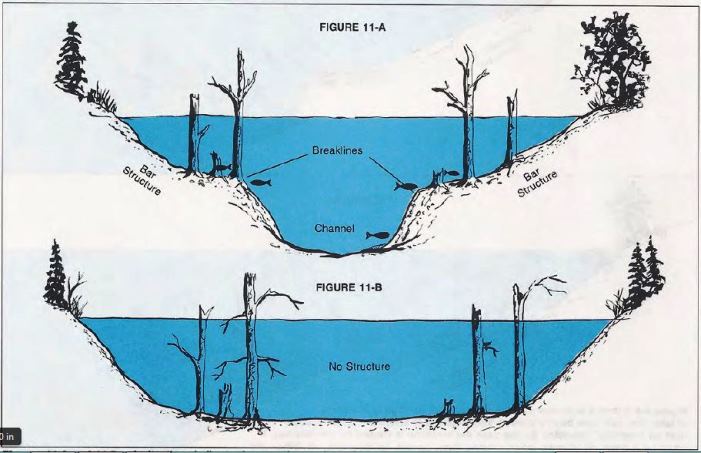
How do you fish a bowl-shaped pond? Depends somewhat on depth, water clarity, etc., but in most cases there will be no true structure, but you almost always have breaks and breaklines. In shallower ponds, "cover" becomes the defacto 'home' that replaces the depth component. The 'home', or the area, where the fish spend the greater part of their time is under the weeds, brush, or 'under-cuts' in the bank, etc.. Breaks and breaklines become your areas of initial concentration, along with the deepest water areas of cover. Every pond will be a bit different, but I fish several currently that fit the above description. How about a reservoir with silted in channels? The breaklines are still there, just (a lot) less pronounced. Not a whole lot changes in the case of a silted in reservoir. You still work the features (structure, breaks, and breaklines) as far out into the deep water as possible, but no deeper than recognizable features allow. You stop at the last recognizable features. Even small, less pronounced breaklines (to us), are easily followed (and probably very obvious) to a fish. I see this a lot in small dish bowl ponds where a small "trail" across a flat only inches deeper than the surrounding water is what the fish use to move into and away from some shorelines. Do you consider a "flat" a structure? No, I don't.
-
It would follow then, that the bottom of the lake without any unusual features to distinguish it from the surrounding bottom area, would have no structure...this also takes care of the misleading/incorrect Murphy book statement - lol A couple examples straight from one of Buck's articles showing a lot of lake bottom (and some "cover," i.e., 'breaks'), but 'No Structure' according to Buck.
-
In my approach, the best spots (potentially), or at least the ones I want to search out and check first, are those that have the best combination of structure, breaks, breaklines and deep water, all in the same general area and related to each other. Based upon the definitions of those terms I use, it's a pretty simple and straightforward process. Based on some of the other definitions given, that approach won't get you very far. Life is a lot simpler when you view everything as either structure, breaks or breaklines. It's interesting that Buck's book was 170 something pages long, and the term "cover" was given all of 2 paragraphs of coverage - lol. Breaklines are technically still just breaks, but they extend for a distance. Usually it involves a depth change, either shallower or deeper, but as mentioned, a lot of other things can be considered breaklines. So a couple fenceposts sitting together would be a "break", but a submerged fence bordering an old property line or farm field (a line of fenceposts) would be a breakline. I'm not sure I would use the term "environment" in the definition though. Obviously I completely disagree with that statement - lol - but it will make a lot of anglers happy to know they can now consider themselves "structure fishermen," even if all they do is just blindly move down the shoreline beating every inch of water.
-
Wow, look at all that structure !!! Or not... Nice pic, Catt! The problem IMO is that using Catt's picture as an example, along with my comment on it, anybody reading it wouldn't really know what I'm referring to, because everybody chooses to have their own definitions. As such, how can you have any kind of coherent conversation when every reader has their own idea of what 'structure' is in that picture, or anytime someone talks about it in a post? According to Tom, there's a lot of structure shown there. I see practically none (only one possibility caught my eye). Based on some other previous comments, all those stumps and standing timber are structure. No wonder it seems like a tough challenge to learn for so many.
-
Tom has spoken, so shall it be...
-
I was with a retired friend who called me that morning and asked if I wanted to go out there later that day. He has a camper over in that section. We were just about to leave shortly after we saw you. He had to get home for an evening event. Never picked up the hair jig all afternoon. Jerkbaits the whole time. We caught a bunch of crappie on that spot along with about a dozen bass. Found one other good crappie spot down lake. Left them biting as they say - lol. Ended with about 32 bass in 3.5 hrs (1:30 to 5:00), so not too bad. Just hole hopped the whole time. He doesn't have a depth finder up by the trolling motor, so just kind of winged it on positioning. Best fish was the one I posted in "Latest Catch pics" thread. We each lost a big one, also.
-
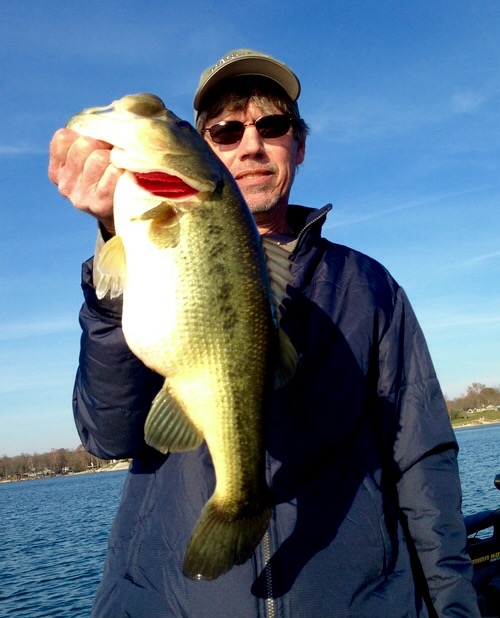
I guess this is what a fish on a fall feeding binge looks like... Structure, breaks and breaklines.
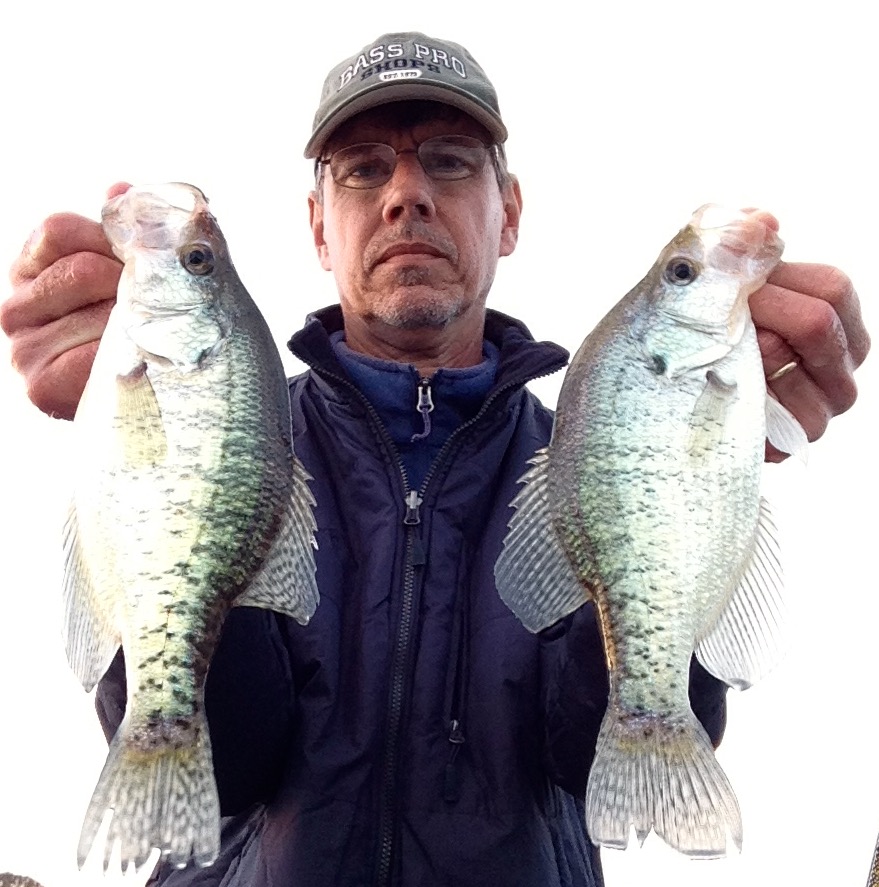
 We found them, too Ended with 10 or 12.




Important Information
We have placed cookies on your device to help make this website better. You can adjust your cookie settings, otherwise we'll assume you're okay to continue.