



Team9nine
Super User
-
Joined
-
Last visited
Everything posted by Team9nine
-
Nice eyes
-
They don’t stay on a hook, either. I think both characteristics were intentionally designed into the bait ? ?
-
Yes, but I’m with @Mike L on this one…it’s your time, so do whatever you want to them.
-
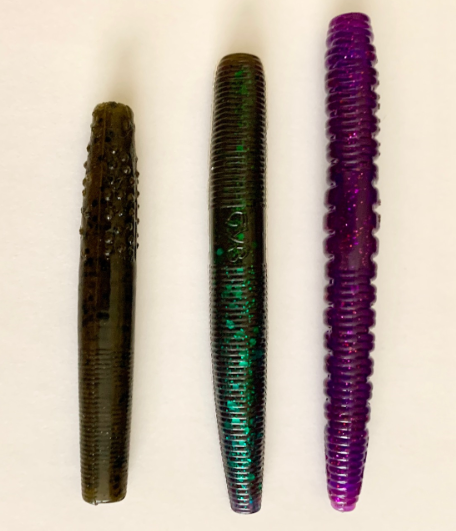
UPDATE: Received a TW order yesterday containing a package of Ned Senkos. There are 10 baits per package for $5.99, but I ordered during the sale and got the bag for $5.09. I'll be trying them out hopefully over the weekend. I did do a quick comparison between the baits in question mentioned earlier in this thread: Left to right: Zman Finesse TRD - ~2-5/8 inch; wt = 4.3 gm (roughly 5/32 oz) each Yammi Ned Senko - 3 inches; wt = 4.3 gm each Robo Ned Worm - 3-1/4 inch; wt = 5.1 gm (roughly 6/32 or 3/16 oz) each More to come after I get a chance to fish them. I will add, I'm nearly through my package of Robo Ned Worms (just 1 left) and the 6-7 bass per bait has held up as a good average estimate.
-
Gatortail worms Bagley Diving Bs w/lead tuner in lip BPS Caterpillar Stud Frys Gary Klein’s Weapon jigs Mann’s Hackleback Craw Original Silver Buddy Original Bomber Long A with metal flash plate insert
-
You can use a split shot pinched on at whatever distance from the bait you’d like, or any appropriately sized Ned jighead will also work.
-
Rick Clunn won the US Open on Lake Mead for a 2nd time in 1986 using a spinnerbait with a then brand new skirt innovation from Stanley that featured transparent rubber skirts with embedded metalflake, burning the bait above the bass in the clear water (KVD fished his first Bassmaster event in 1987, and didn’t join the tour full time until 1990/1991. Clunn Clear Water Spinnerbait Basics
-
Day in and day out, high and/or fast in clear water has been the favored first option for spinnerbaits in our clearer waters for quite a while. I believe Clunn put it “on the map” before even KVD. Not that low and slow won’t work, obviously, but it tends to be more situational or personal preference/style. We had a regional pro get some Bassmaster love when they published a couple articles on his “weed whacking” approach to clear natural lakes, which was a deep water slow roll technique over and through submerged vegetation. That was back in the late 80s/early 90s if I’m not mistaken. Before that, several pros gained notoriety for slow rolling spinnerbaits over deep vegetation during the cool water months. In the end, you should always be testing different depths and speeds regardless of the presentation.
-
Another practitioner - I resemble this solution ? ^^
-
From a post I made 6+ years ago where I tested some of this one winter… I had some time to kill last night, so I grabbed a reel and started measuring. I had a Shimano Castaic CA200 sitting around that I won't be using any more before things freeze up over here. Capacity is listed at 125 yds of 14# test. I had a nearly full spool of 16# fluorocarbon on it. It has a 6.2:1 gear ratio, and the tested IPT was around 24.5" The initial starting diameter of the line filled spool was 1.233" (radius = ~0.616"). After stripping off about 40 yds of line (loosely measured with a yardstick), the effective gear ratio only dropped to just above 5:1. That would be about as long a cast as I'd normally ever make with that outfit. I kept stripping line off, passing the 82 yd mark that is factory placed on the line and continuing until I had nearly 100 yds stripped off. At this point the filled diameter was just 3/4 of an inch, with a spool radius of 0.385". I was well into my backing and likely only had another 20 or so yds of line left as I could see my arbor knot starting to appear. The calculated "effective gear ratio" at that point was 3.9:1 which was an IPT of 15", a 37% decrease from initial starting capacity. Your mileage will certainly vary, as every reel is different, and a lot of variables affect the overall outcome. In general though, I'd say a typical long cast will likely decrease your overall effective gear ratio by at least 1+ spool revolutions per handle turn (a 7.x:1 becomes a 6:1, etc.). This would only happen during the initial part of your retrieve. As the line gets built back on the spool, the effective gear ratio continues to climb back to "normal." Wider spool reels would probably show less of an effect because they hold more of the line on the "outside" of the spool, while heavier lines, because they are thicker diameter, would likely exaggerate this effect. I also carried out the "shoe test" at all stages (as suggested in another post). At full spool and attached to a 6' musky rod, it was a big struggle to lift and wind a 10.4 oz. shoe off the ground using only the reel handle and the drag clamped down. After stripping off the 100 yds of line and retesting, even though the gear ratio is still technically 6.2:1, since your IPT has decreased so much, the effective gear ratio of 3.9:1 made the task a pretty simple affair. A very noticeable difference and considerably easier to accomplish with much less effort in winding.
-
Personally, I find this common line of thinking a bit misleading. I wouldn't focus so much on "most" or "the best," as they really only need "adequate and appropriate" to survive and grow big; oxygen, forage, etc.. It also seems things like nutrients don't play that big of a role with bigger bass, though they certainly do with bigger crappie. Beyond the food part of the equation, I would also add deeper water/heavier cover, along with living a long time/capture avoidance. The first of those three is hard to determine or quantify, other than if you catch a big fish somewhere, then you know that to some degree, those necessary environmental conditions exist. The latter two aspects, which to a certain degree are intertwined, can guide you toward a lot of the right areas, where I'd then agree again with @WRB on the "dedication and spending hours on the water," as seeing (in whatever form), hooking and catching are the best data points to putting the final puzzle pieces together.
-
I’ve spent an awful lot of time studying this aspect of ‘bigger bass’ fishing over the years, especially more recently, and a lot of the framework, IMO, lies within the above selected responses.
-
I've been getting almost daily emails featuring new ICAST product releases. Nothing has really impressed me so far, though I am curious to see all the shapes available in the new Zman micro series of baits for panfish.
-
Been there, done that. I typically ran 17'-18' boats, and had a few partners that had just as many rods in the picture leaning up against their truck when I arrived, along with their tackle bags, coolers, rain gear and life jacket. Yeah, it may all "fit" in the boat, but at some point during the day, it inevitably became a nuisance in some manner.
-
They’re the same price as bronze or black nickel hooks in nearly all models, so if it gives you confidence, go ahead and buy them. I’ll still probably snicker and grin if I see you out on the water throwing them though ?
-
Agree with the few saying the problem was not the drag, per se, but your inexperience with it along with your use of 8# fluoro leader line with that bait. We’ve rehashed this topic to death on here, but as @Captain Phil mentioned, if you know what you’re doing, thumb-barring and backreeling works great for the few of us that still run our drags at “over the recommended settings.” On the leader line, change to 12-15# test mono for the Spook Jr. It’s a hefty enough bait to handle it, along with the extra hook-setting pressure from using braid.
-
Thx - a couple here have been treated heavily. This one has a lot of deep Chara on bottom I kept finding with my jig, but might be able to work the blade over and through it easily enough. I’ll have to pull it out and see what happens. Been a few months since I last tossed it.Post frontal today with NW winds 10-15 gusting over 20, mostly sunny skies and a rel. humidity in the low 30s, so I was hoping for just one good bite - but I got two out of 18 total; everything on jig.
 Sometimes it can be highly entertaining to just hang out and read a 60 post, 3 page thread of disagreements based largely on how everyone’s definition of things varies, especially if you don’t really have a vested interest in the subject. Sometimes it’s just more fun to watch from the sideline ? This thread still has the potential to get thereYes...At some point he DID decide they needed different jigs for those techniques, perhaps shortly after the time of the Randy Dearman victory using braid ('93). Either way, Stanley started labeling jigs for casting that had the lighter wire and longer shank hook (original?), and jigs for flipping/pitching with their heavy wire round bend style hook. They were clearly differentiated on the package. I still have a couple dozen of his 'casting' jigs because the design still has merit today, and is not near as easily found as it was 'back in the day.'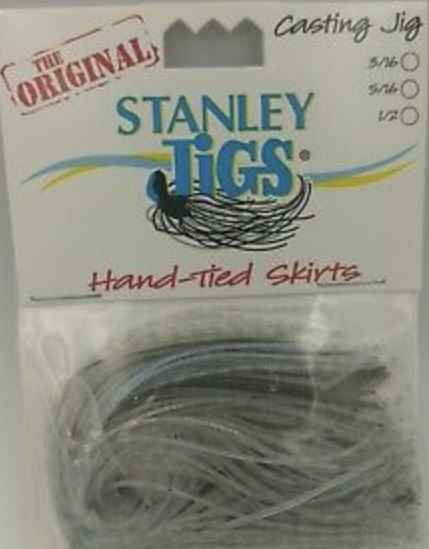
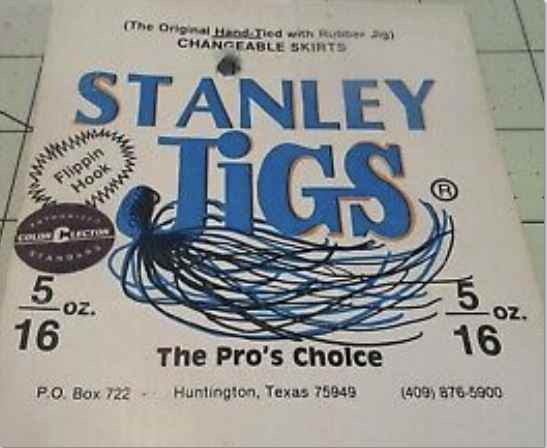
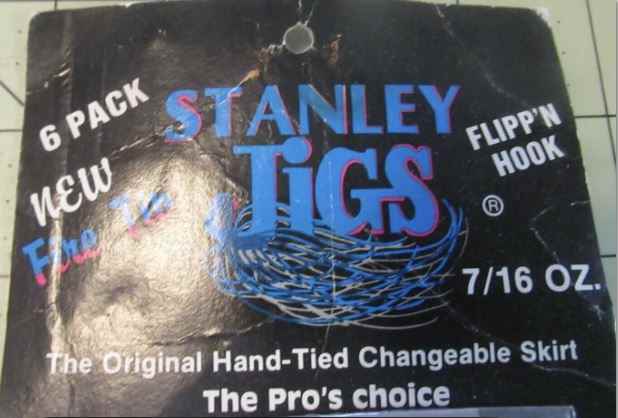 Generally speaking, shad tend to be very oxygen and temperature sensitive. As such, in summer, most are main lake oriented. They tend to stay deeper during the day, especially when sunny, and rise near the surface and school more loosely in the evening. This can also occur during heavily overcast days. I’d say it’s more likely they might move into the mouths of coves from off the main lake during overcast days, or hold there longer in the morning if they moved in overnight. A lot of variables at play though across different water bodies (size, reservoir type, current, nutrient load, water clarity, etc.), so hard to make an absolute call.Once upon a time, words meant something specific in the fishing industry. Those days are about gone. This topic is another good example. Several companies used to make both casting jigs along with flipping/pitching jigs (Stanley, Bulldog, Gambler are a few that come to mind). Casting jigs had lighter wire hooks with longer shanks, often with O’Shaughnessy style bends, and frequently thinner skirts. Now days, as you mentioned, all jigs are “cast,” and most all are (over)built the same regardless of purpose. The development in tackle trends and technology (esp. braided super lines) has probably also played a role in this.




Important Information
We have placed cookies on your device to help make this website better. You can adjust your cookie settings, otherwise we'll assume you're okay to continue.