



.jpg.b998c05257fb49251e5ce2473d4285b3.jpg)
Catt
Super User
-
Joined
-
Last visited
Everything posted by Catt
-
Ya can't have a discussion on "T Rig Hookset time" & not mention early strike detection.
-
MirrOlure She Dog 83MR Surface Walker MirrOlure - Top Dog 94MR Paul Brown's Original Series Corky 3-5/8" Suspending Jerk Bait
-
Zoom's Ultravibe Speed Worm & Ultravibe Speed Craw
-
I still throw Mr Twister Phenom WormsProbably gonna get in trouble...politiciansWhen I start dropping the rod tip I'm reeling slack at the same time & then the sethook. This time frame is y'all's 1-3 seconds! You are correct, there are occasions where hesitation is warranted. Toledo Bend has a healthy population of Kentucky Spotted Bass. They infamous for the tap, tap, tap bite y'all call Bluegill bites. There's a ridge out on the main lake we call "machine gun ridge" because you'll feel 4-5 taps.What drove it home for me was the first time I saw the "Hawg Trough", ya know that big aquarium on a trailer at tackle shows. I was standing right up against the plexiglass when the Pro threw a Texas Rig & a 3# bass sucked it in & spit it out before my pea brain could comprehend what happened. I started setting hook on everything!I use to believe that Bluegill bite until I started setting hook & found out it was NADINE! With this bass all I saw was tiny little rings around my line like someone strummed a guitar.
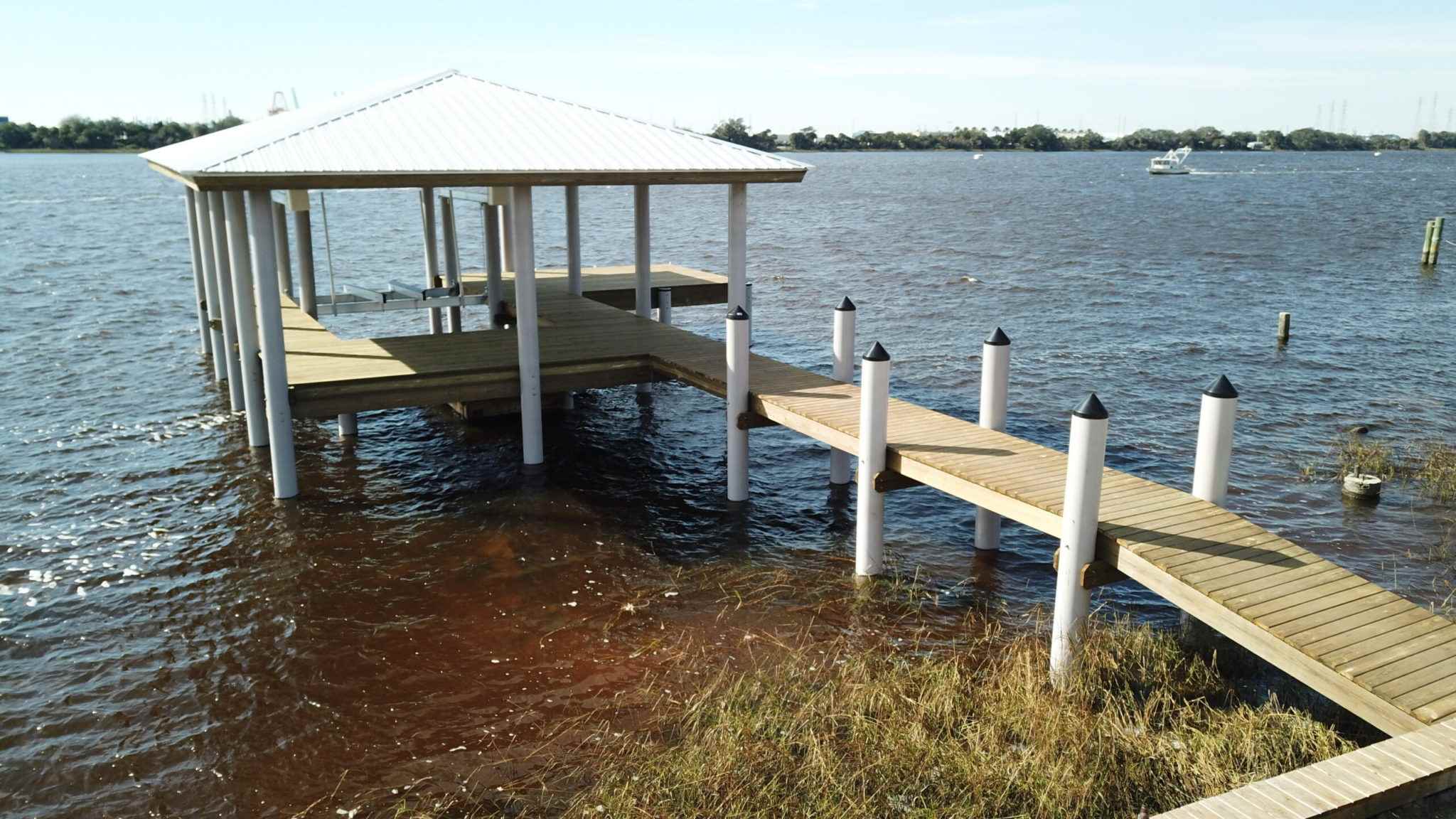
 I vary slightly, 1/8-1.5 oz.Three Tap Theory as explained to me by Shaw Grigsby The first tap the bass has inhaled your lure The second tap the bass has expelled your lure The third tap is me tapping you on the shoulder asking way you didn't set hook!If ya ain't never thrown one, ya ain't gonna catch nuthin! Texas Rigged Craws & Bugs are highly overlooked presentations.Since Diawia ain't in my boat casting for me.3 ? Topwater, mid-depth, & bottom contact. But I usually carry 5Never ever look at that, I set by the weight of the lure I'm using. I set it to where the lure hits the deck with 2-3 slightly loose coils & use my thumb after that.Never lock em down, once adjusted I never change it until I break em down to clean em. My previous flipping-n-pitching-frogging reel was a Calcutta 100A which only has 9.5 lbs of drag, it was set at 6 lbs. My current reel is a Lew's Tournament MP with 20 lbs of drag & it set at 12 lbs.I'm a dumb Coonass so I gonna go with Andy & Gary on this one!@WRB Ever since the introduction of the first graphite rod by Fenwick in 1974, myths about this mysterious material have been growing and circulating the globe like wildfire. How many times have you been told that the difference between IM6, IM7 and IM8 is the difference in quality standard, or that the higher the modulus, the more graphite was used to produce the rod? With there being so many misconceptions surrounding this material, Gary Loomis – one of the world’s foremost authorities on graphite rod design and founder of the G.Loomis Corp. – agreed to lend his expertise to eliminate these myths. Loomis began by explaining that the identifiers IM6, IM7 and IM8 are the trade numbers used by the Hexcel Corp. to identify their product and is not an industry quality or material standard, although the Hercules Fibers produced by the Hexcel Corp. are the benchmark that most companies use to compare their materials. The confusion is compounded because a number of rod manufacturers use materials produced by companies other than Hexcel and yet identify their rods as being IM6, IM7 and IM8, which by itself means nothing. What an angler needs to understand is how the word “modulus” pertains to graphite rods. Modulus is not a thread count, as many would have you believe. Modulus basically equates to stiffness. The higher the modulus, the stiffer the material is by weight, meaning less material is needed to achieve the same stiffness of lower-modulus materials. This results in a lighter product. “You have to remember, weight is the deterrence to performance,” Loomis said. Stiffness also equates to responsiveness – that is, the rod’s ability to store and release energy. The higher the modulus, the faster and more consistent a rod is able to store and release its energy, which enables an angler to cast farther and more accurately. But you cannot talk about modulus without including strain rate, or the measured strength of the material. While modulus is reported in millions, strain rate is reported in thousands. An acceptable strain rate for a fishing rod is 680,000 or higher. A graphite rod made from IM6 Hercules Fibers will have a modulus of 36 million and a strain rate of 750,000. With the original materials used for graphite rods, as the modulus rate increased, the strain rate would decrease, resulting in the rods being more acceptable to failures because of brittleness. However, through the advancements of materials, technology and engineering design, companies are able to produce high-modulus, high-strain-rate rods. These new high-tech fishing rods are super-light, responsive, and extremely sensitive and strong. But the misconception of brittleness still plagues them, and the reason for this is because as the modulus gets higher, the less material is needed and therefore used. This means that the wall thickness in the blank, which is basically a hollow tube, is thinner. “Remember what I said before – weight is the deterrence to performance,” Loomis said, and went on to tell a story: “I had a gentleman come in with a fly rod that broke near the handle, and he was asking for a new rod. I examined his broken rod and knew from the break – it was splintered – that his rod broke from abuse. So I asked him how it broke, and the man, being sincere, told me it broke while fighting a fish. I explained that it would be nearly impossible for the rod to break this way. But to be fair, (I told him) if he could break another rod the same way, I would give him three brand-new rods of his choice, but if he couldn’t, that he would pay for the repairs, and the man agreed. “So I took him out in the back by the shipping docks and handed him an identical rod. With the rod in his hands, I grabbed the blank and asked him to apply the same pressure he was using when it broke. The man was applying a great deal of stress on the rod, and it wasn’t breaking. So I asked if he wanted to apply even more pressure, and the man responded that he didn’t think he could, but he insisted that is how his rod broke. “So then I told him, ‘We are going to break this rod, so that it breaks just like yours did.’ I then laid the blank on a rubber mat and I kneeled on it by the handle, and we tried it again but it didn’t break. Then I laid it on the concrete and kneeled on it. Examining the rod, you couldn’t see it was damaged, but this time the rod broke just like his did, and the man simply asked where he needed to pay to get his rod repaired.” The point of this story is that these high-modulus, high-strain-rate, thin-walled rods are extremely strong and are highly unlikely ever to break under normal use. Almost all rods are damaged by other means – an angler accidentally stepping on them, hitting them against a hard surface while casting, or storing them where a toolbox or some other heavy object can slide into them. Then, with the damage done, the rod collapses while under the stress of fighting a fish. So while high-modulus, high-strain-rate rods are not brittle, they do require more care in storage and transport. There is a graphite rod made for every angler and their lifestyle. Composite blends (a mix of graphite and fiberglass) can take a lot of abuse. Intermediate modulus rods (33 million to 42 million) with high strain rates (700,000 or higher) still offer a lot of sensitivity and responsiveness and are quite durable. The high-modulus, high-strain-rate, extremely light rods are usually a rod manufacturer’s high-end product. These rods are the ultimate in responsiveness and sensitivity, and they cost a lot more than the average fishing rod. As with anything that costs this type of money, you would want to take a lot better care of it, including using protective cases to store and transport them around. Hopefully, you now have a much better understanding of graphite as it pertains to fishing rods, and as a result, understand the care you need to employ with their use, storage and transport. Finally, armed with your newfound knowledge, you will be able to make a much more informed decision the next time you purchase your next graphite rod.From a previous thread & should be a sticky! Good evenin' folks, I may be about to open a SERIOUS can of worms with this thread, but what the heck.....here goes anyway. Being in the blank distribution business, I get asked A LOT about the construction and makeup of the various graphite rod blanks that I sell. And, I have to say that whenever somebody asks me about modulus I just cringe! Here is why; It seems that about 90% of the folks that email me want to know what the modulus is of the blank(s) they are considering buying. When I ask "Why do you want to know that" they can't really give me an answer....they're just convinced that higher the IM rating is better. Here is how the conversation usually evolves: Mr. Customer: What modulus is that blank made from? Andy: Well, if you must know, it's about 40million Msi Mr. Customer: What does that mean? Andy: Well, it means the blank is made from the material you have come to know and love as IM6 Mr. Customer: Oh, that's too antiquated...I only fish with IM7 and higher. Andy: Really? Did you know that the difference between IM6 and IM7 is not the modulus it's the tensile strength? Mr. Customer: Really? Andy: Yeah REALLY! Mr. Customer: Eh Hhhmmm....erreer, uh, oh....well uh....well Bass Pro Shops says... Andy: Forget Bass Pro shops...let's look at the numbers (at this point Andy whips out his trusty data chart that illustrates the differences between the different fibers that actually have IM designations). Here take a look at this. This comes from a chart put together by the folks at Hexcel (http://www.advancedcomposites.com/technology.htm) The number on the far right is the modulus of the fiber, and the number in the middle is the elongation to failure or stretch. Hexcel IM4 600 40 Hexcel IM6 760 40 Hexcel IM7 780 40 Hexcel IM8 790 44 Hexcel IM9 920 42 Mr. Customer: You Mean all this time I thought I was getting a higher modulus fiber with the higher IM rating, when what I was really getting is a fiber that stretches more? Andy: Well, in some cases you are, and in some cases you arent. The fact is though that the difference between IM6 and IM7 is nothing in terms of modulus, and compared to IM8 it's only slightly higher. Wow...look at that IM9 actually has a lower modulus than IM8...go figure Now, many companies are using fibers with a much higher modulus, like 57 and even higher, however these fibers don't necessarily use the IM ratings. So, whenever you see a fiber with an IM rating...BUYER BEWARE! THE HIGHER THE IM RATING, DOES NOT NECESSARILY MEAN THE HIGHER THE MODULUS!!! The point is this folks...just because you have a blank made from a high modulus fiber, doesn't means it's a good rod! And vice versa, just because you have a blank with a low modulus...even the original fiber blanks were made with (33 million) doesn't mean it's a bad or outdated rod. It's all about what the designer does with it. I know there are some of you that may already know this, but judging from the amount of calls I get on a daily basis from folks who ONLY want IM7 or IM8, but can't really tell you why, I have to believe they don't really know what they are talking about at all. They've just been sucked into the marketing machine that leads people to believe that the higher the IM rating, the lighter and more sensetive the material, which is not always the case. Be forewarned that there is A LOT more to graphite blank construction, performance, quality, sensetivity, weight etc... than just what modulus the fiber is. There are lots of other variables like flag patterns, and wall thickness, and resin systems, and mandrel design....It's all about the talent of the designer, and what he is able to do in terms of the sum of those variables...not just the friggin modulus! Whewww...ok I feel better now... My aforementioned explanation of modulus and IM ratings is by no means meant to be anything more than a brief primer for the folks who didn't realize what the differences with the IM ratings were. I hope this clears things up a bit, and I hope that some of you will chime in on this as well. Oh, here is a link to the Hexcel page for those of you who want to investigate the matter further. Do a search for IM6 and you'll get some interesting info. (if you're into that kind of techie junk). [www.hexcel.com] [www.advancedcomposites.com] Now, this gives you some ammunition...next time you stroll into BassPro, and some yahoo tries to sell you a rod based on it's IM rating, ask him to explain to you why the higher IM ratings are better. When he replies by sayin' that the higher the IM rating means more sensetivity, less weight etc....just tell him that you have a blank at home made from IM2000, and see what he says. Regards, Andy Dear Lamar Manufacturing^^2X^^ ?Could have sworn someone mentioned that! Another consideration is the type of dock. Down here we have only two kinds. Floating docks which sit flat on the water & move up & down on poles. I usually don't fish those at night unless there's lights. Pole docks which don't move & have room under them for skipping.
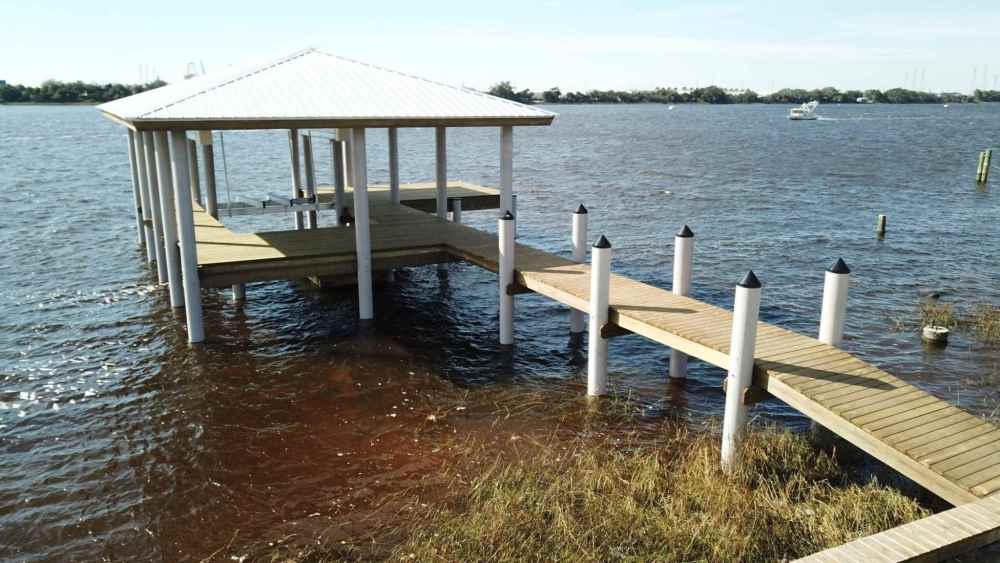 I find sudden rapid changes up or down will give em lock jaw. I prefer stable weather & water conditions.Ya don't need a red lens! Your night vision isn't gonna be off for more than a couple minutes unless you shine the white light directly into your eyes. Couple minutes might be an issue if I'm flying an F22 Raptor but I ain't I'm chunking a lure. Try finding a certain color lure with a red light...that ain't happening!
.thumb.jpg.df52404fc648bc17a641a50eb4c9dac9.jpg)




Important Information
We have placed cookies on your device to help make this website better. You can adjust your cookie settings, otherwise we'll assume you're okay to continue.