Johnbt
Members
-
Joined
-
Last visited
-
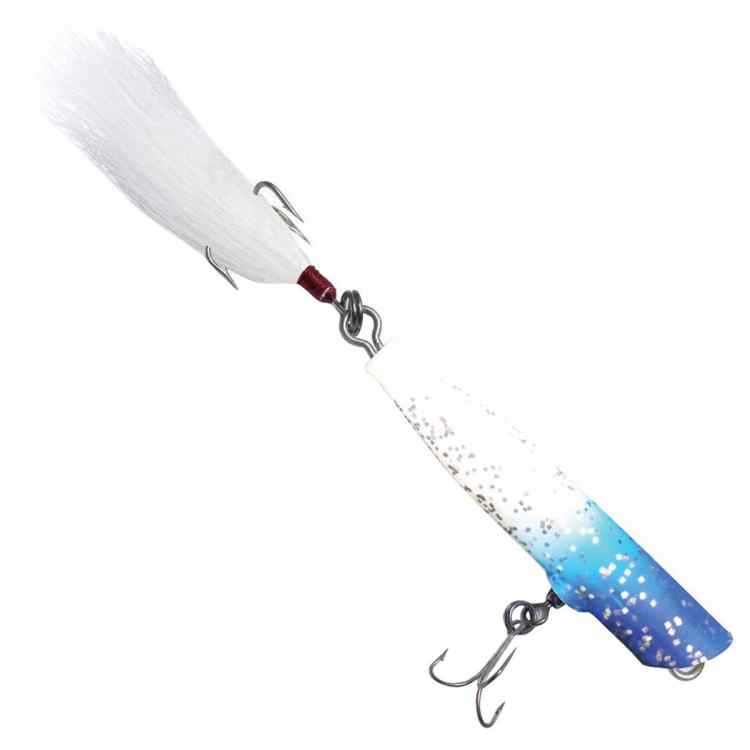
Atom Striper Swiper Poppers. Largemouth love them some days.
-
" Attorneys Near Me Legal ResourcesCurrent page is within this section Lead Counsel Verified Enter information in at least one field (required) Legal IssueUse up and down arrow keys to navigate. Touch device users, explore by touch or with swipe gestures. and / or LocationUse up and down arrow keys to navigate. Touch device users, explore by touch or with swipe gestures. Criminal Defense Law Home Legal Resources Criminal Defense Are Lie Detector Tests Admissible in Court? Are Lie Detector Tests Admissible in Court?By Christina Majaski | Reviewed by Gary Almeter, Esq. Last updated December 14, 2023 Listen to this article 6 min Key Takeaways:Less than half of U.S. states allow the use of polygraph tests as evidence in criminal trials. In states that allow polygraph tests, the defense can use testimony and evidence to question the test’s results. Never agree to take a lie detector test with the police without first talking to a criminal defense attorney. Are Lie Detectors Accurate? What States Allow Polygraph Tests in Court? The Argument for Lie Detector Admissibility How a Lie Detector Test Works Should You Take a Polygraph Test? Talk to a Criminal Defense Lawyer Today One of the greatest challenges for judges, juries, and law enforcement officers is determining who is telling the truth. This makes witness believability vitally important at a trial. While witnesses must promise to tell the truth before taking the stand, judges and juries often hear conflicting testimony that indicates someone is lying. So, a lie detector test could theoretically help the jury determine the truth, but only if the test is reliable and can be used as evidence in court. It turns out that neither is true. If you are under criminal investigation for potential criminal charges and are being pressured to take a lie detector test or you’ve already taken a test and are worried about it being used against you, contact an experienced criminal defense attorney to help you. Your attorney will be able to protect your rights and options for building a strong defense. Are Lie Detectors Accurate?In short: Lie detector tests have questionable reliability and are generally not admissible as evidence in court. They can be used in some investigations and for decision-making when applying to some federal employment positions. It might seem like the technology of the lie detector test, also known as the polygraph test, could take the guesswork out of determining who is lying and who is telling the truth. That’s how many television crime dramas made them look. But the accuracy of lie detector test results can vary depending on the person administering the test, the machine used, and the person taking the test. As such, polygraph results are generally not admissible in criminal cases unless both parties agree to it. Even then, some states do not allow polygraph tests to be used as evidence, and often a trial judge has discretion to allow (or not) a polygraph exam. Those who are opposed to allowing the results of lie detector tests to be used in a court of law argue that jurors might accept the test results without considering the test’s accuracy or the threat of false positives. Jurisdictions that allow the results of lie detector tests in court also allow each party to present evidence as to why the test is or is not reliable. Polygraph test results indicate physiological changes like the test taker’s heart rate differences using control questions like “What is your name?” and then more probing questions which would indicate alleged guilt or innocence. What States Allow Polygraph Tests in Court?The U.S. Supreme Court leaves the question of the admissibility of lie detector test evidence up to individual states. Other states do not allow any lie detector evidence. The criminal justice systems of states that may allow the results of a polygraph test as evidence in a criminal case include: Alabama Arizona* Arkansas California* Delaware Florida* Georgia* Idaho Indiana Iowa Kansas Nevada* New Jersey New Mexico North Dakota Ohio Utah Washington Wyoming States with an asterisk (*) allow lie-detector evidence in certain proceedings or only when both parties agree to its admissibility. In states where they are admissible, you could have expert testimony on your behalf about the unreliability of the test’s results." www.lawinfo.com/resources/criminal-defense/are-lie-detector-tests-admissible-in-court.html#what_states_allow_polygraph_tests_in_court The same info is available elsewhere. Then there are the rules for military courts, different parts of the judicial process and on and on and on. There are certainly places that don't allow the introduction of the actual printed test results with notations, but do allow the examiner to testify about their opinion of what happened in the little room.
-
"This issue is now resolved" Thank you.
-
I've cleared the cache and everything else 3x since yesterday and my 17" windows laptop is still unusable on the new software. My iPhone 16 runs the new software just fine and if I mirror the forum on our 65" LG OLED it's very readable. Now back to resetting passwords, etc.
-
I cleared it before posting. As well as some other things. I started using pcs at work and at home in 1986.
-
Unfortunately, I can't read the new page layout. Here's an example. Here's another snip. I'm using a 17" laptop running up to date Windows 11.


-
"As they're private residential ponds I don't feel comfortable putting them on the Internet, but use Google maps and start investigating some neighborhood ponds north of Duck and in Corolla." There are some in the Kill Devil Hills/Nags Head area as well, although they too are private. My source? A man who has owned a restaurant for 35 years and they live on one of the private neighborhood ponds. The last I heard one of his children landed a 4.5 pounder.
-
"Been throwing Chartreuse forever." Same here. At least since the '90s. Pic of a 10.2 I caught on a chartreuse spinnerbait with a silverflake chartreuse grub trailer.

-
I'm all for technology, but did anyone else see the reports about the 2 Amazon MK30 delivery drones that crashed into the crane in Arizona while the sun was up? They weigh 85 pounds each and I assume have some of the best tech Amazon's billions can buy. www.foxbusiness.com/economy/amazon-delivery-drones-crash-crane-prompting-ntsb-faa-investigation
-
Even at West Marine prices, Ancor #4 AWG marine wire is only $2.79/ft. Your choice of red, black or yellow. The yellow is $1.98 on sale. "Battery Cable by the Foot Model # 179523 Mfg # 113512"
-
https://minnkota.johnsonoutdoors.com/us/support/trolling-motor-installation-guides/trolling-motor-wiring-and-battery-guide?srsltid=AfmBOootn2RQ4I_8y_38qv5-K2Hp6KPyo-E6_FQ9AgLeFVDykc8QXrua The thing I overlooked at first when I extended my MK trolling motor wires was what the chart said. Not the total wire length, but the distance from the end of the factory wires to the batteries. "NOTICE: Wire Extension Length refers to the distance from the batteries to the trolling motor leads. "
-
I took my MK Maxxum 70 apart 10 years ago to replace part 142 (142 1 2282500 CONTROL BOX) which is where the shaft exits the bottom. It wasn't too bad for my first time inside a trolling motor. It was cracked from us running the boat into a sand bar hard enough to flex the shaft enough for the running prop to hit up under the hull :). The top with the arrow is part 71 (71 1 2280201 CONTROL BOX COVER) (16' Grizzly with two trolling motors running full blast with 2 200-pounders, added decking, too much gear, lunch, etc. We were doing over 4 mph.) I did take it to the local MK service center because although it was running after I fixed the control box it was still lightly ticking. The replaced the bent (1 2-100-128 ARMATURE ASSEMBLY 24V) and it's been running fine ever since. They had one in stock and had it back to me the next day.
-
Face it, nobody is safe when drunks are driving. Did he wake up that morning and decide to do a hit and run on the USS Midway? They caught him later and charged with multiple offenses. There were reportedly seven people aboard.
-
Don't blame the bass boat.
-
"It is my opinion that most knot failures occur because knots are not set tightly enough when tied." And not lubricated with a little spit before being snugged up.