haggard
Members
-
Joined
-
Last visited
Everything posted by haggard
-
Can you elaborate on the reason(s)? To me a MH BC seems slightly too stout as a most versatile; I'd think a M/F BC would be the ticket.
-
Not sure if there's a valve in there or not, but if you can get it to a point where you know the drain is supposed to be open, fill the well with a couple inches of water (to make a good seal) and hit it with a toilet plunger. Suck or push whatever's blocking that drain out of the way.
-
Not a boat, but a '91 BMW 318is beater ($300) that didn't start up right away one day, I thought that was odd and kept going. A mile down the road at a traffic light, stalled and wouldn't start. Fuel gauge says full. Pushed it to a parking space, figured it was the fuel filter. Got a ride, went to parts store, got filter, replaced it at the side of the road, no luck. Pushed it down the road to a free parking spot for the night, went back the next day and tried again, no luck. Called for a tow. Garage figures it's the fuel pump, which means dropping the driveshaft (rear wheel drive) to remove the gas tank. Which is about when they discover it was out of gas, and when I learned that tapping the fuel gauge will unstick the needle.
-
Forgot to put the plug in at the launch. Parked truck, came back, boat sits a little lower than usual, put the plug in, bailed a bit, all good. Remembered to put the plug in but forgot to bring the actual plug. Looked around for anything that I could make up a plug, which was sort of like Apollo 13 astronauts trying to make a CO2 filter out of anything they had on hand. Found the real plug in the truck bed, continued, fished, likely didn't catch anything. Again. Forgot to pull up the anchor before taking off. Boat seemed more sluggish than usual. Looked back and saw anchor chasing me 50 feet behind jumping like a caught fish. No damage done (excepting ego). Forgot to pull up the GoPro cam after tossing it overboard on a rope to inspect the bottom. Motored to next spot, stopped, fished, tried to restart, but rope was wound around the prop. Windy day, drifted to shore, got out and by some miracle (long story short) recovered camera and restarted. Been fishing and boating only since last August. This is not a good sign. Bring water. Bring rope. Bring checklists. Wear your PFD. Don't rush. if you rush, don't forget stuff.
-
We need less crappy weather, more crappie weather.
-
2 favorites: One spinner for lighter (generally panfish) and one baitcaster for heavier (generally for bass), and one serves as backup for the other if one combo goes down, and can handle either species in a pinch. This covers a variety of techniques and species and offers simplicity and redundancy. But if you say take 5 favorites, and since that was the original question: In order of preference: 6'6 M/F baitcaster, 12# mono The favorite. General purpose bass, wide range of lure types/weights 6'6 L/F spinner, 6# mono, 1000 size reel general purpose spinner biased to lighter techniques and lures, for panfish and bass Note: Untested; just ordered it today. Hoping it covers panfish and light bass techniques. 5'6 UL/F spinner, 6# mono panfish using lightest lures, tight spaces 6'8 MH/F baitcaster, 12# mono heavier duty bass and lures, possibly inshore salt 6'6 M/M Ugly Cheap spinner, 12# mono, cheap 2500 series reel topwater (don't need sensitive) and inshore salt (don't care if it gets abused) Favorite 1? #1 Favorite 2? #1 and #2
-
A couple things worth mentioning: 1) you've probably noticed already that getting started can be information overload, but keep in mind: one rod and one reel with a proven lure will catch bass. 2) "keep it simple when starting out" may sound like dumbing it down for a newbie but it's not. The simple techniques are just as effective for experienced anglers as they are for newbies. If I had to fish only one rod, one reel and one lure for the rest of my life, I'd go right back to the simple setup I started with. 3) There's nothing more rewarding than figuring it out for yourself. Except that moment when you feel a tug on the line.
-
Hi Jim! I think this is normal. Every rig I've owned in the last however many years had a hitch and in every case you could wiggle the bar around inside the tube. Not by much, probably 1/16 inch as you mentioned.
-
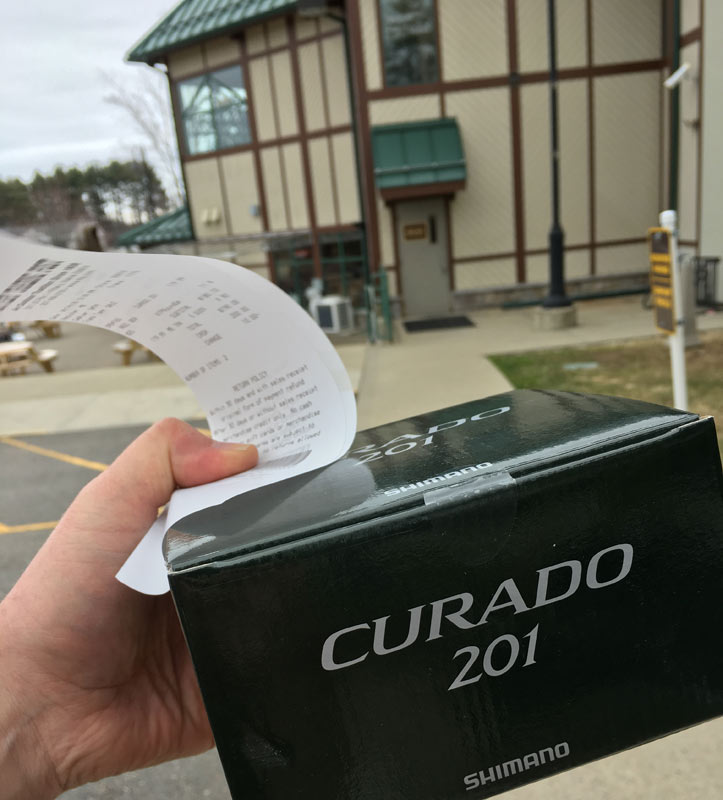
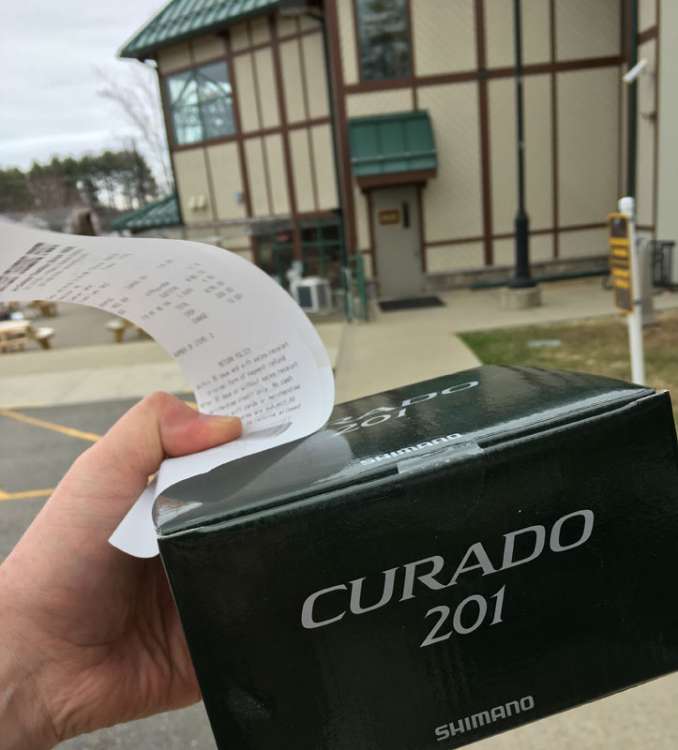
After a winter of trying to decide whether or not to get a Curado 200K, told myself the only way to put an end to it was to buy it. Leftie 6.2:1. Application will be the reel for my general purpose, 1 rod 1 reel, go-to bass combo, salt or fresh. Thank you Bait Monkey and Kittery Trading Post.
-
Sundolphin Journey 10 SS ("Last Resort") Pros - sit on top - small (10 ft) and light weight (44 lb) so it's ridiculously easy to get on the water - cheap ($185) - light & cheap enough to throw in the truck and have it ready at all times Cons - doesn't track well from what I hear (haven't tried it out yet) - seating looks not comfy - no access to the inside of the hull (for mounting stuff) 2018 Hobie PA12 ("(no name yet...)") Pros - sit on top - pedal drive - fin drive system allows more natural sitting position (sit higher with legs lower than propeller drive systems) - quality materials - stability - attention to detail (ex: molded-in threaded brass fittings for anchor trolley; pull cord to hold fins up against hull if you're in shallows and need to paddle) - through-hull plugs for fish finder cables - extras included (ex: recessed transducer area at bottom of hull, with cover plate) - integrated rudder - integrated skeg - paddle included - dry seal for front hatch - comfortable and highly adjustable seat (height, lumbar) with great back support upper & lower - light weight, easily removable drive system (I think it's around 8 lb) - rail system for mounting things - spacious mid & rear decks - 12-sided rails offer resistance to slippage (compared to round/tubes), yet offer 12 mounting angles - short enough for good turning radius and maneuvering, yet long enough for reasonable speed and stability (I hope... haven't actually be on the water with it yet) Cons - expen$ive - proprietary rail/mounting system - heavy. It's a bit of a beast. 105 lb empty; 128 lb fully rigged. - Papaya Orange is going to hurt my eyes in bright sunlight - need to pull a cable to go between forward and reverse; propeller systems are more instant Miller High Life 12' promotional yak ("Banana Boat") Pros - cheap ($30 used at yard sale) - bright banana yellow - Miller High Life promotional decals Cons - cheap ($30 used at yard sale) - bright banana yellow - Miller High Life promotional decals
-
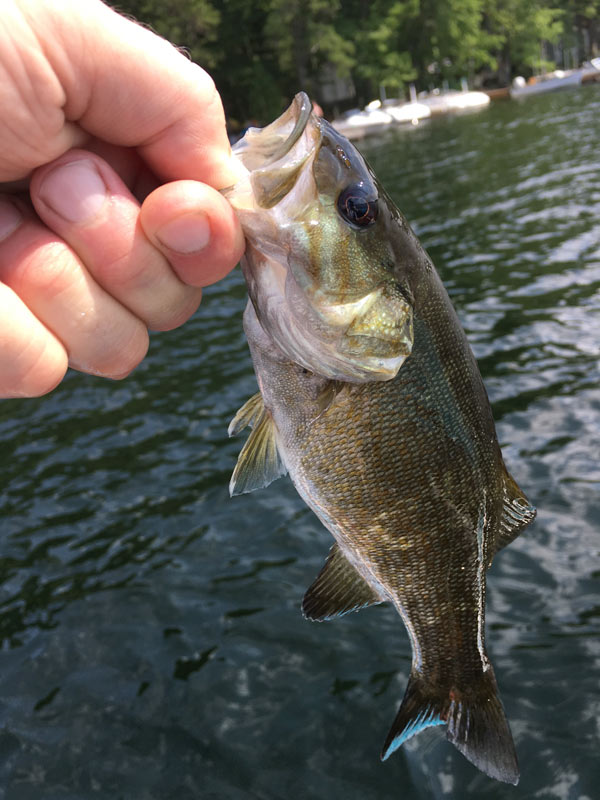
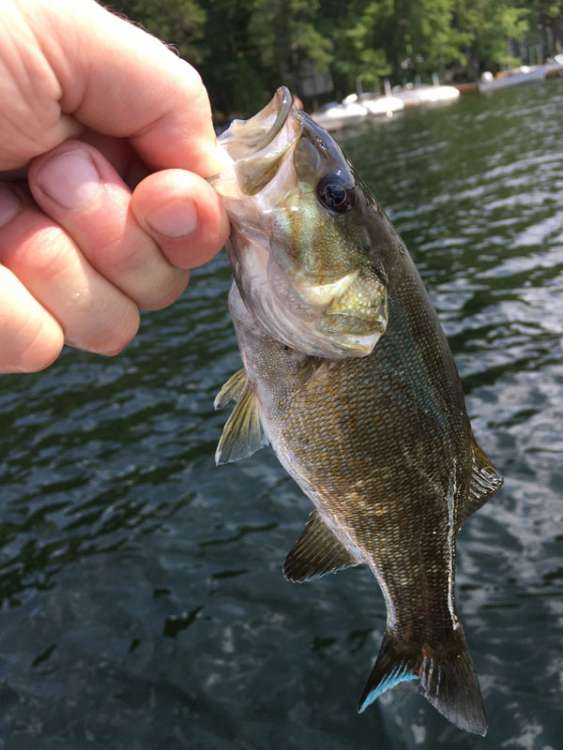
Fishing from the boat on the day of the total solar eclipse (Aug 21 2017), anchored near the shore with a couple friends, I was casting and retrieving for 30 mins with no luck so really wasn't expecting anything when the smallie hooked up. Reeled it in and when it was almost at the boat the reel fell off the rod. I never thought I had to check the nut once in a while but apparently it had worked itself loose. I managed to grab the reel immediately, don't know how it didn't hit the water, set the rod down, and brought the fish in the rest of the way with just the reel. That small fish was my only fish of the day and he made me work for it.

-
4 inch soft plastic green pumpkin worm, Texas rigged, 3/0 extra wide gap hook, on whichever combo you can cast with. Use a clinch knot to connect the line to the hook. 10# test mono line is good to start out with (anywhere from 6# to 14# should work). If it's the baitcaster, consider slipping a 1/4 oz bullet weight inline (baitcasters tend to backlash on light lures). If you're fishing in vegetation, poke the hook tip back under the plastic ("weedless" mode) so it doesn't get hung up. For line and lure weight, try to stay within the rod's ratings, ideally in the middle of them. Medium power rods with fast action are a good place to start for general purpose bass fishing, but there are plenty other choices that work too. Cast out, let it sink but keep the line mostly tight (sounds counterintuitive but you'll get it). When it's near or at the bottom, start swimming it back with whatever method you think makes the worm look most realistic. I like to jerk the rod tip up to bring up the worm, then fall back down slowly while reeling in the worm slowly, then repeat. This way you cover both horizontal distance and vertical/water column. Work the worm the entire time; don't just let it sit there. In short, just imagine what the worm is doing or what you want it to do, and use your rod and reel to make that happen. Fish like structure, cover, weeds, any kind of disruption from plain/open water. Fish near those areas (not necessarily IN them, to avoid snags when starting out). Starting out, open/deep water probably won't bring you as many bass as shallower water or close to shore & structure. Handle the fish as little as possible and release it as soon as possible. You can learn tons from youtube, or better yet, a fishing buddy. Keep it simple and fun. 4 inch work, TX rigged (or wacky rigged, even easier) is almost universal. I'm a noob, just started last fall. Did the same as you: bought a baitcaster and a spinner. Got my first fish, in 17 minutes, on the baitcaster, using aforementioned T rigged 4" green pumpkin worm with a 1/4 oz bullet weight, ~50 feet from shore in ~15 ft of water. I had no idea what I was doing. Still don't. SO MUCH FUN! Welcome to the forum & fishing.
-
I phoned Lowrance support and the guy says I can use a single card on multiple devices; the card isn't tied to a specific one.
-
I enjoy ultralight fishing and love baitcasters so I thought I'd combine them by getting a BFS setup but soon realized 1) very expensive and 2) gear is specialized and finicky so I got out of it real quick and it's back to spinning gear. I really wanted to make it work but I saw the rabbit hole I was about to go down. It can be done, but it can be expensive and sometimes frustrating. Wait, doesn't that describe fishing in general? I found that with some practice on the ultralight/fast 5'6 rod and 500 size spinning reel, I can be surprisingly accurate at short distances (which is all I can really reach on a 5'6 with a light lure).
-
On one boat I bolted a simple 2" diameter PVC tube to the gunnel, on per side towards the stern, angled about 30 degrees from vertical. Even then they were still occasionally in the way when casting, or I had to scramble to take them down before going through the culvert near the launch. Once I forgot (just once), and having them angled slightly backwards is what probably saved the rod tips. I think vertical works well as a place to temporarily hold a rod while unhooking a fish or changing a lure You could probably rig up a PCV solution that pivots fore and aft, with stops, so you could swing it out of the way (almost horizontal) when not needed.
-
Fast action. From what I understand, moderate action is good as a "shock absorber" when using thinner treble hooks (common with swimbaits/crankbaits) when you don't want to rip the thin hook out of the fish. Moderate action in this case also helps to keep the steady pressure on. For your applications, fast action.
-
Trilene XL mono 12# test.
-
I have two identical finders. If I buy a Navionics+ card, can I share it between the two finders, or is the card tied to a specific device?
-
GPS/mapping is great to have for logging, marking spots you want to come back to, showing contours, etc. As for screen size, in a yak the finder is going to be right next to you so I don't think a big screen is necessary unless you're also using the same finder on a bigger boat. Bigger screen will of course let you see more at once, but in a yak you've got only so much space. In a yak I'd make GPS a priority over screen size. I got a 4", haven't used it yet but think it will do just fine in the yak
-
Yakkers... and even power boaters... the milk crate makes an easy way to consolidate your most important gear in an easy to carry, easy to strap down convenient package. Assuming you could carry a separate cooler for ice and food/drink, if you could carry only ONE standard sized milk crate for all your other stuff (excluding rods and reels), what do you put in it? Tackle box? Fire extinguisher? Air horn? Flare? Yeti mug? Lights? Anchor and line? First aid kit? Tools?
-
Okay I didn't think so but I'm new at this so just had to ask. Thanks Jig Man.
-
I got a Hook4 Nav+ a few months ago on closeout and installed it, but haven't done anything with the Nav+ feature, and thought I'd get started now. I'm new to finders and Nav+. Does the Nav+ feature just mean it supports Nav+ but you buy a card (filled with data) separately from Navionics, or should the unit come with a card and data set already, out of the box? The Hook4 manual isn't too helpful here, just shows me how to insert an SD card but nothing about Navionics+.
-
This will depend on the water and type of cover you fish the most, but in my opinion if I had to use only one combo for fresh water smallies and largies in any condition, I'd reach for 6'6" medium power, fast action baitcaster with 12# mono test, and a ~$100 to $180 class reel. Done. Light enough to feel the strikes; heavy enough to handle the big'uns; this specific one ha a 1/4 to 3/4 oz lure weight rating (good range). Caveat: Rod is a StC which supposedly is a little heavier than other brands, so if you're going with something other than StC consider a medium heavy instead of a medium. If you're fishing heavy cover consider MH/F and different line. I have no experience with anything but mono line.
-
There are so many options out there... the place I'd start is to consider what water you'll be fishing the most. This will dictate the boat type and the hull type (flat bottom, mod V, deep V). Also consider your fishing style and number of passengers. This will dictate boat size and motor size. Also consider your budget. Bunks or rollers are fine, either one. 2 stroke or 4 stroke is fine, either one. A 2 stroke will generally be quicker acceleration, better torque and noisier, will require mixing oil/gas; a 4 stroke will be quieter, cleaner, maybe more convenient and a little slower to get up to speed. Riveted vs all welded: Older riveted boats might leak; all-welded might crack. Neither one is necessarily a deal breaker, just a fact of life. Pleasure fishing or tournaments? 16' alum with 40 hp sounds like a great all-around choice. Lots of options, new and used. If you've got more specifics it might help lower down the choices.
-
12# test mono has worked well for me with jigs and worms, and pretty much everything else. I'm fishing mostly in clear water with minimal vegetation and cover and at my novice level I like a more "universal" line that is generally good at everything as opposed to multiple lines that excel with specific techniques. If you're throwing into cover you may want something stronger. If you're jigging deep, maybe braid. Never tried it here but from what I understand you'll have less stretch, more sensitivity to bites and feeling the bottom.